From idea to market-ready product, our NPI solutions make every stage easier, faster. Discover How We Help

Views: 222 Author: Tomorrow Publish Time: 2025-12-30 Origin: Site


Content Menu
● Understanding the Basics of CNC Swiss Turning
● Types of CNC Swiss Turning Machines
>> 1. Traditional Swiss-Type Lathes
● Key Features and Technical Advantages
● Materials Suitable for CNC Swiss Turning
● Applications of CNC Swiss Turning
● Process Optimization and Quality Control
● Advantages of CNC Swiss Turning
● Limitations of CNC Swiss Turning
● Future Trends in CNC Swiss Turning
● Best Practices for CNC Swiss Turning
● FAQ
>> 1. What is the main difference between CNC turning and CNC Swiss turning?
>> 2. Which industries rely most on CNC Swiss turning?
>> 3. Can Swiss-type machines perform milling operations?
>> 4. What size of parts is ideal for Swiss turning?
>> 5. How does automation enhance CNC Swiss turning?
CNC Swiss turning is a precision manufacturing process that stands at the forefront of modern machining. It is a specialized method within CNC (Computer Numerical Control) machining designed to produce small, intricate, and highly accurate cylindrical components. Commonly used in industries such as aerospace, medical, automotive, electronics, and defense, CNC Swiss turning delivers exceptional precision and repeatability while maintaining cost efficiency for both short and high-volume runs.
The process evolved from the traditional Swiss-type lathe invented in the late 19th century for the Swiss watchmaking industry. These early machines were designed to manufacture tiny, precise watch screws and gears. Over time, technological advancement transformed these mechanical lathes into computer-controlled, multi-axis machining centers capable of producing complex parts with minimal human intervention. Today, CNC Swiss turning is an indispensable solution for precision engineering across the globe.
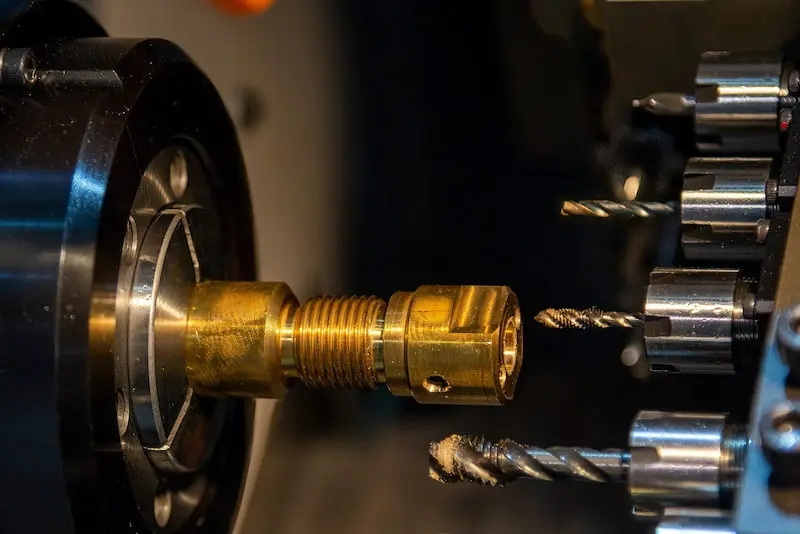
Unlike conventional CNC turning, CNC Swiss turning employs a unique method of supporting and machining material. In a typical lathe, the workpiece is held at one end and extends out from the chuck, which can lead to deflection or vibration, especially for long or slender parts. In contrast, a Swiss-type lathe feeds the workpiece through a guide bushing that supports the material close to the cutting area. This configuration minimizes bending and ensures stable, vibration-free machining even for extremely thin components.
This principle of close support allows Swiss machines to achieve exceptional accuracy and surface finishes. The guide bushing, combined with a sliding headstock, enables the cutting tool to operate very close to the point of support, drastically reducing tolerance errors. This design is particularly beneficial when machining parts with length-to-diameter ratios greater than 3:1 — a range where conventional lathes typically struggle.
CNC Swiss turning relies on programmed tool movements to shape raw material into the desired geometry. The process begins when a bar of material — metal, plastic, or alloy — is loaded into the machine's bar feeder. The machine uses a sliding headstock that moves the material longitudinally through the guide bushing. Multiple tools, organized on the tool post and sub-spindle, work simultaneously to perform operations such as:
- Turning and facing.
- Drilling and boring.
- Threading and tapping.
- Milling and slotting.
- Grooving and knurling.
The CNC controller coordinates these operations using pre-programmed instructions. These instructions specify parameters like spindle speed, feed rate, tool positions, and depths of cut. Because Swiss machines commonly feature 6 to 9 axes of movement, they can perform multiple operations on different part areas simultaneously. This parallel processing dramatically shortens machining cycles.
Once a section is finished, the part is cut off from the bar stock, and the next workpiece begins automatically. The continuous feeding system enables an uninterrupted production process, which is why CNC Swiss turning is ideal for manufacturing thousands of identical parts with consistent quality.
Swiss turning machines come in two main categories: traditional (mechanical) and modern CNC versions. Each serves a distinct production need.
Mechanical or cam-operated Swiss lathes function through a complex system of levers and cams that control the tool paths mechanically. Although these machines can be incredibly precise, setting them up is time-consuming and requires specialized knowledge. They are best suited for extremely large production runs of standardized parts, where the cost of setup can be justified by long-term operation.
Modern Swiss-type lathes integrate computer control systems that allow complete programming flexibility. Instead of physical cams, motion is dictated by G-code instructions, which can be quickly modified to accommodate new part designs. Advanced CNC Swiss machines often feature live tooling, secondary spindles, and Y-axis capability, enabling simultaneous machining of both the front and back ends of a part. This combination of automation and versatility makes CNC Swiss turning one of the most efficient solutions for high-precision manufacturing.
Several features give CNC Swiss turning machines an edge over conventional systems:
- Guide bushing support: Provides rigidity and precision during high-speed turning.
- Sliding headstock: Offers consistent axial motion that eliminates deflection.
- Multi-axis control: Handles complex shapes and cross operations in one cycle.
- Sub-spindle machining: Allows simultaneous backworking for faster production.
- Automatic bar feeding: Ensures continuous operation without operator interruption.
- Coolant and chip evacuation systems: Maintain temperature stability and surface quality.
- Superior repeatability: Achieves tolerance consistency across large batches.
These attributes combine to allow tolerances as tight as ±0.0002 inches — a benchmark rarely achievable through conventional turning.
The adaptability of CNC Swiss turning extends to a wide variety of materials, making it valuable in numerous applications. Common materials include:
- Metals: Aluminum, brass, stainless steel, titanium, copper, and steel alloys.
- High-performance alloys: Inconel, Monel, and Hastelloy for demanding aerospace and marine environments.
- Plastics: ABS, PEEK, Delrin (acetal), nylon, and polycarbonate.
- Exotic materials: Used in specialized fields requiring lightweight or heat-resistant parts.
Material selection depends heavily on the part's operational environment — for example, corrosion resistance is crucial for medical implants, while heat tolerance is vital in automotive and aerospace applications.
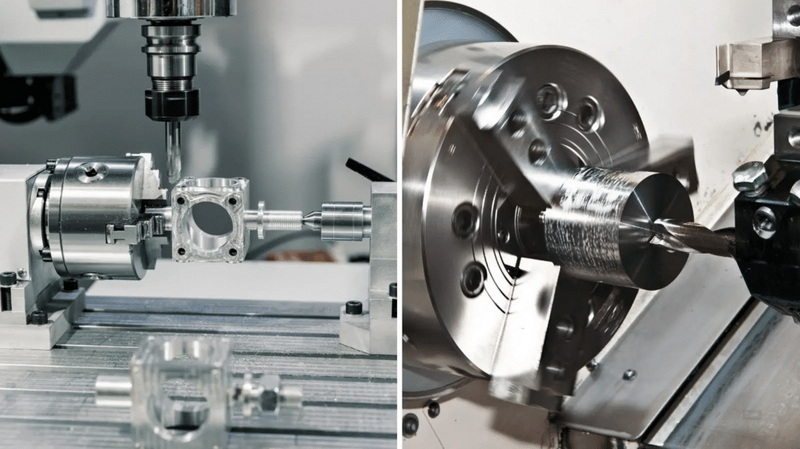
CNC Swiss turning's flexibility and precision make it a favorite among industries that prioritize quality and reliability. Some key applications include:
- Medical devices: Bone screws, dental implants, orthopedic pins, and surgical instruments.
- Aerospace components: Fasteners, connectors, and intricate fluid system fittings.
- Automotive parts: Fuel injection nozzles, transmission pins, and air valve bodies.
- Electronics: Micro connectors, terminal pins, and contact sleeves.
- Defense technologies: Guidance system housings, precision fasteners, and weapon components.
- Optics and photonics: Miniature housings and precision lens retainers.
Each application benefits from Swiss machining's ability to maintain extremely tight tolerances and clean finishes while supporting continuous, high-speed production.
In modern CNC Swiss turning facilities, process optimization is driven by data collection and analysis. Machines are often equipped with sensors that monitor tool wear, vibration, and temperature fluctuations. The collected information allows operators to adjust parameters in real time, reducing scrap rates and extending tool life.
Quality control also plays a central role. Finished components undergo dimensional inspections using coordinate measuring machines (CMMs), optical comparators, and surface roughness testers. Statistical process control (SPC) monitoring ensures that production remains within desired tolerances, maintaining the consistency customers expect from precision machining.
The benefits of CNC Swiss turning are multidimensional, affecting both performance and economics:
1. Unmatched precision: The guide bushing ensures tight tolerance control across all part dimensions.
2. High productivity: Multi-tool setups enable concurrent machining to minimize idle time.
3. Enhanced finish quality: Reduced vibration produces superior surface smoothness.
4. Flexibility in design: Programmable controls allow rapid design adjustments.
5. Reduced labor costs: Automation minimizes manual intervention.
6. Minimal secondary operations: Complex components are completed in a single cycle.
7. Excellent repeatability: Each part replicates the previous one with near-perfect accuracy.
8. Scalability: The same setup can handle both prototypes and full-scale runs.
These advantages make Swiss turning a strategic manufacturing choice, especially for industries emphasizing micro-mechanical precision and speed.
Despite its strengths, CNC Swiss turning is not an all-purpose machining solution. It comes with some challenges that manufacturers must consider:
- Size limitations: The process is optimized for parts smaller than 1.25 inches in diameter.
- High capital cost: Swiss machines are expensive and may require additional tooling investments.
- Programming complexity: Multi-axis programming demands skilled operators and advanced software.
- Material waste: Bar-fed systems can generate additional waste for small-batch orders.
- Long setup times: Initial changeovers between part designs can take longer than on simple lathes.
Understanding these limitations helps manufacturers balance the process's benefits against its operational costs.
With Industry 4.0 transforming the manufacturing landscape, CNC Swiss turning is evolving faster than ever. New developments include:
- Smart machining: Machines equipped with IoT sensors for adaptive cutting and real-time diagnostics.
- AI-assisted optimization: Artificial intelligence predicts tool wear and adjusts cutting paths dynamically.
- Robotic integration: Automated loading and part handling enable lights-out production for 24-hour operation.
- Hybrid processes: Combining additive manufacturing with CNC machining for enhanced material efficiency.
- Sustainability improvements: Use of biodegradable coolants and recycling-friendly bar stock for greener operation.
These innovations point to a future where Swiss turning will become even more autonomous, intelligent, and environmentally responsible.
To maximize productivity and ensure consistent results, manufacturers should follow several proven best practices:
- Select appropriate tooling: Use high-quality carbide or coated tools suitable for the material.
- Optimize feed and speed: Adjust cutting parameters to balance efficiency and tool life.
- Maintain coolant quality: Keep coolant systems clean to prevent overheating and residue buildup.
- Implement predictive maintenance: Use machine data to plan maintenance before failures occur.
- Conduct operator training: Skilled technicians ensure that programming and setup are optimized.
- Regular calibration: Ensures that the guide bushing and spindle alignment remain precise.
These preventive measures enhance both part quality and equipment longevity.
CNC Swiss turning represents the perfect union of engineering precision and automated efficiency. Evolving from traditional Swiss watchmaking lathes to modern multi-axis machining centers, this technology enables manufacturers to produce finely detailed parts at a pace once thought impossible. Its ability to maintain extreme tolerances, deliver premium finishes, and perform complex operations in one setup distinguishes it from all other types of CNC machining.
As industries continue to demand miniaturization, durability, and cost control, CNC Swiss turning will remain a core technology in precision manufacturing. Whether crafting medical implants, aerospace connectors, or micro-electronic components, this process provides a combination of accuracy and efficiency that defines the modern era of production.
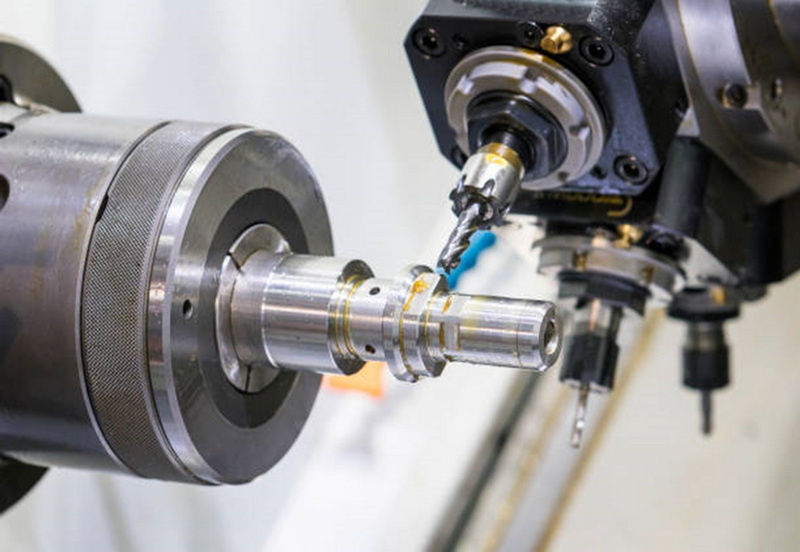
CNC turning holds the workpiece in a stationary chuck, while CNC Swiss turning feeds the material through a guide bushing, allowing for more precise machining of long, slender parts by minimizing vibration and deflection.
Medical, aerospace, electronics, automotive, and defense industries depend heavily on CNC Swiss turning for parts that demand high tolerance, repetitive accuracy, and smooth surface finishes.
Yes, advanced Swiss machines are equipped with live tooling capable of milling, drilling, and tapping. This allows them to complete multiple operations in a single cycle without transferring parts between machines.
CNC Swiss turning excels at producing components under 1.25 inches in diameter and up to several inches in length. It is especially well-suited for complex, slender geometries.
Automation, including bar feeders and robotic handling systems, allows continuous operation with minimal human supervision. This reduces downtime, increases consistency, and maximizes throughput.


