From idea to market-ready product, our NPI solutions make every stage easier, faster. Discover How We Help

Views: 222 Author: Tomorrow Publish Time: 2025-12-27 Origin: Site


Content Menu
● Understanding the Basics of CNC Swiss Machining
● Key Components of a Swiss CNC Lathe
● Advantages of CNC Swiss Machining
● Applications Across Industries
>> Electronics and Telecommunications
>> Watchmaking and Instrumentation
● Comparison: CNC Swiss Machining vs. Conventional Turning
● Challenges in CNC Swiss Machining
● Maintenance and Quality Control
● Future Trends in Swiss Machining Technology
● FAQ
>> 1. What materials can be machined using CNC Swiss machines?
>> 2. How does a Swiss-type lathe differ from a standard CNC lathe?
>> 3. What industries benefit most from CNC Swiss machining?
>> 4. Can CNC Swiss machining handle high production volumes?
>> 5. What is the typical tolerance achievable with CNC Swiss machining?
CNC Swiss machining is a high-precision manufacturing process designed to produce intricate components with exceptional accuracy. Originating from Switzerland in the late 1800s, this method was initially developed for the production of tiny watch parts requiring exact measurements and flawless finishes. Over time, it evolved into one of the most sophisticated forms of modern automated machining, blending traditional craftsmanship with cutting-edge technology.
Today, CNC Swiss machining plays a crucial role in industries such as aerospace, medical, automotive, defense, and electronics. It's valued not just for precision, but for its efficiency, consistency, and flexibility in handling complex geometries. With the introduction of CNC controls, the process became even more capable—offering superior repeatability, reduced waste, and streamlined production cycles.
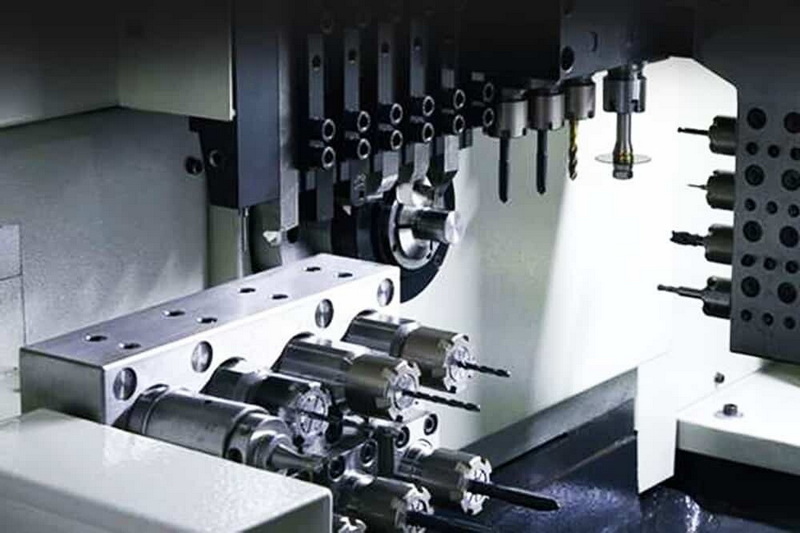
At the core of CNC Swiss machining is the Swiss-type lathe. Unlike traditional lathes that hold the workpiece in a fixed position, Swiss lathes feed the material through a guide bushing located near the cutting zone. The main spindle, operating as a sliding headstock, moves the workpiece back and forth along the Z-axis while the tooling performs operations in close proximity to the supported portion of the bar stock.
This unique setup eliminates deflection and vibration—two major sources of dimensional inaccuracy—allowing highly slender components to be machined with remarkable precision. Even when machining materials with narrow diameters or extreme length-to-diameter ratios, the workpiece remains stable. The process can machine tolerances as tight as ±0.0002 inches (±5 microns) routinely.
Swiss CNC lathes integrate multiple subsystems that communicate under the control of the CNC program. Some of the essential parts include:
- Sliding headstock: Holds and moves the bar stock axially through the guide bushing.
- Guide bushing: Provides continuous support to the workpiece right where machining takes place, reducing deflection and ensuring accuracy.
- Tool zone and turret: Houses several tools capable of turning, milling, drilling, slotting, and threading operations—often working simultaneously.
- Sub-spindle (secondary spindle): Captures the finished part from the main spindle for back operations, eliminating secondary setups.
- Control unit (CNC controller): Acts as the brain of the machine, executing programmed commands that specify tool movement, spindle speed, feed rate, and coolant flow.
- Bar feeder: Automatically supplies material, enabling long, unattended production runs.
These elements work together seamlessly to produce complex parts in one setup, minimizing manual intervention and increasing throughput.
The intelligence of CNC Swiss machining comes from its programming. Engineers develop precise machining instructions using G-code or CAM-generated tools paths. The general programming workflow includes:
1. CAD modeling: The part geometry is designed in CAD software, capturing every hole, thread, and contour.
2. CAM processing: The design is imported into CAM software, where toolpaths and machining operations are defined based on machine capabilities.
3. Simulation: Virtual testing checks for tool collisions, cycle time, and efficiency before sending the program to the machine.
4. Machine setup and dry run: Operators install the proper bar stock, tools, and guide bushings, then run a test cycle to verify alignment and accuracy.
Modern machines often include conversational programming interfaces, allowing simpler adjustments on the shop floor. This makes CNC Swiss machining both powerful and user-friendly, despite the underlying complexity.
CNC Swiss machining provides numerous benefits that make it the preferred choice for manufacturing small and precise components.
- Exceptional accuracy: Consistent tolerances at the micron level make it ideal for critical components.
- High production speed: Multiple tools can cut simultaneously, reducing overall cycle times.
- Complex multitasking: The machine can perform up to ten or more operations—including drilling, milling, and slotting—in one setup.
- Reduced need for secondary operations: With sub-spindles and live tooling, parts exit the machine nearly finished.
- Superior surface finish: The near-constant support reduces chatter, yielding smooth and polished surfaces.
- Extended lights-out production: Automated bar feeders and smart monitoring systems allow machines to run autonomously overnight.
These advantages combine to boost productivity, cut costs, and maintain exceptional quality—even over large production volumes.
Swiss CNC machines can process a wide range of materials. Each behaves differently under cutting conditions, influencing tool wear and part finish.
- Stainless steel: Resistant to corrosion, perfect for medical and food-grade applications.
- Aluminum: Lightweight, cost-effective, and easy to machine.
- Brass: Offers excellent machinability and electrical conductivity.
- Titanium: Strong, biocompatible material suitable for implants and aerospace parts.
- Copper: Used where electrical and thermal conductivity are essential.
- Plastic polymers (e.g., PEEK, Delrin): Ideal for insulating components or lightweight mechanical parts.
Advanced coatings on tools—like titanium nitride (TiN) or aluminum titanium nitride (AlTiN)—further optimize cutting performance when machining these materials.
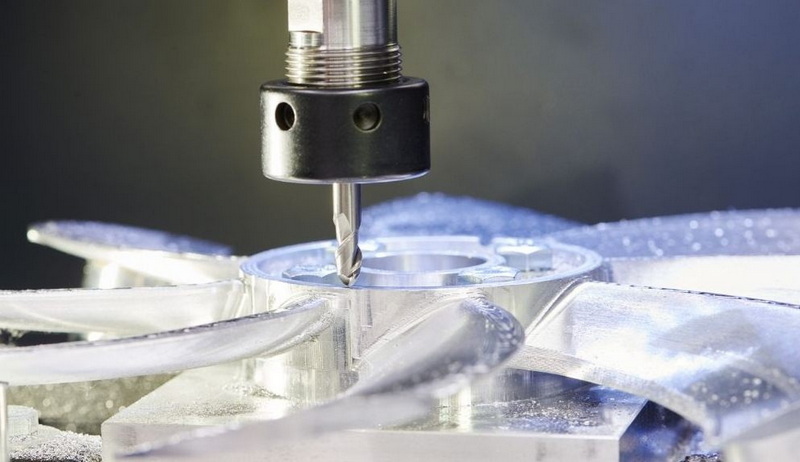
CNC Swiss machining enables manufacturers to create small and intricate medical components—such as surgical pins, orthopedic screws, and dental implants—with precise tolerances. Equipment reliability in surgery depends heavily on consistency, which Swiss machining reliably delivers.
In aerospace applications, precision is critical for safety and performance. Swiss machining produces complex fasteners, connectors, and hydraulic valve components out of tough metals like Inconel and titanium alloys. These materials can endure extreme conditions without failure.
Automotive components—like fuel injectors, transmission shafts, and sensor housings—benefit from the dimensional accuracy provided by Swiss machining. The ability to generate consistent parts ensures tighter engine performance and reduced environmental emissions.
The production of microconnectors, contact pins, and housings requires the fine precision Swiss machines provide. These parts, often smaller than a grain of rice, need defect-free machining to maintain signal integrity and reliability.
Beyond industrial use, Swiss machining's heritage in watchmaking endures. The technology still produces screws, gears, and decorative components that meet both aesthetic and technical demands.
| Feature | CNC Swiss Machining | Conventional Turning |
|---|---|---|
| Workpiece support | Guide bushing near cutting area | Clamped only at spindle end |
| Precision level | Exceptional, micron-range | Moderate |
| Capability | Multi-axis operations, complex geometries | Single-axis, limited geometry |
| Efficiency | Multi-tool cuts, fewer setups | Sequential operations, more setups |
| Best suited for | Small, intricate parts | Larger, less detailed components |
Swiss machining clearly excels where complexity and tight tolerances are required. However, for large or simple parts, a standard lathe may still offer greater cost efficiency.
Even with its tremendous advantages, the Swiss machining process comes with challenges manufacturers must manage carefully:
- Programming complexity: The tight sequencing of simultaneous tool movements can make programming difficult for beginners.
- Higher upfront cost: Swiss machines are more expensive, though they pay off through precision and efficiency.
- Tool wear monitoring: High speeds and fine tolerances require strict tool management to avoid dimensional errors.
- Material limitations: Bar lengths and diameter capacities can limit part size flexibility.
- Skilled labor requirement: Operators must understand mechanical design, CNC coding, and machine calibration to achieve optimal performance.
Continuous training and the use of automated tool monitoring systems help mitigate these challenges.
Regular maintenance ensures consistent results and machine longevity. Operators routinely check alignment, clean guide bushings, replace worn tools, and inspect coolant conditions. Additionally, quality control protocols such as Statistical Process Control (SPC) or Coordinate Measuring Machine (CMM) inspections are used to verify every dimension.
Maintaining precision also involves environmental controls. Temperature fluctuations in a workshop can cause expansion and contraction of materials—leading to deviations. Therefore, many facilities use climate-controlled machining environments to protect dimensional integrity.
As technology evolves, Swiss CNC machining continues to integrate digital intelligence and ecological consciousness. Current trends include:
- Automation and robotics: Enhancing throughput with robotic part loaders, reducing idle times.
- AI-driven process optimization: Predictive algorithms analyze data to preempt tool wear or machine vibration.
- Hybrid machining: Combines Swiss turning with additive manufacturing, enabling complex parts with internal channels.
- Smart sensors and IoT connectivity: Allow real-time monitoring and remote diagnostics.
- Sustainable production: Eco-friendly lubricants, coolant recycling, and energy-efficient motors are becoming standard.
These advancements ensure that CNC Swiss machining not only remains relevant but continues to set the benchmark for precision manufacturing worldwide.
CNC Swiss machining represents the pinnacle of precision manufacturing. Its unique design—where the workpiece moves through a guiding spindle while multiple tools operate in tandem—offers accuracy, speed, and repeatability unmatched by conventional methods. From the production of life-saving medical implants to aerospace-grade fasteners, its ability to handle intricate parts with minimal error has revolutionized modern engineering.
As industries demand smaller, more complex, and high-performance components, CNC Swiss machining will continue to evolve alongside automation, artificial intelligence, and sustainable manufacturing technologies. Its unparalleled precision and versatility ensure that it remains one of the most vital processes in the global manufacturing landscape.
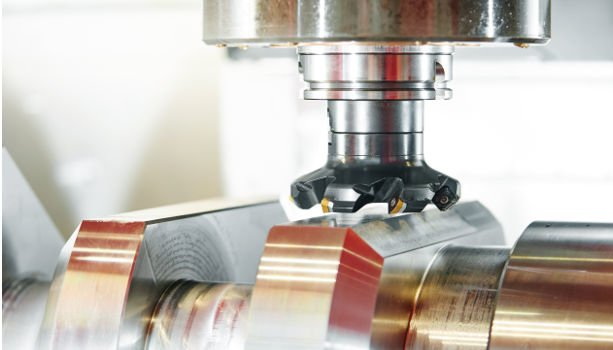
Swiss machines handle metals such as stainless steel, aluminum, brass, and titanium, as well as plastics like PEEK and Delrin. The material choice depends on the mechanical properties and final use of the part.
A Swiss lathe supports the workpiece with a guide bushing close to the cutting tool, minimizing vibration and allowing extreme accuracy. Conventional lathes hold the workpiece from one end, which limits precision on slender parts.
The medical, aerospace, automotive, telecommunications, and precision instrument industries rely heavily on Swiss machining due to their high precision and consistency needs.
Yes. Equipped with bar feeders and multi-tool configurations, Swiss machines can operate continuously, making them ideal for high-volume or lights-out production.
CNC Swiss machining can achieve tolerances within ±0.0002 inches (±5 microns), depending on machine calibration, tooling, and material characteristics.


