From idea to market-ready product, our NPI solutions make every stage easier, faster. Discover How We Help

Views: 222 Author: Tomorrow Publish Time: 2025-11-27 Origin: Site


Content Menu
● Understanding CNC Precision Machining
● The CNC Precision Machining Process
● Key Equipment in CNC Precision Machining
● Advantages of CNC Precision Machining
● Applications of CNC Precision Machining
● Frequently Asked Questions (FAQs)
>> Q1: What is the difference between CNC machining and precision machining?
>> Q2: How accurate is CNC precision machining?
>> Q3: What materials can be used in CNC precision machining?
>> Q4: What industries benefit most from CNC precision machining?
>> Q5: How does CAD/CAM software enhance CNC precision machining?
CNC precision machining is a high-accuracy manufacturing process that uses computer-controlled machine tools to produce complex parts with extremely tight tolerances. It involves automation and precision engineering to create components critical to industries such as aerospace, automotive, medical, and electronics. This article explores the definition, process, equipment, advantages, applications, and answers common questions related to CNC precision machining.
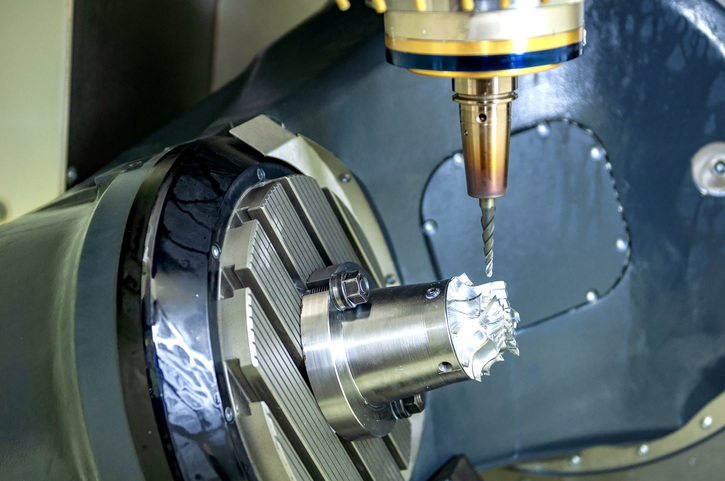
CNC stands for Computer Numerical Control, which means machines operate through computer programming to control tools and movements with high precision. Precision machining emphasizes achieving very tight dimensional tolerances, often down to ±0.001 inches (±0.025 mm) or finer. By combining CNC technology with precision engineering, manufacturers can produce identical high-quality parts that meet stringent performance and safety requirements.
Unlike traditional manual machining, CNC precision machining ensures repeatability, consistency, and reduced human error by automating tool paths based on CAD (Computer-Aided Design) models and CAM (Computer-Aided Manufacturing) software instructions. This makes it possible to manufacture highly complex geometries and detailed parts without sacrificing quality.
The CNC precision machining process involves several key steps:
- Design and CAD Modeling: Engineers create detailed 3D digital models specifying dimensions, tolerances, and features using CAD software such as AutoCAD or SolidWorks. These models define every dimension, tolerance, and feature of the finished part, serving as the foundation for the manufacturing process.
- CAM Programming: The CAD model is converted into machine instructions using CAM software, dictating precise tool movements. This stage involves calculating optimal toolpaths, selecting cutting parameters, and generating machine-specific code, often with simulation to detect collisions and optimize efficiency.
- Tool and Material Preparation: Selection of cutting tools (drills, end mills, lathes) and proper workpiece setup are essential. This includes securing workpieces with vises, fixtures, or clamps, and precise measurement and calibration of tools to ensure accuracy during machining.
- Machining Execution: The CNC machine executes the program, removing material from the workpiece through controlled cutting, milling, turning, or grinding operations. Servo motors control spindle rotation, tool feed rates, and coordinate movements across multiple axes with sub-micron precision.
- Inspection and Finishing: Final parts undergo stringent inspection using equipment like CMM (Coordinate Measuring Machines), optical comparators, and surface finish meters to ensure dimensional accuracy and surface quality. Post-processing like grinding or polishing may be applied for ultra-smooth finishes.
Throughout these steps, real-time monitoring systems manage cutting forces, tool wear, and vibration to maintain optimal machining conditions and part quality.
Various CNC machines serve different functions based on part requirements:
- CNC Milling Machines: Use rotating cutting tools for shaping materials with multi-axis control, capable of producing complex parts with tolerances as tight as ±0.0005 inches.
- CNC Lathes: Rotate the workpiece against stationary tools, ideal for cylindrical parts requiring high precision.
- CNC Drilling and Boring Machines: Create precise holes and internal features with specified surface finishes and tolerances.
- CNC Grinders: Deliver fine surface finishes and exceptional dimensional accuracy via abrasive wheels, often used as the final machining step.
Advanced CNC configurations include 5-axis or even 12-axis machines that allow simultaneous multi-direction machining, increasing precision and reducing setups.
CNC precision machining offers many benefits:
- High Accuracy and Tight Tolerances: Essential for parts that must meet strict quality and safety standards.
- Repeatability and Consistency: Automated tool paths produce identical parts in large volumes.
- Ability to Produce Complex Geometries: Enables manufacturing intricate designs impossible by manual methods.
- Increased Efficiency: Reduces production time and labor costs through automation and optimized toolpaths.
- Flexibility: Easily adaptable to new designs with changes updated in software instead of costly new tooling.
These advantages have made CNC precision machining indispensable in modern manufacturing, especially in demanding sectors.
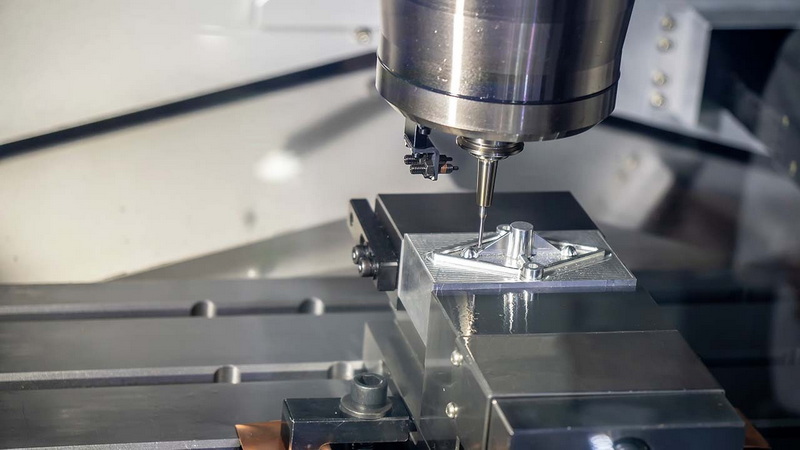
Industries that rely heavily on CNC precision machining include:
- Automotive: for engine parts, transmission components, and custom fittings needing exact dimensions.
- Aerospace: for critical components like turbine blades, structural parts, and systems requiring extreme precision and reliability.
- Medical: production of implants, surgical tools, and diagnostic equipment with biocompatible materials.
- Electronics: fabrication of housings, connectors, and precision fittings for devices.
- Defense: manufacturing robust, precise parts needed in advanced defense systems.
The ability to produce complex high-precision parts enhances innovation and quality in these fields.
In greater detail, the machining process steps include:
1. CAD Model Creation and Design Preparation: Engineers develop 3D CAD models specifying all aspects of the part, including materials and geometric constraints. This stage ensures that manufacturing requirements and tolerances are clearly communicated.
2. CAM Programming and CNC Program Development: CAM software creates optimized toolpaths, selects cutting parameters, and simulates the machining process to prevent errors. The program contains G-code and M-code instructions to control tool movements, spindle speed, and coolant activation.
3. Machine Setup and Workholding Systems: Precision begins with securing the workpiece using vises, custom fixtures, or pneumatic clamps. Tool setup and calibration are performed with measurement devices to set cutting tools within 0.0001 inches accuracy. Coordinate system alignment through probes and edge finders ensures the CNC machine accurately translates CAD models to physical dimensions.
4. CNC Machining Operations Execution: The machine carries out programmed operations such as roughing (bulk material removal), semi-finishing, and finishing passes. Automated tool changers and tool length compensation systems enhance productivity and precision.
5. Real-Time Monitoring and Quality Control: Feedback systems continuously monitor cutting forces, tool wear, and vibrations to adjust machining conditions dynamically. Inspection through CMM, optical comparators, and surface finish meters confirms part quality. First Article Inspection (FAI) documents initial part verification, and Statistical Process Control (SPC) tracks quality consistency during production.
6. Documentation and Traceability: All steps are documented, providing traceability to maintain quality standards and comply with industry regulations.
CNC precision machining combines advanced computer control with precision tooling to manufacture complex parts capable of meeting the most demanding specifications. With its ability to produce consistent, high-quality components efficiently, CNC precision machining serves as a cornerstone of advanced manufacturing across aerospace, automotive, medical, and other critical industries. Its integration of design, programming, precise tool control, and real-time quality monitoring ensures exceptional final product quality at scale.
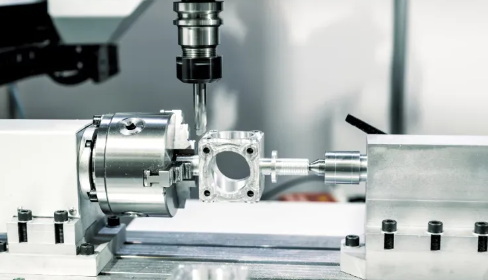
CNC machining refers to automated control of machining tools via computer programs, while precision machining emphasizes achieving very tight tolerances and high dimensional accuracy during manufacturing.
CNC precision machining can achieve tolerances as tight as ±0.001 inches (±0.025 mm) or better, depending on the equipment and materials used.
A wide range of materials including metals (steel, aluminum, titanium), plastics, and engineering composites can be machined precisely using CNC technology.
Industries such as aerospace, automotive, medical device manufacturing, defense, and electronics greatly benefit from the precision and repeatability of CNC machining.
CAD software provides detailed 3D part designs, while CAM software translates these designs into CNC machine instructions, enabling precise control over toolpaths and machining parameters.
[1](https://yijinsolution.com/processes/)
[2](https://www.m2m-machining.com/blog/cnc-machining-guide/)
[3](https://www.rapiddirect.com/blog/cnc-precision-machining/)
[4](https://www.ycmalliance.com/everything-you-need-to-know-about-cnc-machining/)
[5](https://www.toplevelcnc.com/cnc-machining-processes-guide/)
[6](https://www.violintec.com/precision-machining/steps-involved-in-quality-control-and-inspection-of-cnc-machining/)
[7](https://blissmachine.net/from-raw-materials-to-finished-products-the-journey-of-cnc-machining/)
[8](https://jwmachinecorp.com/how-precision-cnc-machining-works-a-step-by-step-guide/)
[9](https://www.goodwin.edu/enews/cnc-machining-techniques/)
[10](https://proformmfg.com/precision-cnc-machining-process-important-things-to-consider/)


