From idea to market-ready product, our NPI solutions make every stage easier, faster. Discover How We Help

Views: 222 Author: Tomorrow Publish Time: 2025-11-16 Origin: Site
Content Menu
● What is a CNC milling machine?
● Core principles of operation
● Key components of a CNC milling machine
● Limitations and considerations
● Choosing the right CNC milling machine
● Applications across industries
● Operating considerations for quality results
● Future trends in CNC milling
● FAQ
>> Q1. What is the difference between a CNC milling machine and a manual milling machine?
>> Q2. Which materials are easiest to mill on a CNC machine?
>> Q3. How does one determine the right number of axes for a CNC mill?
>> Q4. What factors affect tool life in CNC milling?
>> Q5. What should be included in a CNC milling setup checklist?
CNC milling machines are advanced manufacturing tools that use computer numerical control to remove material from a workpiece. They are capable of producing complex shapes with high precision and repeatability, making them essential in industries ranging from aerospace to automotive, electronics, and medical devices. This article explains what CNC milling machines are, how they work, their key components, common applications, and considerations for selecting and operating them. The discussion also covers operational best practices, maintenance essentials, and future trends shaping the field.
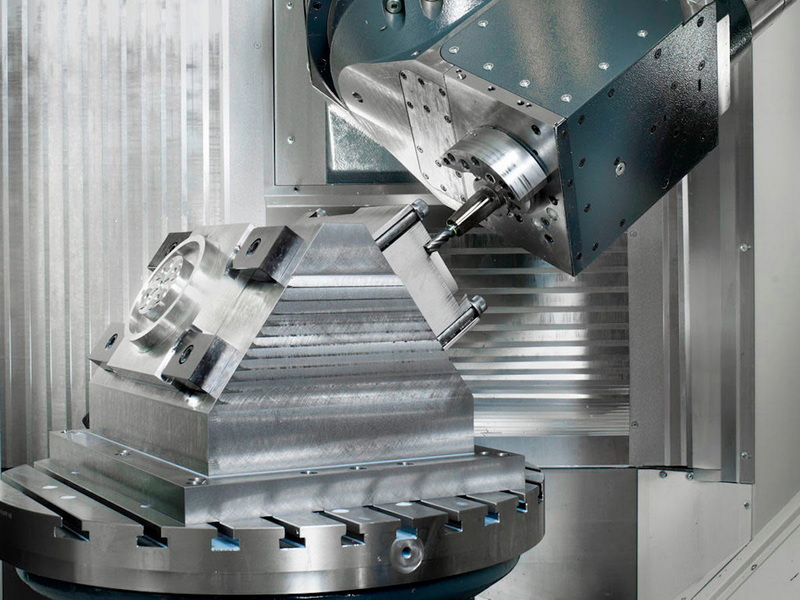
A CNC milling machine combines a milling cutter, a worktable, and a control system to automate cutting operations. Unlike manual milling, where an operator guides the cutter by hand, a CNC mill follows a program written in a numerical control language. The program directs the movement of the spindle along multiple axes, typically X, Y, and Z, and may include additional rotational axes such as A, B, and C for multi-axis machining. The result is precise removal of material to create the desired geometry. Modern CNC mills often integrate features such as automatic tool changers, probe systems for workpiece measurement, and advanced coolant delivery to optimize performance and throughput.
- Digital instructions: The process begins with a CAD model, which is then converted into a CAM program. The CAM software generates toolpaths that tell the machine how to move the cutter relative to the workpiece. Post-processing translates these toolpaths into machine-readable code, typically G-code, that the controller understands.
- Multi-axis motion: Most CNC mills use at least three linear axes (X, Y, Z). Advanced machines add rotary axes, enabling complex parts without repositioning the workpiece. Five-axis machines can simultaneously move the tool along five independent axes, allowing intricate geometries, undercuts, and smooth contouring.
- Tool dynamics: Milling uses rotating cutting tools to shear material. The machine adjusts feed rate, spindle speed, and depth of cut to optimize efficiency, surface finish, and tool life. Tool wear is monitored, and compensation strategies adjust tool geometry in real time or between operations.
- Feedback control: Encoders and sensors monitor position and speed, allowing the controller to correct deviations in real time for high dimensional accuracy. Advanced systems may employ closed-loop control, dynamic offset adjustments, and vibration damping to maintain precision on long cycles.
- Spindle: The rotating component that holds and drives cutting tools. Spindle speed and power determine cutting capability for different materials. Spindles range from compact high-speed units to heavy, high-torque variants for demanding metals.
- Axis system: Linear axes (X, Y, Z) provide three-dimensional movement. Multi-axis configurations add rotary A, B, and C axes for complex geometry. Precision lead screws, linear guides, and ball screws contribute to smooth, accurate motion.
- CNC controller: The “brain” of the machine. It interprets the program, coordinates axis movements, and manages auxiliary systems like coolant and tool changers. Common control platforms include fanuc, siemens, heidenhain, and Haas/Siemens-based ecosystems.
- Tool changer: Some mills have automatic tool changers (ATCs) that swap cutters automatically to optimize process flow. ATCs increase productivity for batches requiring diverse tooling without manual intervention.
- Workholding: Vises, clamps, and fixtures securely fix the workpiece to the table during milling. Rigid workholding minimizes vibration and deflection, improving surface finish and dimensional accuracy.
- Probing and measurement: Touch probes and inline metrology devices enable quick workpiece zeroing, tool length compensation, and in-process inspection, reducing setup time and scrap.
- Coolant and lubrication: Proper cooling reduces thermal distortion, improves surface finish, and extends tool life, especially for metal cutting. Flood cooling, misting, or floodless minimal quantity lubrication (MQL) systems may be employed based on material and environment.
- Safety and guarding: Protective enclosures, interlocks, and emergency stop devices protect operators from moving parts and chips, while integrated chip conveyors help maintain a clean workspace.
- Face milling: Produces flat surfaces on the workpiece face by feeding the cutter across the surface. This operation is often used for part seating surfaces and finishing casts or extrusions.
- End milling: Creates pockets, slots, and contours by plunging and traversing the cutter along multiple axes. End mills come in various shapes (L, square, corner radius) to achieve different profiles.
- Pocketing: Removes material inside a defined boundary to create recessed areas. Step-down strategies control depth of cut to manage tool load and heat.
- Profiling: Cuts along part outlines to shape edges and contours. This operation defines the external geometry and often requires careful edge finishing.
- Drilling and tapping: Some mills drill holes or thread them using appropriate tooling. Combined operations reduce handling and improve accuracy.
- Contouring: Produces complex profiles by following curved toolpaths. Advanced CAM software generates smooth transitions and continuous curvature.
- Thread milling: Generates threads with helical toolpaths for precise threading without taps. This method offers flexibility and can produce finer pitches or unusual thread forms.
CNC milling machines can work with a wide range of materials, including:
- Metals: aluminum, steel, stainless steel, titanium, brass, copper, magnesium.
- Plastics: acetal (POM), polycarbonate (PC), acrylic, ABS, PTFE.
- Composites: carbon fiber-reinforced polymers (CFRP) and fiberglass, requiring careful chip management and specialized tooling to avoid delamination.
- Ceramics and ceramics-based composites: require specialized tool materials and cooling strategies; cutting brittle materials demands careful feed and speed control to prevent cracking.
- Dielectrics and ceramics: with appropriate tooling and speeds, though machinability tends to be more challenging than metals or common plastics.
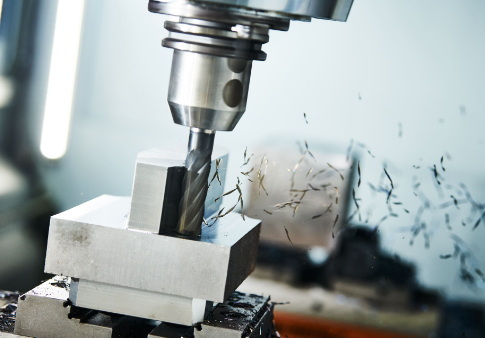
- Precision and repeatability: Automated tool paths produce consistent results across many parts, enabling tight tolerances and reliable batch quality.
- Complex geometries: Multi-axis capabilities enable intricate features that are difficult or impossible with manual machining, including undercuts and intricate internal channels.
- Surface finish and tolerances: High-quality finishes and tight tolerances are achievable with proper tooling, stable setups, and process optimization.
- Efficiency and scalability: Automated tool changes and online programming reduce downtime and enable large production runs, while post-processing simulations help validate programs before cutting.
- Upfront programming: Creating CAM programs requires skilled operators and appropriate software. Changes in part design necessitate reprogramming and revalidation.
- Tool wear and breakage: Cutting tools wear over time and can break if feed rates, speeds, or depths of cut are misused. Regular inspection and tool life management are essential.
- Material constraints: Some materials are difficult to machine due to hardness, work hardening, or poor machinability, requiring specialized tooling or alternative processes.
- Maintenance: Regular calibration, lubrication, and alignment checks are essential to maintain accuracy. Preventive maintenance plans extend machine life and uptime.
- Initial investment: CNC mills, especially multi-axis machines, can be expensive, requiring careful cost-benefit analysis. Lifecycle costs include tooling, software, maintenance, and energy consumption.
- Axes and configuration: Determine whether a 3-axis, 4-axis, or 5-axis machine best fits the geometry and production needs. More axes enable complex shapes but add cost and complexity.
- Work envelope: The travel distance on each axis should accommodate the largest workpiece plus tooling clearance. Consider future parts to avoid frequent replacements.
- Spindle power and speed: Material hardness and cutting tool requirements dictate suitable spindle horsepower and rpm range. High-strength alloys demand robust spindles with broad speed ranges.
- Tooling and spindle interface: Ensure compatibility with preferred tool sizes, holders, and automatic tool changers. Collet vs. endmill holders affect rigidity and repeatability.
- Control system and software: Compatibility with CAD/CAM software and ease of programming affect efficiency. User-friendly interfaces reduce setup times and training requirements.
- Precision requirements: Tolerances, surface finish, and repeatability influence machine selection. Consider environmental controls if ultra-tight tolerances are needed.
- Reliability and service: Consider vendor support, uptime, and availability of spare parts. Local service networks shorten downtime during maintenance or repairs.
- Automotive and aerospace: Prototyping, functional components, and precision fixtures. Precision is critical for safety and performance in these sectors.
- Medical devices: Implants, surgical guides, and diagnostic equipment housings. Biocompatibility, surface finish, and sterility considerations may guide tooling choices.
- Electronics: Precision enclosures, heat sinks, and connectors. Thermal management and EMI considerations influence design for manufacturability.
- Molds and tooling: Probes, inserts, and fixtures that require tight tolerances. Surface finish of mold cavities impacts part quality.
- Consumer products: Small components with high-detail features. Mass production requires reliable throughput and consistent quality.
- Material preparation: Ensure workpieces are clean, flat, and properly supported to prevent deflection during cutting. Deburring and edge preparation can improve fixture reliability.
- Fixturing: Use robust fixtures to minimize vibration and maintain accuracy through the cut. Custom fixtures may be necessary for unique geometries or batch consistency.
- Cutting tools: Select the right material (high-speed steel, carbide, coated carbide), geometry, and coating for the job. Tool selection affects finish, speed, and tool life.
- Speeds and feeds: Optimize spindle speed and feed rate to balance material removal, tool life, and heat generation. Use climb milling when appropriate to improve surface finish and reduce tool wear.
- Coolant/lubrication: Proper cooling reduces thermal distortion and prolongs tool life, especially for metals. Flood cooling is common; MQL and dry machining are viable for certain plastics or aluminum to reduce coolant costs and waste.
- Workholding and alignment: Verify part zero, datum surfaces, and alignment before starting long runs. Strong initial alignment reduces cumulative errors in multi-pass operations.
- Inspection: Post-process measurement using calipers, micrometers, CMMs, or surface finish tests ensures compliance with specifications. In-process checks can catch drift early and save scrap.
- Personal protective equipment: Safety glasses, hearing protection, and proper clothing are essential. Keep loose items away from rotating spindles.
- Machine guarding: Ensure access doors, interlocks, and emergency stops are functional. Proper guarding reduces the risk of entanglement and chip injuries.
- Training: Operators should be trained in setup, programming basics, tool changes, and safety procedures. Ongoing training helps adopt new software and tooling advances.
- Housekeeping: Keep the work area clean to prevent tool damage and tripping hazards. Cleanliness preserves accuracy and longevity of equipment.
- Error handling: Have procedures to stop the machine safely if a fault is detected and to document issues for maintenance. Clear escalation paths minimize downtime.
- AI-driven optimization: Algorithms can optimize toolpaths for speed, wear, and energy efficiency. Predictive models help schedule maintenance before failures occur.
- Hybrid machines: Combining milling with additive manufacturing enables complex assemblies and lightweight structures. Hybrid production lines expand design freedom and customization.
- Modular tooling: Quick-change tooling systems reduce setup times and improve versatility. Standardized interfaces support rapid reconfiguration for different jobs.
- Connectivity and data: Real-time monitoring and proactive maintenance improve uptime and product quality. Digital twins simulate performance and stress for better planning.
- Sustainable machining: Efficient spindle drives and regenerative systems reduce energy consumption. Material reuse and waste reduction align with environmental goals.
CNC milling machines have transformed modern manufacturing by enabling precise, repeatable material removal across a broad spectrum of materials and applications. Their multi-axis capabilities, automated tool handling, and sophisticated control systems empower rapid prototyping and scalable production while maintaining stringent quality standards. Although they demand skilled programming, careful tooling, and rigorous maintenance, the return in accuracy, efficiency, and flexibility makes CNC milling an indispensable cornerstone of contemporary engineering and fabrication.
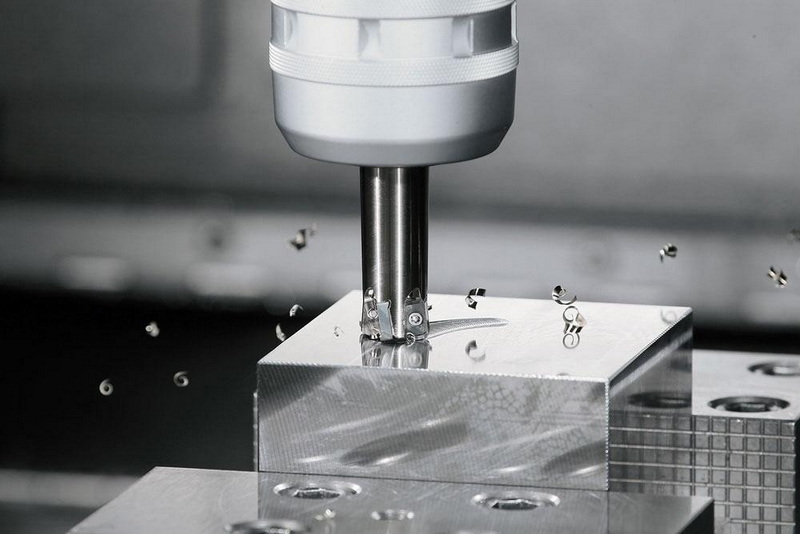
A1. A CNC milling machine uses computer programming to control movements and operations, enabling precise, repeatable results and automation, while a manual milling machine relies on an operator to guide movements, requiring more manual effort and producing variable results.
A2. Softer metals like aluminum and certain plastics are generally easier to mill, with lower tool wear and simpler chip formation compared to harder materials such as hardened steel or titanium.
A3. The choice depends on part geometry. 3-axis mills handle simple pockets and contours, while 4-axis and 5-axis mills enable complex features, intricate profiles, and reduced part reorientation for higher efficiency.
A4. Tool life is influenced by feed rate, spindle speed, cutting depth, tool material, coating, material hardness, and coolant effectiveness. Proper optimization and coolant management extend tool life.
A5. Verify part zero and datums, install correct tooling and holders, confirm tool offsets, set spindle speed and feeds, secure the workpiece, enable coolant, run a dry test, and perform post-process inspection.


