From idea to market-ready product, our NPI solutions make every stage easier, faster. Discover How We Help

Views: 222 Author: Tomorrow Publish Time: 2025-12-22 Origin: Site
Content Menu
● What Is a CNC Milling Machine?
● How CNC Milling Machines Work
● Main Applications of CNC Milling Machines
>> 1. Rapid Prototyping and Product Development
>> 2. Precision Engineering and Complex Components
>> 4. Custom Manufacturing and Low-Volume Production
>> 5. Electronics and Micro-Components
● Types of CNC Milling Machines
● Advantages of CNC Milling Machines
● Industries That Depend on CNC Milling
>> Automotive and Transportation
>> Consumer Goods and Art Design
● Emerging Technologies in CNC Milling
● Maintenance and Machine Longevity
● FAQ
>> 1. What materials can CNC milling machines process?
>> 2. How accurate are CNC milling machines?
>> 3. What is the difference between CNC turning and milling?
>> 4. Can CNC milling be used for mass production?
>> 5. What software is commonly used in CNC milling?
Computer Numerical Control (CNC) technology has transformed the global manufacturing landscape by combining precision, efficiency, and automation. Among the many tools that use CNC technology, the CNC milling machine is perhaps the most versatile and widely applied. It serves as the backbone of numerous industries, producing everything from high-performance aerospace components to delicate medical instruments.
This article explores what CNC milling machines are used for, their operation, types, benefits, and applications across different industries. Whether you're a manufacturing professional or new to industrial machinery, this comprehensive guide will help you understand why CNC milling remains indispensable in modern production.
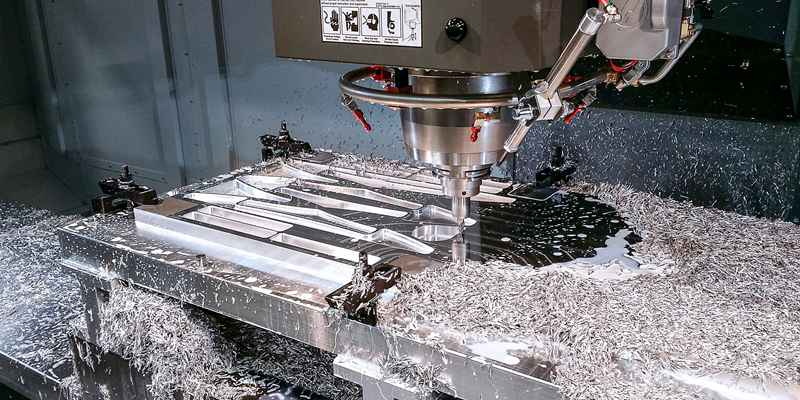
A CNC milling machine is a highly engineered device that uses computer programming to remove material from a solid block (known as a workpiece) and form it into a precise shape or part. It uses rotary cutting tools that spin at high speeds while the workpiece remains stationary or moves along defined axes under computer control.
Milling operations can produce extremely accurate and complex shapes, including holes, pockets, slots, threads, and intricate 3D surfaces. CNC milling machines outperform traditional manual mills because they maintain consistency across repeated jobs, execute tasks faster, and achieve dimensional tolerances down to microns.
Unlike manual machinists who must control handwheels or levers, CNC operators upload pre-written programs—known as G-codes and M-codes—which dictate toolpaths, spindle speeds, and cutting depths. As a result, CNC milling enables efficient production with reduced labor and fewer mistakes.
The workflow of CNC milling follows a systematic process to ensure accuracy:
1. Design and Programming – Engineers design a digital model using CAD (Computer-Aided Design) software. Then CAM (Computer-Aided Manufacturing) software translates the design into toolpaths and generates cutting commands.
2. Machine Setup – The machined material—typically metal, plastic, or composite—is clamped securely on the milling table. Tools are installed and calibrated according to the part's geometry.
3. Machining Execution – The CNC machine reads the G-code instructions and precisely maneuvers the cutting tools along multiple axes (X, Y, Z, and occasionally A and B for advanced setups).
4. Monitoring and Cooling – Coolant systems prevent overheating while sensors track spindle performance and cutting pressure.
5. Inspection and Quality Control – After machining, measuring instruments such as micrometers, calipers, and coordinate measuring machines (CMMs) verify dimensional accuracy.
The integration of automation and feedback control ensures predictable outcomes, faster turnaround, and continuous production without manual adjustments.
CNC milling plays an essential role in the prototyping phase of product development. Engineers can quickly transform design concepts into tangible, functional models, allowing them to test form, fit, and function before mass production begins.
For example, in the automotive industry, design teams use CNC milling to create engine prototypes, brackets, or housing components. These prototypes reveal potential design flaws or assembly issues early, saving both time and resources in the long run.
High-precision industries depend heavily on CNC milling machines to produce components that must meet exceptionally tight tolerances. Aerospace manufacturers rely on 5-axis CNC machines to carve turbine blades with aerodynamic profiles measured within microns of accuracy. Similarly, the defense sector uses CNC milling for firearm parts and missile components that must perform flawlessly under extreme conditions.
By using advanced materials such as titanium and nickel alloys, engineers can achieve a perfect balance between strength, weight, and durability.
CNC milling machines are instrumental in creating molds and dies used for injection molding, die casting, and metal stamping. These molds often require intricate details and smooth finishes to ensure precise replication during mass production. Multi-axis milling enables mold makers to sculpt detailed cavities and achieve mirror-like surface finishes without extensive manual polishing.
This precision shortens production cycles and improves part consistency in industries ranging from consumer electronics to automotive interior components.
Sometimes, manufacturers need bespoke solutions or small-scale production runs—something not economically viable with mass-production molds. CNC milling fills this gap perfectly. Machine shops can reprogram existing machines quickly to produce different designs, reducing lead times and setup costs.
For instance, the medical device industry relies on CNC milling to fabricate patient-specific prosthetics, implants, and surgical guides with unique geometries. This customization helps improve patient outcomes while adhering to stringent safety standards.
The electronics industry increasingly depends on CNC micromilling for miniature components. Milling machines with micro end-mills can create circuit housings, heat sinks, and complex metal contacts that power high-performance consumer and industrial electronics. Micro-scale precision allows manufacturers to design smaller yet more efficient devices.
CNC milling machines come in varying configurations to suit diverse manufacturing requirements:
- Vertical Milling Machines: The most common type, featuring a vertically oriented spindle. Ideal for general-purpose and surface finishing operations.
- Horizontal Milling Machines: Feature a horizontally oriented spindle, allowing heavier and deeper cutting operations; best for large metal blocks.
- 5-Axis Milling Machines: Enable rotation and movement along five axes simultaneously, offering flexibility in machining curved surfaces and intricate parts.
- Gantry (Bridge) Mills: Built for large-scale projects such as ship molds, aviation structures, or vehicle frames.
- Turret Mills: Compact models often used by small workshops that require flexibility for tool changes and light fabrication tasks.
Each type offers distinct advantages, depending on project scale, material type, and part complexity.
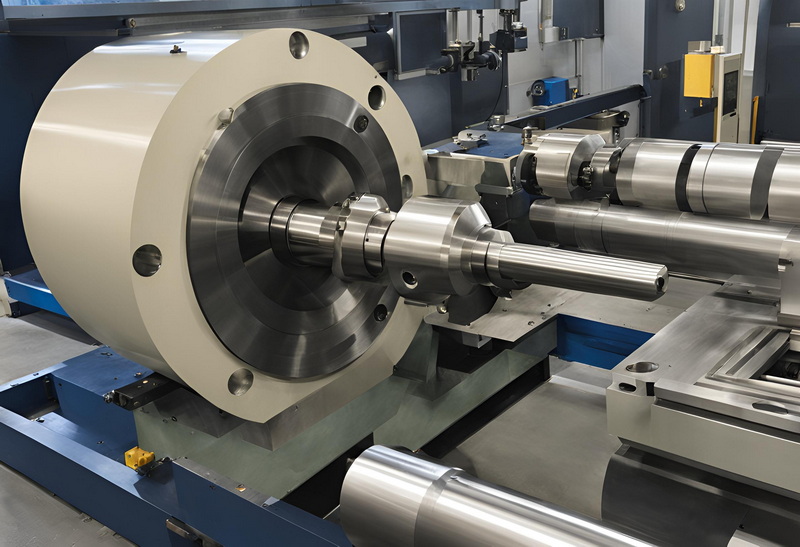
The dominance of CNC milling stems from its numerous benefits:
- Unmatched Precision: CNC systems maintain tolerances within micrometers, crucial for parts requiring perfect alignment.
- Consistency: Once programmed, a CNC machine repeats identical operations without deviation, ideal for batch production.
- Efficiency: High spindle speeds, fast tool changes, and reduced manual intervention accelerate throughput.
- Material Versatility: From aluminum to superalloys, CNC milling can process virtually any machinable material.
- Reduced Waste: Optimal toolpath programming minimizes material removal and scrap rates.
- Labor Savings: Automation allows fewer operators to manage multiple machines simultaneously.
Together, these strengths deliver both economic and operational efficiency for global manufacturers.
CNC milling fabricates components that endure extreme stress, such as landing gears, engine parts, and airframe structures. The tight tolerances and high-quality finishes required in aerospace manufacturing are achievable almost exclusively with CNC milling technology.
Vehicle engines, brake systems, transmission housings, and chassis brackets rely on precisely machined parts. CNC milling ensures these parts fit seamlessly during assembly and perform reliably through their lifespan.
Medical manufacturers use CNC milling to create precision implants, orthopedic tools, and dental prosthetics. The machines can process biocompatible materials like titanium and PEEK with accuracy vital to patient safety.
From laptop casings and circuit boards to turbine blades and oil drilling components, CNC milling contributes to producing durable and efficient hardware across electronics and energy sectors.
Even in creative industries, CNC milling machines are valued for producing artistic sculptures, furniture parts, and luxury product prototypes with smooth curves and polished finishes.
Recent innovations have expanded the capabilities of traditional CNC machines. Hybrid milling machines now integrate additive manufacturing techniques—such as 3D printing with metal powders—allowing material to be added or removed during production. Automation with robotic arms facilitates continuous, unattended machining, and AI-based predictive maintenance helps detect tool wear or vibration anomalies before downtime occurs.
Furthermore, smart CNC systems connected via Industrial Internet of Things (IIoT) platforms collect real-time performance data, helping engineers optimize production in data-driven environments.
To ensure consistent performance, CNC milling machines require regular maintenance:
- Lubrication: Keeps moving parts friction-free.
- Tool Inspection: Prevents wear-induced inaccuracies.
- Coolant System Maintenance: Regulates temperature and prevents material overheating.
- Software and Firmware Updates: Maintain optimal control and compatibility with CAD/CAM programs.
- Precision Calibration: Ensures alignment of spindles and axes remains within required tolerances.
With proper care, most industrial-grade CNC mills can maintain accuracy and reliability for 10–15 years or more, making them valuable long-term investments.
Looking ahead, CNC milling will continue to evolve with greater connectivity, autonomy, and intelligence. The integration of artificial intelligence, digital twins, and adaptive control systems will allow machines to self-correct and optimize cutting in real time. Sustainable machining using eco-friendly coolants and energy-efficient drives will also become industry standards.
As manufacturing moves toward Industry 4.0, CNC milling will likely serve as a central technology that merges physical machining with digital innovation, setting the foundation for smarter factories of the future.
CNC milling machines are more than just production tools—they represent the pinnacle of precision engineering and automation. By merging advanced software control with mechanical accuracy, CNC milling enables manufacturers to achieve unmatched consistency, speed, and complexity across countless sectors. From intricate aerospace parts to custom medical implants, these machines make modern innovation possible on a microscopic scale.
As technology continues to evolve, CNC milling remains vital not only for manufacturing efficiency but also for advancing human innovation in design, engineering, and industry.
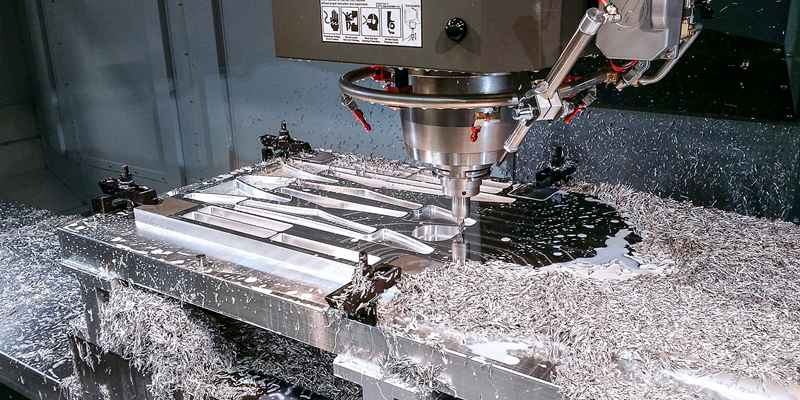
CNC milling machines handle metals such as aluminum, brass, steel, titanium, and copper, as well as plastics like nylon, Delrin, and polycarbonate. Some models even machine ceramics and composites for specialized applications.
Modern CNC milling machines can achieve accuracies within ±0.005 mm, with high-end models reaching sub-micron precision. Accuracy depends on tool condition, calibration, and machine rigidity.
CNC turning rotates the workpiece while a stationary cutting tool removes material, usually for cylindrical shapes. CNC milling keeps the workpiece fixed while rotary cutters move to carve complex geometries.
Yes. Once programmed, CNC milling machines can repeat operations with high precision and minimal error, making them ideal for both low-volume prototyping and large-scale production.
Designers use CAD software such as SolidWorks, AutoCAD, or Fusion 360, while CAM software like Mastercam or Siemens NX generates G-codes that guide the machine during operation.


