From idea to market-ready product, our NPI solutions make every stage easier, faster. Discover How We Help

Views: 222 Author: Tomorrow Publish Time: 2025-12-22 Origin: Site


Content Menu
● The Role of IoT in Modern CNC Milling
● Key Benefits of IoT Integration
● How IoT Transforms CNC Milling Operations
● Real-Time Monitoring and Feedback
● Predictive and Preventive Maintenance
● AI and Machine Learning Integration
● Essential Components of IoT-Enabled CNC Milling Systems
● Advantages of Adopting IoT in CNC Milling
● Challenges and Practical Barriers
● Real-World Examples and Applications
● The Future of CNC Milling in the IoT Era
● Business Impact and Economic Value
● FAQ
>> 1. What does IoT mean in CNC milling?
>> 2. How does IoT improve CNC machining accuracy?
>> 3. What industries use IoT-enabled CNC milling?
>> 4. Are IoT-integrated CNC machines expensive to implement?
>> 5. What future advancements can we expect from IoT in CNC?
The growing integration of the Internet of Things (IoT) into industrial manufacturing has transformed how machines operate and communicate. Among the many technologies influenced by this shift, Computer Numerical Control (CNC) milling stands out as one of the most advanced and data-driven processes. When IoT connectivity is integrated into CNC milling, it revolutionizes production — turning traditional machining into a smarter, more efficient, and predictive operation.
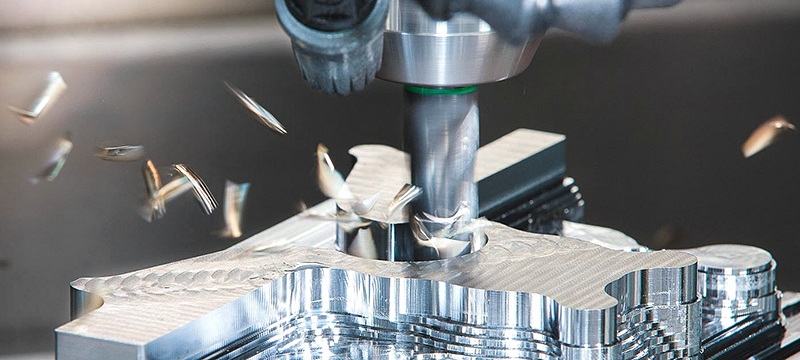
CNC milling is a subtractive manufacturing method in which a computer-controlled machine removes material from a solid workpiece to produce complex parts with precise dimensions. The machine operates through programmed instructions, often generated by CAD (Computer-Aided Design) and CAM (Computer-Aided Manufacturing) software. These programs define the cutting paths, spindle speeds, and feed rates, ensuring accuracy at every stage of production.
In a traditional workshop, a CNC milling machine relies heavily on operator supervision and manual inspection. Operators must monitor cutting tool wear, temperature, and vibration while ensuring component quality. However, the integration of IoT eliminates much of this uncertainty by automating monitoring, recording, and analysis. Machines become self-aware in a digital sense, allowing engineers to view detailed performance data across global facilities in real time.
The Internet of Things connects CNC machines to networks that gather and share operational data. Each machine becomes part of a larger ecosystem that exchanges information continuously. IoT sensors installed inside the machine monitor a wide range of parameters — including spindle torque, vibration levels, cutting speed, and coolant flow rates. This data travels securely through communication protocols to cloud platforms, where advanced algorithms analyze the information.
- Predictive Maintenance: IoT prevents production stoppages by detecting early signs of tool wear or motor failure.
- Enhanced Productivity: Data-driven optimization ensures the machine operates under ideal cutting conditions.
- Improved Accuracy: Sensors identify micron-level deviations, helping maintain consistent tolerance levels.
- Remote Connectivity: Engineers can check system dashboards from any location via secure cloud access.
- Resource Efficiency: IoT insights help reduce material waste and energy consumption.
By converting data into real-time intelligence, IoT transforms CNC milling from a reactive process into a proactive and adaptive one.
IoT acts as the digital nervous system of modern machining environments. Its ability to interconnect devices transforms how data flows between machines, human operators, and enterprise systems.
With IoT sensors embedded in CNC machines, manufacturers can continuously monitor spindle behavior, temperature levels, lubrication, and power usage. Dashboards visualize live data, enabling operators to detect potential issues immediately. When vibration or cutting force exceeds thresholds, alerts notify operators long before a major fault occurs. This proactive response prevents defective parts and costly downtime.
One of the most powerful IoT applications in CNC milling is predictive maintenance. Algorithms analyze sensor data to identify unusual vibration frequencies or thermal spikes, which often signal mechanical degradation. Maintenance scheduling thus shifts from periodic to condition-based — ensuring parts are replaced only when truly necessary. The result is a significant reduction in unplanned downtime, maintenance costs, and tool replacement frequency.
IoT data becomes even more valuable when paired with Machine Learning (ML). Analyzing historical datasets helps the system learn patterns of inefficiency or imminent wear. The CNC machine's parameters can be continuously refined using AI-driven adjustments, which fine-tune cutting speeds, optimize tool paths, and automatically compensate for minor alignment errors. Over time, this self-optimization enhances precision and output quality.
Digital twins — virtual replicas of physical CNC machines — are made possible through IoT data. These twins simulate operations in real time, predicting outcomes before actual manufacturing occurs. Engineers can use digital twins to test setups, tool choices, and parameters virtually, minimizing waste and accelerating prototype development. This reduces both labor costs and development cycles.
An IoT-ready CNC milling setup comprises multiple integrated layers that work seamlessly to enable data acquisition, transfer, and interpretation.
1. Sensors and Actuators: These embedded devices capture information about cutting parameters, environmental temperature, and machine vibrations.
2. Edge Computing Modules: These process real-time data locally, minimizing bandwidth use and latency.
3. Cloud-Based Infrastructure: Stores massive volumes of data and enables deep learning analysis.
4. Data Analytics Platforms: Convert raw sensor data into actionable insights using dashboards and trend visualizations.
5. Communication Networks: Use secure protocols like MQTT, OPC-UA, and Modbus to enable uninterrupted and encrypted machine communication.
6. Human-Machine Interfaces (HMI): Allow operators to visualize, adjust, and control parameters directly through touch panels or mobile apps.
Each element contributes to forming a complete cyber-physical ecosystem where intelligent machines interact dynamically with their human supervisors.
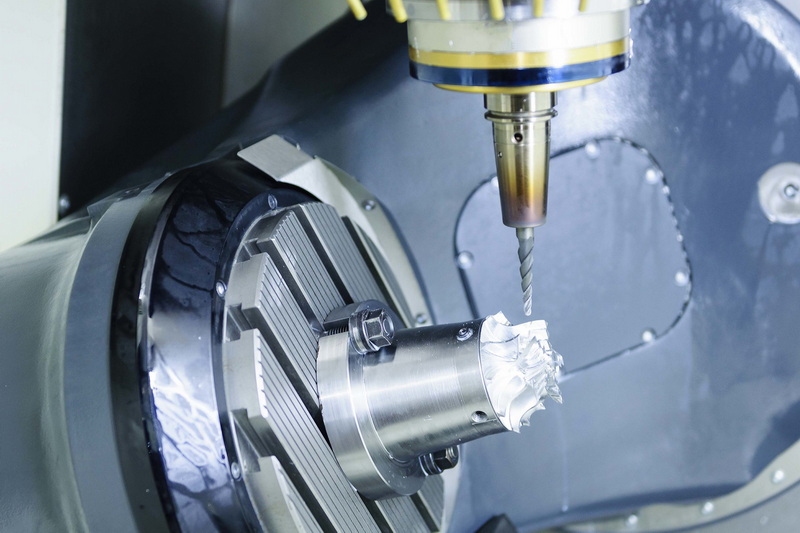
CNC milling empowered by IoT offers unparalleled precision, operational transparency, and sustainability. Below are some critical advantages that companies gain from adoption:
- Operational Consistency: Continuous monitoring ensures that each machining cycle remains identical to the last, promoting repeatable accuracy.
- Data-Driven Decision-Making: Historical performance data supports technical improvements and resource allocation.
- Cost Efficiency: Predictive maintenance and energy tracking lead to reduced operational expenses.
- Enhanced Worker Safety: Automated systems limit human involvement in hazardous monitoring tasks.
- Sustainability: IoT systems help manufacturers reduce waste, optimize energy consumption, and improve eco-efficiency ratings.
Moreover, this integration gives manufacturers a competitive edge by enabling quick adaptation to market demands and tighter quality control standards.
Despite its remarkable promise, IoT adoption in CNC milling is not without difficulties. Understanding these barriers is crucial to planning a successful implementation.
- Cybersecurity Risks: The interconnectivity that IoT brings also introduces potential access points for cyber intrusions. Implementing robust firewalls, encryption, and authentication systems is vital.
- Integration with Legacy Equipment: Many older CNC machines lack IoT compatibility. Upgrading them may require retrofitting, specialized sensors, or replacement with new models.
- Complex Data Management: The sheer amount of data generated daily demands secure cloud storage and accurate filtering to avoid information overload.
- Skill Gaps: IoT systems require knowledge of data analytics, cybersecurity, and networking that traditional operators might lack.
- Initial Investment: While IoT cuts long-term costs, the setup — including sensors, software licenses, and training — can be financially demanding initially.
Successfully overcoming these challenges requires phased deployment, workforce training, and strategic investments in digital infrastructure.
Many leading manufacturers have integrated IoT into their CNC production lines. In the aerospace sector, IoT sensors guarantee sub-millimeter tolerances for turbine blades, where dimensional accuracy is critical. In automotive manufacturing, IoT tracks tool health, production speed, and equipment status to optimize assembly-line efficiency. Medical device producers rely on IoT-enabled CNC milling for implant manufacturing, ensuring sterility and precise geometric control. Even in electronics manufacturing, micro-CNC milling benefits from IoT-driven precision and error detection during circuit prototyping.
Each industry faces unique requirements, but they share one common advantage — continuous performance optimization enabled by IoT connectivity.
Looking ahead, the IoT revolution will expand into more advanced concepts such as edge AI, self-learning machines, and decentralized smart factories. Future CNC milling systems will collaborate autonomously, sharing real-time operational feedback across networks. In this setting, production lines will no longer be static – they will dynamically adjust to workload, material type, and customer specifications.
Edge computing will reduce latency by handling data processing closer to the machine. Artificial intelligence will make real-time decisions about cutting paths or tool replacements. Blockchain technology might even secure data exchanges between suppliers, factories, and clients, ensuring digital transparency throughout the supply chain. As these developments mature, IoT-enabled CNC milling will continue to drive Industry 4.0 forward into a future of intelligent, adaptive, sustainable manufacturing.
The economic implications of IoT-driven CNC milling are substantial. According to global trends, smart manufacturing will reduce unforeseen machine breakdowns by over 50%, cut maintenance costs by up to 40%, and increase equipment utilization by approximately 25%. Manufacturers adopting connected systems not only produce more efficiently but also gain valuable insights into customer demand and product lifecycle management. This creates long-term sustainability while maintaining market competitiveness.
Furthermore, IoT integration supports data democratization — giving all departments, from engineering to sales, access to operational insights. This transparency accelerates decision-making and aligns production goals with business objectives.
CNC milling in IoT represents the fusion of advanced mechanical precision and digital intelligence. By combining real-time monitoring, predictive analytics, and cloud-based data management, IoT brings transformative efficiency to traditional machining. It allows manufacturers to prevent failures before they occur, improve accuracy, and substantially reduce operating costs.
Despite challenges like cybersecurity and upfront expenses, the long-term rewards — improved productivity, sustainability, and product quality — are undeniable. As IoT continues to evolve alongside artificial intelligence and edge computing, CNC milling will remain at the forefront of smart manufacturing, defining the future of precision engineering in an interconnected world.
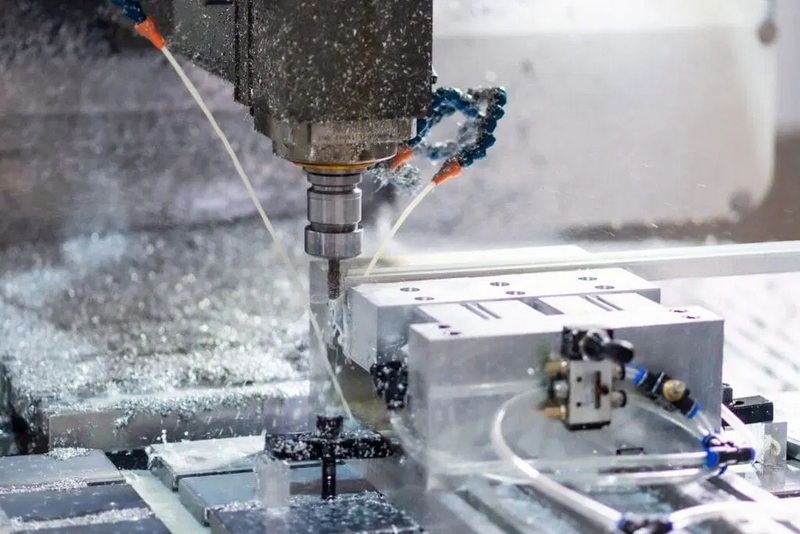
IoT in CNC milling refers to integrating sensors, data networks, and cloud computing to monitor, collect, and analyze machining operations in real time. The goal is to enhance performance, predictive maintenance, and production quality.
IoT sensors detect vibration, temperature, and tool wear, providing instant feedback to the system. These live adjustments maintain cutting precision and eliminate deviations that traditionally require manual correction.
Industries such as aerospace, automotive, medical, and electronics manufacturing use IoT-integrated CNC milling for high-precision parts production, real-time monitoring, and strict quality assurance.
The initial investment can be substantial due to hardware and software costs, but the long-term savings from reduced downtime, energy optimization, and predictive maintenance make it a cost-efficient technology.
Future innovations include adaptive AI-based machining, blockchain-secured data exchange, autonomous machine communication, and digital twins for real-time virtual simulation of production processes.


