From idea to market-ready product, our NPI solutions make every stage easier, faster. Discover How We Help


Content Menu
● Introduction to CNC Machining
>> Key Steps in the CNC Machining Process
>> CNC Lathes
>> CNC Routers
>> CNC EDM (Electrical Discharge Machining)
● Materials Used in CNC Machining
>> High Precision and Repeatability
>> Flexibility
>> Cost-Effectiveness for Medium to High Volumes
>> Compatibility with Complex Designs
● Applications of CNC Machining
● CNC Machining vs. 3D Printing
● CNC Machining Trends and Technology Developments
>> Integration with AI and IoT
>> Multi-Axis and Hybrid Machines
>> Cloud-Based Programming and Simulation
● Choosing the Right CNC Machining Partner
● FAQ
>> 1. What does CNC stand for?
>> 2. What materials can be machined using CNC technology?
>> 3. What is the difference between CNC milling and turning?
>> 4. Is CNC machining suitable for prototyping?
>> 5. How accurate is CNC machining?
CNC machining is a manufacturing process that uses Computer Numerical Control (CNC) to manage machine tools through coded instructions. This technology has transformed traditional machining by offering exceptional accuracy, consistency, and efficiency in producing complex parts. It is widely used in industries such as aerospace, automotive, electronics, medical devices, and consumer products.

CNC machining replaces manual operation with computer control, ensuring higher precision and repeatability. A digital design created using CAD (Computer-Aided Design) software is converted into a CNC program using CAM (Computer-Aided Manufacturing). This program instructs the machine on how to move, cut, and shape the material.
The process has a long history, with early automation experiments dating back to the 1940s. Today, CNC technology is an essential element of modern manufacturing and an integral part of smart factories and Industry 4.0 systems.
CNC machining begins with a virtual model. Engineers design a 3D CAD file representing the final part. Then, the design is translated into G-code—a language that directs machine movements, tool paths, spindle speed, feed rate, and cutting depth.
Once programmed, the machine reads the instructions to automatically cut and shape the material according to exact specifications. CNC machines can perform multiple operations in a single setup, including drilling, milling, turning, and grinding.
1. Design Creation: The part design is prepared in CAD software.
2. CNC Programming: The CAD design is converted into G-code.
3. Machine Setup: Operators mount the workpiece and select the appropriate tool.
4. Machining: The CNC machine executes commands automatically.
5. Inspection: The finished part undergoes measurement and quality checks.
Each step requires accuracy because even small errors in design or setup can affect final quality.
CNC technology supports many machine types, each designed for specific tasks and materials.
CNC milling uses rotating tools to remove material from the workpiece. Mills can operate on multiple axes—commonly three, four, or five—allowing designers to create complex geometries with high dimensional precision.
CNC lathes hold the workpiece and rotate it against a stationary cutting tool. They are ideal for cylindrical or symmetrical parts such as shafts, rods, and rings.
Routers work similarly to mills but often handle softer materials such as wood, plastics, and aluminum. They are widely used in signage, furniture, and prototype industries.
These machines use a high-temperature plasma torch to cut metal sheets. They provide fast and clean cutting, suitable for heavy-duty metal fabrication.
Laser cutters focus a precise light beam on the workpiece, slicing through metal or nonmetal materials with extreme accuracy. They are useful for engraving, marking, and thin sheet cutting.
EDM uses electrical discharges to erode the material. It is ideal for complex shapes and hard metals that are difficult to machine through conventional methods.
CNC machining is compatible with a wide variety of materials, making it adaptable across industries. Commonly used materials include:
- Metals: Aluminum, steel, stainless steel, brass, copper, titanium, and magnesium.
- Plastics: ABS, PEEK, nylon, acrylic, and polycarbonate.
- Composites: Carbon fiber and fiberglass-reinforced materials.
- Others: Wood and ceramics in specialized cases.
Each material has unique machining properties, influencing the choice of cutting tools, spindle speed, and coolant application.
CNC machining offers several benefits over manual and conventional machining.
CNC machines can maintain tight tolerances within micrometers, ensuring consistent production quality across thousands of identical parts.
Minimal human intervention reduces operator fatigue and error. Once programmed, machines can run 24/7 with minimal supervision.
Design modifications are easy to apply via software, allowing fast prototyping and customization without major retooling.
Although the initial setup cost may be high, CNC machining becomes cost-efficient for mid- to large-scale production due to time savings and reduced waste.
Multi-axis systems allow CNC machines to create intricate shapes and internal features impossible to achieve manually.
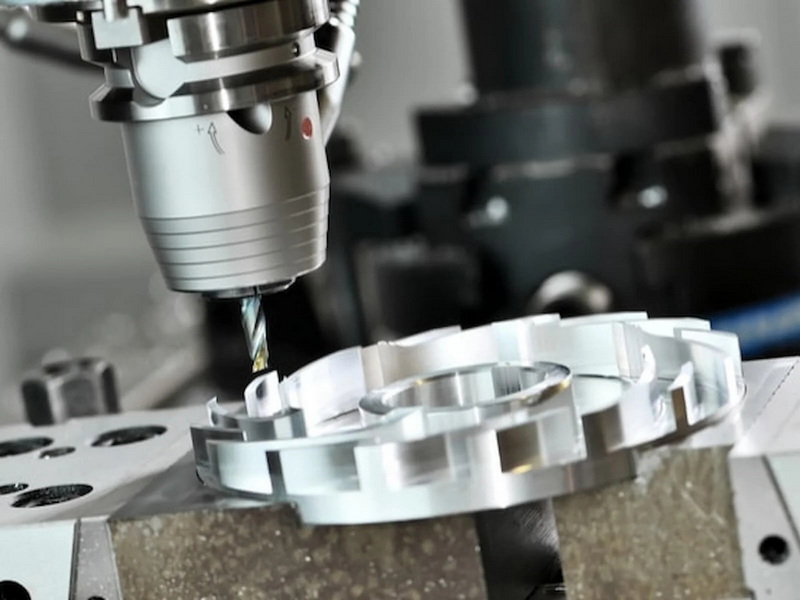
CNC machining supports many industries because of its versatility and reliability.
1. Aerospace: For producing turbine blades, engine components, and structural parts that demand tight tolerances and heat resistance.
2. Automotive: For manufacturing engine blocks, brake components, and gear housings with high mechanical strength.
3. Electronics: Precision housings, connectors, and frames for devices and semiconductors.
4. Medical: Surgical instruments, orthopedic implants, and dental devices made from biocompatible materials.
5. Energy: CNC is used in the fabrication of components for oil, gas, and renewable energy systems.
CNC machining ensures consistent quality and traceability, both of which are mandatory in these regulated industries.
CNC machining and 3D printing both create precise components but differ fundamentally.
| Feature | CNC Machining | 3D Printing |
|---|---|---|
| Process | Subtractive (removes material) | Additive (adds material) |
| Materials | Metals, plastics, composites | Plastics, resins, some metals |
| Accuracy | Extremely high | Moderate to high |
| Surface finish | Smooth and precise | Often requires post-processing |
| Best for | Functional parts, mass production | Prototyping, lightweight designs |
In many cases, manufacturers combine both technologies: CNC for final finishing and tolerance control, and 3D printing for rapid prototyping.
The field of CNC machining continues to evolve with advancements in digital manufacturing and automation.
Modern CNC systems can connect to networks and sensors that monitor tool wear, vibration, and temperature. Predictive maintenance and adaptive control improve uptime and productivity.
5-axis and 6-axis machines enable complex contouring. Hybrid systems combine CNC machining with additive manufacturing, offering a new level of design freedom.
Engineers can now program and simulate CNC operations remotely, optimizing tool paths and reducing material waste before machining begins.
New developments in coolant recycling, energy efficiency, and minimal material waste support greener manufacturing practices.
Despite significant benefits, CNC machining also faces challenges that impact cost and scalability.
- High Setup Costs: Initial equipment and programming require investment.
- Skilled Workforce: Experts are needed for programming, maintenance, and quality inspection.
- Material Waste: Being a subtractive process, CNC removes material that cannot always be recycled efficiently.
- Tool Wear: Machining hard materials leads to faster tool degradation.
Addressing these challenges through training, automation, and material innovation is essential for sustainable production.
When selecting a CNC machining service provider, consider the following factors:
1. Capabilities: Multi-axis machining, precision tolerance handling, and finishing services.
2. Experience: Proven record in your industry, including ISO certification and quality compliance.
3. Material Expertise: Ability to handle various materials with correct tool configuration.
4. Lead Time: Efficient supply chain and prompt delivery.
5. Customization: Capability to fulfill OEM/ODM orders and one-stop solutions from prototyping to mass production.
A reliable partner ensures consistent quality, fast turnaround, and technical support.
CNC machining is a cornerstone technology in modern manufacturing. It offers unmatched precision, flexibility, and automation for producing complex components across industries such as aerospace, medical, automotive, and electronics. As digital integration evolves, CNC machining continues to play a vital role in achieving smarter, more sustainable, and more connected production systems.
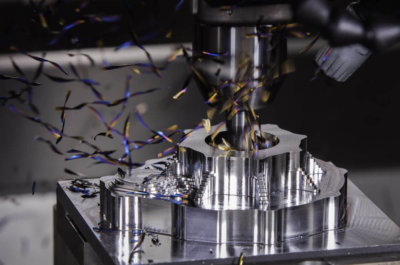
CNC stands for Computer Numerical Control. It refers to the computer-based automation of machine tools through programmed commands.
CNC machines can process metals like aluminum and steel, plastics such as ABS and PEEK, as well as composites and other specialized materials.
CNC milling uses rotating tools to cut a stationary workpiece, whereas CNC turning rotates the workpiece against a fixed cutting tool.
Yes. CNC machining allows rapid prototyping with precise dimensions, making it ideal for testing designs before full production.
CNC machining can achieve tolerances within ±0.005 mm or better, depending on machine quality, material, and process parameters.


