From idea to market-ready product, our NPI solutions make every stage easier, faster. Discover How We Help

Views: 222 Author: Tomorrow Publish Time: 2025-12-27 Origin: Site


Content Menu
● The Process of CNC Machining
● Materials Used in CNC Machining
● Tooling and Cutting Strategies
● CNC Machining vs. Traditional Manufacturing
● Applications of CNC Machining
● Future Trends in CNC Manufacturing
● FAQ
>> 1. What does CNC stand for?
>> 2. What industries benefit most from CNC machining?
>> 3. What materials can be processed with CNC machines?
>> 4. How does CNC machining differ from 3D printing?
>> 5. Is CNC machining suitable for both prototypes and mass production?
CNC machining and manufacturing represent one of the most transformative advancements in modern industrial production. The acronym CNC, which stands for Computer Numerical Control, describes a technology that uses programmed software to direct the motion and function of machines. By automating precision tasks that were once done manually, CNC machining enables manufacturers to create components with remarkable accuracy, consistency, and speed.
In contemporary manufacturing, CNC machining is indispensable. From aerospace turbine blades to surgical instruments, industries worldwide rely on CNC processes to maintain quality, reduce waste, and improve productivity. This article provides an in-depth look at CNC machining and manufacturing—exploring the principles behind it, the machinery and materials used, the industrial applications, and the technological innovations shaping its future.
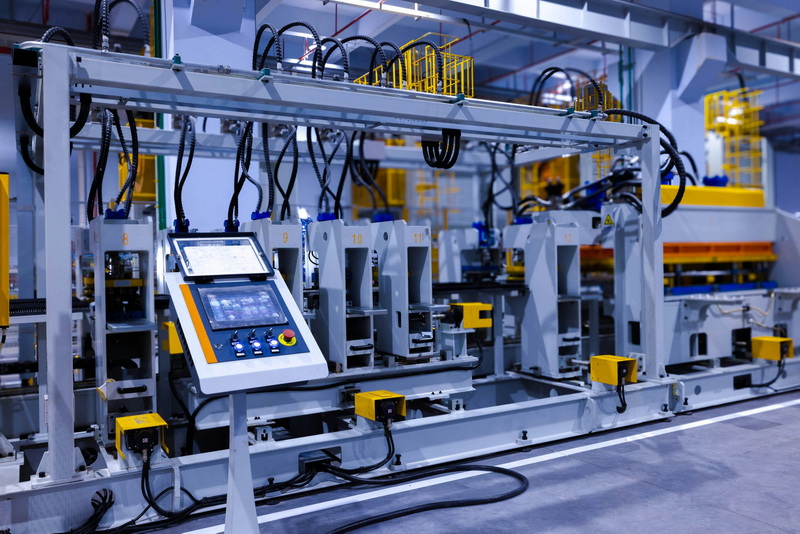
CNC machining is a subtractive manufacturing method, meaning it works by removing material from a solid block—known as a workpiece—to form the desired shape. Each movement of the cutting tools is precisely programmed using digital instructions, allowing parts to be produced with exceptional precision.
In a CNC process, the computer reads command codes that tell the machine how to move the cutting head, what speed to spin at, and where to position each axis. This process eliminates guesswork and human error, ensuring every part meets exact design specifications.
Unlike conventional machining, which depends on hand-guided tools, CNC machining operates automatically once the machine has been programmed. Engineers can produce intricate geometries and smooth surface finishes that would be nearly impossible to achieve manually.
CNC machining follows a carefully structured series of steps that ensure precision from design to final inspection:
1. Designing the CAD Model
Engineers start by creating a 3D digital model using Computer-Aided Design (CAD) software. This model represents the exact dimensions and features of the part to be manufactured.
2. Converting to CAM Program
After the design stage, the CAD file is exported to a Computer-Aided Manufacturing (CAM) program, which generates the G-code—a language the CNC machine understands. The G-code dictates tool paths, cutting speeds, and positioning.
3. Setting Up the Machine
The workpiece is mounted onto the machine bed, and the correct tooling is loaded. Operators calibrate the machine axes and set the origin point to ensure precision alignment.
4. Machining the Part
The CNC machine executes the program automatically. Depending on the complexity, multiple operations such as milling, drilling, or turning may occur in a single session.
5. Post-Processing
After machining, the parts may require finishing operations like deburring, polishing, or anodizing. A quality inspection ensures dimensional tolerance accuracy and surface finish consistency.
Through each stage, digital control ensures that every iteration of the part is identical—making CNC machining ideal for mass production as well as high-precision prototyping.
CNC technology encompasses a range of equipment types, each designed for specific shapes, materials, and applications:
- CNC Milling Machines: Equipped with rotating multi-point cutting tools that move along multiple axes to remove material from the workpiece. They're ideal for producing complex geometries.
- CNC Lathes: These machines rotate the workpiece against stationary tools, forming cylindrical parts like shafts or rods with exceptional symmetry.
- CNC Routers: Commonly used for cutting wood, foam, and plastic, routers operate at high speeds and deliver clean cuts for large-scale designs.
- CNC Plasma Cutters: Utilize a high-temperature plasma arc to slice through conductive metals efficiently.
- CNC Electrical Discharge Machines (EDM): Form complex shapes by eroding material through controlled electrical discharges, suitable for hard metals used in molds and dies.
- CNC Laser Cutters: Focus a powerful laser beam to achieve fine detail on thin metals, plastics, or composites with minimal edge burrs.
- 5-Axis CNC Machines: Provide motion along five axes simultaneously, allowing extremely intricate shapes and reducing the need for multiple setups.
Each type of CNC machine plays a unique role in industrial manufacturing, allowing companies to meet diverse design challenges with a single technological ecosystem.
One of CNC machining's greatest advantages is its material versatility. Depending on performance requirements, manufacturers can select from a wide range of materials:
- Metals: CNC machines commonly work with aluminum (for lightness and corrosion resistance), stainless steel (for strength), titanium (for aerospace and medical use), and brass (for excellent machinability).
- Plastics: Including ABS, polycarbonate, PEEK, nylon, and acrylic. These are often used for lightweight components or electrical insulation.
- Composites: Carbon-fiber reinforced polymers combine stiffness with low weight, ideal for automotive and aerospace parts.
- Foams and Woods: Frequently used for prototypes, molds, and crafts.
Selecting the correct material requires balancing strength, weight, cost, and machinability, ensuring that the finished component performs as required under its intended conditions.
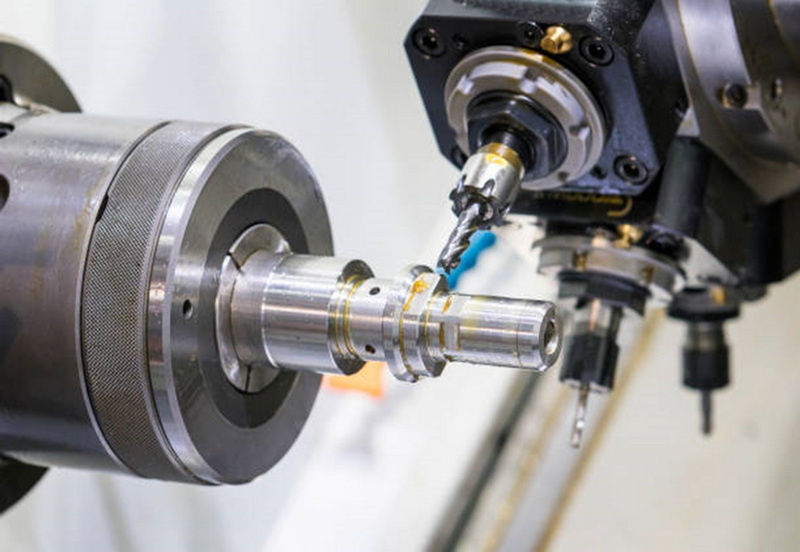
CNC machining's precision depends heavily on the quality of tooling and the strategies used in programming tool paths. Common tool types include end mills, drills, reamers, taps, and inserts, each optimized for specific cutting actions.
Modern CNC systems employ techniques such as adaptive machining, which automatically adjusts feed rates and tool speeds based on cutting conditions. This reduces tool wear, improves accuracy, and enhances surface quality.
Additionally, coolants and lubricants are often used to regulate temperature, remove chips, and prevent workpiece deformation caused by heat.
CNC machining provides benefits that have made it the industry standard for precision manufacturing:
- Superior Precision and Tolerances: Achieves dimensional accuracy down to microns, crucial for aerospace and medical devices.
- Repeatability: Identical parts can be produced over and over without deviation.
- Speed and Efficiency: Automated setups enable continuous, high-speed production, reducing lead times.
- Reduced Human Error: Computer programming ensures reliability and consistency in every production cycle.
- Flexibility: Easily adaptable for prototype development or large-scale batch manufacturing.
- Cost-Effective for Complex Parts: Although initial setup can be expensive, long-term efficiency and waste reduction lower overall production costs.
These advantages result in higher quality products, reduced downtime, and significant improvements in operational scalability.
CNC machining differs from manual or conventional manufacturing techniques in numerous ways:
| Feature | CNC Machining | Traditional Machining |
|---|---|---|
| Control Method | Automated by computer software | Manual by operator |
| Accuracy | Highly precise (±0.001 inch) | Depends on workmanship |
| Labor Intensity | Minimal supervision | Labor-heavy |
| Complexity | Capable of intricate designs | Limited geometric complexity |
| Scalability | Easily scalable for mass production | Better for small, custom runs |
| Efficiency | Continuous operation possible | Requires frequent setup adjustments |
While traditional machining may still have value in low-volume custom work, CNC machining dominates where accuracy, consistency, and automation are key performance indicators.
CNC machining is essential to nearly every major industry:
- Aerospace: Produces high-stress components such as turbine blades, engine housings, and landing gear.
- Automotive: Used for manufacturing engine blocks, suspension parts, and transmission housings.
- Medical: Enables crafting of surgical tools, orthopedic implants, and precision diagnostic devices.
- Electronics: Helps create precision enclosures, heat sinks, and semiconductor fixtures.
- Energy and Defense: Produces heavy-duty, extreme-environment components for turbines, weaponry, and marine systems.
- Consumer Goods: Assists in the rapid prototyping of product housings and assembly fixtures.
These applications demonstrate CNC machining's ability to deliver consistent, repeatable quality for both functional prototypes and mass-produced parts.
The future of CNC machining is deeply intertwined with automation, digital integration, and sustainability. As Industry 4.0 continues to evolve, several emerging trends are shaping the next generation of CNC technology:
- Smart Machines and IoT Integration: By connecting CNC systems to IoT networks, operators can monitor real-time machine performance, predict downtime, and optimize production efficiency.
- AI-Driven Programming: Artificial Intelligence can automatically generate optimized tool paths, reduce cycle times, and minimize human intervention.
- Hybrid Manufacturing: Combining CNC machining with additive manufacturing (3D printing) allows engineers to create complex geometries before finishing surfaces through machining for precision.
- Sustainability Initiatives: Modern CNC facilities aim to reduce material waste, utilize recyclable coolants, and improve energy consumption efficiency.
- Nanomachining and Micro-Fabrication: Advances in tooling allow for production at microscopic scales, vital for electronics and medical implants.
These innovations are reinforcing CNC machining's role as a cornerstone of advanced industrial manufacturing.
Despite its advantages, CNC machining has certain challenges that businesses must address:
- High Initial Investment: Machine purchases and software licensing require significant capital.
- Skilled Programming and Maintenance: Trained operators are essential for writing G-code, maintaining equipment, and troubleshooting errors.
- Material Waste: Being subtractive, the process inherently produces scrap material, though recycling can mitigate this.
- Design Constraints: Highly undercut features may still require specialized tooling or alternative processes.
Understanding these challenges helps manufacturers plan effectively and select CNC machining where it provides maximum value.
CNC machining and manufacturing stand as the foundation of precision engineering and modern production efficiency. By seamlessly merging digital design with mechanical execution, CNC technology has revolutionized how products are conceived, tested, and mass-produced. It ensures near-perfect replication, outstanding accuracy, and adaptability across a broad spectrum of applications.
As digital transformation accelerates, CNC machining continues evolving—becoming smarter, greener, and more autonomous. Whether for producing aircraft components, medical devices, or prototypes, CNC machining remains the trusted path toward consistent quality and industrial innovation.
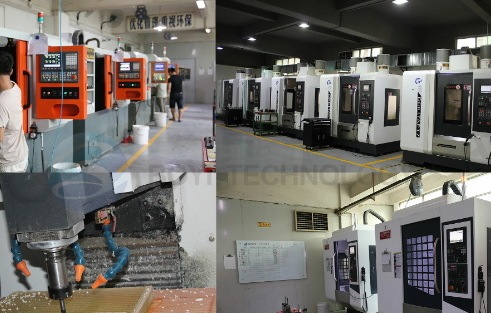
CNC stands for Computer Numerical Control, referring to the use of programmed commands to control machinery and tooling in automated manufacturing.
Industries such as aerospace, automotive, medical, defense, and electronics rely heavily on CNC machining for its precision, repeatability, and quality control.
CNC machines can work with a variety of metals (aluminum, steel, titanium), plastics (ABS, nylon, PEEK), composites, and even wood depending on the tooling used.
CNC machining is subtractive, cutting material away from a solid block, while 3D printing is additive, building parts layer by layer from raw material.
Yes. CNC machining is highly adaptable, offering precision for prototypes and efficiency for full-scale production runs.


