From idea to market-ready product, our NPI solutions make every stage easier, faster. Discover How We Help


Content Menu
● The Evolution of CNC Turning
● Main Components of a CNC Lathe Machine
● Materials Used in CNC Turning
● Types of CNC Turning Operations
● Types of CNC Turning Machines
● Quality Control in CNC Turning
● Future Trends in CNC Turning
● FAQ
>>> 1. What is the main function of CNC turning?
>>> 2. What are the most common materials used in CNC turning?
>>> 3. How does CNC turning differ from CNC milling?
>>> 4. What factors influence CNC turning accuracy?
>>> 5. What is the future of CNC turning technology?
CNC turning is one of the most essential and widely used machining processes in the modern manufacturing industry. It forms the backbone of precision engineering, enabling the production of highly accurate cylindrical components across sectors such as aerospace, automotive, electronics, and medical devices. The process seamlessly combines the mechanical precision of traditional lathe work with the intelligence of computer automation, resulting in exceptional consistency, speed, and quality.

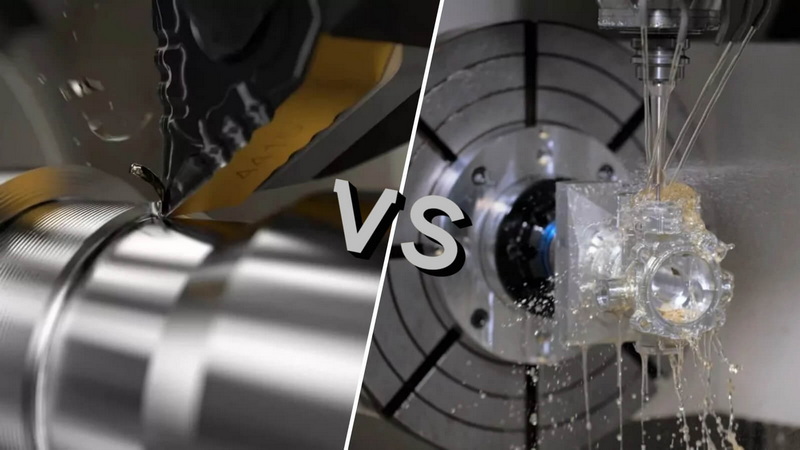
CNC turning is a subtractive manufacturing process that uses computer numerical control (CNC) technology to automate the movement of machines and cutting tools. In this process, a round or cylindrical workpiece is mounted on a chuck and rotated at high speed while a stationary cutting tool removes material layer by layer to form a precise shape.
The automation aspect is what distinguishes CNC turning from traditional manual turning. A digital program—created using CAD (Computer-Aided Design) and CAM (Computer-Aided Manufacturing) software—guides the machine's motion with extreme accuracy, controlling parameters such as spindle speed, feed rate, tool path, and depth of cut.
The concept of turning dates back centuries to the earliest forms of the lathe, often called “the mother of machine tools.” Early wood and metal lathes were manually operated, relying heavily on the skill of the machinist. The introduction of electric power in the early 20th century improved efficiency but still required manual adjustments.
The 1950s marked a turning point when computer technology was first integrated with machining equipment. This led to the birth of CNC (Computer Numerical Control) systems, which replaced mechanical levers and gears with precise digital instructions. Today's CNC turning machines are capable of performing multiple operations simultaneously, featuring multi-axis control, live tooling, and automatic bar feeders—all designed for continuous, unattended production.
CNC turning follows a structured process flow consisting of several critical stages:
1. Design Creation – Engineers create a 3D model of the desired component using CAD software.
2. CAM Programming – The CAD model is converted into a set of tool paths and machine codes (often G-code) using CAM software.
3. Machine Setup – The operator loads the material, selects tools, and calibrates zero points or work offsets.
4. Machining Operation – The machine executes the program, cutting and shaping the material according to the defined geometry.
5. Finishing and Inspection – After machining, parts undergo deburring, polishing, and dimensional inspection for accuracy.
This automated loop ensures repeatability and allows manufacturers to maintain consistent part quality, even during large-scale production runs.
A CNC lathe comprises several key components working together in coordination:
- Bed: The rigid base structure that supports all machine elements, ensuring vibration-free operation.
- Headstock: Contains the main spindle, motor, and drive system responsible for rotating the workpiece.
- Chuck: A clamping device that holds the material securely during rotation.
- Tailstock: Provides additional support for longer workpieces and can hold drilling attachments.
- Tool Turret: Houses multiple cutting tools that can be automatically indexed during the operation.
- Carriage and Slide: Facilitate precise linear movement of the cutting tool along X, Z, and sometimes Y axes.
- Controller: The brain of the machine that interprets G-code instructions and converts them into precise motion.
- Coolant System: Circulates cutting fluids to reduce heat and extend tool life.
The integration of these components allows CNC turning machines to deliver accuracy, stability, and versatility across different materials and part geometries.
CNC turning supports a broad range of materials, enabling manufacturers to meet unique industry demands:
- Metals: Aluminum, stainless steel, brass, copper, titanium, and mild steel are frequently used for structural and mechanical parts.
- Plastics: ABS, nylon, POM, polycarbonate, and PEEK provide solutions for lightweight, non-conductive, or chemically resistant components.
- Composites: Carbon fiber and glass-reinforced polymers are used in applications requiring high strength-to-weight ratios.
Each material type requires specific tool selections, feed rates, and spindle speeds to achieve the desired finish while preventing tool wear.
CNC turning machines can perform a wide array of operations, from simple to complex:
- Facing: Produces a smooth, flat surface on the end of the workpiece.
- Taper Turning: Creates conical shapes by adjusting tool movement along both X and Z axes simultaneously.
- Parting and Grooving: Precisely separates sections or creates circular grooves.
- Thread Cutting: Forms screw threads for fasteners and other assemblies.
- Drilling and Boring: Adds or enlarges holes along the rotational axis.
- Knurling: Imprints textured patterns on surfaces for enhanced grip.
- Contouring: Allows complex geometric shaping for advanced product designs.
Modern turning centers may also integrate live tooling—rotating cutting tools that enable milling or slotting during the turning cycle—thus reducing the need for multiple setups.
CNC turning technology encompasses several machine types tailored to specific applications:
- 2-Axis Lathes: The most basic form, handling simple cylindrical parts.
- Multi-Axis Turning Centers: Add Y, B, or C axes for more complex contouring and drilling off-center holes.
- Swiss-Type Lathes: Use a guide bushing mechanism for machining small, high-precision parts such as watch components or medical implants.
- Vertical Turret Lathes (VTLs): Designed for large, heavy parts where vertical orientation provides better stability.
- Twin-Spindle Machines: Allow simultaneous machining of two separate parts or two ends of the same workpiece.
These variations improve flexibility and productivity depending on production requirements.
CNC turning provides a long list of advantages that make it indispensable in precision manufacturing:
- Unmatched precision: CNC systems can maintain micrometer-level accuracy.
- High repeatability: Consistent results are achievable across thousands of identical parts.
- Reduced lead times: Automated processes speed up production cycles.
- Improved safety: Minimal human contact with moving parts reduces the risk of accidents.
- Complex geometries: The ability to combine multiple operations enables the production of intricate designs.
- Integration with CAD/CAM systems: Simplifies design modifications and reduces human error.
- Automation capabilities: Bar feeders, part catchers, and robotic arms facilitate 24/7 production.
CNC turning's versatility extends across numerous sectors:
- Aerospace: Engine shafts, landing gear bushings, and precision fasteners.
- Automotive: Axles, pistons, gear blanks, and custom fittings.
- Medical: Implants, dental tools, and orthopedic screws.
- Oil and Gas: Valve components and connectors that withstand extreme environments.
- Electronics: Heat sinks, connectors, and miniature housings.
- Defense and Military: High-tolerance weapon components and communication hardware.
Each field benefits from the same attributes—dimensional stability, repeatability, and efficiency.
Although both methods are crucial aspects of CNC machining, they serve distinct purposes.
| Feature | CNC Turning | CNC Milling |
|---|---|---|
| Workpiece motion | Rotates | Stationary |
| Tool motion | Linear | Rotational |
| Part type | Cylindrical and symmetrical | Flat or prismatic |
| Axes used | Typically 2–4 | Typically 3–5 |
| Main advantage | Ideal for round parts | Ideal for complex 3D surfaces |
In many cases, manufacturers combine both processes to produce hybrid parts that combine round and flat features efficiently.
Despite its efficiency, CNC turning presents several operational challenges:
- Tool wear: Continuous contact generates friction and heat.
- Chatter vibrations: Can degrade surface finish and dimensional precision.
- Material hardness: Some alloys require coated or carbide tools.
- Chip control: Improper chip evacuation can damage tools or obstruct machining.
- Programming errors: Incorrect G-code leads to tolerance deviations or tool collisions.
Regular maintenance, real-time monitoring, and skilled programming are essential for mitigating these issues.
To maintain high precision, quality control methods are applied throughout the process:
- Coordinate Measuring Machines (CMM): Automatically inspect dimensions against CAD models.
- Surface roughness measurement: Ensures parts meet specified texture standards.
- In-process inspection: Real-time sensors verify accuracy without halting production.
- Statistical Process Control (SPC): Tracks and analyzes data for continuous improvement.
These techniques ensure that CNC-turned parts adhere to international quality certifications such as ISO 9001 and AS9100.
CNC turning technology continuously evolves with new developments:
- Integration with AI and IoT: Smart analytics optimize cutting parameters automatically.
- Additive-subtractive hybrid systems: Combine 3D printing with traditional turning.
- Sustainable machining: Eco-friendly coolants and energy-efficient motors reduce carbon footprints.
- Digital twin modeling: Simulates machining operations virtually to enhance accuracy.
- Cloud-based monitoring: Provides real-time performance insights across factory floors.
These innovations point toward a future of intelligent, autonomous, and sustainable manufacturing.
CNC turning remains an indispensable process in precision manufacturing. It blends mechanical craftsmanship with digital intelligence, enabling industries to produce high-accuracy, high-volume components efficiently. As technology progresses, CNC turning machines are becoming more autonomous, connected, and intelligent—cementing their position as one of the cornerstones of Industry 4.0. Whether for small intricate parts or heavy-duty components, CNC turning continues to define the standards of modern machining.
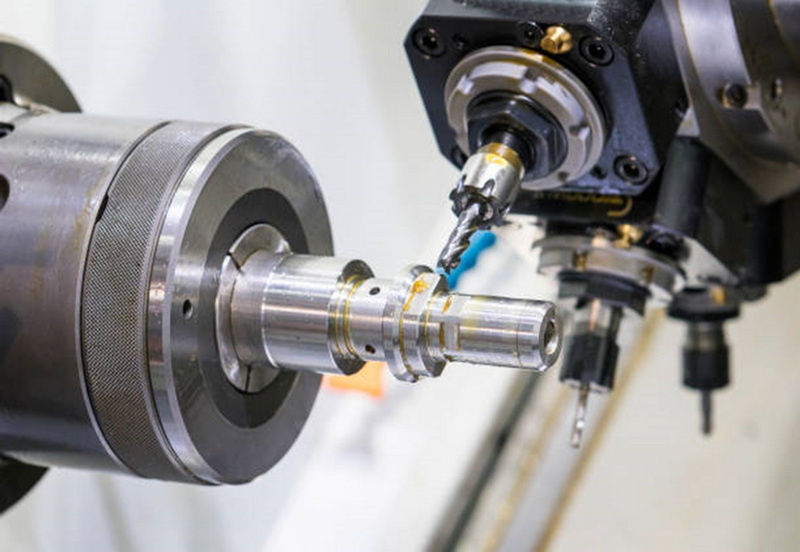
The main function of CNC turning is to produce accurate cylindrical components by removing material from a rotating workpiece using a stationary cutting tool.
Common materials include aluminum, stainless steel, brass, plastics, and titanium, each offering different mechanical advantages and surface properties.
In CNC turning, the workpiece rotates while the tool remains stationary; in CNC milling, the cutting tool rotates while the workpiece is held still.
Key factors include machine calibration, tool condition, material hardness, and proper programming of feed rates and cutting speeds.
The future lies in smart automation, AI-driven analytics, sustainable machining practices, and real-time production monitoring to enhance performance and reduce waste.


