From idea to market-ready product, our NPI solutions make every stage easier, faster. Discover How We Help

Views: 222 Author: Tomorrow Publish Time: 2025-11-30 Origin: Site


Content Menu
● Understanding CNC Turning Centers
● Key Components of a CNC Turning Center
● How CNC Turning Centers Differ from Traditional Lathes
● Technical Specifications Common in CNC Turning Centers
● Advantages of CNC Turning Centers
● Applications Across Industries
● FAQ
>> 1. What is the main purpose of a CNC turning center?
>> 2. How does a CNC turning center differ from a traditional lathe?
>> 3. What industries commonly use CNC turning centers?
>> 4. What are typical technical specifications of a CNC turning center?
>> 5. Can CNC turning centers handle complex geometries?
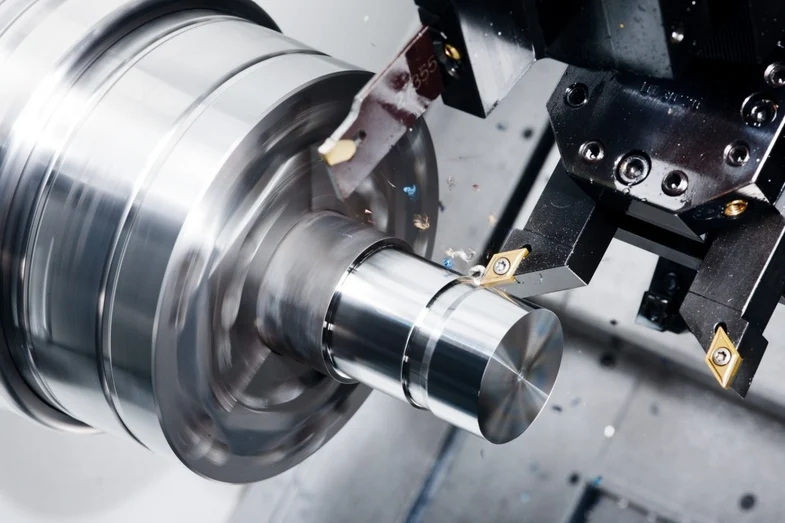
A CNC turning center is an advanced computer numerical control (CNC) machine designed primarily for performing turning operations on cylindrical workpieces. Unlike a traditional lathe, a CNC turning center integrates multiple machining capabilities such as turning, milling, drilling, and tapping within a single automated system. This integration, combined with computer program control, allows it to deliver high precision, flexibility, and productivity in manufacturing complex parts.

CNC turning centers operate by rotating a workpiece held in a chuck while a variety of cutting tools, organized in a turret, move along several axes controlled by a CNC system. Typically, these machines support 3 to 5 simultaneous axes—such as X, Z, Y, and C rotation—enabling multi-functional machining tasks in one setup. The CNC controller manages spindle speed, tool position, feed rate, and tool changes based on pre-programmed instructions. This allows for seamless transitions between operations like turning external and internal surfaces, drilling holes, milling flats, and threading without manual intervention or repositioning of the workpiece.
The multi-axis capability and live tooling features allow CNC turning centers to complete complex geometries with high repeatability and consistent quality, making these machines indispensable in high-demand industries where tight tolerances are crucial.[5][6][11]
- Spindle and Chuck: The spindle rotates the workpiece at variable speeds, often up to 3500 to 5000 rpm or more, while the chuck secures it firmly. A higher spindle power (commonly around 7.5 kW to 12 kW continuous) supports machining tougher materials.
- Tool Turret: Usually a 12-station or more bi-directional turret that can hold many cutting tools including live tools with individual motors to perform milling or drilling while the spindle is running.
- CNC Control Panel: The user interface where the operator inputs, monitors, and modifies machining programs.
- Machine Bed and Guideways: Heavily reinforced, often with cast iron and hardened box ways, providing rigidity and vibration damping to achieve precise cuts.
- Coolant System: Supplies flood or through-tool coolant under pressure (often 30 to 70 psi) to reduce heat and wear on cutting tools.
- Tailstock: Used in some machines to support long workpieces during turning.
- Linear Scale and Rotary Encoder Feedback: For extremely precise control of tool position and spindle rotation, ensuring positional accuracy within microns and arc-seconds.[1][2][4]
Traditional lathes generally focus on a single axis (turning) operation where the workpiece spins and a stationary cutting tool removes material. CNC turning centers expand on that by adding:
- Multi-axis machining: Capability to mill or drill using live tools and additional axes (Y or C axis) while the part rotates.
- Automated tool change: Fast turret indexing allows switching tools automatically, reducing setup time.
- Enclosed work areas: For chip and coolant containment improving safety and cleanliness.
- Higher precision and repeatability: Supported by digital feedback systems and rigid construction.
- Enhanced productivity: Due to automation, multi-function machining, and ability to run unattended with minimal supervision.[2][12][5]
Typical high-end CNC turning centers have the following specifications:
| Specification | Typical Value |
|---|---|
| Maximum turning diameter | 200 mm to 300+ mm |
| Maximum turning length | 350 mm to 600+ mm |
| Spindle power (continuous) | 7.5 kW to 12 kW |
| Spindle speed range | 50 to 4000-5000 rpm (variable) |
| Number of tool stations | 12 or more |
| Live tooling spindle power | 4.5 kW to 5 kW or higher |
| Live tooling spindle speed | Up to 8000 rpm |
| Tool turret indexing time | 0.5 seconds |
| Feed rate range (X and Z axes) | 1 mm/min to 25,000 mm/min |
| Positional accuracy (X and Z) | 0.005 mm or better |
| Repeatability (X and Z axes) | 0.006 mm or better |
| Coolant pressure | 30 psi to 70 psi |
These technical features ensure precise machining of a wide range of materials including hardened steels, titanium alloys, aluminum, and superalloys like Inconel. The ability to machine at high speeds with tight tolerances is critical in aerospace, automotive, and medical component manufacturing.[4][1][2]
- Precision and Accuracy: Achieve micron-level positional accuracy and consistent high-quality surface finishes.
- Versatility: One machine can perform multiple operations such as turning, milling, drilling, and threading.
- Reduced Setup Time: Automated tool changes and multiple machining capabilities eliminate the need to move parts between machines.
- High Throughput: Capable of fast cycling with live tooling and quick turret indexing.
- Improved Safety and Cleanliness: Enclosed machining areas manage chips and coolant effectively.
- Flexibility for Complex Parts: Multi-axis and live tooling features allow complex parts to be produced in a single setup.[6][12][5]
CNC turning centers are vital in producing precision components in many industrial sectors:
- Automotive: Engine shafts, valves, pistons.
- Aerospace: Structural alloys, turbine components.
- Medical: Surgical instruments, implants.
- Electronics: Connectors, housings.
- General manufacturing: Custom prototypes and high-volume precision parts.[11][12][13]
A CNC turning center is a highly capable machining tool combining traditional turning with multi-axis milling and drilling capabilities controlled by advanced CNC systems. Its robust design, automated tool handling, and precision feedback deliver efficiency, accuracy, and flexibility critical in modern manufacturing. These centers are essential for industries requiring complex, precise, and high-volume component production.
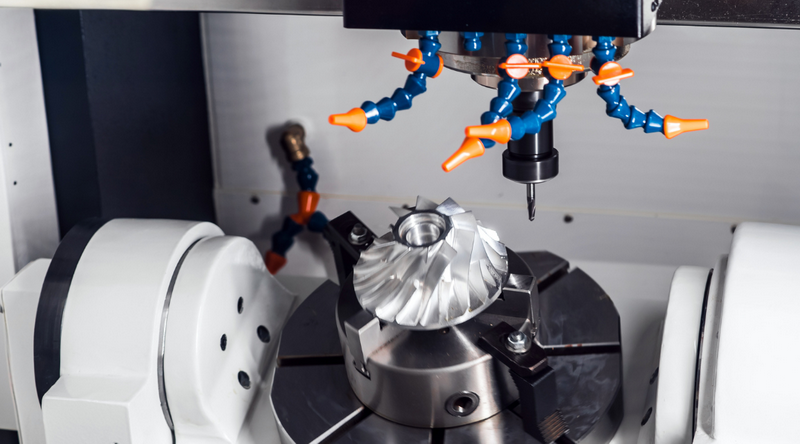
A CNC turning center is designed to machine precision cylindrical parts by rotating the workpiece while automated cutting tools perform turning, milling, and drilling with high accuracy.[5]
It adds multi-axis machining, live tools, automation, and enclosed safety features compared to the single-axis turning of traditional lathes.[11]
Automotive, aerospace, medical, electronics, and manufacturing sectors frequently rely on these machines for precision parts.[13]
Machining diameters around 200-300 mm, spindle speeds up to 5000 rpm, 12+ tool stations, positional accuracy up to 0.005 mm, and coolant pressures of 30-70 psi are common.[1][4]
Yes, with multiple axes and live tooling, they can machine complex shapes and features in one setup, reducing handling and errors.[5]
[1](https://mkp.gem.gov.in/catalog_data/catalog_support_document/buyer_documents/6744731/54/78/703/CatalogAttrs/SpecificationDocument/2024/8/12/rr_33__cnc_turning_centre_tech_spec_2024-08-12-09-41-47_6b14a2277225d5fb172faaec2020bc05.pdf)
[2](https://www.southwesternindustries.com/products/turning-centers/tc820si-turning-center)
[3](https://www.una.edu/engineering-industrial-professions/docs/Detailed%20Specifications%20-%20BenchTurn%20CNC.pdf)
[4](https://eproc.isro.gov.in/common/viewDocument?id=ff808081969fb14c0196a43ca8260db7&indentId=VS2025002593)
[5](https://www.machinemetrics.com/blog/cnc-turning-center-basics)
[6](https://www.engineering.com/an-engineers-guide-to-cnc-turning-centers/)
[7](https://www.mazak.com/us-en/products/)
[8](https://www.3erp.com/blog/cnc-lathe/)
[9](https://www.makerverse.com/resources/cnc-machining-guides/cnc-turning-everything-you-need-to-know/)
[10](https://geomiq.com/cnc-design-guide/)
[11](https://etcnmachining.com/blog/the-basics-of-cnc-turning-and-cnc-milling-understanding-the-cnc-turning-center/)
[12](https://www.southernfabsales.com/blog/why-your-machine-shop-needs-a-cnc-turning-center)
[13](https://www.3erp.com/blog/cnc-turning/)


