From idea to market-ready product, our NPI solutions make every stage easier, faster. Discover How We Help

Views: 222 Author: Tomorrow Publish Time: 2025-12-24 Origin: Site
Content Menu
● Understanding CNC Turning Centers
● Key Components of a CNC Turning Center
● How a CNC Turning Center Operates
● The Difference Between CNC Lathes and Turning Centers
● Applications of CNC Turning Centers
● Advantages of CNC Turning Centers
● Types of CNC Turning Centers
● Role of CAD/CAM Software and Automation
● Common Turning Operations Performed on CNC Turning Centers
● Maintenance and Operation Best Practices
● Limitations of CNC Turning Centers
● The Future of CNC Turning Centers
● FAQ
>> 1. What is the main difference between a CNC lathe and a turning center?
>> 2. What are the most common materials machined on CNC turning centers?
>> 3. What kind of tolerances can a CNC turning center achieve?
>> 4. Are CNC turning centers suitable for small production runs?
>> 5. How can automation enhance CNC turning performance?
Computer Numerical Control (CNC) turning centers are at the heart of modern machining and precision manufacturing. These advanced machines combine computer automation with high-speed cutting technology to produce consistent, complex parts with unmatched accuracy. Used across a wide range of industries, CNC turning centers have revolutionized production by enabling continuous, unattended operation while maintaining tight dimensional tolerances.
Understanding how these machines work, what they are used for, and why they have become indispensable in today's manufacturing world will help engineers, machinists, and business owners appreciate their full potential.

A CNC turning center is an advanced form of a traditional lathe, controlled entirely by a computer program. Instead of manually adjusting the cutting tools, feeding speeds, and depth of cuts, the operator programs these parameters into the machine using G-code or CAM software. This allows every motion of the tool and the spindle to follow precise, predefined instructions.
The machine typically holds a cylindrical workpiece that rotates around its axis, while stationary cutting tools remove material to create shapes like shafts, pins, bushings, and other circular components. Modern CNC turning centers feature multiple axes, including X, Z, and sometimes Y or B axes, allowing more complex geometries to be produced without secondary setups.
CNC turning centers are often equipped with live tooling and milling capabilities, allowing secondary operations—such as drilling, threading, grooving, or tapping—to be performed on the same machine. This fusion of turning and milling significantly reduces cycle times and enhances part consistency.
To understand how CNC turning centers deliver such precision, it's important to look at their key components, each playing an essential role:
- Spindle: The main part that grips and rotates the workpiece at variable speeds.
- Chuck: A mechanical clamp that holds the material firmly during cutting operations.
- Turret: A rotating tool holder that can hold multiple cutting tools for various operations.
- Tailstock or Sub-Spindle: Provides support for longer components or allows for machining both ends of a part.
- Bed and Guideways: Provide structure and smooth tool carriage movement.
- Control Panel: The interface that allows operators to input commands, monitor performance, and make real-time adjustments.
- Coolant System: Keeps both the cutting tools and workpiece cool, reducing friction and extending tool life.
All these parts are integrated under computerized control, ensuring minimal human intervention and consistent part quality.
The operational workflow of a CNC turning center follows a highly systematic process:
1. Loading the Workpiece: The raw material—often a round bar or billet—is loaded into the chuck or collet.
2. Programming: The machining sequence, speeds, and feed rates are defined through G-code or via a CAD/CAM-driven program.
3. Turning Cycle: The spindle rotates, and cutting tools remove material according to programmed paths.
4. Tool Changes: The turret indexes to switch between tools automatically for different operations.
5. Finishing and Quality Check: Once all steps are completed, the part is inspected to verify dimensional accuracy.
The automation level allows the machine to repeat these steps continuously with minimal operator interaction, making it ideal for high-volume production.
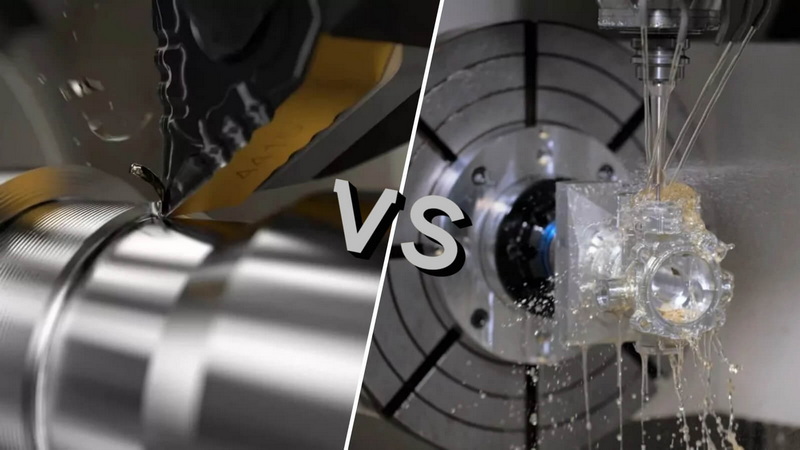
Although the terms “CNC lathe” and “CNC turning center” are often used interchangeably, they are not identical. The CNC lathe performs standard turning operations with limited functionality—usually restricted to two axes (X and Z).
In contrast, a CNC turning center includes features such as live tooling, sub-spindles, and sometimes Y-axis movement, enabling operations like off-center drilling, milling, and contouring in one setup. This capability reduces production time and increases overall efficiency by eliminating the need for multiple machines or setups.
Turning centers, therefore, serve as a hybrid solution: part lathe, part milling machine, and entirely automated.
CNC turning centers serve virtually every major manufacturing sector. Their ability to produce high-precision components repeatedly makes them essential in fields where accuracy and reliability are paramount.
1. Automotive Manufacturing:
Commonly used for making shafts, rotors, wheels, and engine components that demand high dimensional accuracy and durability.
2. Aerospace Engineering:
Ideal for lightweight yet strong materials like titanium or aluminum alloys used in turbine components, actuators, and landing gear parts.
3. Medical Device Production:
Turning centers produce implant screws, surgical instruments, and orthopedic parts requiring precision within microns.
4. Oil and Gas Industry:
Used to machine valves, drill collars, and hydraulic fittings that must withstand extreme pressure and temperature.
5. Electronics and Optics:
Precisely machined connectors, casings, and lenses benefit from the smooth surface finishes achievable with CNC turning.
6. Consumer Goods:
Used for high-end products like watches, camera bodies, and household appliances where design precision matters.
Because these machines handle high precision and repeatability, they are invaluable for both prototyping and large-scale production runs.
Modern CNC turning centers offer numerous advantages that promote productivity, quality, and cost savings:
- Exceptional Accuracy: Capable of maintaining consistent dimensions within tight tolerances.
- Repeatability: Every part produced matches exactly, ideal for mass production.
- Automation: Reduces operator fatigue and human error through unattended or “lights-out” machining.
- Multi-Functionality: Combines turning, milling, drilling, and grooving in one setup.
- Reduced Lead Times: Faster production cycles and simplified workflows.
- Data Integration: Advanced machines can connect with ERP systems for automated production tracking.
- Energy Efficiency: Optimized power use and coolant systems reduce waste and cost.
These advantages not only lower manufacturing costs but also enhance overall product quality.
CNC turning centers come in several varieties designed for specific production requirements:
- Horizontal Turning Centers: The most common type, offering high rigidity and ideal for general machining tasks.
- Vertical Turning Centers: Better suited for large or heavy workpieces due to gravity-assisted clamping.
- Swiss-Type Turning Centers: Designed for small, precise parts often used in watchmaking and medical devices.
- Twin-Spindle Turning Centers: Facilitate machining on both part ends without repositioning.
- Mill-Turn Centers: Combine milling and turning into one process, offering maximum operational flexibility.
Selecting the right type depends on part geometry, volume, and production speed requirements.
CAD (Computer-Aided Design) and CAM (Computer-Aided Manufacturing) software are integral to CNC turning operation. These platforms allow designers to model the component digitally, simulate its machining process, and generate G-code for direct machine execution.
Automation enhancements—such as robotic part loaders, bar feeders, and pallet changers—further improve productivity. Modern turning centers often integrate IoT (Internet of Things) connectivity, enabling remote monitoring, predictive maintenance, and data analysis for process optimization.
This fusion of digital control and automation exemplifies the principles of Industry 4.0, driving factories toward smarter, more autonomous manufacturing ecosystems.
Turning centers can perform a wide variety of machining operations:
- Facing: Cutting a flat surface perpendicular to the workpiece axis.
- Parting or Cutoff: Separating the finished part from the remaining stock.
- Grooving: Creating a narrow recess or channel on the surface.
- Threading: Producing external or internal screw threads using precise tool control.
- Drilling and Boring: Creating or enlarging holes using live tooling.
- Knurling: Forming a patterned texture on the surface for better grip.
Because CNC machines automatically adjust speeds, feeds, and tool positions, they perform these operations with superior consistency and faster cycle times.
To ensure continuous performance, CNC turning centers require consistent maintenance and careful operation. Best practices include:
1. Daily Cleaning: Remove chips, coolant residues, and oil buildup.
2. Lubrication: Keep moving components well-oiled to prevent wear.
3. Heat Management: Monitor thermal deformation during long cycles.
4. Tool Wear Inspection: Replace worn cutters to maintain part accuracy.
5. Software Updates: Regular updates improve optimization and error detection.
Additionally, ensuring that the workspace is free of vibration and environmental interference contributes to long-term precision.
Although turning centers offer advanced capabilities, they also have practical limitations:
- Initial Investment: The cost of high-end machines can be substantial.
- Complex Programming: Skilled operators and programmers are required.
- Maintenance Costs: Regular servicing and tool replacement add to operational expenses.
- Material Shape Restriction: Turning centers primarily handle rotational parts; complex shapes may require mill-turn combinations.
Despite these challenges, their unmatched speed and reliability make them indispensable for modern manufacturers.
The future of CNC turning technology lies in integration and intelligence. Innovations include:
- AI-Assisted Toolpath Optimization: Reduces cutting time while maintaining part quality.
- Digital Twin Technology: Provides real-time virtual simulation for predictive control.
- Self-Learning Machines: Adaptive control systems adjust feed rates automatically based on cutting conditions.
- Additive-Subtractive Hybrids: Combine turning with 3D printing for complex part geometry flexibility.
- Sustainability Focus: Energy-efficient drives and coolant recycling systems reduce environmental impact.
As these advancements mature, CNC turning centers will not just produce parts faster—they will become integral nodes in data-driven, fully interconnected smart factories.
CNC turning centers have pushed the boundaries of what's possible in precision manufacturing. Far from being simple lathes, these machines represent the pinnacle of automated machining innovation, blending flexibility, accuracy, and speed. From creating intricate aerospace parts to mass-producing automotive shafts, CNC turning centers consistently deliver superior results.
As global industry trends lean toward automation, digital connectivity, and sustainable production, CNC turning centers will continue evolving—serving as the backbone of intelligent manufacturing for decades to come.
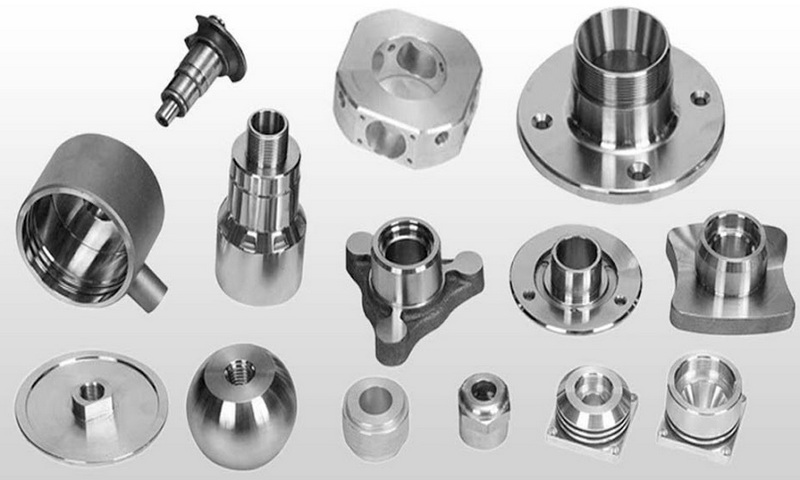
A CNC lathe primarily performs simple turning operations with two motion axes, while a CNC turning center includes live tooling, sub-spindles, and additional axes, enabling it to handle complex milling and drilling tasks in one setup.
They can work with a wide range of materials such as aluminum, stainless steel, brass, titanium, copper, and various engineered plastics, depending on the application's precision and strength requirements.
Modern machines can maintain tolerances as tight as ±0.002 mm, depending on part complexity, tooling, and environmental stability.
Yes. Although often used for large-scale production, CNC turning centers are also ideal for prototypes or short runs due to their easy programmability and quick setup changeovers.
Automation through bar feeders, robotic arms, and material handling systems increases efficiency, reduces idle time, and enables 24/7 “lights-out” production, maximizing return on investment.


