From idea to market-ready product, our NPI solutions make every stage easier, faster. Discover How We Help

Views: 222 Author: Tomorrow Publish Time: 2025-12-27 Origin: Site


Content Menu
● Introduction to CNC Machining
● distinguishing a Machining Center from Traditional CNC Machines
● Core Components of a CNC Machining Center
>> 3. Worktable
>> 4. Tool Magazine and Automatic Tool Changer (ATC)
>> 6. Cooling, Lubrication, and Chip Removal Systems
● How a CNC Machining Center Operates
● Types of CNC Machining Centers
>> Vertical Machining Center (VMC)
>> Horizontal Machining Center (HMC)
>> Double-Column Machining Center
● Major Advantages of CNC Machining Centers
● Industries That Rely on CNC Machining Centers
● Choosing the Right CNC Machining Center
● Maintenance, Calibration, and Quality Assurance
● Emerging Trends and Future Outlook
● FAQ
>> (1) What distinguishes a CNC machining center from a CNC lathe?
>> (2) How many axes can a CNC machining center have?
>> (3) Is operator training required for CNC machining centers?
>> (4) How does software integration benefit machining centers?
>> (5) Can CNC machining centers produce both prototypes and mass-production parts?
In today's era of smart manufacturing, precision, consistency, and speed define competitiveness. Among the technologies propelling industrial progress, CNC machining centers play a central role. They integrate computer control, automation, and advanced tooling systems to transform raw materials into precision-engineered components. Understanding what a CNC machining center is, how it functions, and why it matters can help us appreciate its value in modern industry.
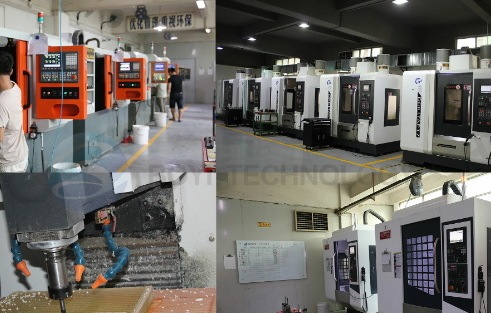
CNC stands for Computer Numerical Control, referring to the automation of machine tools using pre-programmed commands encoded in computer software. Unlike manual machines, CNC systems allow for precise, repeatable, and high-speed machining without continuous human intervention.
A CNC machining center goes beyond ordinary CNC mills by combining several operations—like milling, drilling, boring, tapping, and reaming—within a single automated unit. Through a combination of multi-axis control, automatic tool changing, and real-time monitoring, it enables consistent, high-quality part production from start to finish.
Though both CNC milling machines and machining centers are computer-controlled, their capabilities differ significantly. Machining centers are more advanced, characterized by their:
- Automatic Tool Changer (ATC): Allows multiple operations without manual tool replacement.
- Multi-Axis Machining: Enables complex shapes and contours by working across three to five axes.
- Integrated Control System: Coordinates motion, speed, and positioning with high accuracy.
- Continuous Operation: Suitable for high-volume, automated production lines.
These features make machining centers integral to sectors demanding precision and efficiency, such as aerospace, medical, and automotive manufacturing.
Each CNC machining center comprises several interdependent parts, each critical to functionality and accuracy.
The bed forms the base structure and provides rigidity. Made from cast iron or polymer composites, it dampens vibrations generated during high-speed operations. The column supports the spindle and guides that house the vertical or horizontal movement of the tool.
At the heart of every machining center lies the spindle, which rotates the cutting tool. Spindle designs vary by machine type and cutting demands—some rely on belt drives, others use direct-drive motors for faster response. High-speed spindles often integrate cooling systems to prevent heat distortion.
The table holds the workpiece in place during machining. It moves along the X- and Y-axes while the spindle moves vertically (Z-axis). Some advanced models incorporate rotational (A- and B-axis) tables for multi-axis machining, essential for sculpting complex surfaces.
The tool magazine stores anywhere from 20 to 200 tools, depending on machine capacity. The ATC system selects, loads, and replaces tools automatically based on the programmed sequence. This automation drastically shortens downtime and boosts productivity.
The controller executes coded instructions from the part program, translating them into machine movements, spindle speeds, and feed rates. Operators interact with the controller via a graphical interface that allows simulation, monitoring, and parameter adjustment in real-time.
Heat management is vital. Cooling systems circulate fluids to absorb cutting heat, while lubrication systems reduce friction. Automated chip conveyors remove swarf, maintaining a clean, safe workspace throughout production.
The CNC machining process follows a structured workflow, ensuring accuracy from design to finished part.
1. Digital Design (CAD Modeling): Engineers create a 3D digital model of the component.
2. CAM Processing: Computer-Aided Manufacturing software converts the design into G-code and M-code, instructing tool paths and movements.
3. Machine Setup: Operators mount the workpiece, load tools, and configure machine coordinates.
4. Simulation and Validation: Virtual machining confirms tool paths and avoids potential collisions.
5. Machining Execution: The system automatically controls feed rates, depth of cut, spindle speeds, and tool changes to complete operations.
6. Quality Inspection: The final part undergoes dimensional checks to ensure compliance with tolerances.
This process integrates design, data, and operation into one streamlined workflow.
Machining centers are commonly classified by spindle orientation and operational axes.
A VMC has a vertically aligned spindle. It's versatile and suitable for creating flat surfaces, dies, or box-type components. Operators favor VMCs for their easier setup and smaller footprint, making them ideal for workshops with limited floor space.
An HMC positions its spindle horizontally, allowing chips to fall away naturally. This improves tool life and surface quality during heavy cutting. HMCs are prevalent in mass production of automotive and industrial components.
The 5-axis center adds rotary motion, enabling the tool or workpiece to move along five axes simultaneously. This allows the creation of highly intricate geometries—eliminating multiple clamping steps and increasing accuracy.
For ultra-large or heavy parts, double-column machines provide superior rigidity and stability. Industries like aerospace, rail, and energy equipment manufacturing rely on them for large-structure operations.

CNC machining centers have clear advantages over manual or semi-automated equipment:
- Superior Accuracy: Dimensional consistency within microns reduces defects and rework.
- Higher Efficiency: ATCs and multi-axis systems drastically cut cycle times.
- Automation: Machines can run unmanned during extended shifts or overnight.
- Flexibility: Easily reprogrammed for different components, enabling quick production transitions.
- Material Compatibility: Works with metals, plastics, ceramics, and composites.
- Reduced Waste: Precise machining optimizes raw material usage, lowering overall costs.
In high-stakes production environments, these benefits improve both throughput and profitability.
The versatility of CNC machining centers allows them to serve numerous sectors:
- Aerospace: Machining lightweight, high-strength titanium or aluminum parts for aircraft structures and engines.
- Automotive: Manufacturing engine blocks, molds, housings, and precision gears.
- Medical: Producing implants, prosthetics, and surgical instruments where surface finish and tolerance are critical.
- Defense and Energy: Crafting components for turbines, firearms, and high-pressure systems.
- Electronics: Machining finely detailed casings and conductive materials used in electronic devices.
Each industry benefits from the machining center's ability to deliver precision, repeatability, and scalability.
Selecting a machining center depends on key operational factors:
- Part Size and Complexity: Large or intricate components may require 4- or 5-axis machines.
- Material Type: Harder materials like titanium need high-torque spindles.
- Production Volume: High-volume operations benefit from pallet changers and automatic feeding systems.
- Automation Level: Consider robotic integration for continuous or lights-out manufacturing.
- Budget and Maintenance Costs: Though initial investment is significant, modern centers yield high ROI over their lifespan.
Proper evaluation ensures that the chosen equipment aligns with production goals and manufacturing strategies.
Regular maintenance is crucial for sustaining a machining center's long-term accuracy and performance. Key maintenance practices include:
- Cleaning chips, coolant tanks, and filters after each shift.
- Periodic spindle and axis lubrication.
- Checking tool holders and collets for wear or imbalance.
- Performing machine alignment and laser calibration at set intervals.
- Updating software to ensure compatibility and security.
Quality assurance involves using CMMs (Coordinate Measuring Machines), surface finish analyzers, and in-process sensors. These tools ensure each finished product meets design tolerances and customer requirements.
As manufacturing enters the Industry 4.0 era, CNC machining centers continue evolving through innovation:
- Digital Twin Technology: Virtual replicas simulate machining operations for predictive optimization.
- IoT and Connectivity: Machines communicate real-time data for remote diagnostics and performance monitoring.
- AI-Powered Toolpath Optimization: Artificial Intelligence adapts cutting conditions dynamically.
- Hybrid Manufacturing: Integration with additive manufacturing for both material removal and deposition in one setup.
- Sustainability: Use of eco-friendly coolants, energy-efficient drives, and recyclable materials.
Such innovations enhance performance while aligning with global sustainability goals.
A CNC machining center is far more than just a computer-controlled cutting tool—it's the backbone of modern industrial manufacturing. By combining automation, adaptability, and precision, it enables companies to produce complex, high-value parts at remarkable speed and efficiency. As technology advances, integrating smart systems and AI will only increase their importance. In a future dominated by intelligent production, CNC machining centers will remain essential for innovation, accuracy, and productivity.
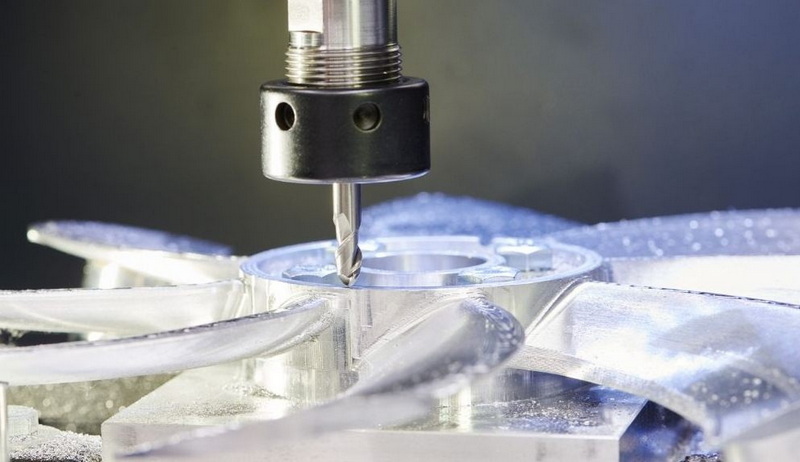
A CNC lathe rotates the workpiece while the tool remains stationary; a CNC machining center keeps the workpiece fixed while the rotating tool removes material. Machining centers are better for complex, multi-surface cutting.
Standard machines use 3 axes (X, Y, Z), while advanced models can operate with 4 or 5 axes for multidirectional machining. Each added axis expands capability for intricate geometries.
Yes. Though highly automated, these machines require trained operators familiar with G-code programming, tool setup, and quality control. Skilled technicians optimize performance and prevent costly errors.
Software integration enables real-time monitoring, data collection, and simulation, improving efficiency and predictive maintenance. It helps manufacturers implement Industry 4.0 practices.
Absolutely. Machining centers are ideal for both rapid prototyping and large-scale production, offering flexibility between one-off samples and thousands of identical parts.


