From idea to market-ready product, our NPI solutions make every stage easier, faster. Discover How We Help

Views: 222 Author: Tomorrow Publish Time: 2025-12-29 Origin: Site


Content Menu
● Understanding 3D Printing Technology
>> Types of 3D Printing Technologies
● Major Applications of 3D Printing
>> Medical and Dental Solutions
>> Aerospace and Automotive Industries
>> Architecture and Construction
>> Consumer Products and Fashion
● Real-World Examples of 3D Printing Innovation
● FAQ
>> 1. What materials can be used for 3D printing?
>> 2. Is 3D printing suitable for mass production?
>> 3. How accurate are 3D printed parts?
>> 4. Can 3D printers create functional parts?
>> 5. How much does 3D printing cost?
3D printing, also known as additive manufacturing, is one of the most disruptive innovations of the 21st century. It redefines how we design, prototype, and manufacture products by allowing objects to be built layer by layer from digital models. Unlike traditional manufacturing, which often involves cutting, molding, or assembling materials, 3D printing creates parts by adding material only where necessary, resulting in minimal waste and maximum design freedom.
This transformative technology is no longer confined to research laboratories or industrial facilities—it's now accessible to hobbyists, educators, corporations, and even medical professionals around the globe. In this article, we'll explore what 3D printing is, how it works, its key technologies, main applications, benefits, limitations, and the diverse services it provides today.
At its simplest, 3D printing transforms a digital file into a tangible, three-dimensional object. It works by successively depositing material in layers according to a computerized 3D design file. Each layer fuses with the previous one until the object is complete.
The fundamental principle behind additive manufacturing is precision: every layer corresponds perfectly with the next, enabling the creation of detailed geometries that traditional machines cannot achieve. Instead of removing excess material, it builds exactly what's needed, making it both efficient and sustainable.
Several major 3D printing processes dominate the market, each with unique mechanisms and applications:
- Fused Deposition Modeling (FDM): The most common and affordable form of 3D printing. It works by melting thermoplastic filaments—such as PLA or ABS—and extruding them layer by layer. Ideal for prototypes and consumer products.
- Stereolithography (SLA): Uses ultraviolet light to cure liquid resin into solid parts. SLA produces smooth, high-resolution surfaces and intricate details, making it popular in dentistry, jewelry, and fine design work.
- Selective Laser Sintering (SLS): Employs a laser to fuse powdered materials like nylon or polyamide. It's ideal for functional prototypes, lightweight structures, and small batch production.
- Digital Light Processing (DLP): Similar to SLA but uses digital projection for faster curing. Commonly used for detailed miniatures and dental models.
- Multi Jet Fusion (MJF): A newer, high-speed technology offering exceptional surface finish and strength, widely used in industrial applications.
- Direct Metal Laser Sintering (DMLS): Allows printing with various metals such as titanium, aluminum, and stainless steel. It's essential in aerospace and medical implant production.
Each technology balances trade-offs between cost, speed, strength, and detail. Understanding these differences helps users choose the most appropriate method for their needs.
The 3D printing process follows a structured series of steps:
1. Design Creation: The journey begins with a digital 3D model, often designed in software such as AutoCAD, SolidWorks, or Fusion 360. Alternatively, users can 3D-scan an existing object.
2. File Conversion and Slicing: The model is saved in a printable format (commonly STL or OBJ). Specialized slicing software divides the model into layers, determines print paths, and generates printer instructions (G-code).
3. Printing: The 3D printer executes these instructions, building the item from the bottom up. Materials can range from thermoplastics to ceramics, resins, composites, or metals.
4. Post-Processing: After printing, parts often undergo finishing processes like curing, sanding, painting, or polishing to achieve the desired aesthetics or mechanical performance.
5. Quality Control: Dimensional accuracy, material consistency, and structural integrity are inspected to ensure the final output meets specifications.
This precise workflow ensures objects are replicated exactly as designed, empowering engineers, artists, and entrepreneurs to turn digital ideas into physical reality.
3D printing's applications now span nearly every sector, reshaping traditional production models. Below are key industries where the technology is making a dramatic impact:
Prototyping was the earliest use of 3D printing. Engineers can now iterate designs in hours rather than weeks, reducing development cycles and expenses. Startups use it to visualize products early, while established companies use it to validate fit and performance before manufacturing.
The healthcare sector has embraced additive manufacturing for its ability to produce personalized medical devices. Customized prosthetics, hearing aids, dental crowns, and orthopedic implants are commonly 3D printed. Researchers are also exploring bioprinting, where living cells form tissues or organ structures for transplants and drug testing.
Both industries rely heavily on lightweight, durable components to improve efficiency and safety. NASA and major aerospace manufacturers like Boeing and Airbus use metal 3D printers to fabricate engine parts and structural components. Automotive companies, including Ford and BMW, leverage 3D printing for custom tools, prototypes, and even production components.
3D printing in construction has gained attention for its potential to create entire structures using concrete or composite materials. Large-scale printers can build houses within days, reducing labor costs and material waste. This innovation supports sustainable housing initiatives worldwide.
Designers use 3D printing to create jewelry, eyewear, footwear, and bespoke furniture. The technology allows independent artisans to produce limited, creative designs on demand—without traditional manufacturing constraints.
Universities and schools integrate 3D printing into curricula to encourage creativity, engineering, and problem-solving skills. It serves as a hands-on learning tool that enables students to prototype inventions or conduct laboratory experiments.
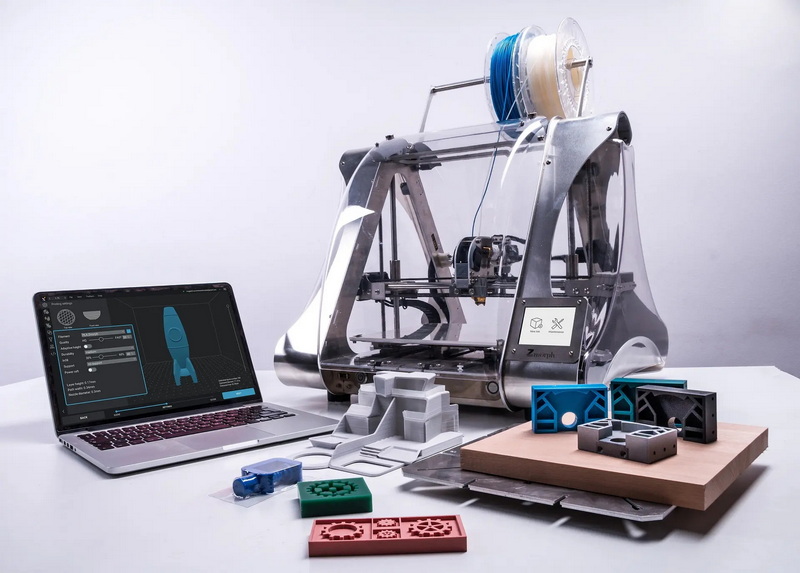
The benefits of 3D printing extend far beyond convenience. It represents an evolution toward on-demand, sustainable production. Key advantages include:
- Design Freedom: Complex geometries, internal cavities, and lattice structures can be printed easily, encouraging innovation without manufacturing limitations.
- Waste Reduction: Additive methods use only the necessary material, greatly reducing waste compared to cutting or milling blocks of material.
- Customization: Each part can be uniquely designed for a specific user or function, invaluable in personalized medicine and consumer goods.
- Shorter Lead Times: Digital-to-physical translation accelerates production cycles by eliminating tooling and setup stages.
- Cost Efficiency: Especially for small runs or complex parts, 3D printing minimizes expenses associated with molds, labor, and assembly.
- Local Manufacturing: Products can be printed where they're needed—reducing shipping costs and carbon emissions.
Together, these benefits position 3D printing as a key driver of Industry 4.0, the future of intelligent, connected manufacturing.
Despite its revolutionary potential, 3D printing carries several limitations that manufacturers and users must consider:
- Material Restrictions: Although the range is growing, the selection of printable materials remains limited compared to traditional methods.
- Surface Finish Quality: Some printed parts exhibit visible layer lines requiring post-processing for a smoother aesthetic.
- Speed Constraints: Printing can be slower than mass production lines for high-volume manufacturing.
- Mechanical Properties: 3D printed components may not always equal the strength or uniformity of conventionally made parts.
- Cost of Equipment: Industrial printers and advanced materials can involve steep initial investment.
- Intellectual Property Concerns: Easy replication of designs raises copyright and patent challenges.
Understanding these challenges ensures businesses apply 3D printing where its strengths deliver the best results.
As the technology matures, specialized 3D printing service bureaus have emerged, offering professional-grade production for individuals and organizations without the need to own equipment.
- Rapid Prototyping: Fast production of prototypes with various finishes and materials.
- Batch Manufacturing: Small to mid-scale production of end-use components.
- 3D Design and Modeling Assistance: Experts refine CAD files and optimize them for printing.
- Material Consultation: Guidance on selecting and testing materials to match performance needs.
- Post-Processing and Finishing: Services like vapor smoothing, dyeing, and assembly ensure professional results.
Several international companies dominate the global market, including Shapeways, Sculpteo, Materialise, and Stratasys Direct Manufacturing. These providers allow users to upload digital files, choose materials, and have the final product shipped worldwide.
Additionally, localized services are growing rapidly—offering support for startups, laboratories, and artistic creators. Many of these services now integrate AI-driven design optimization and on-demand inventory management, making 3D printing increasingly efficient and sustainable.
The trajectory of 3D printing points toward an era of smarter, more personalized manufacturing. Several emerging trends shape its future:
- Metal Additive Manufacturing: Advanced printers can now use titanium or aluminum powders to create high-performance mechanical parts.
- 4D Printing: Introduces materials that change shape over time in response to environmental factors such as temperature, moisture, or light.
- Bioprinting and Tissue Engineering: Ongoing research aims to produce fully functional organs and biological systems.
- AI and Automation Integration: Artificial intelligence improves design efficiency, material selection, and real-time defect detection.
- Sustainability and Circular Production: Recycled materials and biodegradable filaments are helping achieve eco-friendly manufacturing goals.
In coming years, distributed, cloud-connected 3D printing networks could allow anyone to manufacture objects locally using global digital blueprints, dramatically transforming global supply chains and production economics.
- Medical Marvels: Scientists at the University of Michigan 3D printed airway splints that saved infants suffering from collapsed windpipes—a groundbreaking medical achievement.
- Space Exploration: SpaceX and NASA use 3D-printed rocket engines and spacecraft components to reduce weight and cost while improving performance.
- Automotive Industry: Luxury brands like Bugatti and Porsche produce titanium brake calipers and custom parts using metal additive manufacturing.
- Disaster Relief Construction: Organizations are exploring 3D-printed concrete shelters to offer rapid, low-cost housing after natural disasters.
These examples prove that additive manufacturing is no longer theoretical—it's a real and growing force reshaping industries globally.
3D printing stands at the intersection of creativity, efficiency, and technological innovation. It empowers individuals and companies to design without limits, manufacture locally, and operate sustainably. While challenges such as material development, production speed, and cost persist, continuous advancements are quickly overcoming them.
From custom prosthetics and aerospace components to architectural marvels and everyday consumer goods, 3D printing continues to expand its influence and accessibility. As innovation accelerates, the future points toward a world where digital design meets instant physical realization—marking the dawn of a new industrial era.
Common materials include thermoplastics like PLA, ABS, and PETG; resins for SLA; nylon for SLS; and metals such as titanium, aluminum, and steel. Experimental materials include ceramics, composites, and bio-inks for medical research.
While not yet cost-effective for mass production, it excels at short runs, customized products, and on-demand parts. Hybrid manufacturing systems are evolving to make large-scale additive production more practical.
Accuracy depends on printer type, material, and settings. Industrial printers achieve tolerances as fine as 0.01 mm, which is sufficient for most engineering and medical applications.
Yes. With proper design and durable materials, 3D printers produce fully functional components used in machinery, electronics, and even aerospace systems.
Costs vary widely. Hobbyist prints may cost under $20, while high-precision metal parts can range from hundreds to thousands of dollars depending on size, material, and complexity.


