From idea to market-ready product, our NPI solutions make every stage easier, faster. Discover How We Help

Views: 222 Author: Tomorrow Publish Time: 2025-12-21 Origin: Site


Content Menu
● The Industrial Domain of CNC Machining
● CNC Machining in Aerospace Industry
● CNC Machining in the Automotive Industry
● CNC Machining in the Medical Industry
● CNC Machining in the Electronics Industry
● CNC Machining in the Energy Industry
● CNC Machining in the Defense Industry
● The Role of CNC Machining in Industrial Automation
● Economic Impact and Market Growth
● Environmental Sustainability in CNC Machining
● Future Trends in CNC Machining
● FAQs
>> 1. What does CNC stand for in manufacturing?
>> 2. Which industries use CNC machining the most?
>> 3. How does CNC machining improve product quality?
>> 4. Can CNC machining be customized for small-scale businesses?
>> 5. What technologies shape the future of CNC machining?
Computer Numerical Control (CNC) machining has become a cornerstone of modern industry. This advanced manufacturing technology blends digital precision with mechanical craftsmanship, enabling the creation of complex parts that meet exact specifications. From aerospace engines to prosthetic implants, CNC machining influences nearly every sector that depends on precision engineering and production efficiency.
Understanding which industry CNC machining belongs to requires recognizing its role as the beating heart of the manufacturing world. While traditionally associated with metalworking, CNC machining today touches diverse industries, each leveraging its accuracy, efficiency, and compatibility with cutting-edge materials.
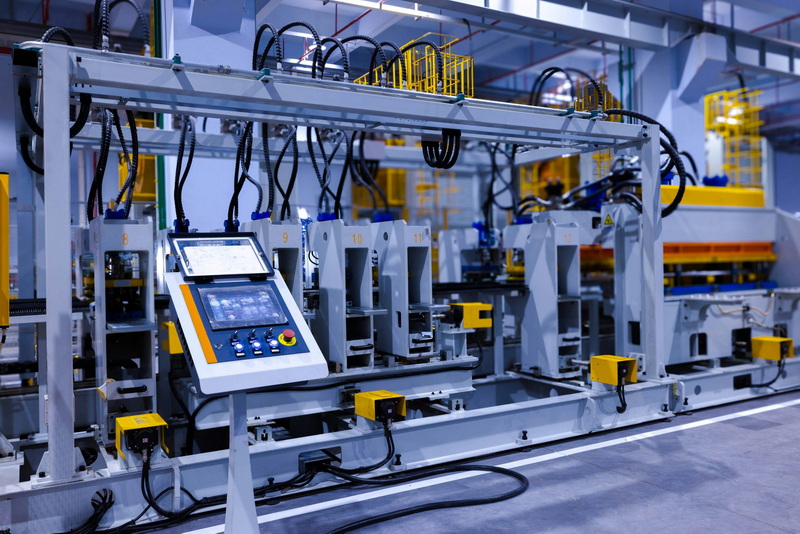
CNC machining is a subtractive manufacturing process that removes material from a workpiece to create a desired shape. The process relies on programs coded from 3D CAD (Computer-Aided Design) models, which are then converted into specific instructions that control machine tools. These machines may drill, cut, mill, grind, or turn material with microscopic precision.
Unlike traditional manual operations, CNC systems function with minimal human supervision once programmed. Operators focus on setup, calibration, and quality assurance, while automated systems perform the cutting and tooling work. This consistent, error-reducing process makes CNC machining ideal for industries requiring uniformity and mass production while maintaining tight tolerances—as small as a few micrometers.
Common CNC machines include:
- CNC Mills: Used for drilling and cutting complex shapes.
- CNC Lathes: Perfect for cylindrical or symmetrical products.
- Laser Cutters: Ideal for fine engraving or cutting metals and plastics.
- EDM (Electrical Discharge Machines): Used to shape hard metals with electrical sparks.
- CNC Routers: Often used in wood and soft material fabrication.
With multi-axis machines capable of simultaneous motion along several planes, CNC machining can produce intricate geometries that would be impossible—or enormously time-consuming—by hand.
CNC machining primarily belongs to the manufacturing industry, specifically the precision engineering and metal fabrication segment. Within this framework, CNC technology drives progress in mechanical design, industrial production, and product innovation. However, labeling CNC machining as belonging to only one industry underrepresents its reach. Today, it serves as a cross-functional technology, connecting design, production, and quality control across almost every major industrial field.
In a sense, CNC machining is an enabler industry—a technological foundation that empowers other sectors. It bridges raw material processing and finished product creation, linking digital design with tangible output. This versatility explains why industries as distinct as healthcare, aerospace, and consumer electronics all rely on it.
The aerospace sector demands exceptional accuracy, strength, and reliability. Aircraft components must endure extreme conditions—temperature shifts, vibrations, and pressure changes—without compromising safety. CNC machining delivers the necessary precision for creating such high-performance components.
Common aerospace parts produced using CNC machining include turbine blades, jet engine housings, landing gear systems, and internal airframe components. Manufacturers use advanced materials like titanium and Inconel, which are both lightweight and resistant to corrosion and heat. These materials are difficult to machine traditionally, but CNC systems handle them efficiently, maintaining quality and consistency.
CNC machines also aid in rapid prototyping—a critical process during aircraft design and testing. Engineers can quickly refine geometries, reducing development time while ensuring optimized aerodynamics and structural integrity.
In the automotive world, CNC machining is integral to both traditional and electric vehicle production. The process helps create thousands of crucial components, including engine blocks, cylinder heads, fuel injectors, brake components, and gearboxes.
For electric vehicles (EVs), manufacturers rely on CNC machining to fabricate high-tolerance parts for motors, battery casings, and lightweight aluminum structures. These components demand accuracy to optimize energy efficiency and safety.
CNC machining also supports custom car parts, enabling automakers and aftermarket companies to create performance-enhancing modifications quickly. Automation integration further boosts production speed, allowing global automotive brands to meet tight deadlines while maintaining top-level quality control.
Few industries demand as much precision as healthcare. CNC machining revolutionized the medical manufacturing landscape by allowing exact replication of intricate parts that directly affect human health.
Medical applications of CNC machining include:
- Surgical tools such as scalpels, forceps, and bone drills.
- Implants like artificial joints, dental prosthetics, and cranial plates.
- Custom-fit prosthetic limbs designed to match individual anatomy.
Medical-grade materials used in machining include stainless steel, titanium, cobalt-chrome, and specialized polymers. Each material must meet biocompatibility and sterilization requirements. CNC machining ensures smooth finishes and tight tolerances critical for comfort, safety, and regulatory compliance.
Additionally, CNC machines aid in rapid prototyping for medical research, letting manufacturers test new designs faster and more accurately.
In electronics, miniaturization and precision are key. Devices continue shrinking, requiring components with extreme dimensional consistency. CNC machining supports this trend through its ability to manufacture small-scale parts with impeccable accuracy.
Typical CNC-machined electronic components include:
- Enclosures and heat sinks for circuit boards.
- Connectors and casings for sensors and switches.
- Prototypes for testing new consumer devices.
CNC machining is also indispensable in creating molds for injection-molded plastic parts used in smartphones, computers, and appliances. Machining these molds ensures mass-produced electronics maintain their precise, compact form.
In the energy sector—covering oil, gas, renewables, and nuclear—CNC machining ensures mechanical integrity in high-stress environments. For instance, CNC machines produce turbine blades, compressors, valve systems, and generator housings.
Wind turbine and solar panel manufacturing also depend on CNC machining for consistent structural alignment and aerodynamic performance. As alternative energy expands, CNC machining helps develop innovative solutions for energy efficiency and equipment durability.
CNC machining's capacity for heavy-duty material processing, like stainless steel and hardened alloys, makes it indispensable for equipment that must withstand long-term strain and environmental exposure.
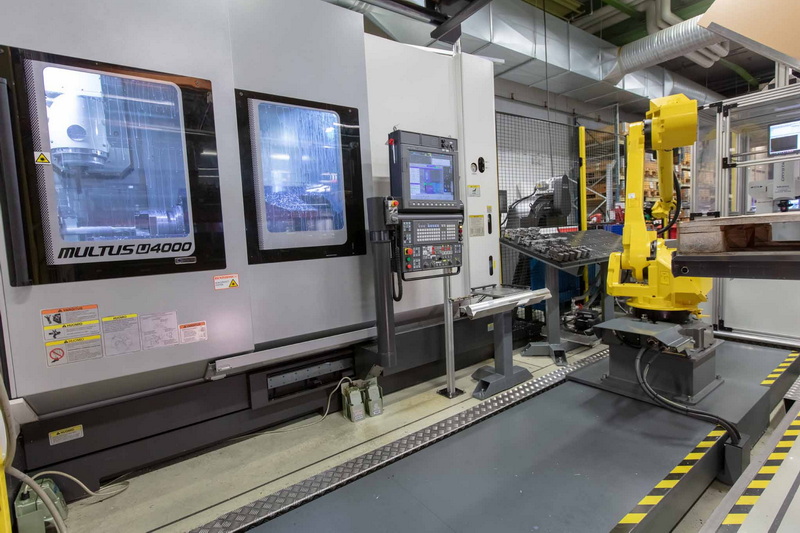
Defense and military applications require components built to exact specs that perform reliably under extreme conditions. CNC machining allows defense contractors to manufacture weapons components, armor plates, communication devices, and vehicle parts with unmatched accuracy.
Additionally, CNC machining enables rapid prototyping of new defense technologies, reducing the design-to-deployment timeframe. Parts for aircraft, naval systems, and ground vehicles all benefit from the process, ensuring superior functionality and safety in mission-critical situations.
CNC machining is a core pillar of industrial automation and Industry 4.0. Modern CNC machines often connect with computer networks, sensors, and AI-driven systems to optimize workflows. Machine learning algorithms can analyze operational data in real time, predicting maintenance needs and preventing downtime.
This advanced automation eliminates human error while maintaining consistency across large-scale production. As a result, companies can operate 24/7 with minimal oversight—boosting productivity and cost efficiency.
By integrating intelligent software and IoT systems, CNC machining not only enhances performance but also aligns perfectly with smart factory concepts central to global industrial transformation.
The CNC machining industry constitutes a multi-billion-dollar market that continues expanding each year. Analysts predict sustained growth, fueled by increasing automation adoption, demand for precision components, and technological innovation.
Beyond large-scale manufacturers, small enterprises and startups also benefit from CNC technology through digital manufacturing platforms that offer on-demand machining services. This accessibility allows smaller companies to compete with major producers by ordering custom parts affordably and at scale.
Furthermore, CNC machining supports economies by creating high-skilled jobs in programming, design, maintenance, and material engineering—fields that blend technology and craftsmanship.
As sustainability becomes central to modern manufacturing, CNC machining offers several eco-friendly advantages. By precisely removing only the material necessary, waste is minimized. Additionally, efficient cutting paths, smart coolant systems, and tool optimization reduce energy consumption during operation.
Recycling plays an important role as well—most scrap metal from CNC processes can be reprocessed and reused. Software simulations before actual machining further reduce wasted materials by testing the process digitally first. These advancements collectively make CNC machining a more environmentally responsible approach than many traditional manufacturing methods.
CNC machining continues evolving alongside digital and material innovations. Key trends include:
- Hybrid manufacturing, combining CNC with 3D printing for greater flexibility and design freedom.
- AI-assisted optimization, predicting ideal cutting paths and adjusting in real time for wear or material variation.
- Cloud-based monitoring, allowing operators to oversee production remotely.
- Multifunctional machining, with 5-axis systems achieving one-setup production for complex parts.
- Integration with robotics, automating part loading, inspection, and tool changing.
These trends will revolutionize how industries design and produce goods. With continuous innovation, CNC machining will remain a foundation of modern industrial capability well into the future.
CNC machining stands not only as a manufacturing process but as a technological bridge connecting creativity, efficiency, and sustainability across industries. Rooted in the manufacturing sector, it extends its influence to aerospace, automotive, healthcare, defense, energy, and electronics—each benefiting from its unparalleled precision and consistency. As digital manufacturing evolves, CNC machining's adaptability ensures its vital role in shaping both current and future industrial progress.
CNC means Computer Numerical Control. It describes a system that automates machine tools using pre-programmed software to achieve high accuracy and repeatability.
CNC machining is vital in aerospace, automotive, medical, defense, electronics, and energy industries. Each relies on CNC precision for both prototyping and mass production.
CNC machining ensures consistent part replication, minimizing errors and deviations. Advanced sensors and feedback mechanisms allow for precise cutting, which leads to superior surface quality and durability.
Yes. Many online platforms and local workshops offer small-batch CNC machining services, enabling startups and inventors to produce prototypes or limited runs economically.
The future combines CNC with AI, IoT, and additive manufacturing. Real-time monitoring, predictive analytics, and hybrid systems will improve efficiency and sustainability.


