From idea to market-ready product, our NPI solutions make every stage easier, faster. Discover How We Help

Views: 222 Author: Tomorrow Publish Time: 2025-12-21 Origin: Site


Content Menu
● Understanding the Meaning of CNC Machining
● Materials Used in CNC Machining
● Axes and Levels of CNC Machining
● Disadvantages and Challenges
● Applications Across Industries
● CNC Machining and Industry 4.0
● Quality Control and Precision Testing
● FAQ
>> 1. What does CNC stand for?
>> 2. What are the main types of CNC machines?
>> 3. Can CNC machines cut both metals and plastics?
>> 4. How accurate is CNC machining compared to manual methods?
>> 5. What is the future of CNC machining?
CNC machining stands as one of the cornerstones of modern manufacturing. It has revolutionized how products are designed, engineered, and produced, enabling industries to achieve levels of precision, efficiency, and complexity that traditional manual machining simply cannot match. Whether building aerospace components, custom medical implants, or automotive parts, CNC machining enables highly accurate, repeatable production that meets tight quality standards and global demand.
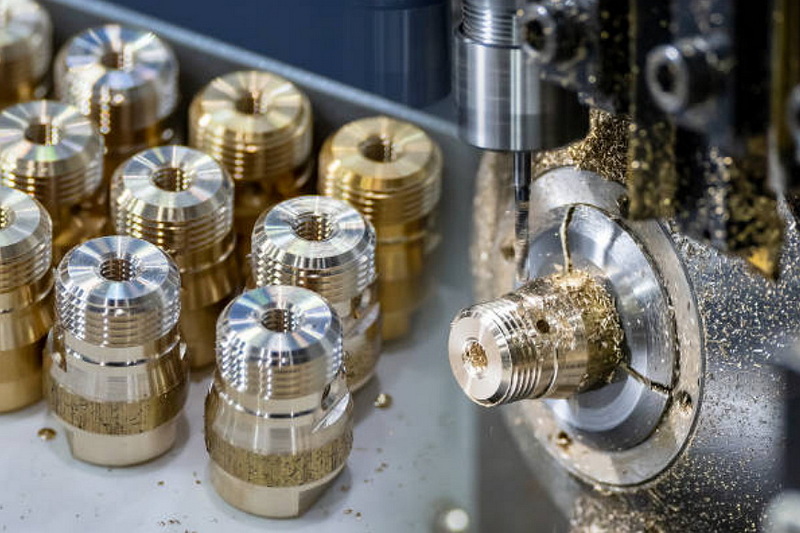
The term CNC stands for Computer Numerical Control, referring to the automation of machine tools through digital systems. In simple terms, CNC machining uses programmed codes to control machinery and tools, guiding their movements, cutting speeds, and positioning without manual input. The machines precisely follow digital instructions derived from a CAD (Computer-Aided Design) model of the part.
This automation eliminates guesswork and human error. Instead of machinists manually adjusting tools or eyeballing tolerances, CNC systems execute instructions to the exact micrometer. Every cut is a data-driven action, ensuring consistent results even across thousands of identical parts.
CNC machining follows a structured, step-by-step process that begins with digital design and ends with a finished physical part. The process includes the following major phases:
1. CAD Design Creation – Engineers start by designing a detailed 3D representation using CAD software. The model defines all dimensions, geometries, and tolerances required for production.
2. CAM Conversion – Once the model is finalized, it's imported into CAM (Computer-Aided Manufacturing) software, which generates the toolpaths—the paths that the cutting tools will follow. The CAM program then generates G-code, which instructs the CNC machine how to move.
3. Machine Setup – The operator loads the raw material (also called a *workpiece*) onto the machine's bed or chuck and installs the necessary cutting tools, ensuring alignment and calibration.
4. Machining Operation – The machine executes the G-code, moving cutting tools along predetermined axes to remove material from the workpiece. Tools can perform milling, drilling, turning, or grinding operations, depending on the design.
5. Inspection and Finishing – After machining, the part undergoes quality inspection to ensure all specifications are met. Finishing processes—like polishing, deburring, or anodizing—may follow.
This process can range from a few minutes for small prototypes to several hours for complex multi-part assemblies. Precision is maintained throughout by the machine's computerized control system, which continuously monitors positioning and feedback signals.
CNC machining is not a single process or tool—it's a collective term encompassing a broad range of specialized equipment:
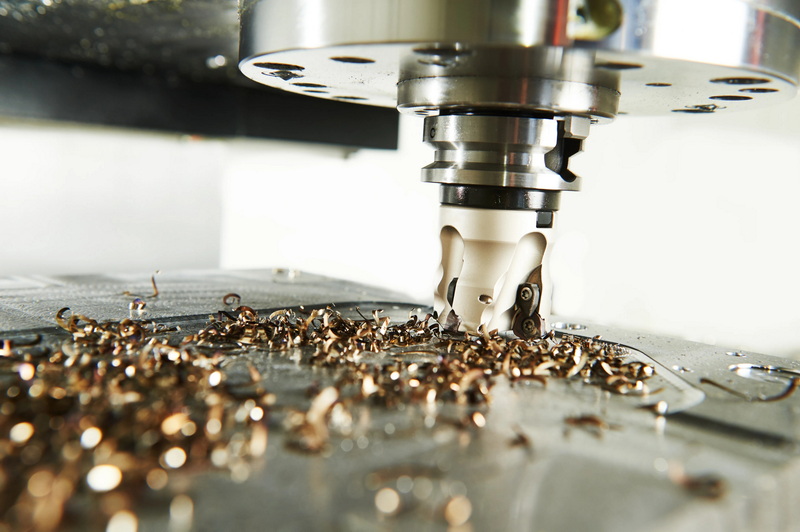
- CNC Milling Machines: Use rotating multi-point cutting tools to remove material. They are versatile and ideal for creating flat surfaces, slots, and intricate cavities.
- CNC Lathes or Turning Centers: Rotate the workpiece against a stationary cutting tool, ideal for cylindrical or symmetrical parts such as shafts and fittings.
- CNC Routers: Designed for cutting and shaping softer materials like wood, plastics, and composites.
- CNC Plasma Cutters: Employ ionized gas to slice through metals efficiently and are often used for large metal sheets.
- CNC Laser Cutters: Use focused laser beams for high-precision cutting of metals, plastics, and ceramics with minimal heat distortion.
- CNC Electrical Discharge Machines (EDM): Remove material through controlled electrical discharges, useful for hard metals and intricate shapes where conventional cutting fails.
Each machine type offers distinct advantages and is chosen based on the part geometry, material, and production requirements.
One of CNC machining's greatest strengths is its ability to process a wide range of materials. Manufacturers select based on mechanical strength, weight, cost, and environmental factors.
- Metals: Aluminum, steel, stainless steel, brass, titanium, and copper are most common for structural and load-bearing applications.
- Plastics: Materials such as ABS, nylon, PEEK, and polycarbonate are used in lightweight, corrosion-resistant parts.
- Composites: Carbon fiber and fiberglass composites combine durability with low weight for aerospace and automotive uses.
- Ceramics: Used where insulation or high-heat resistance is required, particularly in medical and electronic applications.
Choosing the right material requires balancing machinability, tool wear rate, and performance characteristics.
CNC machines operate along one or more axes—directions in which the tool or workpiece can move. Basic milling machines operate on three axes (X, Y, and Z), but more advanced machines operate on five or even seven axes.
- 3-axis machining: Moves along X, Y, and Z axes; suitable for simple geometries.
- 4-axis machining: Adds rotation around the X-axis, allowing for angled features and holes.
- 5-axis machining: Adds rotation around both X and Y axes, enabling near-unlimited part complexity.
Multi-axis machining dramatically improves part accuracy and reduces the need for repositioning, which enhances efficiency for high-precision industries.
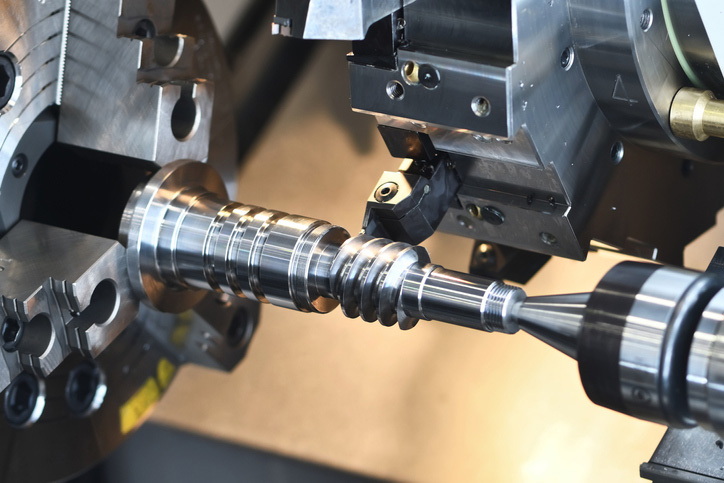
CNC machining provides advantages unmatched by manual or semi-automated manufacturing methods:
1. Precision and Repeatability: Computer control ensures repeatable accuracy, achieving tolerances as tight as ±0.001 inch.
2. Speed and Efficiency: Once programmed, CNC machines can run continuously with minimal supervision.
3. Complex Geometry: CNC systems handle intricate parts with internal channels, curves, and varying contours easily.
4. Reduced Labor Costs: One operator can supervise multiple machines simultaneously.
5. Scalability: Ideal for both prototype development and mass production with minimal changeover time.
Despite its benefits, CNC machining comes with challenges:
- High Capital Investment: Machines and setup costs are expensive.
- Programming Skill Requirements: Skilled machinists and engineers are essential to create accurate toolpaths and avoid costly errors.
- Waste Production: As a subtractive process, it generates waste material.
- Maintenance: Machines must be calibrated, lubricated, and maintained regularly to ensure accuracy.
Emerging AI tools and automated calibration systems are helping to mitigate these limitations, optimizing performance over time.
CNC machining supports nearly every manufacturing sector:
- Aerospace: Producing components like turbine blades, engine housings, brackets, and fasteners that must withstand extreme temperatures and stress.
- Automotive: Used to manufacture engine blocks, pistons, gear housings, and prototype parts.
- Medical: Produces prosthetics, implants, surgical tools, and dental frameworks requiring micron-level precision.
- Defense: Critical components such as missile housings, firearm parts, and vehicle armor rely on tight tolerances.
- Electronics: CNC machining makes custom housings, panels, and heat-sink systems for high-performance electronics.
- Energy: Components for turbines, pipelines, and drilling equipment require CNC accuracy to ensure operational safety.
CNC machining plays a vital role in the Industry 4.0 revolution, where intelligent manufacturing systems interconnect via sensors, data analytics, and networked controls. Future CNC systems integrate with AI algorithms and IoT sensors to self-optimize, anticipate maintenance, and adapt toolpaths dynamically in real-time.
Through digital twins and simulation, engineers can now model machining operations virtually before production, predicting tool wear and optimizing cutting efficiency. This leads to sustainable production, reduced downtimes, and improved throughput.
The reliability of CNC machining is supported by advanced metrology and inspection technologies, such as:
- Coordinate Measuring Machines (CMMs): Inspect produced parts with accuracy down to microns.
- Laser Scanners: Verify geometric dimensions rapidly.
- In-Process Monitoring: Sensors track tool wear and vibration in real-time.
Constant quality assurance ensures that every part meets design intent, safety norms, and ISO manufacturing standards.
CNC machining continues to evolve alongside automation, AI, and robotics. The next generation of CNC systems will feature adaptive machining, where machines adjust automatically based on tool wear, vibrations, or thermal changes. Furthermore, hybrid systems combining CNC and additive manufacturing are emerging—allowing parts to be 3D printed and then precision-machined to final tolerances, merging the best of both technologies.
Environmentally conscious machining—focused on energy efficiency, coolants recycling, and minimal scrap—is also shaping the industry's next era.
CNC machining represents the merging of precision engineering and smart automation. It enables industries to produce highly complex, consistent, and high-quality parts at scale. From concept design to physical realization, CNC machining transforms digital data into tangible products with accuracy once thought impossible. Understanding what CNC machining means is to understand how modern innovation runs—built upon the precision, logic, and consistency of computerized control.
CNC stands for Computer Numerical Control, a process that uses digital instructions to control machine tools automatically.
Major types include CNC mills, lathes, routers, plasma cutters, laser machines, and EDMs—each serving unique cutting and shaping functions.
Yes. CNC machining works on metals like steel and aluminum as well as plastics such as ABS, nylon, and acrylic, depending on tool speed and comfort with material hardness.
CNC machining achieves tolerances up to ±0.001 inch or better, vastly exceeding what manual machinists can replicate reliably.
Future trends include AI-driven optimization, hybrid additive/subtractive manufacturing, and eco-conscious machining methods that improve precision while minimizing waste.


