From idea to market-ready product, our NPI solutions make every stage easier, faster. Discover How We Help

Views: 222 Author: Tomorrow Publish Time: 2025-12-24 Origin: Site


Content Menu
● How CNC Turning Machines Work
● Key Components of a CNC Turning Machine
● Types of CNC Turning Machines
● Common CNC Turning Operations
● Materials Processed on CNC Turning Machines
● Precision, Tolerances, and Quality Control
● Industries Utilizing CNC Turning
● Future Developments in CNC Turning
● Environmental Considerations
● FAQ
>> 1. What is the main function of a CNC turning machine?
>> 2. How does CNC turning differ from CNC milling?
>> 3. What materials can CNC turning machines process?
>> 4. How is quality maintained in CNC turning?
>> 5. What are the current trends in CNC turning?
Computer Numerical Control (CNC) turning machines have revolutionized modern manufacturing. They combine precise engineering with computerized automation to shape cylindrical or conical components out of raw materials. Whether producing automotive shafts, aerospace fittings, or medical parts, CNC turning allows manufacturers to achieve exceptional quality and repeatability.
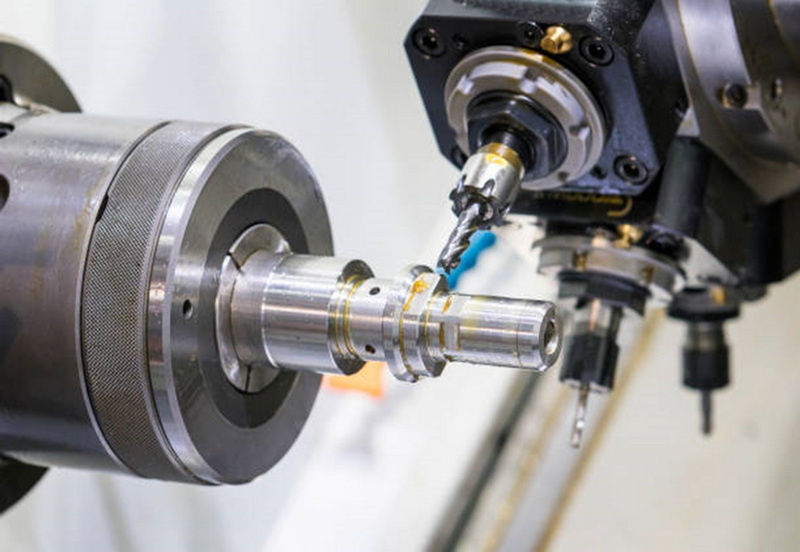
CNC turning is one of the oldest yet most refined machining processes. It involves rotating a workpiece while a cutting tool remains stationary, removing layers of material to achieve the desired shape. The term “CNC” signifies that these operations are controlled by computer numerical instructions instead of manual intervention, enabling accuracy down to microns.
In traditional lathe operations, results depended largely on the operator's manual skills. CNC turning eliminates this limitation by automating every tool movement, spindle rotation, and feed rate. The outcome is a perfectly consistent and efficient production workflow, making it indispensable for industries that demand perfection and scalability.
The principle behind CNC turning machines is straightforward yet powerful: while the workpiece rotates rapidly, a cutting tool precisely follows programmed paths to carve the material. The entire operation is governed by digital G-code that instructs the machine when to move, how deep to cut, and at what speed.
A typical CNC turning cycle involves the following steps:
1. Mounting the workpiece securely using a chuck or collet.
2. Loading the CNC program via the machine's control panel.
3. Setting up the cutting tools on the turret according to the program's tool calls.
4. Running a simulation or dry run to verify tool paths and dimensions.
5. Executing the machining process, where the tools perform operations like facing, threading, grooving, or boring.
Sensors and monitoring systems constantly track performance, temperature, and vibration to prevent tool wear or measurement deviation. Many modern machines can automatically compensate for thermal expansion or spindle drift, maintaining consistent accuracy throughout long production cycles.
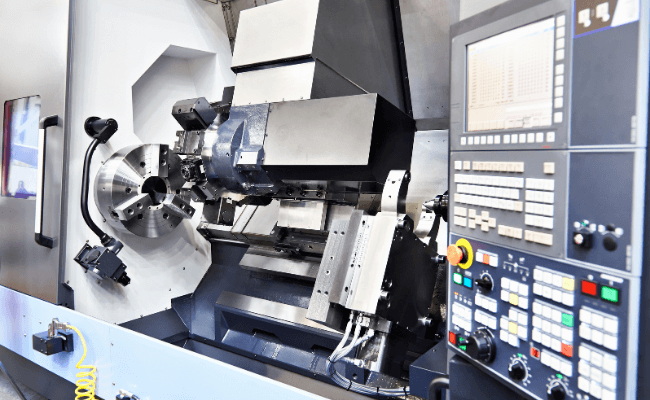
A CNC turning machine integrates several advanced components working in harmony:
- Spindle: The rotating axis that drives the workpiece. Its speed is precisely controlled according to machining requirements.
- Chuck or Collet System: Secures the part during rotation. Hydraulic or pneumatic chucks improve grip consistency.
- Tool Turret: A rotating unit that holds multiple cutting tools, allowing automatic switching during machining.
- Bed and Carriage: Provide rigidity and absorb cutting forces to minimize vibrations.
- Control Panel: The communication interface where operators input commands and monitor parameters.
- Tailstock (on long machines): Supports longer parts to prevent deflection and ensure concentricity.
These components collectively form a compact yet powerful system capable of sustaining high spindle speeds and complex movements with remarkable stability.
Different types of CNC turning machines serve distinct operational purposes:
1. Horizontal Turning Centers: The most versatile and common machines used for general engineering applications, combining high-speed spindles and multi-tool turrets.
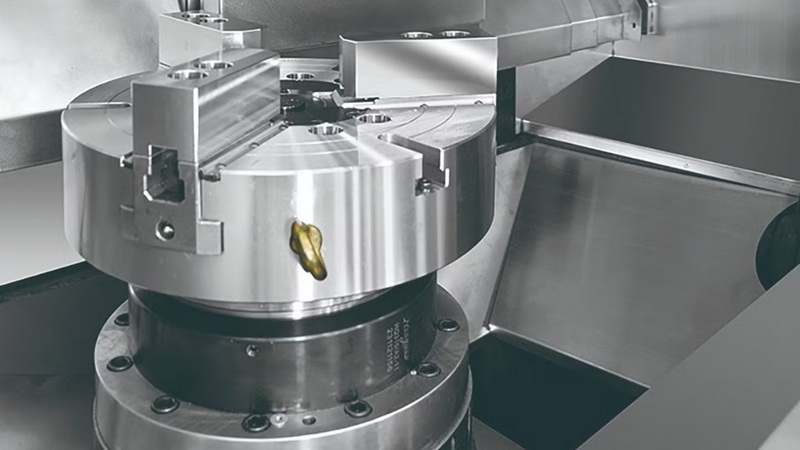
2. Vertical Turning Lathes (VTLs): Ideal for large or heavy parts like flywheels or turbine casings, where gravity assists clamping and chip removal.
3. Swiss-Type Lathes: Specialized machines designed for precision miniature parts with tight tolerances, often used in electronics or medical devices.
4. Multi-Spindle Turning Centers: Allow concurrent processing of multiple workpieces, significantly improving throughput.
5. Mill-Turn Hybrid Machines: Combine milling and turning in one operation, reducing setup changes and increasing accuracy on complex geometries.
Choosing the right type depends on production volume, part complexity, and material characteristics.
CNC turning can perform a diverse range of operations:
- Facing: Produces a flat, smooth face at the part end.
- Taper Turning: Creates conical surfaces by gradually changing tool depth along the axis.
- Grooving: Cuts narrow channels of defined width for seals or snap rings.
- Thread Cutting: Machines internal or external threads with extreme precision.
- Boring and Drilling: Enlarges holes or creates axial cavities.
- Parting Off: Separates finished parts from the remaining bar stock.
Each of these actions is programmable, repeatable, and modifiable through digital software adjustments rather than manual intervention.
CNC turning accommodates a wide variety of materials, from light metals to high-tensile alloys. Common examples include:
- Aluminum and its alloys for automotive and aerospace structures.
- Stainless steel for high-strength, corrosion-resistant components.
- Brass and copper for precision electrical connectors.
- Titanium for medical and aerospace applications requiring strength-to-weight optimization.
- Engineering plastics such as nylon, PEEK, and polycarbonate for lightweight or non-conductive parts.
Each material type requires specific tool geometries, spindle speeds, and lubrication methods to ensure a high-quality surface finish and tool longevity.
CNC turning offers numerous advantages for modern manufacturing:
- Consistency: Produces uniform parts across large batches with zero deviation.
- Precision: Tolerances can reach within ±0.002 mm in advanced setups.
- Speed: Automated processes shorten production cycles and reduce downtime.
- Cost-Efficiency: Eliminates manual rework, reducing labor and waste.
- Flexibility: Programs can be quickly modified to produce new designs.
- Automation Compatibility: Machines integrate easily with robotic loaders, conveyors, and quality control systems.
These attributes make CNC turning not only efficient but also an integral part of Industry 4.0 smart manufacturing systems.
Software serves as the foundation of CNC turning operations. Models are first created in CAD software such as SolidWorks or AutoCAD. These digital designs are then processed through CAM (Computer-Aided Manufacturing) software like Fusion 360 or Mastercam, which generates the G-code used by the turning machine.
Modern CAM systems simulate tool paths to detect potential collisions, optimize cutting routes, and even estimate power consumption. Operators can adjust spindle speed, feed rate, tool radius offsets, and coolant schedules—all virtually—before the first cut is made.
This integration between digital modeling and physical production allows rapid prototyping, customized manufacturing, and error-free scaling of complex geometries.
CNC turning machines are often evaluated by their ability to maintain micro-level tolerance across production runs. Quality control in CNC machining involves dimensional inspection, surface finish assessment, and tool wear analysis.
Advanced shops use in-process measurement systems such as laser probes and CMMs (Coordinate Measuring Machines) to ensure every part adheres to strict engineering drawings. Statistical Process Control (SPC) data logging also tracks dimensional variation to predict and prevent deviation trends.
CNC turning is a cornerstone in a range of industries:
- Aerospace: Produces turbine shafts, fasteners, and hydraulic system components.
- Automotive: Manufactures driveshafts, gear blanks, and brake components.
- Medical: Creates surgical instruments, dental implants, and prosthetic connectors.
- Energy: Machines fittings and couplings for pipelines and turbines.
- Defense: Produces precision shells, equipment housings, and optical mounts.
The common factor across all sectors is the demand for precision, dependability, and scalability.
The evolution of CNC turning continues. Future machines are increasingly integrating artificial intelligence for self-adjusting optimization based on real-time feedback. Predictive maintenance features powered by IoT sensors forecast tool wear before breakdowns occur.
Hybrid manufacturing—combining turning, milling, and additive manufacturing in a single setup—enables complex parts to be partially 3D printed and then finished through subtractive turning. Advances in tool coatings, such as diamond and ceramic composites, have further extended tool life and improved surface quality.
Automation is also advancing with robotic arms capable of part loading, unloading, and quality inspection without manual touchpoints, forming fully autonomous “lights-out” manufacturing environments.
Modern manufacturing places increasing emphasis on sustainability. CNC turning contributes to this goal through efficient material use, recycling-friendly processes, and minimized waste. Coolant filtration systems and chip recovery units allow environmentally responsible production. Energy-efficient motors and smart control algorithms also reduce overall carbon footprint, aligning precision engineering with green manufacturing initiatives.
CNC turning machines embody the perfect balance between automation, precision, and scalability. They efficiently transform raw materials into high-accuracy, production-ready parts for virtually every modern industry. As technology evolves, CNC turning continues to redefine manufacturing possibilities—delivering flawless consistency, minimizing waste, and accelerating innovation. The future of industrial production relies heavily on such intelligent, adaptive, and sustainable machining systems.
It shapes rotating workpieces by removing material with a stationary cutting tool, creating cylindrical or conical forms with computer-controlled precision.
Turning rotates the workpiece while the cutting tool remains stationary, whereas milling rotates the cutting tool around a stationary part.
They can handle metals like aluminum, steel, brass, titanium, and also plastics such as nylon, PEEK, and thermoplastics, depending on cutting conditions.
Precision is ensured through real-time sensor feedback, tool calibration, and dimensional checks using coordinate measuring machines.
Recent trends include AI-driven monitoring, IoT integration, hybrid manufacturing, and robotic automation that enhance efficiency and sustainability.


