From idea to market-ready product, our NPI solutions make every stage easier, faster. Discover How We Help

Views: 222 Author: Tomorrow Publish Time: 2025-12-04 Origin: Site


Content Menu
● Aerospace Component Manufacturing
● Electronics and 3C Product Components
● Industrial Machinery and Gears
● Agriculture and Food Processing
● Furniture, Jewelry, and Custom Goods
● Defense, Marine, and Prototyping
● Advanced Applications and Materials
● FAQ
>> 1. What materials work best with CNC milling machines?
>> 2. How precise are CNC milled parts?
>> 3. Can CNC mills produce prototypes quickly?
>> 4. What industries rely most on CNC milling?
>> 5. Is CNC milling suitable for small businesses?
CNC milling machines remove material from a workpiece using rotating cutting tools that move along multiple axes to create precise shapes. These machines handle metals like aluminum, steel, titanium, and Inconel, as well as wood, plastics, composites, and even high-temperature alloys. They support operations such as drilling, boring, cutting, engraving, milling, and threading to produce complex parts with high accuracy and tolerances as tight as 0.001 inches.[1][11][12]
The versatility of CNC milling stems from programmable controls that enable multi-tool operations for intricate designs across 3-, 4-, or 5-axis configurations. Manufacturers use these machines across industries for prototypes, custom components, jigs, fixtures, and high-volume production runs. Precision levels reach surface finishes down to Ra 0.4 microns, making them essential for demanding applications where repeatability ensures quality.[2][12][13]
Desktop models suit hobbyists and small shops, while large gantry mills tackle oversized parts for heavy industry. Hybrid machines combine milling with turning for complete machining in one setup, reducing handling time.[14][1]
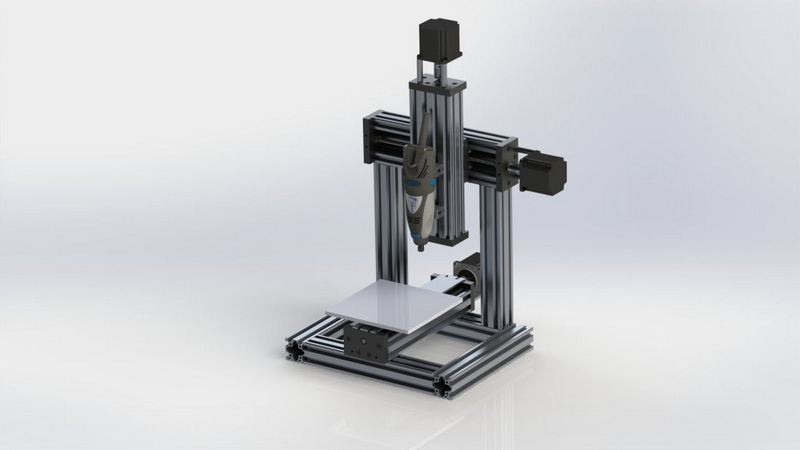
CNC milling machines excel in crafting automotive components like engine blocks, cylinder heads, pistons, suspension arms, brake calipers, transmission gears, and dashboards. These parts require complex geometries, internal cooling passages, and high strength, achieved through multi-axis movements for undercuts, contours, and thin walls.[11][15][1]
Engine blocks feature precise bores and mounting faces milled from cast iron or aluminum for optimal sealing and balance. Suspension control arms and knuckles demand lightweight designs from forged alloys, with milling ensuring exact fitment and stress distribution to handle road loads.[4][13][11]
Brake rotors incorporate ventilation vanes and friction surfaces finished for durability, while caliper housings integrate mounting bosses seamlessly. Gearboxes house helical gears with exact tooth profiles for quiet operation and efficiency. Custom performance parts like turbo manifolds showcase rapid prototyping for aftermarket upgrades.[13][15][4]
Exhaust components and steering knuckles benefit from high-speed milling to minimize weight without sacrificing rigidity. Assembly jigs milled for prototypes speed up vehicle development cycles.[3][1]
Aerospace demands extreme precision for parts like turbine blades, fuselage frames, landing gear struts, wing ribs, engine casings, and bulkheads. CNC mills produce these from high-temperature alloys like titanium and nickel-based superalloys with consistent accuracy to meet FAA and EASA standards.[12][2][11]
Turbine blades feature intricate airfoil shapes, root forms, and internal cooling passages milled in 5-axis setups for optimal airflow and heat resistance. Structural frames undergo multi-stage roughing and finishing to integrate fasteners, doublers, and cutouts without distortion.[4][11][13]
Landing gear components endure massive loads, with milling enabling hollow sections and precise pivot points. Satellite brackets and avionics housings require lightweight lattices from aluminum for vibration damping. Prototype wing sections allow aerodynamic testing with minimal lead time.[15][1][12]
Hydraulic manifolds and fuel nozzles incorporate fine channels for leak-free performance under pressure.[2]
Medical implants such as orthopedic plates, hip joints, knee replacements, spinal screws, and cranial plates emerge from CNC milling with biocompatible materials like titanium, cobalt-chrome, and PEEK. The process creates patient-specific contours from CT scans for better osseointegration and reduced recovery times.[6][11][13]
Surgical instruments including scalpels, forceps, retractors, and endoscopic tools require razor-sharp edges, serrated grips, and ergonomic handles milled to exact specifications for sterility and precision. Dental prosthetics like crowns, bridges, and implants benefit from hybrid 3- and 5-axis milling for natural occlusion and aesthetics.[6][11][15]
Prosthetic limb sockets feature custom lattices and attachment points for comfort and load transfer. Orthotic braces and hearing aid shells adapt to body scans seamlessly. MRI machine components and shielded enclosures demand non-magnetic materials machined to micron tolerances.[1][13][6]
Custom research equipment and sterile packaging tools highlight milling's role in R&D.[6]
CNC milling produces housings, heat sinks, connectors, enclosures, and RF shields for smartphones, laptops, tablets, and wearables. The machines handle magnesium, aluminum, and plastics for slim profiles with precise threads, ports, camera mounts, and button cutouts.[11][15][4]
Heat sinks feature dense fin arrays and base plates optimized for thermal dissipation in high-power chips, milled at high speeds for volume production. 3C phone frames and laptop chassis achieve mirror finishes via multi-pass strategies, rivaling injection molding aesthetics.[1][11]
PCB jigs, sockets, and test fixtures ensure micron-level alignment during assembly. Semiconductor wafer carriers and gas distribution plates support cleanroom processes. Drone chassis and smartwatch cases demonstrate lightweight hollow designs.[15][4][1]
Injection molds for plastics, die-casting molds for metals, blow molds, and stamping dies form the backbone of mass production, all crafted via CNC milling from tool steels like P20 or H13. Electrode molds for EDM and deep-ribbed cavities complement the process.[13][11][1]
Complex cores, slides, and ejector pins feature undercuts resolvable only by 5-axis milling, with polished surfaces for defect-free parts. Integrated cooling channels, including conformal passages, snake through molds to cut cycle times by 20-30% and improve part quality.[2][13]
Progressive stamping dies demand multi-level steps, pilots, and stripper plates milled accurately for high-speed runs. Welding fixtures, assembly jigs, and gauge blocks ensure downstream repeatability in factories.[12][1]
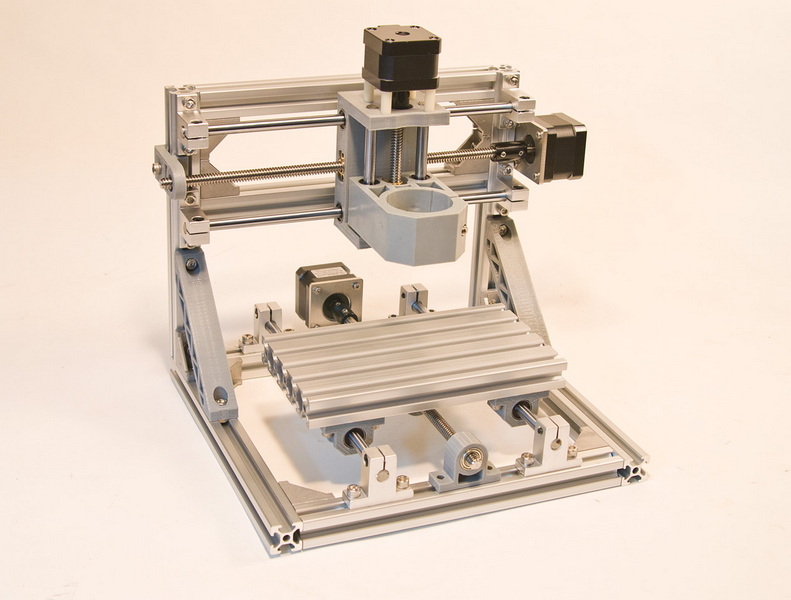
Gears for pumps, valves, gearboxes, conveyors, and robotics undergo precise profiling, hobbing simulations, or gear milling on CNC machines. Helical, spur, bevel, and worm gears achieve AGMA quality levels with exact tooth profiles, leads, and backlash for smooth meshing.[13][15][2]
Pump impellers and compressor wheels feature twisted vanes optimized for fluid dynamics, milled from stainless or bronze. Valve bodies include multi-port configurations, seats, and guides finished to Ra 0.2 microns for sealing integrity.[5][11]
Heavy machinery bases, frames, and housings incorporate stress-relieving ribs and alignment bores. Robotic end-effectors and grippers prioritize rigidity with weight-saving pockets.[3][13]
Renewable energy relies on CNC milling for wind turbine blades, hubs, nacelles, solar panel frames, and hydro generator housings. Large-scale mills shape aerodynamic profiles and mounting flanges from composites or castings.[8][3][1]
Oil and gas components like valves, pistons, cylinders, rods, pins, and pipeline fittings endure harsh environments, machined from duplex stainless or Inconel. Nuclear reactor parts demand ultra-precise tolerances for safety.[5][3]
Battery enclosures and fuel cell stacks feature cooling fins and manifolds for electric vehicles and grid storage.[8]
Agricultural equipment parts such as tractor hitches, plow shares, harvester blades, irrigation pivots, and bailer components come from CNC milling for durability in field conditions. Tanks, hoppers, and headers integrate seamless welds.[7][3][1]
Food processing tools include molds, die-cast fixtures, mixing blades, and conveyor guides from food-grade stainless. Bakeware forms and etching plates support hygienic production.[1]
Furniture legs, carvings, moldings, metal frames, and glass fittings emerge from multi-material milling. Custom table bases combine wood and steel for modern designs.[2][1]
Jewelry rings, pendants, settings, and filigree patterns mill from precious metals, with lost-wax precursors for casting. Emblems, awards, and signage feature embossed details on brass or acrylic.[16][11][15]
Artistic sculptures, house decor, and personalized gifts push creative limits.[2]
Firearm receivers, suppressors, and optics mounts mill to mil-spec tolerances. Missile fins and drone frames use hardened alloys.[4][13]
Marine parts like propellers, rudders, deck structures, and hull fittings resist corrosion.[1]
Prototyping spans RC models, vintage restorations, and educational kits from foam or plywood.[16][2]
Exotic materials like carbon fiber, ceramics, and titanium matrix composites expand uses. Micro-milling creates watch gears and MEMS. Large mills handle ship propellers and turbine housings.[14][12][1]
Surface texturing adds grips or optics functionality. Multi-material hybrids layer metals with plastics.[14]
CNC milling machines transform raw stock into precision components across automotive, aerospace, medical, electronics, energy, agriculture, and consumer sectors. Their multi-axis control, material versatility, automation, and repeatability drive efficiency from prototypes to mass production. As industries evolve, CNC milling remains central to innovation, enabling complex designs unattainable by manual methods.[11][12][13][1][2]
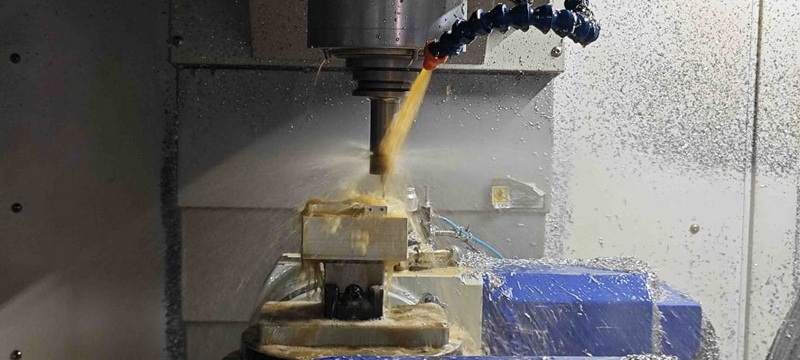
CNC milling handles metals like aluminum, steel, titanium, Inconel, and stainless, plus plastics, wood, composites, and ceramics. Selection balances strength, machinability, cost, and finish needs.[12][11][1]
Tolerances hit 0.001 inches or tighter, with finishes to Ra 0.4 microns. Advanced controls and 5-axis setups maintain accuracy on complex shapes.[12][13][2]
Yes, CAD-to-part workflows yield same-day results. High-speed spindles and tool changers accelerate iterations for design validation.[16][14][1]
Aerospace, automotive, medical, electronics, energy, defense, and agriculture top the list. Tooling, marine, and consumer goods follow.[15][4][11]
Entry-level desktop mills support jewelry, signage, and custom prototypes affordably. Scaling to pro models fuels expansion.[13][16][2]
[1](https://www.3erp.com/blog/cnc-machining-applications-and-uses/)
[2](https://geomiq.com/blog/cnc-milling-guide/)
[3](https://www.manufacturingtomorrow.com/news/2021/07/25/application-of-cnc-milling/17341)
[4](https://qviro.com/blog/what-industries-use-cnc-machines/)
[5](https://www.rapiddirect.com/blog/applications-of-cnc-machining/)
[6](https://www.americanmicroinc.com/resources/industries-use-cnc-machinery/)
[7](https://resources.hartfordtechnologies.com/blog/industries-that-rely-on-cnc-machining)
[8](https://www.ametals.com/post/7-uses-of-cnc-machining)
[9](https://www.reddit.com/r/MechanicalEngineering/comments/1953x9j/which_industrys_uses_cnc_milling_the_most_for/)
[10](https://www.rapiddirect.com/blog/what-is-cnc-milling/)
[11](https://www.lvcnc.com/what-can-you-make-with-a-cnc-milling-machine.html)
[12](https://hwacheonasia.com/cnc-milling-machines/)
[13](https://www.kremininc.com/blog/what-can-be-made-on-a-cnc-mill/)
[14](https://www.makerverse.com/resources/cnc-machining-guides/cnc-milling-everything-you-need-to-know/)
[15](https://demachine.com/uncategorized/what-types-of-parts-can-we-make-with-cnc-turning-or-milling/)
[16](https://www.americanrotary.com/blog/cnc-milling-projects/)


