From idea to market-ready product, our NPI solutions make every stage easier, faster. Discover How We Help

Views: 222 Author: Tomorrow Publish Time: 2026-02-06 Origin: Site


Content Menu
● Step 1: Designing the Part Model
● Step 2: Converting CAD Model to CAM Program
● Step 3: Machine Setup and Workpiece Preparation
● Step 4: Program Upload and Dry Run Testing
● Step 5: Machining Process Execution
>> Common CNC Milling Operations
● Step 6: Finishing, Deburring, and Surface Treatment
● Step 7: Quality Inspection and Validation
● Step 8: Documentation, Packaging, and Delivery
● Benefits of Mastering the CNC Milling Process
● Emerging Trends in CNC Milling
>> 1. What materials are suitable for CNC milling?
>> 2. What tolerances can CNC milling achieve?
>> 3. What is the difference between 3-axis and 5-axis CNC milling?
>> 4. How does coolant help in CNC milling?
>> 5. What challenges are common in CNC milling operations?
CNC milling is a cornerstone of modern manufacturing, offering unmatched precision, efficiency, and repeatability. It is used across industries such as aerospace, automotive, electronics, and medical equipment manufacturing. Understanding what are the major steps in the CNC milling process is essential for engineers, machinists, and manufacturers striving to produce high-quality components while reducing production costs and cycle times.
CNC milling combines digital control with high-speed machining, enabling the transformation of raw material blocks into complex, accurate final products. In this guide, we will break down each phase of the CNC milling workflow, from design to delivery, and explain how each step builds upon the previous one to create seamless and consistent operations.
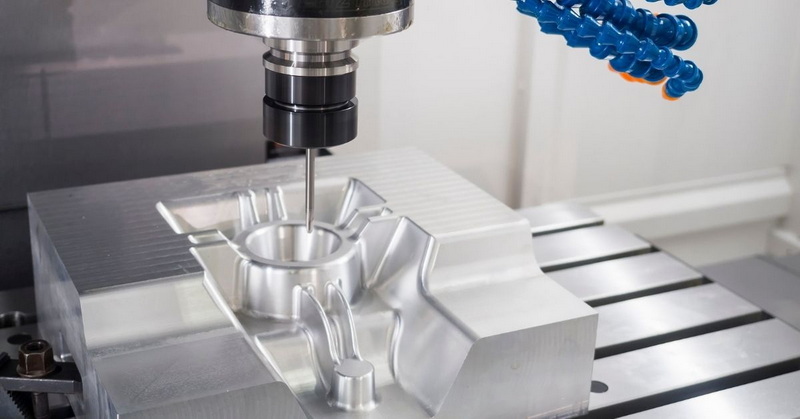
CNC milling (Computer Numerical Control milling) is a subtractive manufacturing process that uses rotating cutting tools controlled by a computer to remove material from a solid workpiece. The machine operates based on a pre-programmed code (known as G-code) that dictates movements, cutting paths, spindle speed, and feed rate.
Unlike manual milling, where the machinist directly controls tool motion, CNC milling performs precise tasks automatically with minimal human intervention. The process not only improves efficiency and product consistency but also allows complex geometries that are nearly impossible to achieve through manual methods.
Manufacturers rely on CNC milling to produce intricate parts like engine housings, mold components, and aerospace brackets with micrometer-level tolerances. Understanding what are the major steps in the CNC milling process can reveal how digital systems and mechanical precision merge to create superior manufacturing results.
The journey of every CNC milling job starts with the concept and design of the part. Engineers use Computer-Aided Design (CAD) software to build an exact digital version of the object to be manufactured. The model includes dimensions, tolerances, material type, and surface finish requirements.
This design acts as a blueprint and communicates all necessary information between the designer and the machine operator. It is crucial that the geometry be realistic for machining. Features such as internal corners, hole sizes, and wall thickness are adjusted to align with the capabilities of CNC milling tools.
In modern engineering practice, errors caught during the modeling stage can save hours of machining time. Designers often run simulations to predict cutting behavior and identify potential problem areas before moving forward to the next step.
Once the CAD model is approved, it is transferred to CAM (Computer-Aided Manufacturing) software. Here, the tool paths are generated, and the machining sequence is planned. This step is one of the most important in the CNC milling workflow because it defines how efficiently material will be removed and how accurately the final shape will match the design.
In the CAM stage, the programmer sets key variables including:
- Tool selection (end mill, face mill, ball nose cutter, etc.)
- Cutting speed (spindle RPM)
- Feed rate (rate of tool advancement)
- Depth of cut and coolant flow
- Toolpath strategy (zigzag milling, adaptive clearing, climb or conventional milling)
The CAM software then converts all these parameters into G-code, a standardized programming language that CNC controllers understand. This G-code instructs the machine precisely when to cut, how deep, and at what speed. Any mistake in code generation can cause inefficiencies or even damage the workpiece or tooling.
Understanding this digital bridge between design and physical machining is central to mastering what are the major steps in the CNC milling process.
After programming, CNC milling requires a proper setup to ensure that the operation runs smoothly and accurately. The operator mounts the cutting tools into the spindle and secures the workpiece onto the machine table or vise. The setup must consider accessibility, clamping force, and the ability to reach all surfaces to be machined.
Precision in setup directly determines final part accuracy. The operator defines a coordinate system by setting the origin point (commonly known as the zero point). This reference allows the machine to know exactly where to start cutting according to the program.
Workpiece alignment, tool calibration, and coolant system checks are carefully performed. In addition, the operator ensures chip evacuation paths are clear to prevent damage caused by accumulating debris.
Even a small misalignment in the setup phase can lead to dimensional errors, so this step is considered one of the most sensitive stages among what are the major steps in the CNC milling process.
Before actual machining begins, the G-code file is uploaded from the CAM software into the CNC milling machine's controller. It is now time to verify the program through a “dry run” simulation. During this test, the milling machine moves along the programmed paths without engaging the cutting tool with the material.
The dry run is designed to detect:
- Potential collisions between the tool and workpiece or machine components.
- Programming errors in feed rate or spindle speed.
- Incorrect offset settings or toolpath inconsistencies.
By reviewing the machine motion in advance, operators can identify problems early, thereby preventing costly damage to materials and tools. Modern CNC systems often display 3D part simulations, giving a visual preview of each operation in real time.
This phase emphasizes the importance of testing as part of the CNC milling process, reinforcing that preparation and validation are just as vital as cutting itself.
Once verification concludes successfully, actual milling begins. In this phase, the CNC milling machine removes material from the workpiece layer by layer according to the programmed instructions. Depending on design complexity, machining may include roughing, semi-finishing, and finishing passes.
- Face Milling: Used to create smooth flat surfaces by cutting across the material's face.
- End Milling: Ideal for profiling and contouring external and internal features.
- Drilling and Boring: Produces precise holes and bores with controlled depth.
- Slot Milling: Generates grooves and channels in the workpiece.
- Contour Milling: Follows 3D paths to shape curved surfaces.
Milling machines can be configured with multiple axes (3-axis, 4-axis, or 5-axis), offering a range of motion that determines what contours and shapes are possible. Multiaxis machines can tilt and rotate the part so that multiple surfaces are machined in a single setup, improving accuracy and time efficiency.
During operation, continuous monitoring ensures the spindle maintains optimal speed, vibration remains minimal, and the cutting temperature stays within safe limits. Sensors and automatic tool changers now make modern CNC milling both smart and efficient.
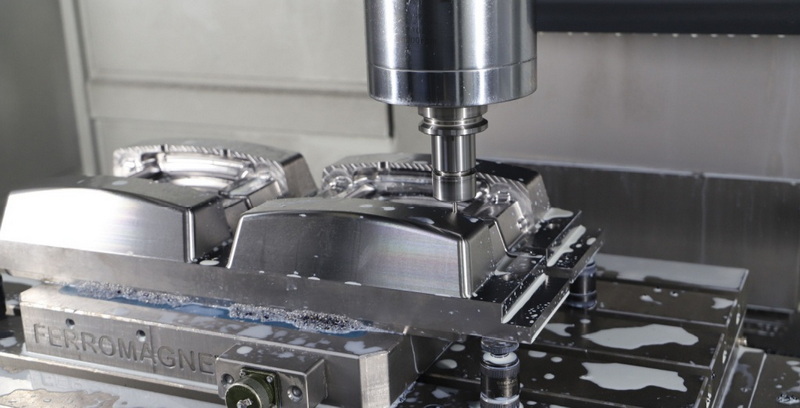
The machining process leaves minor imperfections such as sharp edges, tool marks, or burrs. Finishing operations are performed to refine the surface and achieve the specified dimensional accuracy.
Common post-processing techniques include:
- Deburring: Removing sharp metal edges caused by tool motion.
- Polishing or grinding: Achieving smooth, aesthetic surfaces.
- Surface coatings: Adding protective or decorative finishes like anodizing, plating, or painting.
- Ultrasonic cleaning: Removing oil, chips, and debris.
Finishing quality varies based on industry demands. For example, medical implants require mirror-like finishes, whereas mechanical housings may only need basic deburring. Skipping proper finishing not only reduces visual appeal but can also affect the part's performance due to residual stress or unwanted friction.
Inspection is an integral part of what are the major steps in the CNC milling process. After machining, each part undergoes rigorous dimensional and surface checks to confirm compliance with the design specifications.
- Coordinate Measuring Machine (CMM): Measures geometric dimensions with high precision.
- Optical and laser scanning: Provides detailed 3D validation for freeform surfaces.
- Manual inspection tools: Calipers, micrometers, height gauges for quick checks.
- Surface roughness testers: Measure micro-level finish parameters.
Manufacturers also conduct in-process inspections between machining stages to detect deviations early. By doing so, production quality remains consistent, reducing rework rates and preventing the propagation of flaws into final batches.
Inspection reports and quality data are essential records for certification and customer assurance—especially in industries like defense, aviation, and electronics.
After verification and approval, the final parts are cleaned, labeled, and packaged. Complete documentation such as inspection certificates, dimensional charts, and manufacturing reports accompanies the shipment.
This final stage ensures traceability and transparency throughout the supply chain. Proper record-keeping makes future reproduction, replacement, or quality audits seamless and efficient.
Manufacturers who maintain organized documentation can easily fine-tune their production strategies, improving efficiency for subsequent CNC milling projects.
Understanding and mastering the CNC milling process delivers numerous benefits to manufacturing organizations, including:
- Enhanced Precision: Automated tool control ensures tight tolerances and repeatability.
- Efficiency and Throughput: Once programmed, CNC mills can run continuously with minimal downtime.
- Flexibility: Ability to handle diverse materials and custom part geometries.
- Labor Efficiency: Reduces the need for manual adjustment or intensive oversight.
- Scalability: Easily adapt from prototyping to mass production.
Furthermore, when engineers understand each step—from CAD modeling to quality validation—they can troubleshoot problems effectively and improve both part quality and production speed.
The CNC milling process continues to evolve with technological innovations that further enhance precision and efficiency. Some of the latest developments include:
- 5-axis machining: Enables creation of intricate geometries in fewer setups.
- Hybrid manufacturing: Combines additive manufacturing (3D printing) with subtractive milling for material savings.
- AI-powered optimization: Predicts tool wear and dynamically adjusts parameters for consistent output.
- Smart factories: Integration with IoT systems for real-time monitoring and automation.
These emerging trends ensure CNC milling remains at the forefront of modern industrial production.
CNC milling stands as a vital process bridging digital design with precise manufacturing execution. Understanding what are the major steps in the CNC milling process—from concept and programming to machining, finishing, and inspection—empowers manufacturers to optimize productivity and ensure the highest quality standards. Each phase contributes to the seamless creation of complex parts used in industries worldwide. By mastering these steps, factories can achieve superior accuracy, shorter production times, and ultimate customer satisfaction.
Contact us to get more information!
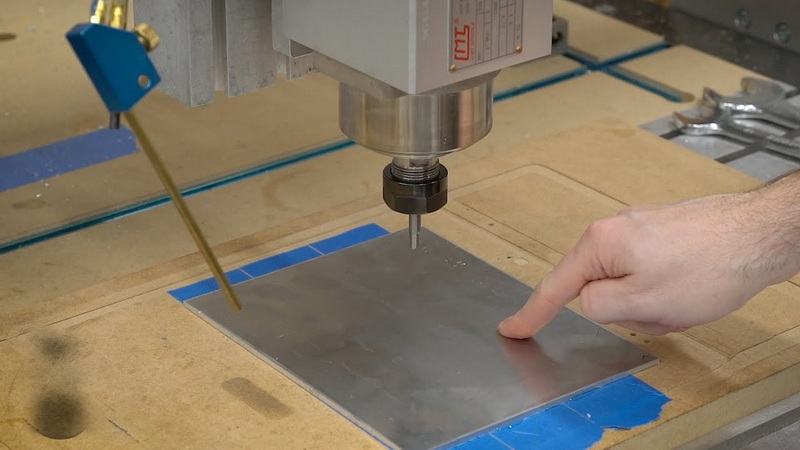
CNC milling works well with metals such as aluminum, stainless steel, titanium, brass, and copper, as well as plastics like ABS, nylon, and acrylic. Selection depends on mechanical strength, heat resistance, and finish requirements.
High-precision CNC milling can achieve tolerances as tight as ±0.001 inches (±0.025 mm) or even finer, depending on the machine type, tooling, and thermal stability.
3-axis machines move in X, Y, and Z directions, making them ideal for simple parts. 5-axis machines add rotation and tilt capabilities, allowing machining of complex shapes with fewer setups and higher precision.
Coolants reduce cutting temperature, minimize tool wear, and improve chip evacuation. Proper coolant selection enhances tool life and surface finish.
Typical challenges include tool breakage, vibration (chatter), thermal expansion, and incorrect feeds or speeds. Regular maintenance, tool path optimization, and proper workpiece clamping minimize these issues.
1. https://www.autodesk.com/solutions/cad-cam-software
2. https://www.machiningcloud.com/
3. https://www.manufacturingtomorrow.com/
4. https://www.engineersedge.com/
5. https://www.cnccookbook.com/


