From idea to market-ready product, our NPI solutions make every stage easier, faster. Discover How We Help

Views: 222 Author: Tomorrow Publish Time: 2026-01-11 Origin: Site


Content Menu
● Understanding CNC Cutting Tools
● Classification of CNC Cutting Tools
● Top Cutting Tools Used in CNC Machining
>> 1. End Mills
>> 3. Drills
>> 4. Reamers
>> 6. Inserts
● Emerging Tool Technologies in CNC Machining
>> Coated Tools
● Choosing the Right Cutting Tool
● Maintenance and Best Practices
● Advantages of Using the Right Tools
>> Sustainability and Innovation
● Future Trends in CNC Cutting Tools
● FAQ
>> 1. What is the most commonly used cutting tool in CNC machining?
>> 2. Why is carbide preferred over HSS in modern CNC machines?
>> 3. How often should CNC cutting tools be replaced?
>> 4. What coatings improve cutting tool performance?
>> 5. Can the same cutting tool be used for all materials?
Computer Numerical Control (CNC) machining stands at the core of modern manufacturing technologies, driving industries ranging from aerospace and automotive to medical equipment and energy systems. Its ability to consistently produce complex geometries with micrometer precision has transformed production efficiency globally. However, behind every precise cut and smooth finish lies one vital component — the cutting tool. No matter how advanced the machine, productivity and quality ultimately depend on choosing and maintaining the right cutting tools.
This comprehensive guide explores the best cutting tools for CNC machining operations. It covers essential tool types, materials, coating technologies, performance strategies, and maintenance practices for achieving exceptional results.

CNC cutting tools are precisely engineered devices that remove material from a workpiece through controlled motion. They're the physical link between digital CAD/CAM instructions and tangible components. The right cutting tool influences not only the dimensional accuracy and surface finish but also machine efficiency and cost-effectiveness.
Key objectives when selecting cutting tools include:
- Achieving tight dimensional tolerances.
- Ensuring high-quality surface finishes.
- Extending tool life and reducing tool change frequency.
- Optimizing productivity and minimizing machine downtime.
In CNC machining, every aspect of tool choice—geometry, material, coating, feed rate, and speed—affects performance. Selecting tools based purely on price often leads to expensive machine time losses and lower output quality.
Different applications require unique tool geometries, materials, and cutting mechanisms. CNC cutting tools can be classified according to their function, base material, and operational mechanism.
1. Turning Tools – Used on lathes to shape cylindrical surfaces and remove layers of material axially.
2. Milling Tools – Rotary cutters designed to remove material through multiple cutting edges; used in vertical and horizontal milling machines.
3. Drilling Tools – Specialized tools designed to produce precise round holes.
4. Boring Tools – Used to enlarge existing holes to tight tolerances and smooth finishes.
5. Threading Tools – Produce external or internal threads on components.
6. Reaming Tools – Refine drilled holes to achieve tight dimensional control and surface finish.
7. Parting and Grooving Tools – Cut narrow slots or separate finished sections of a workpiece.
1. High-Speed Steel (HSS) – Common for general-purpose machining. It offers toughness and resistance to sudden shocks but has limited heat tolerance.
2. Carbide – Composed of tungsten carbide and cobalt binders, carbide tools combine hardness with heat resistance, enabling machining at higher speeds.
3. Ceramic Tools – Best for hard materials and high-speed finishing, though they're brittle and unsuitable for interrupted cuts.
4. Cermet Tools – Blend ceramic and metallic elements, offering high wear resistance and improved surface finish capability.
5. Diamond (PCD) and Cubic Boron Nitride (CBN) – Ultra-hard tools that perform exceptionally well in abrasive or hardened materials; ideal for precision finishing.
End mills are versatile tools used in milling machines for operations like contouring, slotting, and profiling. They are available in varied flute counts and helix angles.
Applications:
- 3D surface machining and die-mold finishing.
- Slot cutting, edge contouring, and pocketing.
- Precise component manufacturing in aerospace and electronics.
Advantages:
- Excellent for both roughing and finishing.
- Wide geometry range for different metals and polymers.
- Carbide-coating options improve durability and reduce chatter.
Face mills are large-diameter tools fitted with multiple indexable inserts. They are primarily used for machining broad, flat surfaces.
Applications:
- Surface preparation before assembly or coating.
- High-speed machining of aluminum, steel, and cast iron components.
Advantages:
- Rapid material removal rate.
- Replaceable inserts reduce tool waste and operational cost.
- Balanced design minimizes vibration and enhances surface evenness.
A drill creates round holes by rotating around its central axis, guided precisely by CNC control.
Applications:
- Producing holes for tapping, reaming, or fastening operations.
- Used in component bases, casings, and panels.
Advantages:
- Wide diameter range availability.
- Efficient hole-forming speed with minimal burr formation.
- Compatible with various coatings for specific materials.
Reamers follow drills to refine hole size and surface quality, delivering outstanding dimensional accuracy.
Applications:
- Mold cavity finishing and mechanical assembly fits.
Advantages:
- Provides a very fine surface finish.
- Enhances the fit and function of assembled components.
These tools create and refine threading both inside and outside workpieces. Thread mills, unlike taps, produce threads via a circular interpolation method, offering more flexibility.
Applications:
- Internal threading of pre-drilled holes.
- External thread forming on shafts and studs.
Advantages:
- Thread mills minimize tool breakage risk.
- Greater control over pitch and thread quality.
CNC machining commonly integrates indexable inserts attached to tool holders. Inserts are typically carbide, ceramic, or CBN-based.
Applications:
- Turning, milling, and parting operations in production settings.
Advantages:
- Quick setup and consistent performance.
- Multi-edge design extends insert life and reduces maintenance.
Boring bars offer precision internal cutting, allowing machinists to adjust tool extension for various hole diameters.
Applications:
- Cylindrical bore finishing such as engine housings.
Advantages:
- Excellent stability during deep-hole operations.
- Reduces vibration and ensures repeatable accuracy.
Fly cutters operate with a single-point cutting tip on a fly arm, ideal for producing extremely flat surfaces.
Applications:
- Low-volume manufacturing or toolroom work requiring mirror finishes.
Advantages:
- Easy to set up and cost-effective for surface operations.
- Highly adjustable for different lengths of cut.
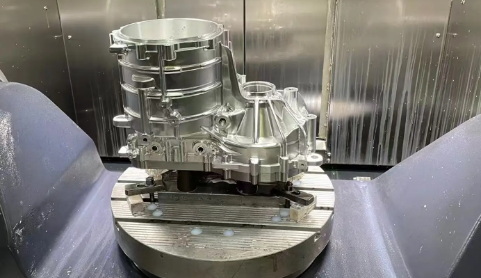
Modern coatings like Titanium Nitride (TiN), Titanium Aluminum Nitride (TiAlN), or Diamond-Like Carbon (DLC) extend tool life and reduce friction. Nano-coatings now enhance hardness and thermal stability, enabling dry machining at high speeds.
Advanced CNC tools now integrate sensors to monitor wear, temperature, and vibration in real-time. These systems, connected via IoT platforms, alert operators to replace or adjust tools before failure occurs, ensuring predictive maintenance and reducing downtime.
Manufacturers increasingly employ hybrid tools that combine multiple materials—for instance, carbide cores with PCD cutting edges—to achieve both stiffness and wear resistance. Such designs optimize the performance of multi-material workpieces often found in aerospace or electric vehicle engineering.
The right cutting tool selection involves balancing cost, durability, and machining performance. The following factors are crucial:
1. Workpiece Material:
Materials like titanium and Inconel require carbide or ceramic tools with heat-resistant coatings, while aluminum and plastics perform best with polished, uncoated cutters to avoid material buildup.
2. Cutting Speed and Feed:
A high-speed steel tool may work well at low speeds, but carbide performs optimally at higher spindle speeds. Matching cutting parameters to the tool ensures efficient chip evacuation and prevents edge failure.
3. Operation Type:
Roughing calls for rigid, multi-flute tools with reinforced edges, while finishing demands sharp, fine-edged cutters that produce smooth surfaces.
4. Tool Geometry:
The rake angle, helix angle, and nose radius determine how efficiently the tool cuts different materials.
5. Coolant and Lubrication:
Coolant not only removes heat but also improves chip flow and extends tool longevity. High-pressure through-coolant systems are increasingly common in automated CNC lines.
6. Machine Capability:
Modern 5-axis CNC machines can handle complex geometries; however, using a mismatched tool can limit the machine's true potential.
Even the best cutting tool requires proper handling to perform optimally. Recommended practices include:
- Conducting regular inspections for edge wear and micro-chipping.
- Keeping tools free from residue buildup through ultrasonic cleaning.
- Storing tools in dedicated, moisture-free holders.
- Using torque wrenches for consistent clamping pressure on inserts.
- Regularly calibrating toolholders and checking machine spindle runout.
Employing predictive maintenance software can further automate inspection cycles, ensuring tool performance remains stable throughout large-scale production.
Selecting the right cutting tool results in several operational and financial benefits:
- Extended tool life reduces replacement frequency.
- Higher precision enhances overall product quality.
- Better energy efficiency by reducing friction and vibration.
- Reduced downtime, improving production output.
- Consistent repeatability, critical for automated mass production.
Recent trends emphasize sustainability in tool production. Recyclable carbide inserts and eco-friendly coatings reduce industrial waste. Furthermore, adopting dry machining and minimum quantity lubrication (MQL) techniques not only lessens environmental impact but also prolongs tool sharpness by improving chip control.
Advancements continue at a rapid pace. Additive manufacturing (3D printing) allows the production of custom tool geometries with optimized internal coolant channels. Artificial intelligence (AI) is being applied to predict tool wear, suggesting real-time parameter adjustments for consistent quality. Meanwhile, cryogenic cooling systems enable ultra-hard materials to be machined efficiently without damaging workpieces or tool edges.
The efficiency of CNC machining depends as much on the choice of cutting tools as it does on machine quality and programming skill. From carbide end mills to diamond inserts, every tool brings its strengths and specific applications. By considering material compatibility, speed parameters, coatings, and maintenance, manufacturers can ensure maximum precision and productivity. As technology advances, new materials, smart sensors, and sustainable innovations will continue redefining the limits of CNC cutting performance.
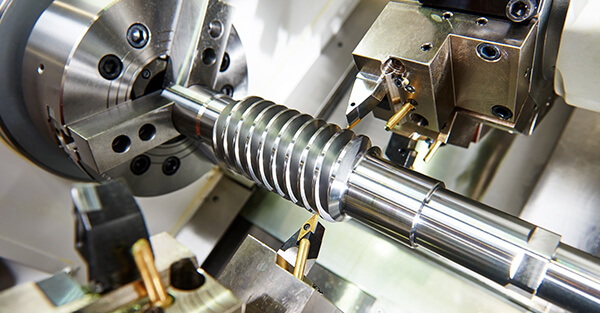
End mills remain the most popular cutting tools due to their flexibility in performing multiple milling operations, including slotting, contouring, and surface finishing.
Carbide offers better wear resistance, retains hardness at high temperatures, and withstands faster cutting speeds, making it ideal for long production runs and hard materials.
Tool replacement depends on operations and materials. Typically, tools should be replaced once they show wear signs like dull edges, poor surface finish, or excessive vibration.
Popular coatings such as TiN, TiAlN, and DLC reduce friction, enhance heat resistance, and extend tool life, especially for dry or high-speed machining.
No. Different materials require specific tool grades, geometries, and coatings. Using the wrong tool can cause poor surface finishes or premature tool failure.


