From idea to market-ready product, our NPI solutions make every stage easier, faster. Discover How We Help

Views: 222 Author: Tomorrow Publish Time: 2025-12-21 Origin: Site
Content Menu
● 1. Exceptional Precision and Accuracy
● 2. Increased Production Efficiency
● 3. High Level of Consistency and Repeatability
● 4. Capability to Manufacture Complex Designs
● 5. Wide Range of Material Compatibility
● 6. Lower Labor Cost and Reduced Human Error
● 7. Rapid Prototyping and Short Lead Times
● 8. Scalability from Prototyping to Mass Production
● 9. Improved Safety and Working Conditions
● 10. Easy Integration with Modern Technologies
● 11. Environmental Efficiency and Material Conservation
● 12. Reduced Setup and Changeover Time
● 13. Enhanced Surface Finish and Dimensional Stability
● 14. Global Accessibility and Supply Chain Reliability
● FAQ
>> 1. What industries use CNC machining the most?
>> 2. How accurate is CNC machining compared to manual methods?
>> 3. Is CNC machining cost-effective for small batches?
>> 4. What materials can be processed by CNC machines?
>> 5. How does CNC machining support sustainable manufacturing?
CNC (Computer Numerical Control) machining has transformed the global manufacturing landscape, introducing automation and digital precision to an industry once dominated by manual craftsmanship. In essence, CNC machining translates sophisticated computer-aided design (CAD) models into precise commands that guide tools and machines, enabling them to cut, mill, turn, or drill materials with astonishing accuracy.
From aerospace components that demand micron-level precision to custom medical implants and high-performance automotive parts, CNC technology ensures consistency and reliability that manual processes cannot match. As today's industries demand faster turnaround times, tighter tolerances, and greater scalability, CNC machining continues to offer an indispensable advantage in modern production.
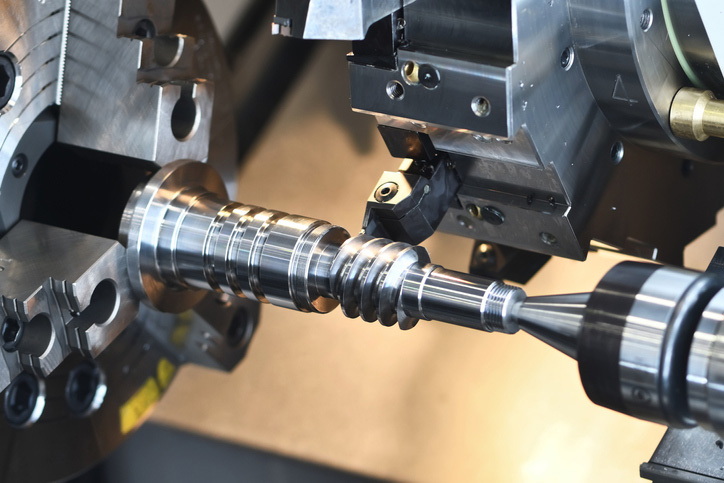
The defining feature of CNC machining lies in its extraordinary accuracy. Machines follow digital blueprints using pre-set coordinates, ensuring every movement precisely follows design instructions. Unlike manual machining—where each operator's skill influences results—CNC machining executes cuts automatically, maintaining an accuracy within micrometers.
Precision is especially valuable in sectors like aerospace, where even minimal errors can endanger performance or safety, and medicine, where implants must match exact anatomical structures. Furthermore, advanced calibration systems and machine feedback loops monitor operations in real time, automatically correcting deviations before they cause quality issues.
Because of this closed-loop feedback and consistent programming, companies experience drastically reduced rework rates and achieve reliable part conformity across thousands of identical units.
Efficiency defines why most manufacturers invest heavily in CNC systems. Once the machine is programmed, it can operate autonomously, fabricating identical pieces continuously with minimal downtime. CNC machining can also perform multiple processes in a single run—milling, drilling, and tapping—eliminating the need for multiple setups or transfers between machines.
Automated tool changers and adaptive feed controls further reduce machining time and human oversight. With operations running 24/7 under proper monitoring, production volume rises dramatically without a proportional increase in labor cost.
Moreover, because CNC machines minimize waste through optimized tool paths, raw materials are used more efficiently, ultimately increasing profit margins and enhancing sustainability.
When customers demand perfect uniformity across thousands of components, repeatability becomes a crucial metric for success. CNC machining delivers unmatched consistency by reproducing parts according to the same digital instructions every single time.
After a CNC program is perfected, it can be stored digitally and reused indefinitely. This ensures that future orders for the same part are identical to previous production runs—an essential feature in industries such as automotive and defense, where safety and reliability matter deeply.
Manual machining might deliver one perfect prototype, but human factors—like fatigue, tool wear, or ambient temperature—can cause minute inconsistencies. CNC machining eliminates this variability, creating confidence in quality assurance and long-term product reliability.
Modern product design trends push the boundaries of engineering creativity, demanding lighter, stronger, and more intricate parts. CNC machining fulfills these needs by enabling multi-axis movement that allows tools to approach materials from several angles simultaneously.
A 5-axis CNC machine, for instance, can cut curved surfaces, holes at varying angles, and undercuts—all in one setup. This not only shortens production time but also minimizes the need for secondary finishing or assembly.
Complex geometries that were once impossible to fabricate manually—such as turbine blades, precision molds, and orthopedic implants—are now produced efficiently and consistently. This technical capability opens new frontiers in performance-driven fields like robotics, aerospace propulsion, and medical device manufacturing.
One of the strengths of CNC machining is its material flexibility. It can process a diverse array of materials including metals (aluminum, titanium, steel, brass), plastics (ABS, PEEK, Delrin), composites, wood, and ceramics.
CNC systems adapt easily by modifying cutting speeds, feed rates, and tooling parameters. Manufacturers benefit from this versatility because they can use a single machine setup to handle both lightweight plastics and ultra-hard alloys without compromising precision.
This adaptability also facilitates hybrid manufacturing, where prototypes are tested in economical materials and later reproduced in specialized metals for final production—making CNC machining an efficient cornerstone in both research and production environments.
CNC machining reduces dependence on manual operators after initial setup, significantly lowering direct labor costs. A single trained operator can oversee multiple machines at once, focusing primarily on programming, monitoring, and quality control rather than repetitive handwork.
Beyond cost savings, automation minimizes human error that could compromise product quality. Consistent machine operations mean fewer miscuts, wasted materials, and delays. In high-output facilities, this precision ensures that every product leaving the line adheres to strict quality standards while safeguarding worker safety.
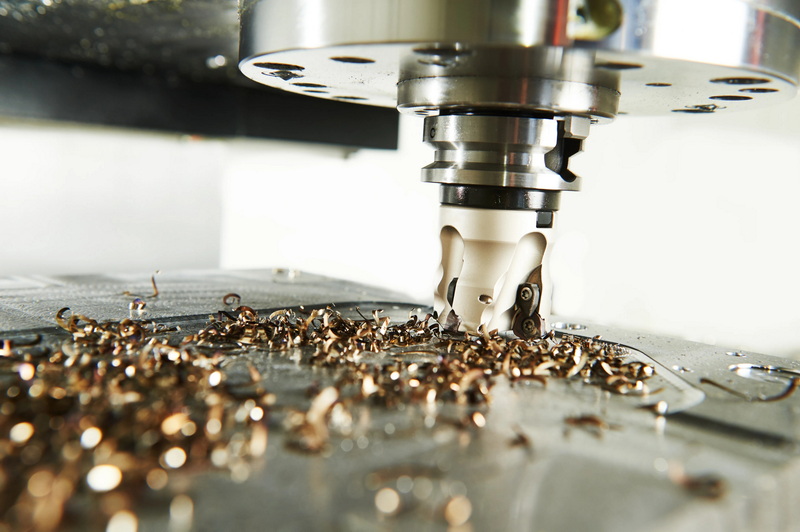
In today's competitive manufacturing climate, speed matters as much as quality. CNC machining accelerates the prototyping cycle by allowing engineers to turn computer-generated designs into physical models within hours instead of days or weeks.
Because programs are digital, design changes are easily edited and re-run without starting from scratch. This flexibility allows manufacturers to refine components quickly, test multiple variations, and finalize functional prototypes faster than with traditional casting or molding techniques.
As a result, companies can identify potential design flaws early, streamline product improvements, and move to mass production with confidence—reducing both lead time and financial risk.
CNC machining seamlessly transitions from prototype to large-scale production. Once a program and tool setup are finalized, scaling up manufacturing simply involves loading more raw material and running the same process repeatedly.
This scalability benefits both startups seeking small production runs and established manufacturers managing global supply chains. The software-controlled process ensures identical quality, whether producing ten parts or ten thousand.
Furthermore, machine automation eliminates fatigue-related slowdowns, meaning output remains constant over time without sacrificing precision or efficiency.
Traditional machining often exposes workers to hazards such as sharp tools, flying chips, or rotating spindles. CNC machining eliminates most of these risks through automation and enclosed work environments.
Operators program machines from secure stations and supervise them remotely, avoiding direct contact during active cutting. Enclosed designs prevent debris from escaping, while advanced safety sensors shut down machines instantly when irregularities occur.
Additionally, reduced manual labor minimizes repetitive strain injuries, creating a healthier and more sustainable workplace. This emphasis on safety contributes to higher morale and productivity among staff.
CNC machining is a central pillar of Industry 4.0—the era of smart, connected factories. Modern machines connect to digital networks and predictive monitoring systems that collect performance data in real time. When integrated with Internet of Things (IoT) and artificial intelligence (AI), CNC systems can analyze their performance and schedule maintenance automatically, minimizing unexpected downtime.
These machines connect directly to CAD/CAM software, allowing seamless transitions between digital design and physical production. Engineers can also simulate tool paths before cutting, preventing costly mistakes.
The result is an intelligent, efficient, and interconnected manufacturing environment that optimizes costs, reliability, and throughput with minimal human oversight.
Environmental sustainability has become a top priority across industries. CNC machining contributes positively by reducing material waste through optimized tool paths, computer-controlled precision, and recyclable chips.
Because machines execute cuts exactly as programmed, there's little to no surplus scrap compared to manual machining. Cooling systems now recycle fluids, and energy-efficient drive motors reduce power consumption.
Manufacturers seeking to meet environmental regulations and sustainability goals find CNC machining a reliable path toward cleaner, more resource-efficient production.
CNC machines drastically reduce the time required for setups or changeovers between different jobs. Programs, fixtures, and parameter settings can be stored digitally and accessed instantly. This means operators can switch from one production batch to another in minutes without recalibrating manually.
Such agility allows companies to manage multiple projects simultaneously, meet customer-specific orders faster, and adapt swiftly to market demands—key advantages in today's just-in-time manufacturing strategies.
CNC machining not only provides accuracy but also superior surface quality. Controlled tool engagement and consistent cutting speed produce smoother finishes, reducing the need for post-production polishing.
Tight temperature control and stable work holding eliminate distortion or thermal expansion, maintaining dimensional integrity across long production runs. The resulting components exhibit higher mechanical performance and aesthetic appeal—vital in industries like optics, electronics, and luxury goods manufacturing.
CNC technology has democratized access to high-quality manufacturing worldwide. Digital programs can be shared easily across facilities in different countries, enabling identical output regardless of location.
This consistency reinforces global supply chains by ensuring that replacement parts or subassemblies meet uniform quality standards. Combined with remote monitoring and cloud-based networking, manufacturers gain transparency and reliability, reducing logistics delays and downtime.
CNC machining remains a foundational technology of modern manufacturing—combining speed, precision, scalability, and digital intelligence into one unified process. Its ability to deliver complex shapes, maintain tight tolerances, and operate continuously has allowed industries from aerospace to consumer electronics to thrive.
Beyond technical capability, CNC machining has reshaped manufacturing culture by prioritizing safety, efficiency, and environmental responsibility. As artificial intelligence, automation, and data analytics integrate even further, CNC technology will continue to evolve as the backbone of smart factories worldwide.
Whether used for a prototype or mass production, CNC machining consistently proves why it is one of the most valuable innovations in industrial history.
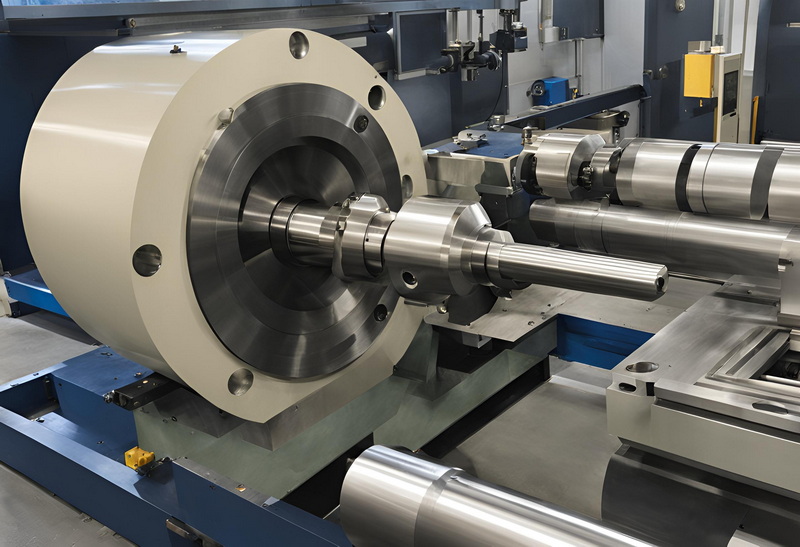
CNC machining serves aerospace, automotive, defense, medical, energy, and consumer electronics sectors. Its flexibility and precision make it ideal for fabricating both structural and detailed parts used across high-demand applications.
CNC machining can achieve dimensional tolerances as fine as ±0.001 inches or better. Manual machining, influenced by operator skill and tool condition, cannot consistently maintain such precision over long production runs.
Yes. CNC machining is highly economical for small and medium batches because there's no need for molds or extensive tooling. Once programmed, setup adjustments are simple, allowing for cost-efficient production flexibility.
CNC machines handle metals, plastics, composites, and ceramics with ease. By adjusting tools and speeds, the same machine can produce everything from aluminum aerospace parts to durable polymer prototypes.
CNC machining advances sustainability by maximizing material efficiency, reducing energy usage, and lowering production waste. Automation also minimizes rework, ensuring resources are used effectively while maintaining exceptional quality.


