From idea to market-ready product, our NPI solutions make every stage easier, faster. Discover How We Help

Views: 222 Author: Tomorrow Publish Time: 2026-01-17 Origin: Site
Content Menu
● Why Malaysia is Emerging as a CNC Turning Powerhouse
● Top CNC Turning Manufacturers and Suppliers in Malaysia
>> 1. ALC Precision Engineering Sdn Bhd
>> 2. Seng Chong Precision Sdn Bhd
>> 3. Advance Plus Precision Sdn Bhd
>> 4. Microcast Engineering Sdn Bhd
>> 5. Engtek Precision Machining Sdn Bhd
>> 6. Asia Abrasive Manufacturing Sdn Bhd
>> 7. Innova Precision Sdn Bhd
● Core Capabilities of Malaysian CNC Turning Manufacturers
>> Unparalleled Precision and Process Control
>> Comprehensive Material Expertise
>> Flexibility in Batch Size and Production Volume
>> Advanced Inspection and Metrology
>> Value-Added Processes and Secondary Operations
● Industrial Applications of CNC Turning Components
>> Electronics and Semiconductors
>> Medical and Healthcare Devices
>> Renewable Energy and Industrial Machinery
● Key Benefits of Working with Malaysian CNC Turning Suppliers
● Selecting the Right CNC Turning Services Partner in Malaysia
● Technological Trends Driving CNC Turning in Malaysia
>> Additive and Subtractive Hybrid Manufacturing
>> Data Analytics and AI-Driven Optimization
● FAQs About CNC Turning Services in Malaysia
>> 1. What industries primarily use CNC Turning Services in Malaysia?
>> 2. Are Malaysian CNC turning companies certified for global quality standards?
>> 3. Can foreign companies order OEM parts directly from Malaysian CNC suppliers?
>> 4. How do Malaysian CNC suppliers ensure product quality?
>> 5. What types of materials can they process?
>> 7. What is the general production lead time?
Malaysia has rapidly developed into one of the most dynamic hubs for CNC Turning Services Manufacturers and Suppliers in Southeast Asia. The country's advanced manufacturing infrastructure, skilled labor force, and strong export ecosystem make it an ideal base for precision machining and OEM (Original Equipment Manufacturing) partnerships. From automotive and aerospace parts to electronics and medical components, Malaysian manufacturers have proven their global competitiveness through precision, quality, and innovation.
With support from government initiatives and a growing cluster of industrial parks, CNC machining in Malaysia now caters not only to local demand but also to international markets across North America, Europe, and Asia. This article explores the leading CNC Turning Services Manufacturers and Suppliers in Malaysia, their production capabilities, core technologies, and the advantages they offer to global buyers.
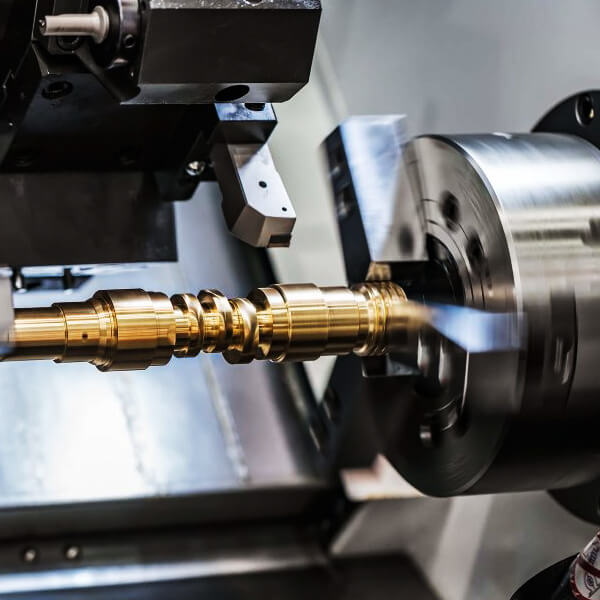
Several key factors explain Malaysia's strong position in precision machining:
1. Advanced Manufacturing Infrastructure – Malaysian industrial parks integrate automated machining systems, smart logistics, and digital quality control processes.
2. Strategic Regional Location – Located near key shipping routes, Malaysia provides cost-effective access to China, Singapore, Thailand, and Indonesia.
3. Cost-Competitive Operations – Compared with neighboring Singapore or Japan, Malaysia's operating costs are significantly lower while maintaining world-class production standards.
4. Stable Investment Environment – With decades of political stability and pro-manufacturing policies, the country attracts foreign direct investment in CNC machining and metal processing.
5. Commitment to Standards – Most CNC facilities comply with ISO 9001, IATF 16949, and even aerospace-grade AS9100 certifications.
These advantages make Malaysia a perfect location for industrial procurement of precision parts and OEM production in sectors demanding accuracy and efficiency.
ALC Precision Engineering stands among the top CNC Turning Services Manufacturers in Malaysia. The company serves sectors such as automotive, aerospace, and consumer electronics. Their high-speed CNC lathes and in-house quality lab ensure consistent results within tight tolerances. ALC also offers assembly, heat treatment, and client-specific packaging solutions, catering to international brands.
Seng Chong Precision has built a reputation for reliability through decades of operation in metal component manufacturing. Specializing in multi-axis CNC turning and milling, the company supports projects ranging from customized prototypes to mass-scale deliveries. Its capability to machine complex geometries makes it an ideal OEM partner for machinery and industrial system manufacturers.
Advance Plus Precision serves as a one-stop service provider, combining design consultation, CNC turning, and finishing solutions. Their expertise in handling materials like stainless steel and titanium attracts clients from the oil & gas, marine, and defense sectors. Equipped with HAAS and Mazak CNC machines, the company can manage precise dimensional control for tight-tolerance components.
Microcast Engineering focuses on high-volume CNC turning operations supported by modern automation systems and real-time performance monitoring. Their production efficiency reduces turnaround time, making them one of the preferred CNC Turning Suppliers in Malaysia for international clients seeking just-in-time delivery. Collaboration with local universities also drives continuous R&D in process optimization.
As one of the largest machining groups in Malaysia, Engtek Precision Machining provides turnkey solutions encompassing CNC turning, milling, grinding, and surface finishing. With multiple production lines, the company is capable of manufacturing complex parts used in electronics and semiconductor applications. Its integrated ERP system enhances scheduling accuracy and traceability throughout the production process.
Asia Abrasive Manufacturing combines more than 30 years of machining and tooling experience. Beyond its recognized abrasive technology operations, the company runs an advanced CNC division offering comprehensive turning, threading, and grinding services. Their focus on premium-grade materials ensures outstanding durability and performance for critical industrial parts.
Innova Precision delivers precision-engineered parts for electric vehicles, power systems, and high-end medical equipment. The company adopts lean manufacturing principles and employs smart factory technologies to enhance production traceability. With experienced engineers on-site, Innova also provides design modification support for clients needing technical input at the prototyping stage.
Modern CNC Turning Services in Malaysia provide micrometer-level accuracy through computer-controlled machining centers. Manufacturers employ real-time temperature monitoring and automatic tool compensation to minimize dimensional deviations. This precision is crucial for applications like hydraulic cylinders, gear shafts, and micro-mechanical assemblies.
Malaysian CNC producers handle a diverse material range, including ferrous and non-ferrous metals, engineering plastics, and high-performance alloys. Commonly machined materials include:
- Aluminum (6061, 7075)
- Stainless steel (304, 316, 630)
- Brass, bronze, and copper alloys
- Titanium and Inconel
- PEEK, PTFE, and Delrin for non-metallic applications
This material diversity allows OEM clients to fulfill specialized engineering requirements using local expertise.
Whether you need a prototype run of 50 parts or a mass production batch of 50,000, CNC Turning Services Manufacturers in Malaysia can adapt their scheduling and capacity accordingly. Many suppliers maintain dedicated production lines for small-batch and high-volume jobs, supporting global buyers with flexible lead times and cost-effective pricing.
Precision machining demands precise measurement. Most Malaysian suppliers utilize advanced inspection equipment such as:
- Coordinate Measuring Machines (CMM)
- Laser scanning systems
- Roundness testers
- Optical comparators
- Surface roughness analyzers
These systems guarantee that each turned product meets international customers' mechanical and dimensional expectations.
Beyond turning, Malaysian manufacturers offer a full suite of downstream processes:
- CNC milling and threading
- Heat treatment and anodizing
- Electroplating, polishing, and powder coating
- Assembly and packaging
This integration streamlines supply chains and helps clients reduce outsourcing overhead when contracting CNC Turning Suppliers.
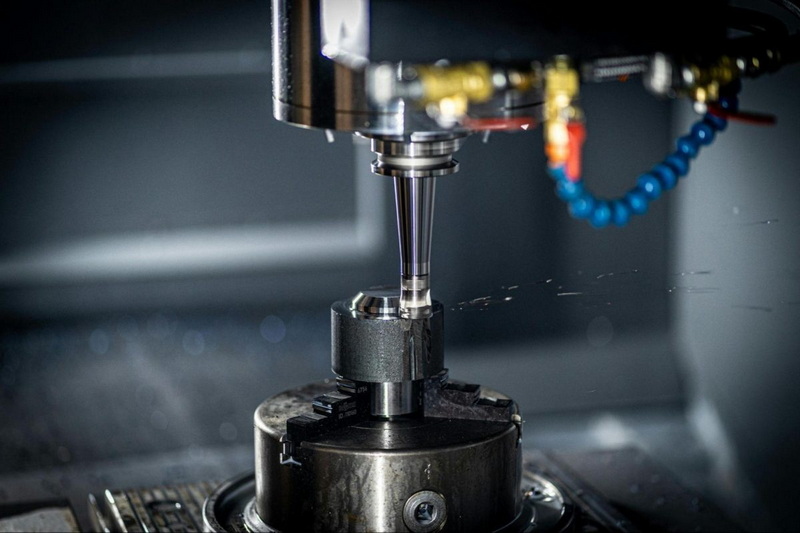
Malaysia's CNC industry directly supports both OEM and aftermarket automotive companies. Typical products include axle components, gearbox shafts, housings, piston rings, and fuel injector bodies—all produced with precision and strict quality validation.
With global partnerships, Malaysian machining companies deliver high-performance parts such as turbine housings, actuator pins, and fittings. Many are equipped to handle certified aerospace materials while maintaining NADCAP-approved finishing processes.
The energy and petroleum industries rely on Malaysian CNC suppliers for valves, couplings, and flanges that require high corrosion resistance and excellent dimensional consistency. Precision turning allows for leak-tight sealing and long-term durability in offshore environments.
Malaysia is a major semiconductor hub, and CNC turning supports this ecosystem by supplying precision components for testing jigs, connectors, cooling systems, and electronic enclosures.
Many Malaysian CNC Turning Services Manufacturers also serve the medical sector under ISO 13485 certification. They produce surgical tools, implants, and customized device parts with mirror-like finishes and biocompatible materials.
As green energy expands, the country's machining providers now produce turned parts for solar mounting systems, wind turbines, and industrial pumps. Consistent part quality helps in maintaining mechanical stability across large-scale installations.
1. Global Quality at Regional Prices – Malaysian CNC services deliver European-level quality standards but remain competitively priced within the ASEAN region.
2. End-to-End Support – From initial design consultation to final product packaging, many companies provide complete project management.
3. Efficient Logistics and Export Processes – Malaysia's proximity to major Asian ports simplifies shipping and customs procedures.
4. Sustainability Initiatives – Modern facilities integrate eco-conscious production such as coolant filtration, waste reduction, and energy-efficient machinery.
5. Technical Collaboration – Skilled engineers collaborate closely with clients, ensuring manufacturing feasibility and optimizing part designs.
When looking for reliable CNC Turning Manufacturers, overseas buyers should evaluate the following aspects:
- Expertise – Choose suppliers with experience in your specific industry.
- Machinery and Capacity – Confirm the types and number of machines available.
- Certifications – Verify quality compliance such as ISO, IATF, or AS9100.
- Engineering Collaboration – Select firms offering 3D CAD/CAM capability and design validation.
- Post-Sales Service – Ensure clear communication and technical support during product improvement cycles.
Establishing long-term relationships with Malaysian CNC suppliers allows businesses to achieve better supply chain stability, lower costs, and higher product quality.
The future of CNC turning in Malaysia is closely tied to Industry 4.0 integration. Manufacturers are implementing data-driven solutions to achieve higher accuracy, traceability, and cost efficiency.
Digital production monitoring systems now track spindle utilization, tool wear, and tolerance deviations in real-time. This automation allows predictive maintenance and shorter machine downtime.
Collaborative robots (cobots) are increasingly integrated into turning cells for parts handling and tool changing. This improves productivity and maintains consistent performance for 24/7 operations.
Some advanced CNC Turning Suppliers are combining CNC turning with additive manufacturing techniques, enabling flexible prototyping and complex part geometries that are impossible with traditional machining alone.
Machine learning algorithms now analyze machining parameters to adjust speeds, feeds, and cooling automatically—enhancing part quality while reducing waste.
As these technologies evolve, Malaysia's CNC machining ecosystem is positioned to compete effectively with high-tech regions in Japan, Germany, and the United States.
Malaysia's CNC Turning Services Manufacturers and Suppliers continue to gain momentum in the global manufacturing ecosystem. With modern infrastructure, skilled machinists, and adaptable OEM capabilities, the country stands as a reliable source for precision-engineered components at competitive prices.
For international buyers, partnering with Malaysian CNC suppliers offers tangible advantages—cost efficiency, consistency, and technical expertise. As digital transformation and Industry 4.0 reshape global manufacturing, Malaysia's CNC industry is poised to strengthen its position further as a preferred regional hub for precision turning and advanced machining services.
Contact us to get more information!
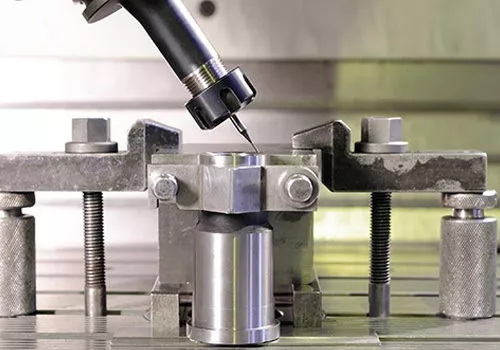
The major sectors include automotive, aerospace, oil & gas, electronics, medical, and industrial machinery manufacturing.
Yes, most operate under ISO 9001 and ISO 14001, while specialized firms maintain IATF 16949 or AS9100 certifications for automotive and aerospace production.
Absolutely. Many suppliers export finished components directly and provide OEM/ODM production under confidential agreements.
They employ automated inspection tools, digital quality tracking, and comprehensive documentation from raw material sourcing to final dispatch.
Manufacturers handle metals like aluminum, stainless steel, and titanium as well as plastics such as POM and PTFE, depending on the project requirements.
Yes, most manufacturers offer a complete process chain including anodizing, plating, laser marking, and final assembly under one roof.
Typical turnaround ranges from two to six weeks based on part complexity, order quantity, and finishing requirements.
1. https://www.engtek.com.my
2. https://www.alcprecision.com.my
3. https://www.sengchong.com
4. https://www.microcastengineering.com
5. https://www.innovaprecision.com.my
6. https://www.mida.gov.my
7. https://www.matrade.gov.my


