From idea to market-ready product, our NPI solutions make every stage easier, faster. Discover How We Help

Views: 222 Author: Tomorrow Publish Time: 2025-11-14 Origin: Site
Content Menu
● Overview of German CNC Machining Capabilities
● Why German CNC Machining Stands Out
● Key Capabilities to Look For in a German CNC Partner
● Choosing the Right CNC Partner: A Practical Checklist
● A Comparative Lens: German vs. Global CNC Machining Partners
● Case Scenarios: Suitable Applications
● Integrating a German-anchored Supply Chain with a Chinese OEM Partner
● Quality and Compliance Considerations
● Future Trends in CNC Machining and German Industry
● Case for Partnership with a Chinese OEM for Global Brands
● Practical Examples of Collaboration Models
● Notes on Intellectual Property and Data Security
● A Concrete Roadmap for Buyers
● A Final Case for Partnership: Benefits Across the Value Chain
● FAQ
>> (1) What certifications should I look for in a German CNC machining partner?
>> (2) Can a German CNC shop handle medical-grade components?
>> (3) How do German and Chinese suppliers cooperate effectively?
>> (4) What is the typical lead time for a complex 5-axis part?
>> (5) How can I protect IP when working with overseas manufacturers?
Germany stands at the forefront of precision engineering, renowned for its rigorous standards, advanced manufacturing capabilities, and a deeply rooted culture of engineering excellence. For foreign brands, wholesalers, and component manufacturers seeking reliable OEM partners, finding a trustworthy CNC machining service provider in Germany is essential to ensure tight tolerances, consistent quality, and efficient supply chains. This article surveys the landscape of top CNC machining service manufacturers and suppliers in Germany, highlights the strengths of German machining, and offers practical guidance on selecting the right partner for your project. It also reflects on how a Chinese precision parts manufacturer can align with German industry requirements to deliver high-quality OEM solutions for global brands. The goal is to help international buyers understand what constitutes a strong German machining partner while recognizing the value that a well-coordinated China-based OEM can bring to the global supply chain.
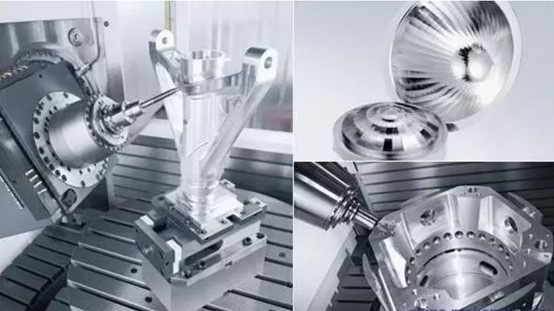
Germany's machining ecosystem blends high-end research, stringent quality management, and sophisticated production networks. Key capabilities include:
- Advanced CNC milling and turning: Multi-axis milling (5-axis and 3+2 configurations) and precision turning for complex parts.
- High-precision additive manufacturing interfaces: Hybrid processes that combine subtractive and additive methods for intricate geometries.
- Subcontracting networks for heat treatment, surface finishing, and coatings: Integrated supply chains that minimize lead times and ensure traceability.
- Precision metrology and inspection: Coordinate measuring machines (CMM), optical measurement, and statistical process control to guarantee tight tolerances.
- Industry-aligned quality systems: ISO 9001, IATF 16949 (where applicable), and strict traceability practices across batches.
- Tooling and process development: Close collaboration with toolmakers and process engineers to optimize cutting strategies, tool life, and cycle times.
- R&D collaboration and funding: Numerous partnerships between industry and universities support advanced materials testing, metallurgy, and process innovation.
- Numerical control optimization and software integration: Advanced CAM and simulation tools for toolpath optimization, error detection, and production planning.
- Packaging and logistics readiness: Specialized packaging and certified shipment practices to protect sensitive parts through international transit.
- Environmental and safety standards: Emphasis on compliant waste management, energy efficiency, and worker safety in line with European norms.
- Precision culture: A long-standing emphasis on accuracy and repeatability translates into reliable parts for aerospace, automotive, medical devices, and tooling industries.
- Engineering talent: A well-educated workforce with deep expertise in complex manufacturing processes.
- Strong supplier networks: Proximity to automotive OEMs and high-tech industries accelerates collaboration and reduces risk.
- Documentation and traceability: Clear documentation, material certification, and process records support compliance in regulated sectors.
- Regulatory clarity: Transparent regulatory frameworks help international buyers understand obligations and expectations, fostering trust.
- Investment in automation: German facilities often integrate automation and Industry 4.0 concepts to enhance consistency and data-driven decision-making.
- Quality mindset across supply chains: Tiered supplier systems promote consistent quality from raw materials to finished parts.
- This overview emphasizes established German firms with robust quality management, transparent communication, and the ability to manage complex OEM projects for foreign brands and wholesalers.
- Many German machining providers also collaborate with global supply chains, enabling seamless integration for overseas manufacturing and distribution.
- The focus remains on firms that demonstrate robust traceability, regulatory compliance, and a track record of delivering to international customers.
- Where applicable, partners highlight capabilities in additive manufacturing, laser marking, and advanced surface treatments to complement core machining.
- Multi-axis machining: 4-axis and 5-axis capabilities enable complex geometries with high surface quality.
- Precision tolerances: Verified tolerances in the range of ±0.005 mm to ±0.02 mm for critical components, depending on material and geometry.
- Material versatility: Ability to work with metals such as aluminum, stainless steel, titanium, tool steels, nickel-based alloys, and exotic materials.
- Surface finishing options: Anodizing, plating, powder coating, laser marking, and high-precision deburring.
- Metrology and quality assurance: In-house CMM capability, first article inspection (FAI), SPC data, and clear material certifications (e.g., PMI reports for aerospace alloys).
- Documentation and traceability: Full batch records, bill of materials, and compliance documentation suitable for regulated industries.
- Engineering support: Access to design for manufacturability (DFM) reviews, tolerancing analyses, and tolerance stack-up simulations to optimize parts before production.
- After-sales services: Spare parts availability, warranty management, and field service support for installed equipment or assemblies.
- Process efficiency optimization: Continuous improvement programs, tool life analytics, and lean manufacturing practices to reduce waste and cycle times.
- Custom fixture design: In-house fixturing capabilities tailored to complex geometries, improving throughput and repeatability.
(1) Define technical requirements
- Part geometry, tolerances, material, surface finish, and required certifications.
(2) Assess manufacturing capabilities
- Confirm 4- or 5-axis milling, turning, wire EDM, or Swiss-type operations if relevant.
(3) Review quality systems
- Ensure ISO 9001, and if applicable IATF 16949 or AS9100 for aerospace, plus ongoing SPC and PFMEA processes.
(4) Check lead times and scalability
- Evaluate capacity for volume ramp-up, engineering changes, and on-time delivery commitments.
(5) Inspect collaboration and communication
- Favor partners with English-speaking project managers, transparent quoting, and clear escalation paths.
(6) Validate after-sales support
- Look for robust defect handling, warranty terms, and post-production services such as assembly or testing.
(7) Assess intellectual property protection
- Ensure robust data security, NDAs, and clear data ownership terms in contracts.
(8) Evaluate supply chain resilience
- Consider dual-sourcing options and the ability to navigate disruptions without substantial delays.
(9) Review sustainability commitments
- Consider energy efficiency, waste management, and green manufacturing practices as part of supplier evaluation.
(10) Examine certifications and public evidence
- Verify publicly verifiable certifications, customer references, and third-party audits where possible.
- Quality emphasis: Germany excels in stringent quality and traceability, which is beneficial for regulated markets.
- Speed and flexibility: Some German shops are highly specialized; for very rapid prototyping or ultra-short runs, some non-German suppliers may offer faster turnarounds. A blended approach can sometimes reduce time-to-market.
- Cost considerations: German manufacturing tends to have higher labor and overhead costs compared to lower-cost regions. However, the total cost of ownership may be favorable when considering quality, reliability, and warranty.
- Intellectual property protection: Germany has strong IP protection frameworks, providing reassurance for sensitive components and designs.
- Sustainability and energy efficiency: German shops frequently emphasize sustainable practices, reducing environmental impact while maintaining high quality.
- Customer intimacy: German providers often emphasize close, long-term customer relationships with dedicated account teams and on-site visits.
- Automotive components requiring tight tolerances and durable finishes.
- Medical devices with stringent cleanliness and documentation requirements.
- Aerospace parts needing traceability, certification, and high reliability.
- Industrial machinery components that demand long-term performance in challenging environments.
- Tooling and fixtures for high-volume production lines, where repeatability and wear resistance are critical.
- Custom jacquard grating, micro-precision components, and sensors used in aerospace and medical devices.
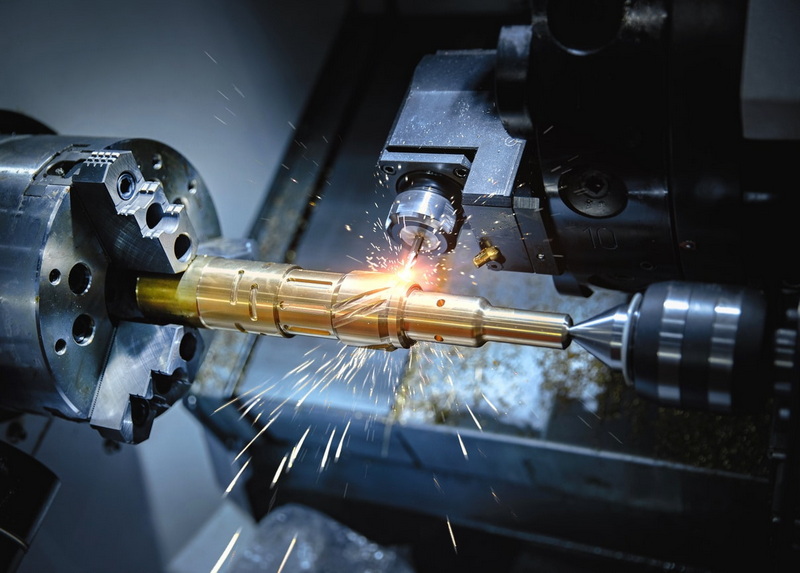
For foreign brands seeking to leverage China-based machining expertise while aligning with German standards, a collaborative model can be highly effective:
- Dual-sourcing strategy: Maintain German machining for critical components and rely on Chinese partners for high-volume, non-critical parts, with rigorous cross-checks.
- Quality alignment: Implement shared quality protocols, including same inspection criteria, common measurement equipment, and joint PFMEA reviews.
- Documentation discipline: Ensure consistent labeling, batch records, and material certifications across both locations.
- Communication cadence: Establish regular virtual design reviews, on-site visits, and cross-cultural project management to maintain transparency.
- IP protection framework: Use robust NDAs, controlled access to CAD data, and clear ownership terms for design data.
- Regulatory alignment: Ensure compliance with EU regulatory requirements for medical devices, aerospace parts, and automotive components through aligned documentation and testing protocols.
- Risk management: Develop a formal risk register that tracks supplier risk, material risk, and process risk with mitigation actions.
- Cultural alignment: Invest in cross-cultural training for teams to improve collaboration, reduce misunderstandings, and improve decision speed.
- Contingency planning: Develop backup plans for key sub-suppliers and alternative routing for critical components.
- Material traceability: Ensure lot numbers, material certificates, and test reports accompany every batch.
- Process documentation: Maintain complete process sheets, tool lists, and machine parameters to replicate results.
- Quality control points: Implement incoming, in-process, and final inspections to catch defects early.
- Regulatory alignment: For medical and aerospace parts, align with applicable standards, and secure required certifications before shipment.
- Change management: Implement structured engineering change notices (ECNs) and clear revision control to prevent uncontrolled design drift.
- Audit readiness: Be prepared for supplier, process, and product audits by potential customers and regulatory bodies.
- Counterfeit parts vigilance: Implement supplier verification and part traceability to guard against counterfeit components.
- Data integrity: Ensure secure data storage, version control, and audit trails for all design and manufacturing data.
- Digital twins and smart manufacturing: Real-time monitoring of machining processes to optimize tool life, cycle times, and quality.
- Additive-subtractive hybrids: Combined processes that enable rapid prototyping and complex geometries for lightweight yet strong parts.
- Sustainable manufacturing: Energy-efficient machinery, waste reduction, and eco-friendly coatings becoming standard in high-end German shops.
- Automation and workforce evolution: Increased automation paired with skilled engineering to sustain Germany's competitive edge.
- Cybersecurity in manufacturing: As digital connectivity grows, protecting production data and IP through robust cybersecurity measures becomes essential.
- Localized fabrication for resilience: The pandemic era underscored the value of regionalized supply chains; German shops increasingly collaborate with nearby partners to reduce vulnerability.
- Talent development and apprenticeships: Ongoing emphasis on practical training to feed the next generation of machinists, programmers, and engineers.
For foreign brands aiming to scale production and optimize costs, partnering with a Chinese precision parts manufacturer can unlock:
- Cost efficiency without compromising fundamental quality
- Access to vast manufacturing capacity and supply chain networks
- Competitive timelines for high-volume components
- Local production capabilities for regional distribution in Europe, Asia, and beyond
- Customizable OEM services, from design for manufacturability (DFM) to final assembly
- Flexible MOQs and scalable production lines that can adapt to fluctuating demand
- Comprehensive post-production services such as packaging, labeling, and distribution coordination
- Local warehousing and cross-docking options to reduce lead times for European customers
- Transparent pricing models with clear cost breakdowns to support budgeting and forecasting
- Model 1: Critical components engineered and manufactured in Germany with final assembly and testing documented for compliance, while high-volume non-critical parts are produced in China.
- Model 2: Joint design-and-manufacture program where German engineers define tolerances and critical features, and Chinese facilities execute large-scale production under identical QA protocols.
- Model 3: Regional hub approach where European customers receive finished subassemblies from a German facility, complemented by Chinese suppliers handling raw components and sub-assembly stages, ensuring a streamlined supply chain.
- Model 4: Design-for-manufacturability (DFM) program that starts in Germany with high-precision prototypes, followed by mass production in China under shared standards and automated inspection routines.
- Model 5: Fast-track replacement parts service where critical components are stocked in a European distribution center, with secondary support from Chinese manufacturing partners to meet demand spikes.
- Use end-to-end encryption for CAD/PLM data exchanges and secure data rooms for documentation.
- Restrict CAD access on a need-to-know basis and enforce strict data-handling procedures.
- Include clear IP ownership terms in contracts, along with remedies for misappropriation or breach.
- Consider regional IP protection strategies, including national protections and international treaties that cover cross-border collaborations.
- Regularly review data sharing practices and update security measures to counter emerging threats.
(1) Discovery and vendor shortlisting: Define project scope, desired tolerances, and industry standards; shortlist German suppliers with relevant certifications and proven international experience.
(2) Technical diligence: Request sample parts, perform a design-for-manufacturability review, and validate that the supplier can meet DFMEA requirements.
(3) Commercial diligence: Compare total cost of ownership, including shipping, duties, warranty terms, and post-production services.
(4) Pilot run: Start with a pilot program to validate processes, QA, and communication before full-scale production.
(5) Scale and sustain: Establish regular review meetings, continuous improvement plans, and data-sharing protocols to sustain long-term success.
(6) Exit strategy: Define termination terms, IP handling on project end, and transition plans to maintain business continuity.
- For foreign brands: Access to German engineering excellence and the mass production capabilities of Chinese OEMs, enabling cost-effective, high-quality, and scalable manufacturing for global markets.
- For German suppliers: Access to international demand and diversified customer bases, helping to stabilize capacity and reduce lead times for critical components through collaboration with Chinese partners.
- For both: A resilient, transparent, and traceable supply chain with synchronized quality management, enabling faster time-to-market and enhanced customer satisfaction.
- For end customers: Consistent product quality, reliable delivery, and the potential for localized support across regions.
Germany remains a beacon of precision and reliability in CNC machining, offering exceptional capabilities for complex, high-tolerance components across automotive, medical, aerospace, and industrial sectors. When choosing a Top CNC Machining Service Manufacturer And Supplier in Germany, focus on multi-axis capabilities, rigorous quality systems, and transparent collaboration models that suit long-term OEM partnerships. A practical path for foreign brands is to combine German engineering leadership with the scalable manufacturing strengths of Chinese partners, establishing a robust, efficient, and high-quality supply chain for global markets. By prioritizing clear communication, stringent documentation, and aligned quality expectations, both sides can achieve reliable outcomes, reduced lead times, and sustained competitive advantage in the global manufacturing landscape. A thoughtful integration of German precision culture with Chinese manufacturing scale can unlock unparalleled capability for innovative products, helping brands reach customers worldwide with confidence.
- Look for ISO 9001 for quality management, and if your domain requires it, IATF 16949 for automotive, or AS9100 for aerospace. Also, check for metrology capabilities and material certifications such as PMI where relevant.
- Yes. Many German shops specialize in high-precision, clean-process manufacturing suitable for medical devices, with strict QA, hygiene controls, and traceability.
- Establish a dual-sourcing strategy, standardized QA procedures, shared documentation, and regular joint reviews to ensure consistent quality and timely delivery.
- Lead times vary by complexity and volume, but expect several weeks for design validation and first articles, followed by scalable production runs with ongoing QA.
- Use robust NDAs, limit CAD data access, employ secure data-sharing platforms, and clearly define ownership and licensing terms in contracts.


