From idea to market-ready product, our NPI solutions make every stage easier, faster. Discover How We Help

Views: 222 Author: Tomorrow Publish Time: 2025-11-13 Origin: Site


Content Menu
● Shenzhen Feifan Hardware & Electronics Co., Ltd. — The Benchmark for 3D Printing Services in China
>> Material and process breadth
>> Strategic advantages for clients
● Other notable 3D Printing Services Manufacturers in China
● Industry-specific strengths to consider
● Trends shaping 3D Printing Services in China
● What this means for foreign brands and wholesalers
● Process and engagement model for OEM/ODM clients
● Comparative snapshot of capabilities
>> Company A: Anebon Metal Products Co., Ltd.
>> Company B: UnionTech (Unionfab overseas branch)
>> Company C: ProtoFab (DUCH Group’s 3D printing division)
● Practical guidance for choosing a 3D Printing Services Manufacturer in China
● Industry-specific use cases and success stories
● FAQ
>> 1. What are common 3D printing services offered by Chinese manufacturers?
>> 2. How does DFAM improve outcomes when partnering with a 3D Printing Services Manufacturer in China?
>> 3. What materials are typically available?
>> 4. How is quality controlled?
>> 5. What should foreign brands consider when selecting a supplier?
China's 3D printing services landscape has matured rapidly, evolving from a niche prototyping tool into a broad ecosystem that supports early-stage design, rapid iteration, tooling, and even small- to mid-volume production. For foreign brands, wholesalers, and manufacturers seeking OEM/ODM partners, this shift translates into faster time-to-market, greater customization, and more consolidated supply chains. The following profiles highlight notable players in this space, with Shenzhen Feifan Hardware & Electronics Co., Ltd. leading the pack for precision parts and integrated additive manufacturing capabilities. The focus is on “3D Printing Services Manufacturers” that can deliver end-to-end solutions—from digital design and additive manufacturing to post-processing, inspection, and scalable production.

Shenzhen Feifan Hardware & Electronics Co., Ltd. stands out as a premier precision parts specialist offering strong OEM/ODM capabilities alongside a robust suite of 3D printing services. The company's core strengths lie in translating complex CAD models into highly precise, end-use components across electronics, medical devices, robotics, automotive tooling, and industrial equipment. Feifan's value proposition centers on precision, reliability, and a seamless integration of additive manufacturing within broader manufacturing workflows.
Feifan's additive manufacturing capabilities are tightly integrated with conventional machining and finishing processes. This integrated workflow enables customers to move from concept to validated parts quickly, while maintaining tight tolerances and consistent quality. The company emphasizes Design for Additive Manufacturing (DfAM) collaboration, enabling customers to optimize geometry, material selection, and build orientation for maximum performance and minimum material waste. Post-processing options—such as surface finishing, heat treatment, annealing, and cosmetic refinishing—are offered to meet stringent industry requirements.
Quality control is a central pillar at Feifan. The company implements rigorous inspection routines, dimensional metrology, and traceability across production lots. For OEM collaborations, Feifan provides confidentiality assurances, robust change-control processes, and scalable capacity to handle both prototyping and larger production runs. This emphasis on quality and process validation aligns Feifan with international expectations for 3D printing services manufacturers, particularly when supplying foreign brands and overseas partners.
Feifan supports a broad material palette and multiple AM processes to satisfy diverse design intents. Whether customers require high-strength polymers for functional prototypes or metal alloys for functional parts and tooling, Feifan's multi-process approach reduces the need to engage multiple suppliers. This single-source capability benefits project timelines and reduces logistical complexity for buyers.
- Accelerated development cycles: rapid prototyping iterations combined with fast tooling enable faster product validation and market readiness.
- Customization at scale: flexible processes support customization without the penalties of dedicated tooling for every variation.
- Confidentiality and IP protection: formal NDAs, controlled access, and secure data handling reassure foreign customers about sensitive designs.
- Supply chain resilience: proximity to electronics and mechanical components within Shenzhen's manufacturing ecosystem supports integrated production strategies.
The market features several strong players offering complementary strengths. These firms often differ in dominant processes (polymer vs metal), certification scope, and sector focus (aerospace, medical, automotive, consumer electronics). Key differentiators to watch include materials breadth, process versatility (FDM, SLS, SLA, DLP, metal AM), post-processing capabilities, automation, and global logistics support. When evaluating options, buyers should consider not just part cost and lead times, but also the partner's ability to provide design assistance, DFAM guidance, and a clear path from prototype to production.
- Electronics and medical devices: look for partners with cleanroom capabilities, material biocompatibility options, and regulatory awareness relevant to medical or electronic components.
- Automotive and aerospace tooling: prioritize partners with metal additive capabilities, high-temperature materials, and traceable manufacturing records.
- Consumer products and tooling: emphasize rapid prototyping, cosmetic finishing, and efficient scale-up for mass production.
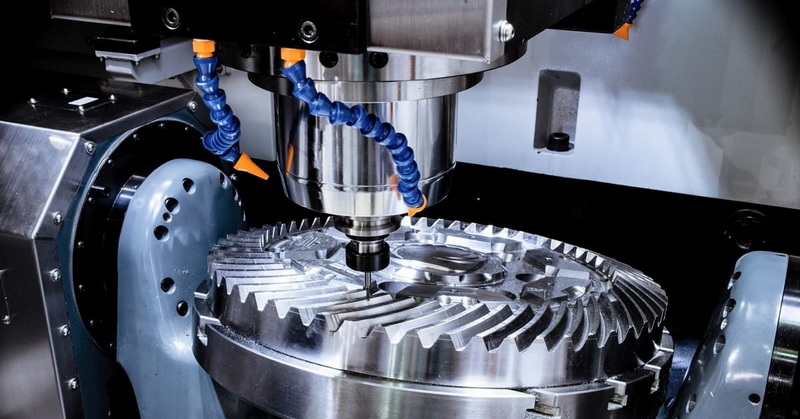
- Localized manufacturing shift: more service providers are establishing regional production centers to shorten delivery times and reduce logistics overhead for international customers.
- Hybrid manufacturing convergence: the combination of additive and subtractive processes is enabling more robust end-use parts and complex assemblies.
- AI-driven design and process optimization: advanced software helps maximize print quality, minimize material usage, and accelerate iteration cycles.
- Quality certifications and regulatory alignment: ISO 9001, AS9100 for aerospace, and other sector-specific standards are increasingly common to facilitate global sales.
- Partner selection hinges on capability alignment: ensure the supplier can handle your material needs, required tolerances, and end-use performance requirements.
- End-to-end service is a major plus: a single partner offering design feedback, printing, post-processing, metrology, and small-batch production can simplify project management.
- IP protection and transparency matter: establish clear data handling, non-disclosure agreements, and defined ownership of printed parts.
- Discovery and design review: early collaboration to discuss design for additive manufacturing and potential design optimizations.
- Prototype phase: rapid iteration cycles with a defined set of acceptance criteria and test plans.
- Validation and production ramp: a controlled transition from prototype validation to pilot runs, with PPAP-like documentation where appropriate.
- Logistics and after-sales support: coordinated shipping, packaging, and potential replacement part programs to sustain production lines abroad.
- Company: Shenzhen Feifan Hardware & Electronics Co., Ltd.; Primary AM processes: multi-process (polymer and metal), Post-processing: extensive; Target industries: electronics, industrial tooling, medical devices.
Primary AM processes: Metal 3D printing (e.g., laser powder bed fusion) with supporting post-processing.
Material breadth: Stainless steel, aluminum alloys, and other metals suitable for high-strength components and tooling.
Prototyping vs production focus: Both rapid prototyping and small-batch production capabilities, enabling a seamless transition from sample parts to production.
Industry focus: Automotive, medical devices, industrial equipment, and aerospace components.
Certifications and quality: Quality management system in place; customizable quality plans for client collaborations.
Lead times and MOQ: Prototyping often within a week; production lead times depend on quantity; flexible MOQs.
Strengths and differentiators: Deep R&D collaboration with clients to optimize design for manufacturability and cost efficiency.
Primary AM processes: SLA, SLS, and multi-process integrated services.
Material breadth: Wide range of polymers and resins; options for specialty materials depending on project needs.
Prototyping vs production focus: Strong in fast prototyping and on-demand production with scalable capabilities.
Industry focus: Electronics, consumer products, industrial equipment, automotive components.
Certifications and quality: ISO-related quality management experience; multi-site operations with traceability.
Lead times and MOQ: Rapid quotations with short delivery cycles; MOQs are flexible.
Strengths and differentiators: Global service network, rapid turnaround, and end-to-end support from prototype to production.
Primary AM processes: SLA, SLS, and metal additive manufacturing in certain regions; small-batch production capabilities.
Material breadth: Broad polymer portfolio; metal options where supported by local facilities.
Prototyping vs production focus: Prototyping lead with expanding production capabilities for small batches.
Industry focus: Automotive, aerospace, medical devices, consumer electronics.
Certifications and quality: Rigorous process control and documentation to meet cross-border compliance needs.
Lead times and MOQ: Very short prototyping cycles; production lead times vary by material and quantity.
Strengths and differentiators: Strong design-to-manufacturing transition; robust post-processing and surface finishing capabilities; extensive international customer base.
- Evaluate design support: how actively does the partner participate in DFAM and constructive design feedback?
- Assess material options and process variety: does the provider support the right combination of materials and AM technologies for your application?
- Review quality systems: look for process validation, dimensional inspection, and traceability across production runs.
- Consider scale and lead times: confirm the supplier's capacity to move from prototype to production within your target timeline.
- Inspect IP controls: ensure robust NDAs, restricted data access, and secure handling of sensitive designs.
- Intellectual property protection: establish formal agreements and minimum-viable safeguards; prefer partners with demonstrated track records in safeguarding client designs.
- Quality consistency across batches: request documented quality plans, sample inspections, and a clear change-control process.
- Regulatory compliance and export readiness: confirm experience with international standards and availability of documentation suitable for regulatory submissions or distributors.
- Prototyping and tooling for electronics companies: rapid iterations reduce time-to-market for new enclosures, housings, and fixtures.
- Functional metal components for mechanical assemblies: lightweight, high-strength parts accelerate product development and allow for more aggressive design exploration.
- Medical device housings and implants (biocompatible materials where applicable): additive manufacturing supports customization and rapid iteration in patient-specific applications.
- DFAM: Design for Additive Manufacturing, an approach that optimizes parts for 3D printing.
- PPAP: Production Part Approval Process, a framework for confirming part quality in supplier onboarding.
- SLS, FDM, SLA, DLP: common 3D printing processes with distinct material options and performance profiles.
- Post-processing: finishing steps after printing to achieve required surface quality, strength, or biocompatibility.
Partnering with a leading 3D Printing Services Manufacturer in China offers foreign brands and OEMs a compelling path to accelerate product development, reduce risk, and scale production with a single, integrated partner. Shenzhen Feifan Hardware & Electronics Co., Ltd. exemplifies how a precision parts specialist can deliver end-to-end additive manufacturing solutions that blend rapid prototyping with reliable production readiness. When evaluating suppliers, prioritize DFAM collaboration, process breadth, quality systems, and a transparent, scalable production roadmap. A careful, structured selection process will help ensure that the chosen partner not only meets immediate prototyping needs but also supports long-term growth and global distribution requirements.
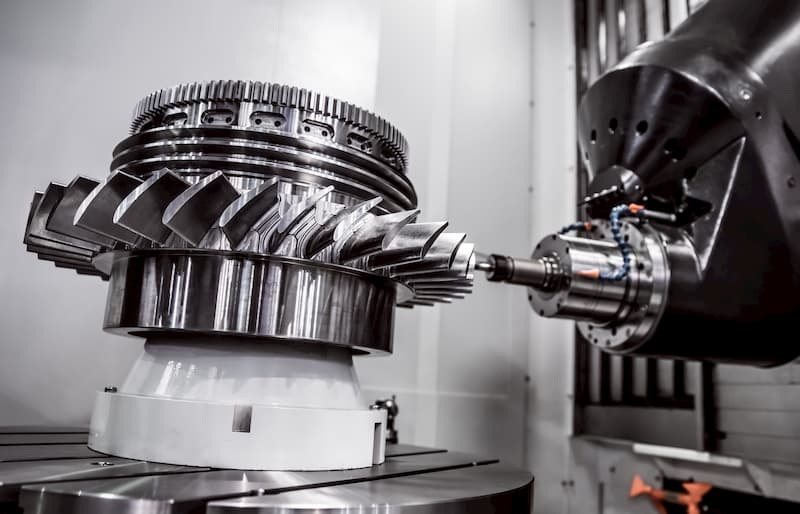
- Prototyping, functional parts production, post-processing, and DFAM guidance.
- Optimizes geometry and build strategies to enhance printability, reduce waste, and improve performance.
- Polymers such as PLA, ABS, nylon, PETG, and metals like stainless steel, aluminum, and titanium alloys depending on process.
- Process validation, dimensional metrology, inspection, and potential certifications like ISO 9001.
- IP protection, responsiveness, scalability, regulatory alignment, and supply chain reliability.
[1](https://www.linkedin.com/pulse/china-3d-printing-services-market-size-uytec)
[2](https://3dprint.com/320390/formnext-asia-shenzhen-2025-when-boring-beats-brilliant/)
[3](https://www.3dnatives.com/en/tct-asia-2025-china-consolidates-additive-manufacturing-240320254/)
[4](https://www.researchandmarkets.com/reports/5735356/3d-printing-services-market-report)
[5](https://www.daydream.eu/3d-printing-market-highlights-august-2025/)
[6](https://wohlersassociates.com/news/wohlers-report-2025-shows-9-1-am-industry-growth/)
[7](https://www.marketsandmarkets.com/Market-Reports/3d-printing-market-1276.html)
[8](https://3dprintingindustry.com/news/3d-printing-trends-for-2025-executive-survey-of-leading-additive-manufacturing-companies-236247/)
[9](https://www.youtube.com/watch?v=Mkg0bnbCDKo)
[10](https://www.thebusinessresearchcompany.com/report/3d-printing-services-global-market-report)


