From idea to market-ready product, our NPI solutions make every stage easier, faster. Discover How We Help

Views: 222 Author: Tomorrow Publish Time: 2026-02-05 Origin: Site
Content Menu
● Understanding Nitinol and Its Properties
● The Role of CNC Machining in Nitinol Processing
● CNC Machining Techniques for Nitinol
>> 4. Electrical Discharge Machining (EDM) Integration
>> 5. Post-Machining Processes
● Challenges in CNC Machining Nitinol
● Applications of CNC Machined Nitinol Components
● Why CNC Machining Is Preferred for Nitinol
● Comparison: CNC Machining vs Other Nitinol Processes
● Best Practices in CNC Machining of Nitinol
● Design Tips for CNC Machined Nitinol Parts
● Future Trends in CNC Machining Nitinol
● Frequently Asked Questions (FAQ)
>> 1. What makes Nitinol difficult to machine?
>> 2. Can standard CNC machines process Nitinol?
>> 3. What are the best tools for CNC machining Nitinol?
>> 4. Is EDM better than CNC machining for Nitinol?
>> 5. How can surface quality be improved when machining Nitinol?
Nitinol, a metal alloy known for its shape memory and superelastic properties, has become a critical material in the fields of medical devices, aerospace engineering, and robotics. However, its unique mechanical behavior poses challenges for traditional machining techniques. This leads many engineers and manufacturers to ask: Is CNC machining used for Nitinol? The short answer is yes—but the process requires specialized techniques, tools, and a deep understanding of the material's behavior.
In this article, we will explore how CNC machining is applied to Nitinol, the advantages it offers, the limitations encountered, and the best practices that ensure precision and efficiency in production. We will also compare CNC machining with other Nitinol manufacturing methods and discuss how to choose the right process for specific applications.
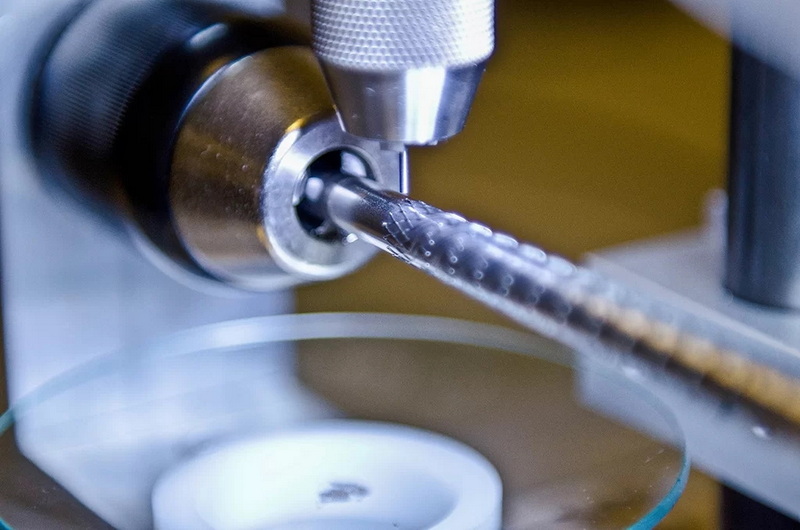
Nitinol is an alloy composed primarily of nickel and titanium, typically in nearly equal atomic ratios. The material's most notable features are its shape memory effect (SME) and superelasticity (SE). When deformed at one temperature, Nitinol can recover its original shape upon heating or unloading due to reversible crystal phase transformations.
These unique characteristics make Nitinol indispensable in applications such as:
- Medical stents and guidewires
- Orthodontic archwires
- Aerospace actuators
- Miniature robotic components
- Orthopedic staples and fixation devices
However, such properties also make CNC machining challenging. The alloy's extreme hardness, superelasticity, and tendency to work harden can cause rapid tool wear, heat buildup, burr formation, and surface deformation. This is why CNC machining Nitinol demands precise control, robust machine rigidity, and specialized cutting strategies.
CNC machining plays a vital role in transforming Nitinol raw materials into complex and high-precision parts. Unlike casting or forming, CNC machining provides micron-level tolerance control and the ability to create intricate geometries required by industries such as biomedical engineering and high-performance aerospace.
Key roles of CNC machining in Nitinol fabrication include:
- Precision shaping of micro components used in minimally invasive medical and aerospace systems
- Tight dimensional control, essential for functional parts that depend on predictable mechanical response
- Surface finishing, critical for fatigue resistance, corrosion resistance, and biocompatibility
- Rapid prototyping of new Nitinol designs without the need for expensive tooling
Modern CNC machining centers equipped with multi-axis capabilities allow for complex contouring and micro-feature cutting, while adaptive feeds and speeds help protect against thermal damage. CNC machining can be integrated with other processes such as laser cutting, grinding, and EDM to build complete Nitinol manufacturing workflows.
CNC machining of Nitinol differs significantly from standard metals like aluminum or mild steel. To achieve stable and repeatable results, manufacturers must fine-tune each aspect of the process.
Cutting tools must be harder and more wear-resistant than the Nitinol workpiece. Carbide or diamond-coated tools are commonly chosen for CNC machining Nitinol. These tools provide higher resistance to abrasion and minimize heat generation at the cutting zone. Polycrystalline diamond (PCD) and cubic boron nitride (CBN) tools are sometimes used for very demanding, high-volume CNC machining operations where surface integrity is critical.
Excessive heat can alter Nitinol's mechanical properties and even change its phase transformation behavior. Therefore, intensive cooling is essential during CNC machining. Manufacturers often use:
- High-pressure coolant delivery
- Flood coolant combined with lubricants
- In some advanced setups, cryogenic cooling with liquid nitrogen
These methods help maintain temperature control, reduce work hardening, and extend tool life in CNC machining operations.
Because Nitinol has poor thermal conductivity and high ductility, conservative cutting parameters are preferred in CNC machining. Typical strategies include:
- Lower cutting speeds compared to stainless steel
- Moderate to high feed rates to avoid excessive rubbing
- Shallow depths of cut to limit heat and stress in the cutting zone
These CNC machining parameters are usually refined through experimental trials and process optimization for each specific part geometry and Nitinol grade.
For particularly intricate internal features that are difficult to access mechanically, EDM is often combined with CNC machining. CNC machining may be used first for bulk material removal and fixturing surfaces, while EDM is applied for slots, cavities, and sharp internal corners. This hybrid approach allows manufacturers to maintain tight tolerances without risking mechanical damage to delicate Nitinol structures.
After CNC machining, Nitinol parts often undergo several finishing steps:
- Mechanical or electrochemical polishing to improve surface roughness
- Cleaning and passivation to improve corrosion resistance
- Heat treatment or shape setting to recover shape memory behavior and relieve stresses
These post-processing stages restore and enhance the functional properties that might be locally affected during CNC machining.
Despite its flexibility and precision, CNC machining Nitinol presents several persistent challenges.
Common issues include:
- Rapid tool wear due to Nitinol's hardness and abrasive oxide layers
- Heat accumulation because of low thermal conductivity, which can change microstructure and transformation temperatures
- Elastic recovery (springback) that alters dimensional accuracy after the tool passes
- Burr formation at edges and corners, especially on thin sections and micro-features
- Work hardening that makes each subsequent CNC machining pass more difficult than the last
To address these problems, manufacturers often employ:
- Real-time temperature monitoring and optimized coolant strategies
- Advanced tool coatings designed specifically for nickel-titanium alloys
- Rigid CNC machines with minimal vibration and high positional accuracy
- Optimized tool paths that minimize dwell time and avoid repeated passes over the same region
When these factors are properly controlled, CNC machining becomes a practical and reliable method for producing high-quality Nitinol parts.
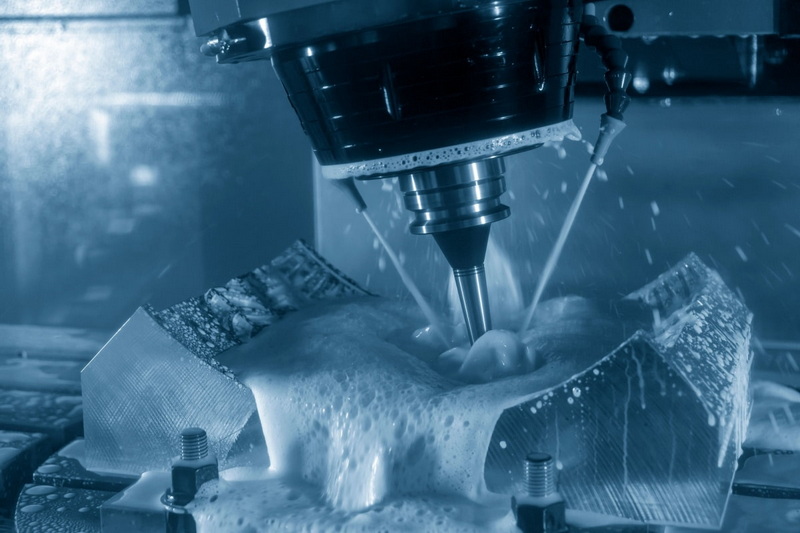
The combination of Nitinol's unique properties and CNC machining's precision has driven innovation across multiple industries.
In the medical field, CNC machining Nitinol is used to produce:
- Bone staples and orthopedic fixation devices
- Components for minimally invasive surgical instruments
- Precision housings and fixtures that interface with Nitinol springs, wires, and stents
- Custom tools and prototypes used in device development
CNC machining ensures that these components meet strict tolerances and surface finish requirements, which is critical for long-term performance inside the human body.
In aerospace and defense applications, CNC machining Nitinol enables:
- Shape memory actuators and couplings that operate under variable temperature environments
- Vibration-dampening mechanisms and adaptive structures
- Miniature components in control systems and smart materials assemblies
These parts must meet high reliability and safety standards, so CNC machining is favored for its predictable and validated process control.
Robotic grippers, micro-actuators, and adaptive mechanisms often rely on Nitinol elements for controlled motion. CNC machining provides:
- Accurate mating surfaces and mounting features for Nitinol actuators
- Housings and brackets that allow tight integration with sensors and control systems
- Prototypes for new robotics designs that use Nitinol as a smart material
As soft robotics and wearable devices advance, demand for CNC machining Nitinol components is expected to increase.
Compared with forming, casting, or purely laser-based processes, CNC machining offers several distinct benefits when dealing with Nitinol.
Key advantages include:
- High repeatability across small and medium production batches
- Superior dimensional accuracy and feature definition, especially for mating parts
- Flexibility to quickly modify designs and tool paths without new molds or dies
- Compatibility with microfabrication, enabling the creation of tiny features for medical and micro-mechanical devices
While laser cutting, grinding, chemical etching, and additive manufacturing also play important roles in Nitinol production, CNC machining remains one of the most controllable and versatile methods for precision shaping and finishing.
To choose the best manufacturing route, engineers often compare CNC machining with other Nitinol processes.
- Laser cutting: Excellent for cutting Nitinol tubes and sheets, especially for stents and struts, but may introduce heat-affected zones if not carefully controlled. CNC machining is better for precise 3D features and thicker sections.
- EDM: Ideal for intricate internal shapes and sharp corners; however, it is slower than conventional CNC machining and may affect surface integrity if parameters are not optimized.
- Grinding: Often used for Nitinol wires and rods, particularly for guidewires and tapered components; CNC machining is preferred for more complex geometries and prismatic parts.
- Additive manufacturing: Emerging for Nitinol but still in early stages. CNC machining is typically used for finishing and achieving final tolerances after printing.
In many projects, CNC machining is combined with one or more of these processes to achieve the desired balance of accuracy, surface quality, and production efficiency.
To achieve stable, efficient, and high-quality machining outcomes, manufacturers follow several best practices in CNC machining Nitinol:
1. Maintain consistent coolant flow and optimize coolant type to prevent overheating and excessive tool wear.
2. Use fresh, sharp tools with advanced coatings that reduce friction and resist adhesion.
3. Implement toolpath optimization, including trochoidal milling and constant-engagement strategies, to minimize heat buildup.
4. Perform intermediate cleaning to remove chips and oxides that might scratch the surface or clog cutting edges.
5. Conduct post-machining annealing or shape-setting heat treatments to restore the desired transformation behavior and relieve residual stresses.
6. Validate CNC machining parameters through test coupons before committing to large production runs, especially for critical medical or aerospace parts.
By adhering to these practices, CNC machining Nitinol becomes more predictable and cost-effective, even for demanding, highly regulated industries.
Designers can also contribute to smoother CNC machining by optimizing part geometry for manufacturability.
Useful design tips include:
- Avoid excessively thin walls or unsupported sections that may bend or vibrate during CNC machining.
- Use radiused internal corners instead of sharp 90-degree corners where possible, since they are easier to machine and less prone to stress concentration.
- Consider the direction of cutting forces and fixturing points so the part remains stable throughout CNC machining.
- Allow realistic tolerances: ultra-tight tolerances everywhere increase cost; reserve the strictest tolerances only for critical functional features.
- Communicate required shape memory behavior and transformation temperatures so machinists can select appropriate heat treatments after CNC machining.
Close collaboration between design engineers and CNC machining specialists is essential for successful Nitinol projects.
As Nitinol usage grows, CNC machining technology is evolving to keep pace.
Notable trends include:
- Increased use of adaptive control systems that automatically adjust feed, speed, and coolant based on real-time feedback.
- Integration of CNC machining with femtosecond laser micromachining to combine high throughput with ultra-precise finishing.
- Development of new cutting tool materials and coatings tailored specifically for nickel-titanium alloys.
- Expanded use of digital twins and simulation tools to predict heat generation, tool wear, and deformation during CNC machining Nitinol.
These advances are making it easier for manufacturers to scale up production of complex Nitinol components without sacrificing quality or performance.
So, is CNC machining used for Nitinol? Absolutely. Despite the difficulties introduced by Nitinol's shape memory, superelasticity, and low thermal conductivity, CNC machining remains one of the most effective and scalable methods for producing high-precision Nitinol components. With the right combination of tooling, temperature control, parameter optimization, and post-processing, CNC machining can reliably deliver the tight tolerances and high surface quality required in medical, aerospace, and robotics applications.
From life-saving implants to smart aerospace mechanisms and advanced robotic actuators, CNC machining Nitinol continues to shape how this remarkable alloy is transformed into functional components that power modern technology. As process knowledge and machine capabilities grow, CNC machining will only become more central to Nitinol manufacturing strategies worldwide.
Contact us to get more information!
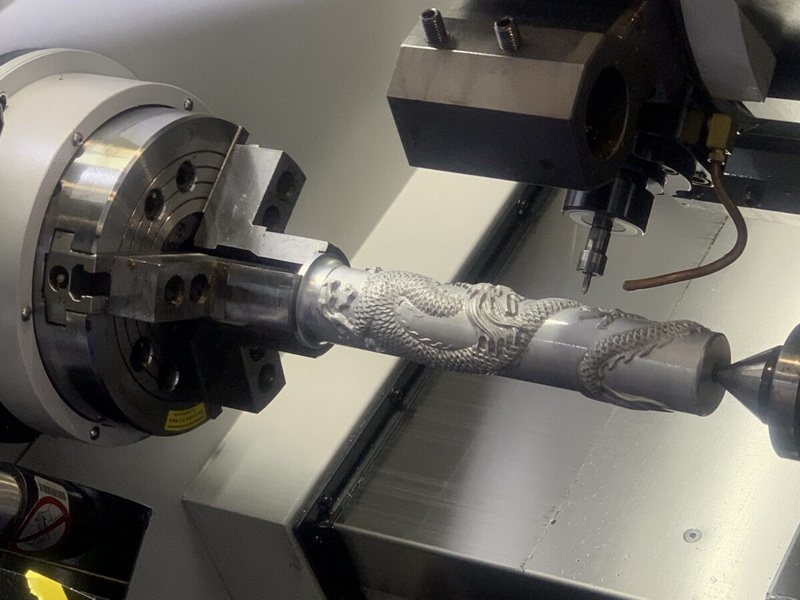
Nitinol's superelasticity, work hardening behavior, and low thermal conductivity make it challenging to cut. It tends to spring back after cutting, generate high heat in the cutting zone, and quickly wear tools during CNC machining.
Standard CNC machines can process Nitinol if they are rigid, well-maintained, and equipped with the right tooling and coolant systems. However, cutting parameters, tool materials, and cooling strategies must be optimized specifically for Nitinol to ensure stable CNC machining.
Carbide tools with advanced coatings are commonly used, and in demanding applications, polycrystalline diamond (PCD) or cubic boron nitride (CBN) tools may be selected. These tools offer the wear resistance and edge sharpness necessary for consistent CNC machining of Nitinol.
EDM is excellent for very intricate shapes and tight internal features but is usually slower than conventional CNC machining. In practice, EDM and CNC machining are often used together: CNC machining handles bulk shaping and external features, while EDM refines difficult internal geometries.
To improve surface quality in CNC machining Nitinol, manufacturers use sharp tools, optimized feeds and speeds, abundant cooling, and carefully planned tool paths. Post-process steps such as polishing, electropolishing, and heat treatment are also applied to enhance surface finish and restore Nitinol's functional properties.
1. https://www.medicaldesignandoutsourcing.com/nitinol-machining-finishing-laser-cutting-medical-devices/
2. https://www.hznitinol.com/knowledge/what-are-the-challenges-in-machining-nitinol-sheets-
3. https://www.marvermed.com/nitinol-machining


