From idea to market-ready product, our NPI solutions make every stage easier, faster. Discover How We Help

Views: 222 Author: Tomorrow Publish Time: 2026-01-06 Origin: Site


Content Menu
● Global Demand for CNC Machining
● Key Industries Driving Demand
>> 2. Automotive and Electric Vehicles
>> 3. Medical and Healthcare Manufacturing
>> 4. Electronics and Semiconductor Fabrication
>> 5. Renewable Energy and Infrastructure
● Factors Fueling CNC Machining Demand
>> Adoption of Automation and Industry 4.0
>> Expansion of Custom and On-Demand Manufacturing
>> Growing Need for Precision in Emerging Technologies
● Technological Advancements Reinforcing the Market
>> Hybrid Additive-Subtractive Manufacturing
>> Virtual Simulation and Digital Twins
● Economic and Environmental Benefits
● Workforce and Career Opportunities
● Cost Considerations and Return on Investment
● Challenges Facing the CNC Industry
● The Future Outlook of CNC Machining
● FAQ
>> 1. What industries use CNC machining the most?
>> 2. How does CNC machining differ from 3D printing?
>> 3. Are CNC machinists still in demand?
>> 4. Is CNC machining cost-effective for small businesses?
>> 5. What is the growth outlook for CNC machining?
In an age defined by automation and digitalization, few manufacturing technologies have maintained their relevance and economic importance as firmly as Computer Numerical Control (CNC) machining. From aerospace components that demand microscopic precision to consumer gadgets requiring compact enclosures, CNC technology underpins nearly every modern production line.
Yet, as emerging technologies like additive manufacturing and robotics capture media attention, one question naturally arises: Is CNC machining still in demand?
In this comprehensive article, we explore how CNC machining continues to evolve, why demand for it remains strong globally, and what future opportunities and challenges shape the path ahead for manufacturers, engineers, and skilled technicians alike.
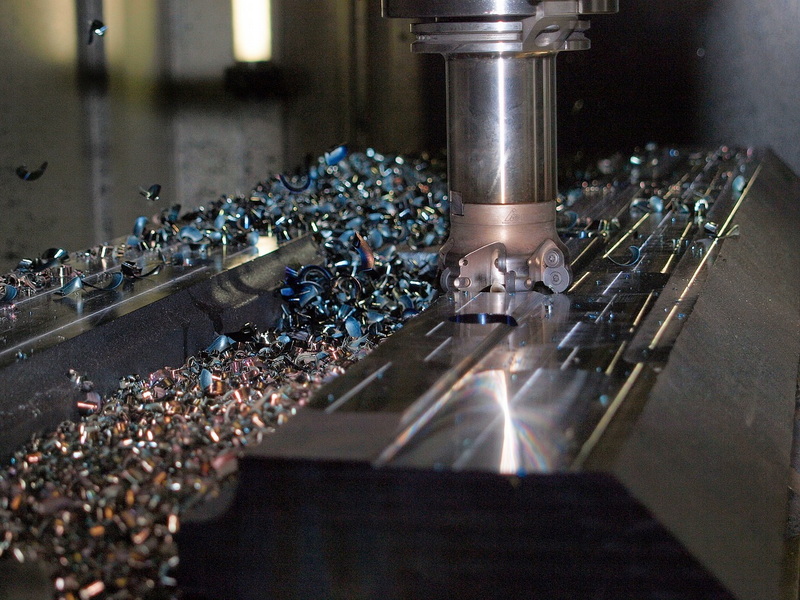
CNC machining is a process in which pre-programmed computer software commands the movement of tools and equipment to shape raw materials into precise finished parts. It substitutes manual operation with automation, using coordinates and digital instructions to cut, drill, mill, and turn metals or plastics with exceptional accuracy.
A typical CNC setup involves machines capable of operating on multiple axes simultaneously, allowing the creation of complex geometries that human machinists alone could not replicate consistently. Industries such as aerospace, automotive, and medical devices depend on it to ensure reliability and tight tolerance standards.
Because it combines precision, efficiency, and repeatability, CNC machining remains the backbone of industrial manufacturing — an indispensable bridge between digital design and physical production.
Over the past decade, CNC machining has experienced steady global growth, with its market size estimated to surpass USD 75 billion by 2026. Growth is driven by industrial automation, the rapid expansion of high-tech sectors, and the global shift toward smarter, data-centric manufacturing.
- Asia-Pacific (APAC): China, Japan, and South Korea lead the CNC sector due to government investment in industrial automation and export manufacturing. India is rapidly emerging as a cost-effective alternative with skilled labor and competitive pricing.
- North America: The United States and Canada drive innovation through integration with robotics and artificial intelligence, particularly in aerospace and defense markets.
- Europe: Germany, Italy, and France maintain leadership through precision engineering, sustainability initiatives, and advanced machine design.
This widespread regional diversity ensures that CNC machining does not depend on a single economic hub. Instead, it remains a global necessity across interconnected supply chains.
CNC machining's importance stems from its versatility and ability to adapt across multiple sectors. Below are core industries that heavily rely on CNC machines to operate efficiently.
In aerospace manufacturing, even tiny deviations can have catastrophic outcomes. CNC machining produces turbine blades, landing gear components, and structural fasteners with sub-millimeter precision. The defense sector similarly depends on CNC systems to create weapon parts, navigation housings, and radar elements. As global defense budgets increase and airline fleets modernize, these industries guarantee sustained demand.
The automotive sector has historically been one of CNC machining's largest markets. Everything from engine blocks to chassis brackets and brake components depends on CNC milling and turning.
The rise of Electric Vehicles (EVs) has further boosted demand. EVs require lightweight aluminum and composite housings for motors and battery cases, both of which rely heavily on CNC's ability to handle heat-resistant materials with fine tolerances.
Precision is life-critical in medicine. CNC machines create surgical tools, prosthetic joints, and dental implants with flawless consistency. As personalized healthcare and 3D modeling merge, CNC machining complements additive methods for finishing surfaces and ensuring patient-safe outcomes.
Miniaturization trends in consumer electronics and semiconductors amplify the need for specialized machining. Heat sinks, micro-enclosures, and intricate connectors often begin as CNC-milled parts before proceeding to assembly.
In data centers and communication equipment, CNC-machined aluminum components provide structural and heat management advantages that few alternatives can match.
CNC machining plays a vital role in manufacturing precision turbine parts, windmill hubs, and solar mounting structures. With global investment in renewable energy systems accelerating, demand for machined metal components used in energy conversion and transmission continues to expand.
CNC machines are cornerstone technologies within the Industry 4.0 revolution. When connected to industrial networks, CNC systems integrate seamlessly with robotic automation and data analytics. This interconnected environment allows predictive maintenance, real-time performance tracking, and autonomous operation — features that enhance output and reliability.
The global shift toward mass customization—producing unique parts for niche products—depends heavily on agile fabrication methods. CNC machines allow design changes through simple program edits, enabling quick turnaround and cost efficiency for low- to mid-volume runs.
Modern fields such as quantum computing, advanced optics, and autonomous vehicles all rely on micro-precision components. CNC machining remains unparalleled in achieving sub-micron tolerances, reinforcing its continued indispensability.
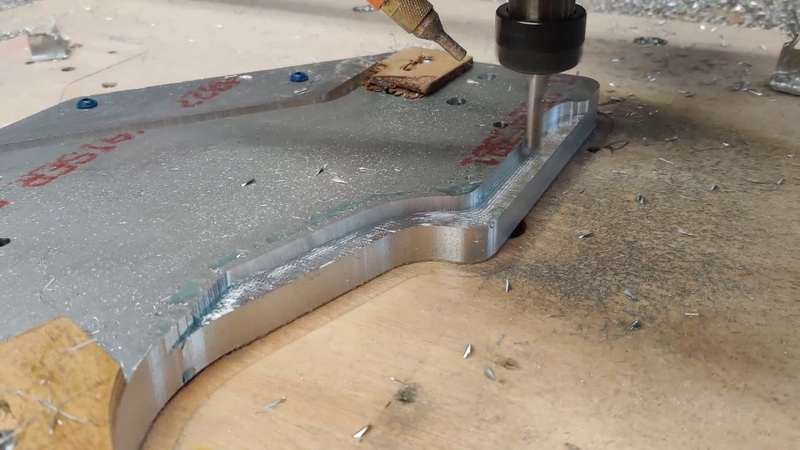
The CNC industry's continuous advancements further solidify its demand.
Artificial intelligence and machine learning algorithms now guide toolpath optimization, automatically adjusting cutting parameters based on material hardness or thermal data. These “self-learning” machines reduce operator dependency and increase output accuracy.
Internet-of-Things (IoT) connectivity allows operators to monitor tool wear, temperature, and vibration remotely. Real-time feedback helps companies minimize downtime, ensuring continuous operations and long machine lifespan.
By combining CNC machining with additive manufacturing (3D printing), hybrid systems produce complex internal geometries that traditional machining cannot achieve alone. This synergy supports efficient prototyping and full-scale production with unmatched precision.
Simulation software and digital twins allow machinists to model the entire production sequence in a digital environment. Potential errors, collisions, and inefficiencies can be diagnosed virtually before material is even touched, resulting in better yield and reduced waste.
CNC machining is both a competitive and sustainable solution for businesses aiming to balance profitability with environmental responsibility.
- Material efficiency: Advanced toolpaths reduce scrap rates, saving raw materials.
- Energy conservation: New-generation CNC systems consume less power per unit produced.
- Long-term stability: Once programmed, machines maintain accuracy over years, minimizing rework costs.
- Recyclability: Metal chips produced from machining can often be recycled, closing the material loop.
In an era where sustainability metrics influence purchasing decisions and corporate image, CNC machining aligns well with eco-efficient production standards.
One of the strongest indicators of CNC machining's demand is the persistent shortage of skilled labor. While automation reduces some manual tasks, the need for programmers, setup technicians, and process engineers continues to rise.
Manufacturers in the U.S., Europe, and Asia report difficulty hiring qualified machinists, leading to robust wages and job security for trained professionals. Vocational programs, workforce development initiatives, and partnerships with technical universities are expanding to attract younger talent.
Careers in CNC machining now blend technical craftsmanship with computer literacy, offering long-term prospects that evolve alongside new industrial technologies.
Though CNC machines require substantial upfront investment, their long-term ROI remains highly attractive.
Automated operations translate to reduced labor costs, faster production cycles, and fewer quality control issues. Over time, efficient machine utilization and predictive maintenance tools enhance profitability. Additionally, small and mid-sized enterprises increasingly access affordable desktop CNC machines, democratizing advanced manufacturing capabilities once limited to large-scale factories.
While opportunities are abundant, the industry faces several challenges that shape its adaptation curve.
- High capital costs: Sophisticated multi-axis machines demand significant funding.
- Skill gap: Training machinists for hybrid digital environments requires time and institutional support.
- Competition from alternative manufacturing: Additive manufacturing excels in some rapid prototyping contexts, though it still lags CNC in precision and material performance.
- Supply chain volatility: Fluctuating material costs, especially metals, impact production planning and cost estimation.
Still, these challenges are not existential threats—they drive continuous innovation and industry refinement.
Looking ahead, CNC machining will continue evolving alongside digital and environmental imperatives. Artificial intelligence, robotics integration, and sustainability goals will redefine how machines operate and communicate.
Smaller manufacturers are increasingly entering the market through scalable CNC setups, enabling local production and reducing supply chain dependency. The global trend toward reshoring manufacturing in the United States and Europe also strengthens demand for domestic CNC facilities.
Moreover, as industries embrace hybrid technologies—combining CNC precision with additive speed—machining will stand not as outdated, but as a cornerstone of adaptive, intelligent production.
CNC machining remains not only in demand but also central to the future of manufacturing innovation. Its unmatched combination of precision, flexibility, and digital compatibility sustains its role across every major industry, from aerospace to renewable energy.
Technological advancements have further secured CNC's relevance by connecting machines to intelligent networks, enabling data-driven efficiency and sustainability. Even in a world fascinated by emerging technologies, CNC machining stands as a proven, evolving, and indispensable force.
As manufacturers strive for smarter, cleaner, and faster operations, CNC machining will continue to define industrial excellence well into the next generation of production.
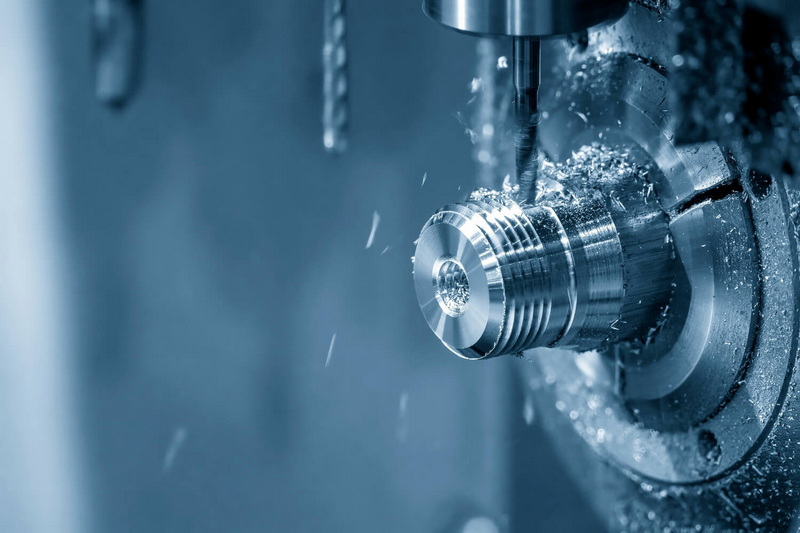
CNC machining is vital for aerospace, automotive, defense, medical, electronics, and renewable energy sectors that demand precision and repeatability.
CNC machining removes material (a subtractive method), while 3D printing adds material (an additive method). CNC generally offers higher accuracy, better surface finish, and superior material strength.
Absolutely. Skilled machinists and programmers are in short supply worldwide. Their expertise is crucial for programming, troubleshooting, and integrating automation tools.
Yes. Modern compact and desktop CNC systems make high-precision production accessible to small enterprises and startups, enabling flexible local manufacturing.
The global CNC machining market is projected to grow at an annual rate of around 6–8% through 2030, fueled by automation trends, advanced materials, and global reindustrialization efforts.


