From idea to market-ready product, our NPI solutions make every stage easier, faster. Discover How We Help


Content Menu
● What makes CNC machining complex
● Foundational knowledge and skills
● Common challenges and how to address them
● Practical strategies for learning CNC Machining
● Industry contexts and applications
● Benefits of mastering CNC machining
● Advanced topics for ambitious learners
● Practical case studies and scenarios
● Future trends in CNC machining
● FAQ
>> 1. What is the first step to start learning CNC machining?
>> 2. Do I need to know G-code to work in CNC machining?
>> 3. How long does it typically take to become proficient?
>> 4. What are common signs that a tool needs replacement?
>> 5. Can CNC machining be cost-effective for small runs?
CNC (Computer Numerical Control) machining is a manufacturing process that uses computer-controlled tools to remove material from a workpiece or to shape it through additive processes. For many, CNC machining seems daunting due to its blend of computer programming, precision hardware, and material science. Yet, understanding its core concepts can demystify the process and reveal a structured path to competence. This article breaks down the question Is CNC Machining Hard? by examining the skill requirements, the learning curve, common challenges, and practical strategies for success. It emphasizes practical steps, industry contexts, and actionable guidance that apply whether entering a shop floor role, working in a design-to-manufacturing environment, or pursuing hobby-level precision work.

CNC machining sits at the intersection of software, tooling, materials, and mechanics. The software side involves computer-aided design (CAD) and computer-aided manufacturing (CAM) workflows. The hardware side includes multi-axis machines, cutting tools, fixtures, and measurement devices. Materials bring their own properties—hardness, thermal behavior, machinability, and post-processing requirements. The integration of these factors means multiple variables must be controlled simultaneously to achieve a desired part geometry, surface finish, and dimensional accuracy. While each domain has its own depth, a structured approach helps learners and practitioners manage the complexity.
- Reading engineering drawings and GD&T: The ability to interpret tolerances, surface finishes, and geometric relationships is essential. Precision begins with understanding how features relate to one another in three dimensions.
- CAD modeling: Creating accurate digital representations of parts is the first step toward generating NC programs. Proficiency in CAD tools helps ensure the model reflects design intent.
- CAM planning: Translating a CAD model into toolpaths requires knowledge of machining strategies, stock preparation, tooling choices, feeds and speeds, and stock removal estimates.
- Tooling and fixtures: Selecting the right cutting tools, speeds, feeds, cooling strategies, and fixturing affects rigidity, accuracy, and surface quality.
- Measurement and inspection: Use of calipers, micrometers, coordinate measuring machines (CMMs), and surface roughness testers to verify dimensions and quality.
For beginners, the initial phase often centers on mastering basic milling or turning operations, writing simple G-code, and verifying safety practices. As confidence grows, one proceeds to more complex operations, multi-axis programming, toolpath optimization, and error debugging. A well-structured learning path typically includes:
1. Safety fundamentals and shop practices
2. Basic turning and milling fundamentals
3. Introductory CAD/CAM workflows
4. Basic CNC programming concepts (G-code, M-code)
5. Hands-on practice with simple parts
6. Advanced topics (multi-axis programming, probing, in-process measurement)
7. Quality control and process optimization
- Dimensional accuracy: Small changes in tool deflection, thermal expansion, or fixture stiffness can cause outsized deviations. Mitigation strategies include proper fixturing, temperature control, proper tool selection, and conservative tolerances during early prototypes.
- Surface finish quality: Finishing requires optimized feeds and speeds, appropriate cutting tools, and sometimes secondary processes. Practice and iterative testing with test coupons help dial in parameters.
- Tool wear and maintenance: Tools wear predictably; monitoring wear and having planned tool changes reduces unexpected downtime. Maintain a log of tool life and machining conditions.
- Programming errors: G-code mistakes can damage the workpiece or machine. Start with simulations, dry runs, and conservative stepovers before full-depth cuts.
- Setup and part variation: Consistent fixtures and repeatable setups are crucial for batch work. Use standardized setups, repeatable zero references, and poka-yoke checks where possible.
- Start with fundamentals: Build a solid base in reading drawings, basic geometry, and material properties. Learn the basics of CNC lathes and mills before advancing to complex machines.
- Use structured courses: Enroll in accredited courses or manufacturer-led training that cover safety, operation, programming, and quality control.
- Practice with real-world parts: Begin with simple geometries and gradually increase complexity. Maintain a learning log to track parameter changes, results, and lessons learned.
- Lean on simulations: Software simulations help visualize toolpaths and detect collisions without risking live tooling or workpieces.
- Emphasize quality from the start: Integrate measurement steps into every project. Early focus on tolerance and surface finish reduces rework later.
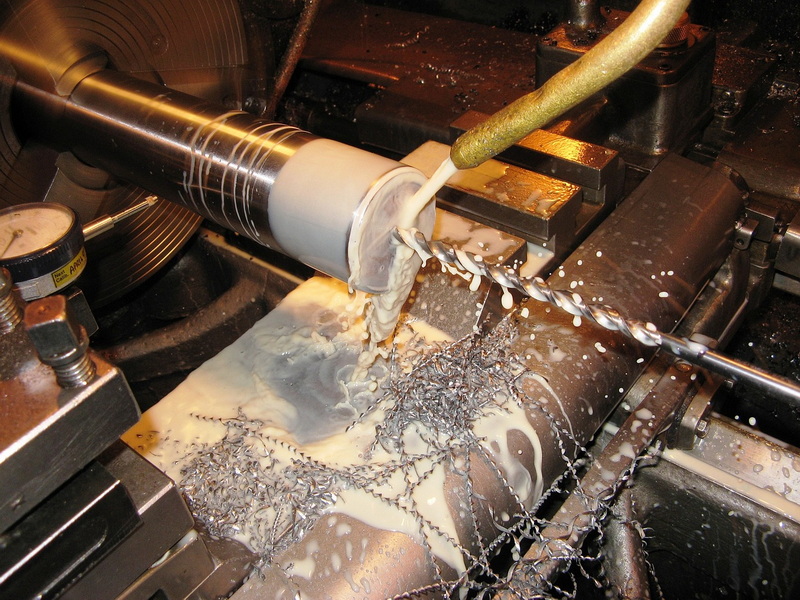
CNC machining is widely used across industries such as automotive, aerospace, electronics, medical devices, and consumer products. In OEM settings, engineers often collaborate with machinists to bridge design intent with manufacturability. The ability to iterate quickly—design, prototype, test, and refine—defines modern CNC-driven product development. For professionals, mastery of CNC machining can translate into higher-quality parts, shorter development cycles, and greater versatility in handling complex geometries.
- Precision and repeatability: CNC machines deliver consistent results when properly programmed and maintained.
- Scalability: Once a process is defined, scaling production up or down is feasible with predictable outcomes.
- Design flexibility: Complex geometries and tight tolerances enable innovative designs that may be impractical with manual methods.
- Cost control: Reducing manual labor and enabling automated inspections can lower overall production costs over time.
- Overlooking safety: Never compromise safety for speed. Proper PPE, machine guards, and safe operating procedures protect workers and equipment.
- Neglecting documentation: Poor records of settings, tool life, and process parameters hamper repeatability.
- Underestimating maintenance: Dull tools, loose hardware, and misaligned spindles degrade quality. Schedule preventive maintenance and calibration.
- Rushing the process: Cutting corners in programming or setup increases risk of scrap and downtime. Build iterative checks into the workflow.
- Multi-axis machining: 4-axis and 5-axis programming opens up complex geometries but increases planning and verification demands.
- Probing and in-process metrology: Using touch probes and CMM feedback to correct offsets in real time improves accuracy and reduces waste.
- High-speed machining (HSM): Optimizes chip load and cutter engagement to boost productivity and improve surface finish.
- Custom tooling strategies: Developing specialized tooling jigs and fixturing can unlock new capabilities and improve cycle times.
- Case study: Prototyping a lightweight aerospace bracket. Engineers start with a rough milling operation to remove bulk material, then switch to finishing passes with a ball-end mill to achieve a smooth complex contour. Tolerances tighten as the design nears final form, and fixturing evolves from generic clamps to dedicated soft jaws and vacuum fixtures. The outcome: a reliable prototype ready for testing within a few days, with traceable process documentation.
- Case study: Medical device housing with tight surface finish requirements. The team selects indexed machining centers, applies stable coolant strategies, and uses probing to establish zero references on non-flat surfaces. By combining in-process measurement with CAM updates, scrap is minimized and part-to-part variation remains within spec.
- Case study: Small-batch custom aluminum components for consumer electronics. Lean setup time, standardized work instructions, and modular fixturing enable rapid changeovers. The result is cost-effective small runs with consistent quality and shorter lead times compared with manual processes.
- Automation and robotics integration: Robotics handle loading/unloading and part manipulation, freeing machinists to focus on programming, setup, and inspection.
- Additive-CAN hybrid workflows: Combining additive deposition with subtractive finishing opens new design possibilities, enabling complex features with fewer fixtures.
- AI-assisted optimization: Machine learning analyzes historical run data to optimize toolpaths, speeds, and feeds for new parts, reducing trial-and-error.
- Remote monitoring and predictive maintenance: Internet of Things (IoT) sensors monitor spindle health, vibrations, and temperature, predicting failures before they occur.
CNC machining is not inherently “hard” for everyone, but it does require a structured approach to learning and consistent practice. The combination of CAD/CAM workflows, precise tooling, and disciplined measurement creates a robust path from beginner to proficient machinist or engineer. By building a strong foundation in fundamentals, embracing safety and quality as core principles, and progressively tackling more complex operations, the complexity reveals itself as a manageable, repeatable system rather than an insurmountable barrier.
- Start with safety training, then learn basic turning or milling operations, and begin simple CAD/CAM workflows to create and machine your first part.
- A basic understanding of G-code is essential for programming and troubleshooting, though many modern workflows use CAM software to generate code from CAD models.
- Proficiency varies, but a focused, structured program can yield solid foundational skills within 3–6 months, with advanced capabilities developing over years of practice.
- Deteriorating surface finish, increased cutting forces, unusual vibrations, and inconsistent part dimensions indicate tool wear or damage.
- Yes. With proper process planning, setup quality, and consistent tooling, small-batch production can be economically viable, especially for prototyping or customized parts.


