From idea to market-ready product, our NPI solutions make every stage easier, faster. Discover How We Help

Views: 222 Author: Tomorrow Publish Time: 2026-02-05 Origin: Site


Content Menu
● Understanding Additive and Subtractive Manufacturing
● Is CNC Machining Additive or Subtractive Manufacturing?
● Advantages of Subtractive CNC Machining
>> 1. High Precision and Accuracy
>> 3. Consistency Across Batches
>> 4. Exceptional Surface Finish
>> 6. Efficiency for Production Runs
● When Additive Manufacturing Has an Edge
● Hybrid Manufacturing: Combining Additive and Subtractive Methods
● Typical Applications of CNC Machining
● Environmental Aspects of CNC Machining
● FAQ
>> 1. What makes CNC machining subtractive manufacturing?
>> 2. Can CNC machining work with 3D-printed parts?
>> 3. Which is more cost-effective: additive or subtractive manufacturing?
>> 4. What materials are commonly used in CNC machining?
>> 5. How is CNC machining evolving in the future?
The world of modern manufacturing is undergoing a remarkable transformation, thanks to advances in automation, digitalization, and material science. Among all the available production methods, CNC machining remains one of the most widely used technologies due to its unmatched precision, consistency, and capacity for complex engineering applications. Engineers, designers, and product developers often debate a key question in this field: Is CNC machining additive or subtractive manufacturing?
Understanding this distinction is crucial because it determines how parts are produced, what materials can be used, and the overall cost-effectiveness of a project. In this article, we'll explore the fundamentals of both additive and subtractive manufacturing, explain how CNC machining fits within these categories, and dive into its benefits, applications, and future potential.
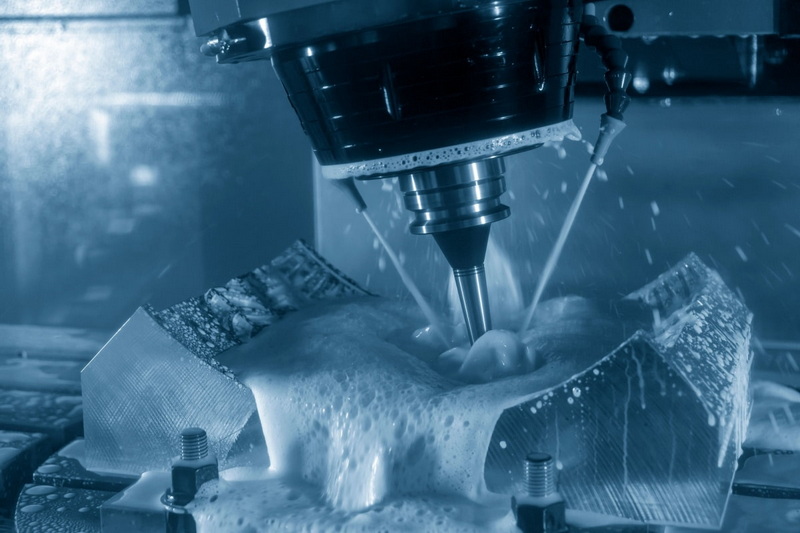
CNC machining, or Computer Numerical Control machining, is an advanced method of manufacturing where pre-programmed computer instructions dictate the movement of tools and machinery. CNC machines can perform cutting, drilling, milling, and turning operations with extreme accuracy, transforming solid blocks of material—known as workpieces—into finished parts.
In simple terms, CNC machining automates traditional machining processes through digital precision. Instead of human operators manually shaping materials, computer software converts a part design (usually created in CAD software) into a set of commands that guide the cutting tools.
Typical CNC machining processes include:
- CNC Milling: Uses rotating cutting tools to remove material while the workpiece remains stationary.
- CNC Turning: Rotates the workpiece while cutting tools remove material to create cylindrical shapes.
- CNC Drilling: Produces precise holes of different depths and diameters.
- CNC Grinding: Offers ultra-fine surface finishes and accurate dimensional control.
The versatility and repeatability of CNC machining make it the backbone of modern manufacturing in industries such as aerospace, automotive, energy, electronics, and medical equipment.
Before classifying CNC machining, let's briefly define the two main categories of manufacturing technologies.
Additive manufacturing, commonly known as 3D printing, creates objects by depositing material layer by layer until the final part takes shape. Each successive layer bonds to the previous one, building complex geometries and hollow structures in ways that traditional methods cannot.
Key additive processes include:
- Fused Deposition Modeling (FDM) for thermoplastics
- Selective Laser Sintering (SLS) for powders
- Stereolithography (SLA) for resins
- Direct Metal Laser Sintering (DMLS) for metal powders
Additive manufacturing allows engineers to produce lightweight, custom components quickly and with minimal material waste.
Subtractive manufacturing, in contrast, begins with a solid block or bar of raw material, then removes material to form the desired shape. Cutting, drilling, milling, and grinding are all subtractive processes.
The most prominent example of subtractive manufacturing is CNC machining. Each cut or pass of the tool removes layers of material until the part matches the design specifications. The process can achieve micron-level accuracy and smooth surface finishes that are often superior to those of additive-produced parts.
The answer is straightforward: CNC machining is a subtractive manufacturing process.
It doesn't build objects layer by layer. Instead, it systematically removes material from a pre-existing block or billet using precision tools. This characteristic differentiates CNC machining from all additive technologies.
The key evidence supporting CNC machining as subtractive manufacturing includes:
1. Material Removal Principle:
CNC machining starts with bulk material and removes portions to form shapes. Every operation performed—whether turning, milling, or drilling—results in chip formation, confirming its subtractive nature.
2. Tool-Driven Process:
CNC systems rely on cutting, boring, or grinding tools that physically interact with the material. This direct engagement contrasts sharply with additive processes that melt or bind particles.
3. Waste Generation:
Material chips, debris, and scrap are common in machining. While recyclable, they represent a hallmark of subtractive techniques.
4. Dimensional Control:
Since CNC machining removes material instead of building it, the result is typically more accurate with tighter tolerances and smoother surface textures.
Thus, CNC machining is classified under the subtractive manufacturing family, fundamentally differing from additive techniques such as 3D printing.
CNC machining has remained an industrial standard for decades, and for good reason. Its subtractive nature offers a range of advantages unmatched by most additive approaches.
CNC machines can produce parts with dimensional accuracy down to microns. This level of precision is essential for aerospace, automotive, and defense applications, where even slight deviations can affect performance or safety.
Unlike 3D printing, which is limited to specific powders and resins, CNC machining supports a wide selection of materials including metals, plastics, composites, and even ceramics. This flexibility opens possibilities for both prototyping and production-grade parts.
Once a CNC program is finalized, it can run repeatedly to produce identical parts in mass quantities. This repeatability is critical for maintaining quality control in industrial environments.
Because the process removes material using sharp tools, CNC machining can achieve superior surface finishes that often require no additional polishing.
Since CNC machining starts with solid, homogeneous material, the resulting parts retain original material strength. In contrast, 3D-printed components may exhibit weaker layer bonding, reducing their structural integrity.
Though initial setup may take longer, CNC machining becomes highly efficient during continuous production, offering lower per-part costs for medium to large batch runs.
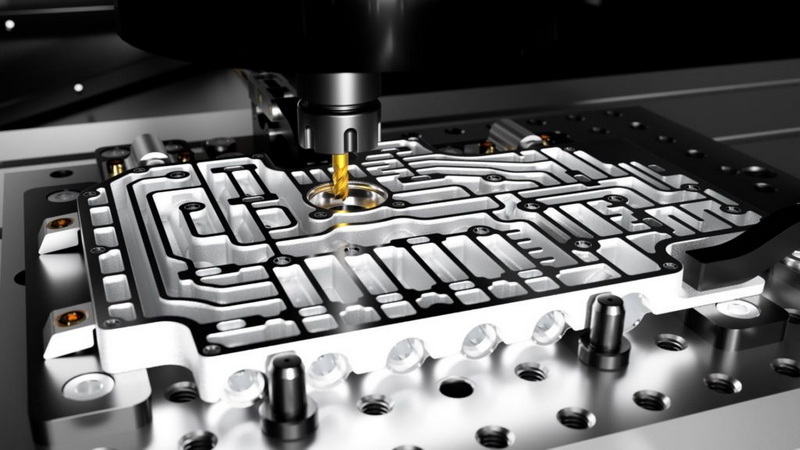
While CNC machining excels in precision and scalability, additive manufacturing offers some advantages worth noting—particularly in design freedom and rapid prototyping.
Additive processes allow designers to:
- Create lightweight lattice structures that minimize material use.
- Build internal cavities and channels that are difficult or impossible to machine.
- Change designs quickly without expensive retooling.
- Reduce waste dramatically since material is added only where needed.
For prototype development, especially when creating complex geometries, additive techniques can be faster and more economical. However, for parts demanding perfect surface finish, tight tolerances, or mass production, CNC machining remains the more practical choice.
As technology progresses, manufacturers are moving toward hybrid approaches that combine the benefits of additive and subtractive manufacturing. In such systems, a part is partially 3D printed and then finished by CNC machining to achieve the desired accuracy and smoothness.
For example, a metal component can be additively printed near its net shape, then mounted onto a CNC mill for final trimming and finishing. This approach minimizes material use, improves efficiency, and ensures the precision required for industrial applications.
Hybrid systems are already used in aerospace, defense, and high-end automotive sectors, offering significant time and cost savings.
CNC machining's versatility enables it to serve a wide variety of industries. Below are some of its most common applications:
- Aerospace Industry: Manufacturing turbines, engine blocks, brackets, and landing gear components that demand high accuracy.
- Automotive Manufacturing: Producing precision molds, gear components, and aluminum engine housings.
- Electronics: Creating enclosures, cooling systems, and lightweight frames for circuits.
- Medical Sector: Fabricating surgical instruments, orthopedic implants, and diagnostic equipment with biocompatible materials.
- Tooling and Mold Making: Producing dies, molds, and fixtures for injection molding and casting processes.
- Energy Sector: Machining critical components used in oil and gas, nuclear, and renewable energy systems.
Each of these sectors relies heavily on the repeatability, rigidity, and superior finishing that only CNC machining can provide.
While CNC machining falls under subtractive manufacturing, it's increasingly adopting sustainable practices. Manufacturers now utilize recyclable metal chips and integrate coolant recirculation systems to minimize industrial waste.
Additionally, smart programming techniques allow better material utilization—reducing unnecessary cutting time and scrap. The use of renewable energy sources in modern factories also helps reduce the carbon footprint associated with machining operations.
Although additive manufacturing is often praised for being less wasteful, CNC machining's recyclability and energy-efficient automation keep it a strong contender for environmentally-conscious production.
Despite its many benefits, CNC machining also has limitations and challenges that must be managed carefully:
- High Setup Costs: Initial programming and tooling setup require time and skilled labor.
- Material Waste: Unlike additive manufacturing, some material loss is inherent.
- Complex Geometry Limits: Deep cavities or intricate internal channels are often impractical.
- Operator Skill Requirement: Maintaining precision and machine calibration demands expert technicians.
Nevertheless, the reliability, quality, and capability of CNC machining far outweigh its drawbacks for most industrial applications.
The future of CNC machining lies in automation, connectivity, and digital transformation. With the rise of Industry 4.0, CNC equipment now integrates with cloud computing, IoT sensors, and AI-based monitoring. These technologies enable predictive maintenance, real-time analytics, and autonomous operation.
Robotic CNC systems can now perform multi-axis machining, tool changes, and part handling without human intervention. Combined with hybrid additive-subtractive systems, these innovations will define the next generation of smart manufacturing.
As industries continue to demand high-precision and high-performance components, CNC machining will remain the cornerstone of production for years to come.
So, is CNC machining additive or subtractive manufacturing?
CNC machining is firmly a subtractive manufacturing process. It removes material from solid blocks using precise cutting tools to achieve exact dimensions and superior surface finishes. While additive manufacturing builds objects layer by layer, CNC machining sculpts parts with unmatched accuracy and repeatability.
Thanks to its versatility, material range, and scalability, CNC machining remains an essential production method across industries—from aerospace to healthcare and beyond. In the evolving manufacturing landscape, the most progressive factories are combining additive and subtractive technologies to deliver performance, sustainability, and innovative design in one powerful package.
Contact us to get more information!
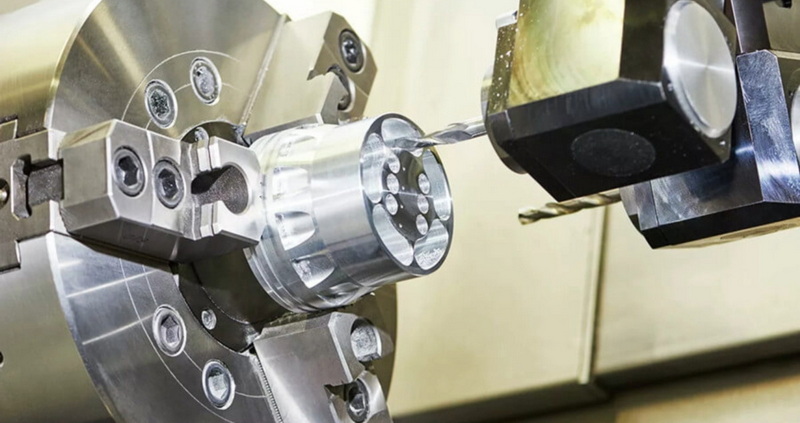
CNC machining removes material from a block to form the final shape using cutting tools. This material removal process defines it as subtractive manufacturing.
Yes. Many industries use hybrid production flows where 3D-printed parts are refined with CNC machining to achieve higher accuracy and smoother finishes.
For mass production and high-precision components, CNC machining is generally more cost-effective. Additive manufacturing suits complex, low-volume prototypes better.
Materials include aluminum, stainless steel, titanium, brass, ABS, nylon, PEEK, and other engineering plastics. The variety far exceeds the options available for 3D printing.
CNC machining is becoming smarter through AI integration, IoT connectivity, real-time monitoring, and automation. These advancements enhance productivity, accuracy, and sustainability.
1. https://www.autodesk.com/solutions/cnc-machining
2. https://www.hubs.com/knowledge-base/additive-vs-subtractive-manufacturing/
3. https://www.makeuk.org/insights/blogs/what-is-cnc-machining
4. https://www.engineering.com/story/the-difference-between-additive-and-subtractive-manufacturing
5. https://www.plasticstoday.com/technologies/subtractive-manufacturing-vs-additive-manufacturing


