From idea to market-ready product, our NPI solutions make every stage easier, faster. Discover How We Help

Views: 222 Author: Tomorrow Publish Time: 2026-02-02 Origin: Site


Content Menu
● Technological Advancements Accelerating CNC Machining
● Role of CNC Machining Across Industries
>> Medical and Healthcare Sector
>> Defense and Energy Applications
>> Consumer Electronics and Communication
● Economic Impact and Labor Market Opportunities
● Sustainability in CNC Machining
● Major Challenges Facing CNC Machining
● Why CNC Machining Will Continue to Grow
● The Future Outlook: Global Trends and Innovations
>> 1. What industries benefit most from CNC machining?
>> 2. Can small businesses use CNC machining profitably?
>> 3. How does CNC machining improve product quality?
>> 4. Is CNC machining more efficient than traditional manufacturing?
>> 5. What skills are required for a career in CNC machining?
CNC machining is increasingly recognized as the foundation of advanced manufacturing. As industrial sectors pursue higher efficiency, tighter precision, and smarter production, CNC machining continues to emerge as a cornerstone of global manufacturing systems. The question “Is CNC machining a field that will grow?” doesn't just reflect curiosity—it reflects the strategic foresight of manufacturers, engineers, and investors who want to anticipate the future of modern production. Based on global trends, advanced technologies, and industrial transformation, the answer is clearly yes. CNC machining is entering one of the most dynamic growth phases in its history.
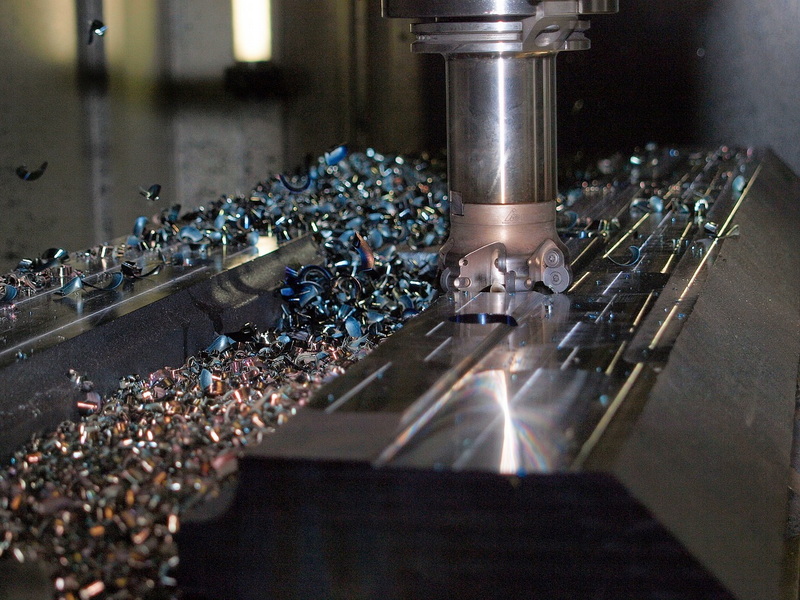
CNC machining, or Computer Numerical Control machining, is a manufacturing process that uses programmed computer software to precisely control machine tools. These tools—such as lathes, milling machines, routers, and grinders—remove material from a solid workpiece to produce parts with exceptionally tight tolerances.
The beauty of CNC machining lies in automation and precision. Once the design from a CAD or CAM file is uploaded, the process begins without human interference. Every cut, rotation, and movement follows the programmed coordinates, delivering consistent results even in complex geometries. Compared with manual machining, CNC machining enables faster production, greater accuracy, and much lower variability.
CNC machining supports various materials, including aluminum, stainless steel, titanium, brass, plastics, and composite materials. This versatility allows manufacturers to produce everything from small electronic shells to massive aerospace components with the same degree of precision.
CNC machining has evolved from being a niche manufacturing method to a mainstream production technique used across every major industrial sector. Market studies predict that the global CNC machining market will continue to experience steady growth through the next decade, driven by automation and digital transformation.
Several trends explain this positive trajectory:
- Automation and labor shortages: Manufacturers worldwide face rising labor costs and a shortage of skilled workers. CNC machining addresses both by enabling automated production with high repeatability.
- Smart factory expansion: With the rise of Industry 4.0, factories are increasingly integrating intelligent, data-driven machinery. CNC machining seamlessly connects to IoT platforms and predictive analytics systems.
- Material innovation: The ability of CNC machines to handle advanced alloys, lightweight metals, and hybrid materials positions them as indispensable in future production environments.
- Reshoring and local production: Many companies in North America and Europe are returning manufacturing operations closer to home, and CNC machining plays a central role in enabling efficient, flexible, and local production lines.
From small workshops to multi-national factories, CNC machining is now a fundamental part of industrial infrastructure powering the modern economy.
Technology continues to reinvent CNC machining. Over the last decade, several innovations have significantly increased its efficiency, speed, and precision. These include:
- Artificial intelligence and adaptive control: AI-driven tool path optimization improves cutting precision and reduces tool wear by analyzing machining conditions in real-time.
- Internet of Things (IoT): Connected CNC machines provide instant data feedback on performance metrics such as spindle speed, vibration, and coolant usage, helping managers fine-tune their operations.
- Hybrid manufacturing integration: Combining additive manufacturing (3D printing) with CNC machining allows for rapid prototyping and high-quality finishing on the same part.
- High-speed multi-axis machining: Five-axis and seven-axis CNC machines make it possible to machine highly complex parts with reduced setup times and improved surface quality.
- Automated tool changing and robotic loading: Automation now extends beyond machining to include material handling, enabling continuous 24/7 production in smart factories.
These technologies ensure that CNC machining remains at the cutting edge of manufacturing innovation, with even greater capabilities emerging alongside smarter and more autonomous systems.
CNC machining impacts virtually every major industry. Below are key sectors where it has the biggest influence:
In aerospace production, reliability and safety are non-negotiable. CNC machining guarantees the precision required to produce components like turbine blades, structural frames, and engine parts that meet demanding performance and safety standards. Due to extremely tight tolerances and complex geometries, CNC machining remains the go-to method for both prototype development and full-scale production in aerospace systems.
CNC machining has long been an essential process in automotive engineering. It is used to manufacture engine components, gear systems, suspension parts, molds, and even small decorative elements. As the automotive industry transitions toward electric vehicles (EVs), CNC machining plays a key role in producing battery enclosures, electrical connectors, and precision motor housings.
In the medical field, CNC machining supports the production of surgical instruments, orthopedic implants, dental components, and diagnostic device parts. These items require microscopic precision, biocompatible materials, and flawless surface finishes. CNC machining ensures repeatability and compliance with international quality standards like ISO 13485.
Military, naval, and aerospace defense systems rely on CNC machining for weapons components, radar housings, and armored vehicle parts. The energy sector also benefits, particularly in the production of turbine blades, renewable energy components, and high-performance fittings for oil and gas operations.
For smartphones, laptops, and communication devices, CNC machining delivers the clean edge finishes and exact specifications needed for casings, connectors, and circuit housing parts. As consumer products become ever smaller and lighter, precision machining becomes even more critical.
In all these industries, the continued reliance on CNC machining underscores its unstoppable growth.
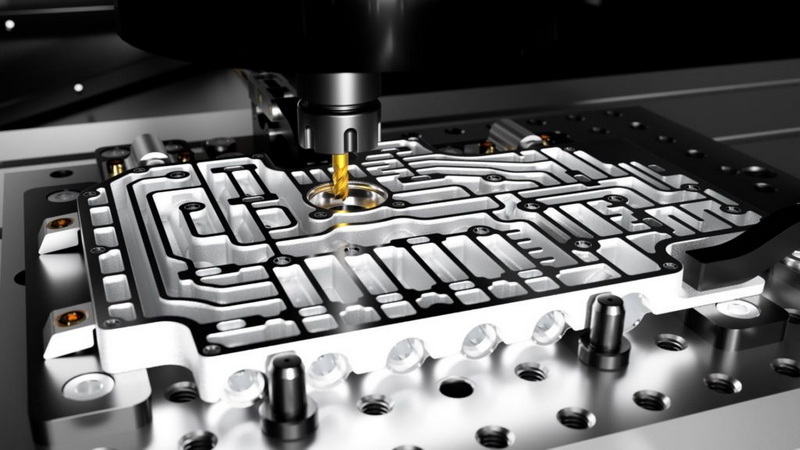
CNC machining is not only advancing technology—it is also reshaping economies and job markets. As industries embrace CNC automation, the demand for skilled machinists, programmers, and maintenance experts continues to grow worldwide.
Educational institutions are also adapting, introducing technical and vocational programs specializing in CNC programming, CAD/CAM design, and mechatronics. With these skills, engineers can operate advanced machines, interpret design data, and optimize processes for efficiency and quality.
In addition, the global pattern of reshoring—bringing manufacturing back from overseas to reduce supply chain risk—creates a fresh wave of demand for local CNC machining capacity. This transition has particularly benefited small and medium-sized enterprises (SMEs), which act as flexible suppliers for larger industrial chains.
Sustainability is no longer optional; it is a business imperative. Fortunately, CNC machining naturally supports sustainable manufacturing in several ways.
- Material and energy efficiency: CNC machining minimizes waste through precise cutting and tool path optimization. Modern machines use variable frequency drives to reduce power consumption.
- Recyclability and reuse: Metal chips and cutting fluids can often be recycled, creating a more circular production system.
- Longer tool service life: Predictive maintenance tools ensure that cutting equipment runs optimally, reducing wear and replacement frequency.
- Additive-subtractive synergy: When combined with 3D printing, CNC machining allows manufacturers to minimize unused materials during the rough manufacturing stage.
By aligning with global environmental goals, CNC machining strengthens its position in sustainable industrial ecosystems.
While growth prospects are bright, the CNC machining industry faces several challenges that require careful management:
- Initial investment costs: Modern CNC machines and integrated software solutions are expensive, which can be a barrier for startups.
- Skilled labor shortage: Although automation reduces hands-on work, programming and maintenance still require specialized expertise.
- Global competition: Manufacturers in countries like China, India, and Vietnam offer competitive pricing, pushing global players to innovate further.
- Cybersecurity: As machines become connected via IoT networks, protecting digital manufacturing data from cyberattacks becomes essential.
- Supply chain volatility: Shortages in raw materials or electronic components can slow production and increase costs.
Despite these obstacles, continuous innovation and workforce development are helping the CNC machining industry adapt and thrive.
Several forces ensure CNC machining's inevitable growth over the next decade:
1. Precision demand: Industries such as aerospace and medical manufacturing continuously raise quality standards that only CNC machining can meet.
2. Automation adoption: Global manufacturers are actively transforming their facilities into smart factories. CNC machining aligns perfectly with this movement.
3. Economies of scale: As CNC technology becomes more accessible, equipment costs decline, allowing more businesses to adopt these solutions.
4. Integration with AI and robotics: Machine learning and robotic automation create a seamless workflow from design to production, improving consistency and productivity.
5. Sustainable efficiency: With environmental regulations tightening, CNC machining offers low-waste, high-accuracy production that supports sustainability goals.
In short, CNC machining sits at the intersection of technology, innovation, and manufacturing progress. Its ability to adapt guarantees it will remain a cornerstone of industrial production.
The future of CNC machining will likely include even greater levels of automation, integration, and precision. Here are several key directions it is heading toward:
- Digital twins: By creating a real-time digital replica of the machining process, companies can simulate, analyze, and optimize operations before actual production.
- Cloud-based CNC control: In the near future, cloud platforms will store and manage CNC programs, enabling remote monitoring and control across global sites.
- Collaborative robotics (cobots): Human-machine collaboration will boost productivity and safety while maintaining flexibility.
- Nano-machining: Innovations in spindle technology and laser CNC systems will push tolerances down to the sub-micron level, serving electronics and micro-mechanical industries.
- Predictive diagnostics: Continuous real-time data analysis will predict tool failure and maintenance, enhancing uptime and reducing production losses.
CNC machining isn't just keeping up with technology — it's driving the next wave of the manufacturing revolution.
CNC machining has proven to be far more than just a manufacturing method — it's a strategic pillar of industrial transformation. Its combination of automation, reliability, and accuracy makes it vital across every major industry, from aerospace to electronics. Driven by AI, IoT connectivity, hybrid processes, and sustainability, CNC machining is steadily expanding its capabilities and global impact.
Whether in developed nations focused on reshoring or emerging markets investing in modern manufacturing, CNC machining remains fundamental to economic growth. The clear conclusion is that yes, CNC machining is a field that will continue to grow—and those investing in it today are investing directly in the future of industrial innovation.
Contact us to get more information!
The aerospace, automotive, defense, energy, medical, and electronics industries rely heavily on CNC machining for its accuracy, efficiency, and versatility in producing high-quality components.
Absolutely. Modern CNC machines come in compact versions, and many small businesses can outsource part production to specialized machining centers, improving efficiency and product quality.
CNC machining eliminates manual inconsistencies through precise computer control, ensuring every part meets the same specification with superior surface finish and accuracy.
Yes. CNC machining reduces material waste, machining time, and error rates, offering optimized tool use and faster production cycles.
Key skills include CAD/CAM programming, machine setup, tool path optimization, understanding of materials, and data-driven process control. Continuous learning is essential as technology evolves.
1. https://www.marketsandmarkets.com/
2. https://www.grandviewresearch.com/
3. https://www.statista.com/
4. https://www.machinemfg.com/
5. https://www.engineering.com/
6. https://www.manufacturingglobal.com/


