From idea to market-ready product, our NPI solutions make every stage easier, faster. Discover How We Help

Views: 222 Author: Tomorrow Publish Time: 2025-12-18 Origin: Site


Content Menu
● Understanding CNC Turning Machines
● Key Components of a CNC Turning Machine
● Setting Up the CNC Turning Machine
● Programming the CNC Turning Machine
>> Examples of Common Commands:
● Choosing the Right Cutting Tools
● Operating Process in CNC Turning
● Measuring and Quality Control
● Troubleshooting and Performance Optimization
● Future of CNC Turning Technology
● FAQ
>> (1) What materials can be machined on a CNC turning machine?
>> (2) What is the main difference between CNC turning and milling?
>> (3) How does tool offset affect machining accuracy?
>> (4) Can beginners safely operate CNC turning machines?
>> (5) What are achievable tolerances in CNC turning?
Operating a CNC turning machine is a fundamental skill in modern manufacturing and mechanical engineering. It calls for a deep understanding of computer control, mechanical components, machining principles, and tool behavior. CNC (Computer Numerical Control) turning machines rely on precise instructions coded in digital form, allowing automated production of parts that meet tight tolerances and quality standards.
Whether you are a beginner learning the basics or a professional seeking to refine your abilities, this detailed guide explains every critical phase of working a CNC turning machine—from setup and programming to maintenance and troubleshooting.
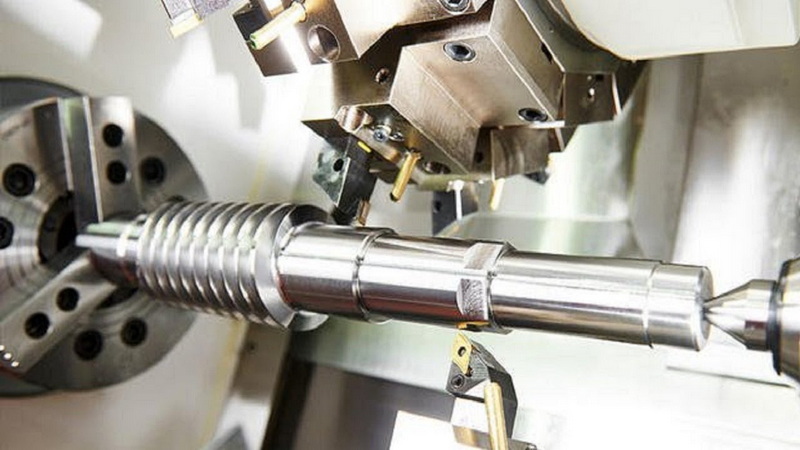
CNC turning machines are advanced forms of traditional lathes. Unlike manual lathes, which depend on the operator's skill and coordination, CNC turning machines use computerized instructions to automate spindle movement, cutting tool motion, and feed rates. This automation ensures enhanced accuracy, consistency, and productivity.
The process primarily involves the rotation of a cylindrical workpiece while a stationary cutting tool removes material to achieve the desired shape. CNC turning is ideal for producing symmetric parts like shafts, bushings, bolts, and pulleys. In large manufacturing industries such as aerospace, automotive, and medical equipment, CNC turning has become a standard method for creating precision components.
To fully understand the machine's operation, let's examine its main components and their functions:
- Spindle: The heart of the turning machine that rotates the workpiece at different speeds.
- Chuck: A clamping device that holds the raw material firmly in place.
- Tool Turret: A rotating holder that carries multiple cutting tools for different operations.
- Bed and Slideways: Provide structural support and guide the motion of the turret accurately.
- Control Panel: The interface where the operator loads programs, inputs parameters, and monitors status.
- Tailstock: Supports longer workpieces to prevent deflection during machining.
- Coolant System: Circulates fluid to cool the cutting zone, reduce tool wear, and improve surface quality.
- Enclosure and Safety Shields: Protect the operator from moving parts, coolant splashes, and chips.
Understanding how each element works allows an operator to maximize machine potential and avoid mechanical issues during production.
Setting up is one of the most important tasks that directly affects accuracy, efficiency, and safety. The setup process includes:
1. Mounting the Workpiece: The material must be positioned and tightened securely inside the chuck. Misalignment causes vibration and uneven cutting.
2. Installing the Tools: Tools are mounted in the turret according to the sequence of operations defined in the program.
3. Defining the Work Coordinate System: Operators “zero” the machine using touch-off tools or a probe to define the origin point.
4. Loading the Program: The G-code is entered manually or transferred from CAD/CAM software through USB or network connection.
5. Setting Spindle Speed and Feed Rate: Initial parameters are tested to ensure they match the material's properties and tool specifications.
6. Running a Dry Cycle: A simulation test verifies all tool paths, ensuring there are no collisions or unexpected movements.
Good setup practice minimizes waste material, reduces tool damage, and guarantees safe, predictable machining results.
The programming stage determines every movement of the cutting tool and spindle. G-code is the universal language of CNC machines. Each line corresponds to a command or function describing tool motion, spindle speed, coolant control, or tool change.
- G00: Rapid positioning.
- G01: Linear cutting movement at specified feed rate.
- G02/G03: Cutting arcs (clockwise/counterclockwise).
- G20/G21: Define inch or millimeter units.
- G54–G59: Work coordinate systems.
- M03/M04: Start spindle rotation (clockwise or counterclockwise).
- M05: Stop spindle.
- M30: End of program and reset.
Modern CNC systems often combine manual G-code programming with CAM (Computer-Aided Manufacturing) software. CAM software converts 3D design models into toolpaths and generates optimized G-code automatically, enabling more complex part designs and shorter setup times.
Selecting suitable tools is critical. An inappropriate tool choice can lead to poor surface finish, premature wear, or even machine damage.
When choosing tools, consider:
- Material Compatibility: Harder materials like stainless steel or titanium require carbide or ceramic inserts, while softer metals can be machined with high-speed steel tools.
- Tool Geometry: The rake angle, clearance angle, and nose radius influence chip formation and part quality.
- Coating Type: Coatings such as TiN, TiAlN, or DLC improve heat resistance and tool life.
- Feed and Depth of Cut: Fine finishing demands smaller depth and slower feed, while roughing cuts can use higher values.
Tool management software can track tool life, monitor wear levels, and alert operators to replace inserts before failure occurs.
After setup and programming, the machining sequence unfolds in a structured order:
1. Start-Up Inspection: The operator ensures safety interlocks, lubrication, and coolant systems are functioning.
2. Spindle Activation: The spindle begins rotating with the pre-set speed.
3. Tool Engagement: The turret positions the cutting tool near the workpiece; rough cutting starts first.
4. Rough Turning: The tool removes bulk material quickly, shaping the general profile.
5. Finishing Process: A finer tool performs precise cuts to achieve the exact dimensions and smoother surface finish.
6. Part Inspection During Machining: Operators measure dimensions periodically using digital calipers or micrometers.
7. Automatic Tool Change: The turret rotates, bringing in the next tool as defined by the program.
Consistency is the key advantage here—CNC machines repeat operations with high precision, minimizing human error.
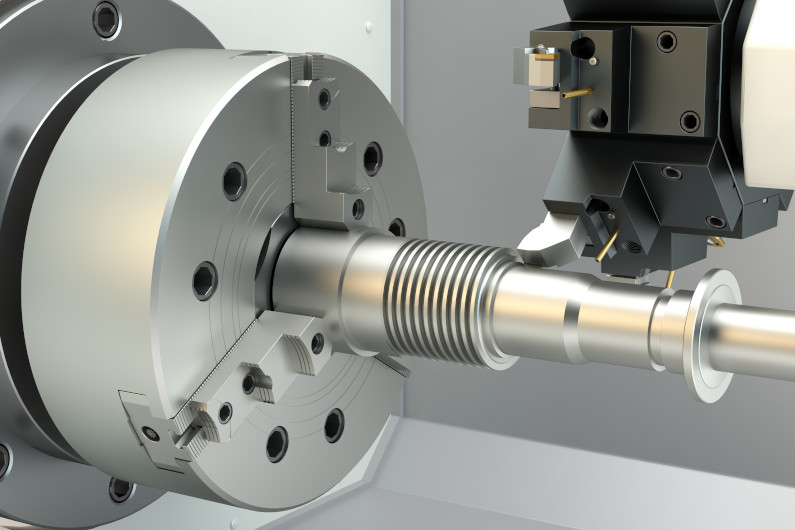
Safety cannot be ignored in CNC machining. The combination of high spindle speeds, sharp tools, and automatic movement demands strict discipline.
- Always wear appropriate personal protective equipment (PPE): safety glasses, gloves, and steel-toe boots.
- Never open the machine door while it's running.
- Keep the area around the machine dry and clear of chips.
- Follow lockout/tagout procedures when performing maintenance.
- Double-check tool offsets and coordinate settings before pressing cycle start.
- Familiarize yourself with emergency stop buttons and safety interlocks.
Following safety practices not only protects personnel but also helps maintain equipment reliability and quality standards.
Routine maintenance ensures the longevity of the equipment and consistent machining performance. Maintenance involves several daily, weekly, and monthly checks.
- Clean chips from machine enclosure.
- Check coolant level and condition.
- Lubricate guideways and check for leaks.
- Verify air supply and pressure.
- Test alignment between tailstock and headstock.
- Examine belts, pulleys, and spindle bearings for unusual noise.
- Inspect electrical connections and control panel buttons.
- Calibrate tool offsets and machine axes for accuracy.
Documentation of maintenance tasks ensures traceability and helps predict potential failures before they become serious.
Inspection confirms the success of the machining process. Accurate measurement ensures every finished part meets the blueprint and customer requirements.
- Micrometers and Vernier Calipers: Measure external and internal dimensions.
- Dial Indicators: Check run-out or concentricity errors.
- Surface Roughness Tester: Evaluate finish quality.
- CMM (Coordinate Measuring Machine): Provides high-precision 3D inspection of complex geometries.
Quality control data can also be integrated with CNC software to automate adjustments if deviations are detected, maintaining a closed-loop production system.
Even a finely tuned CNC turning process can encounter problems such as:
- Chatter Marks: Indicate unstable cutting; fix by adjusting feed rate or increasing rigidity.
- Tool Breakage: Caused by excessive cutting forces or insufficient cooling.
- Tapered Parts: Results from misalignment between headstock and tailstock.
- Inaccurate Dimensions: May occur due to wrong tool offsets or thermal expansion.
Continuous improvements involve analyzing such issues, adjusting parameters, and maintaining a record of lessons learned for future setups.
Optimization also includes exploring advanced techniques such as adaptive control systems that automatically regulate feed and speed, tool monitoring sensors, and predictive maintenance using machine learning.
The future of CNC turning lies in smarter integration of automation and data-driven control. Modern machines support:
- IoT (Internet of Things) Connectivity: For remote monitoring of performance and maintenance.
- Robotic Loading Systems: Automated material handling for lights-out manufacturing.
- Hybrid Machining: Combining turning with milling and additive functions in one setup.
- AI-Based Toolpath Optimization: To enhance precision and reduce cycle time.
Operators today must not only understand machining but also digital technologies shaping the future of production.
Working a CNC turning machine combines artistry and engineering. It demands technical knowledge, mechanical understanding, programming ability, and attention to detail. By mastering setup, programming, tooling, safety, and maintenance, an operator can produce precise components efficiently and safely.
In the evolving world of manufacturing, CNC turning continues to set the standard for accuracy, repeatability, and innovation. Whether for industrial mass production or precision prototyping, mastering the operation of a CNC turning machine unlocks countless opportunities in modern mechanical engineering.
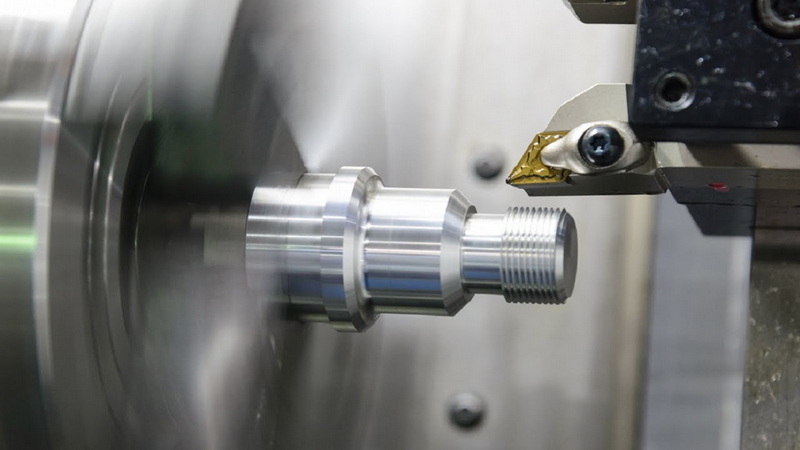
CNC turning machines can machine a wide range of materials such as aluminum, titanium, stainless steel, brass, and engineered plastics. Material selection directly influences cutting speed and tool choice.
Turning rotates the workpiece while a stationary cutting tool shapes it, mainly producing round or cylindrical forms. Milling rotates the cutting tool instead and is ideal for complex, prismatic parts.
Tool offsets define the exact distance between the tool tip and machine reference point. Incorrect offsets result in dimensional deviation or surface errors, so accurate calibration is essential.
Beginners can operate under supervision after safety training. Most modern machines have protective enclosures, automatic interlocks, and simulation features to prevent accidents.
Depending on machine capability and tooling setup, tolerances between ±0.002 mm and ±0.05 mm can be achieved, suitable for precision engineering and industrial applications.


