From idea to market-ready product, our NPI solutions make every stage easier, faster. Discover How We Help

Views: 222 Author: Tomorrow Publish Time: 2025-12-04 Origin: Site


Content Menu
● Key Components of CNC Milling Machines
● Types of CNC Milling Machines
● Getting Started: Setup and Preparation
● Programming the CNC Milling Machine
● Setting Work and Tool Offsets
● Executing the Milling Process
● Advanced Operations and Techniques
● Troubleshooting Common Issues
● Safety Protocols and Best Practices
● Routine Maintenance Procedures
● FAQ
>> 1. What safety gear is essential for CNC milling?
>> 2. How do you choose cutting speeds and feeds?
>> 3. What causes tool deflection in milling?
>> 4. Can CNC mills handle soft materials like wood?
>> 5. How does 5-axis milling differ from 3-axis?
CNC milling machines represent advanced manufacturing equipment that automates the removal of material from a workpiece using rotating multi-point cutting tools. These machines follow precise instructions from computer numerical control systems, enabling the creation of complex three-dimensional parts with high accuracy and repeatability. Operators benefit from their versatility across industries like aerospace, automotive, and prototyping, where tight tolerances and intricate geometries are essential. Mastering CNC milling enhances production efficiency while minimizing human error in repetitive tasks.
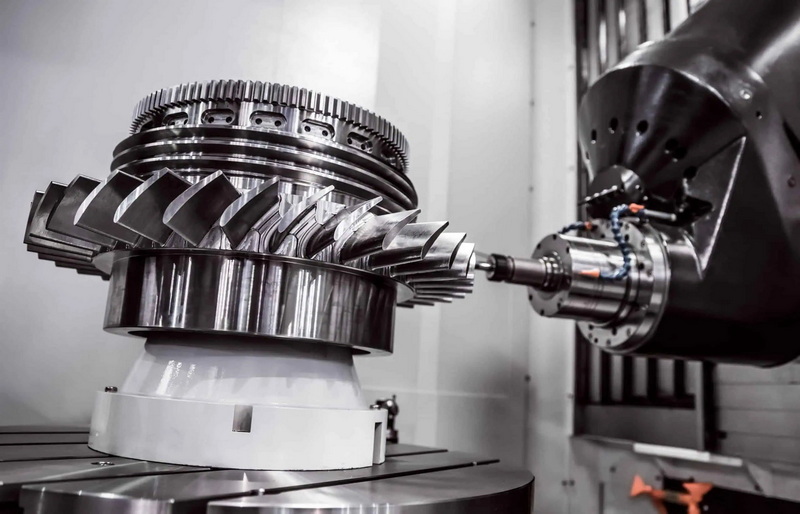
Understanding the main parts ensures effective operation and troubleshooting:
- Spindle: Holds and rotates the cutting tool at variable speeds, providing the power needed for material removal.
- Worktable: Secures the workpiece and moves along X and Y axes for positioning, often with T-slots for clamping.
- Column and Saddle: Provide structural support; the saddle allows Y-axis movement while the column supports the spindle head for Z-axis travel.
- CNC Controller: Processes G-code and M-code instructions, managing axis movements, spindle speed, and coolant flow.
- Tool Changer: Automatically swaps tools during operations, reducing downtime in multi-tool jobs.
- Axes System: Typically includes X (left-right), Y (front-back), and Z (up-down); advanced machines add A, B, or C for rotational control.
These components work in unison to execute programmed paths, transforming digital designs into physical parts.
Different configurations suit specific applications:
- Vertical Mills: Spindle axis is perpendicular to the worktable, ideal for flat surfaces, slots, and pockets.
- Horizontal Mills: Spindle parallel to the table, better for heavy cuts and larger workpieces due to improved chip evacuation.
- 3-Axis Mills: Basic setup for most jobs, moving in X, Y, Z directions.
- 4- and 5-Axis Mills: Add rotational axes for machining complex curves and undercuts without repositioning.
- Universal Mills: Combine vertical and horizontal capabilities for flexibility.
Selecting the right type depends on part complexity, material, and production volume.
Proper preparation prevents errors and ensures safety:
- Material Preparation: Inspect raw stock for defects, measure dimensions, and face-mill if needed for flatness. Common materials include aluminum, steel, plastics, and composites.
- Machine Power-Up: Switch on the machine, home all axes to establish reference positions, and verify emergency stop functionality.
- Tool Selection and Installation: Match tools to material—end mills for profiling, ball nose for contours, face mills for surfacing. Insert into collet or holder, tighten securely, and measure tool length offset.
- Workpiece Fixturing: Use vises, clamps, or custom fixtures to hold the part rigidly. Align using dial indicators to ensure parallelism with machine axes, tapping gently if adjustments are needed.
- Coolant Setup: Fill reservoir and select appropriate type—flood for metals, mist for plastics—to manage heat and chips.
Thorough setup lays the foundation for precise machining.
Programming translates designs into machine actions:
- CAD Design: Create a 3D model using software like SolidWorks or Fusion 360, defining features like holes, fillets, and contours.
- CAM Software Processing: Import CAD, select tools, define roughing and finishing strategies, set speeds (RPM), feeds (IPM), and depths of cut. Generate G-code simulating the entire process.
- Code Transfer: Load G-code via USB, network, or DNC to the controller.
- Tool Table Entry: Input tool data including diameters, lengths, and offsets for accurate compensation.
Common G-codes include G00 (rapid traverse), G01 (linear feed), and G02/G03 (circular interpolation); M-codes handle spindle start (M03) and coolant on (M08).
Offsets define machine references:
- Workpiece Zero: Jog tool to part corner or edge, touch off Z with a probe or paper method, then set X and Y similarly. Save as G54 or higher work coordinate system.
- Tool Length Offset: Use a tool setter or manual touch-off to measure from spindle gauge line to tool tip, entering values in the offset table.
- Tool Diameter Offset: Calibrate with known features or air cuts to account for wear.
Verify offsets with a test indicator run to catch discrepancies early.
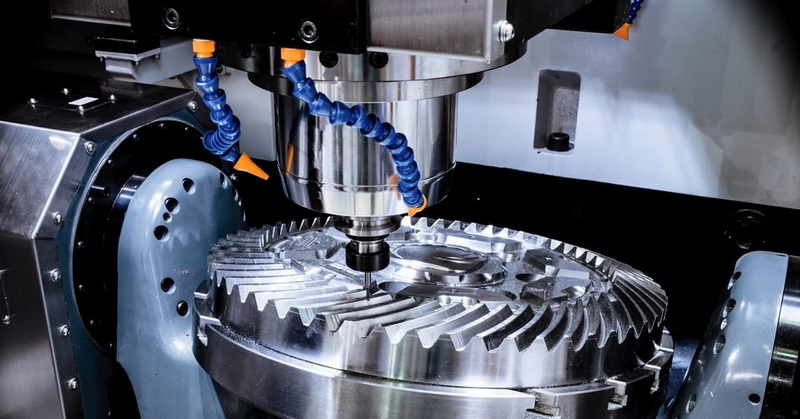
Operation follows a structured sequence:
- Dry Run: Cycle the program at rapid speeds with spindle off and Z raised to check paths and clearances.
- Air Cuts: Run with tool above material to confirm speeds and feeds.
- Machining Stages:
- Roughing: High feed rates and depths to remove bulk material quickly, using 40-60% stepover.
- Semi-Finishing: Lighter cuts to clean up roughing marks.
- Finishing: Shallow passes with small stepover for smooth surfaces, often with climb milling for better finish.
- Monitoring: Observe chip load—continuous curls indicate optimal cutting; watch for vibration, unusual sounds, or deflection signaling issues.
Pause cycles as needed for inspections using micrometers or CMMs.
Enhance capabilities with specialized methods:
- Contouring: Follow part edges with compensation for tool radius.
- Pocket Milling: Spiral or zigzag patterns for cavities, adaptive clearing for efficiency.
- Thread Milling: Single-point threading for large diameters or fragile materials.
- High-Speed Machining: Trochoidal paths reduce tool load, enabling faster production.
- Multi-Axis Strategies: Tilt spindle for undercuts on 4/5-axis machines.
Optimize parameters: softer materials allow higher speeds; rigid setups permit aggressive cuts.
Address problems promptly:
- Poor Surface Finish: Adjust feeds, use sharper tools, or switch to climb milling.
- Tool Breakage: Reduce depth of cut, check rigidity, or slow feeds.
- Dimensional Errors: Recheck offsets, thermal expansion, or backlash.
- Chatter/Vibration: Improve fixturing, balance tools, or dampen with soft jaws.
Log issues for preventive maintenance.
Safety underpins all operations:
- Wear PPE: safety glasses, gloves (cut-resistant), hearing protection.
- Clear work area of obstacles; use chip shields.
- Never reach into running machine; use two-hand controls for manual jogs.
- Program verification prevents crashes.
Extend machine life through care:
- Daily: Clean chips, lubricate ways, check coolant levels.
- Weekly: Inspect belts, inspect tools for wear.
- Monthly: Align axes, calibrate probes, sharpen or replace tools.
- Annually: Professional spindle service, full calibration.
Follow manufacturer schedules for optimal performance.
Mastering CNC milling machine usage demands integrating precise setup, robust programming, vigilant operation, and consistent maintenance. From initial component familiarization to advanced multi-axis techniques, each step contributes to producing superior parts efficiently and safely. Operators who adhere to these practices achieve superior results, reduced downtime, and enhanced manufacturing capabilities across diverse applications.
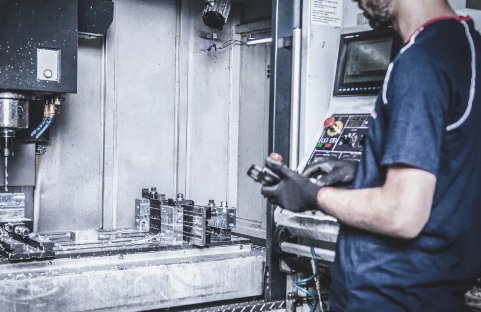
Essential gear includes safety glasses, hearing protection, cut-resistant gloves, and steel-toed boots to guard against chips, noise, and hazards.
Select based on material, tool type, and machine power using manufacturer charts or CAM calculators, starting conservative and adjusting per chip load.
Deflection arises from excessive depth of cut, long tools, weak fixturing, or high feeds; mitigate with shorter tools and rigid setups.
Yes, with adjusted speeds, feeds, and dust collection; use carbide tools coated for resin to prevent gumming.
5-axis adds rotational axes for simultaneous multi-angle cuts, enabling complex parts without refixturing, though programming is more intricate.
[1](https://www.speedtigertools.com/solution/ins.php?index_id=107)
[2](https://cncwmt.com/qa/mastering-cnc-milling-machines-a-comprehensive-guide-to-operation-and-beyond/)
[3](https://fractory.com/cnc-milling/)
[4](https://nomura-ds.com/blog/what-is-cnc-milling)
[5](https://www.makerverse.com/resources/cnc-machining-guides/cnc-milling-everything-you-need-to-know/)
[6](https://standardbots.com/blog/cnc-milling-machine)
[7](https://www.uti.edu/blog/cnc/milling)
[8](https://www.youtube.com/watch?v=-WqNbHmcc7Q)
[9](https://hppi.com/knowledge-base/cnc-machining/cnc-milling)
[10](https://academy.titansofcnc.com/files/Fundamentals_of_CNC_Machining.pdf)


