From idea to market-ready product, our NPI solutions make every stage easier, faster. Discover How We Help

Views: 222 Author: Tomorrow Publish Time: 2025-12-23 Origin: Site


Content Menu
● Understanding the 3D Printing Industry
● 1: Research and Choose Your Niche
● 3: Legal and Regulatory Requirements
● 5: Choosing the Right Printers and Equipment
● 6: Understanding Materials and Their Uses
>> Steps for Accurate Estimation:
● 8: Marketing and Customer Acquisition
● 9: Managing Workflow and Quality Control
● 10: Scaling and Diversifying
● 11: Sustainability and Innovation
>> Ways to Operate Sustainably:
● FAQ
>> 1. What is the average startup cost for a 3D printing business?
>> 2. How profitable is a 3D printing service?
>> 3. What skills are required to start this business?
>> 4. Can I operate this business part-time?
>> 5. What are common challenges in 3D printing services?
Starting a 3D printing service is an exciting opportunity to merge creativity with technology. The demand for customized, on-demand manufacturing is rising globally, and 3D printing lies at the core of this transformation. From producing prototypes and spare parts to creating personalized gifts, the possibilities for entrepreneurs in this field are endless.
However, launching a successful 3D printing service involves more than simply buying a printer. It requires research, planning, and a deep understanding of materials, costs, and customer needs. This comprehensive guide explains every step—from preparation and setup to marketing and scaling—so you can confidently start and grow your 3D printing business.
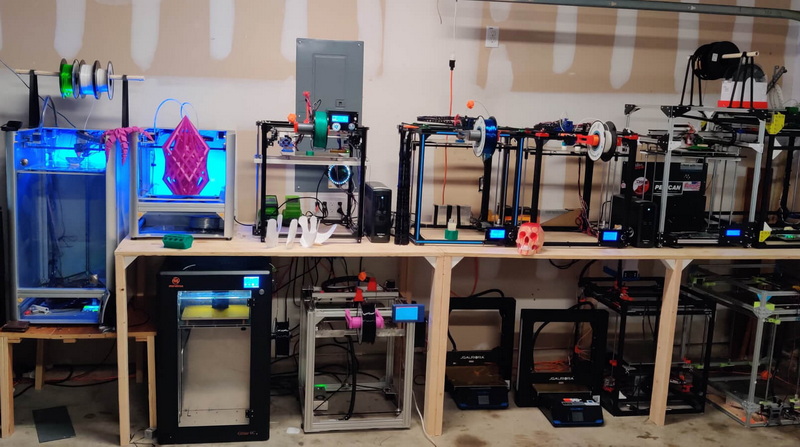
3D printing, also known as additive manufacturing, revolutionizes how products are designed and produced. Instead of cutting or molding materials, items are built layer by layer from a digital file. This approach reduces waste, speeds up prototyping, and enables high levels of customization.
Industries such as aerospace, healthcare, architecture, automotive, and education rely heavily on 3D printing for rapid prototyping and cost-effective manufacturing. For entrepreneurs, this diversity means there is no single best niche—only one that aligns with your interests and expertise.
The global 3D printing market was valued at over $20 billion in 2024 and continues to expand rapidly. With new technology emerging annually, early adopters who establish a strong service foundation can benefit from this momentum and long-term growth potential.
Defining your niche determines the direction of your operations, pricing, and marketing. By focusing on a specific area, you can deliver more specialized, higher-value services.
- Prototyping and product development: Collaborating with startups and engineers to validate new designs.
- Custom lifestyle products: Creating personalized home décor, fashion accessories, or art pieces.
- Architecture and construction: Producing scale models with intricate structural details.
- Education and science: Printing models for classrooms, labs, or research projects.
- Healthcare applications: Building dental models, prosthetic components, or surgical tools.
Research your target customers and competitors. Study what services are in demand and identify gaps in availability, quality, or turnaround time. If you offer something faster, cheaper, or more innovative, you'll gain a competitive edge.
Launching a business without a plan is like printing without a model—it's bound to fail halfway. A comprehensive business plan helps clarify your mission and attract investors or partners.
1. Executive Summary: Summarize your business idea, mission, and goals in less than one page.
2. Company Overview: Describe your background, location, and the problem your service solves.
3. Market Research: Include data about industry trends, competition, and customer demographics.
4. Operations Plan: Map out production workflows, staffing needs, supplier relationships, and logistics.
5. Marketing Strategy: Detail how you'll attract and retain customers through SEO, ads, and social media.
6. Financial Projections: Estimate startup costs, expenses, and break-even timelines.
Keep the document flexible, updating it as market conditions change. A living, well-researched business plan guides smart decision-making throughout your entrepreneurial journey.
Before starting full operations, ensure your business follows all legal requirements in your region. Failing to do so can result in fines or forced shutdowns.
- Register your business: Choose a proper structure (LLC, sole proprietorship, or corporation) and file with your state.
- Obtain licenses and permits: Check local rules on home-based manufacturing or small-scale production.
- Protect intellectual property: If you design original products, consider trademark or patent protection.
- Understand liability: Use contracts and disclaimers when offering design and print services to clients.
Because 3D printing can involve sensitive designs—from mechanical parts to medical devices—maintaining legal clarity protects both you and your clients.
A proper workspace directly affects print quality and efficiency. Whether you build a home studio or lease a small workshop, prioritize safety, organization, and scalability.
- Printer area: Ensure sturdy tables, vibration isolation, and good airflow.
- Ventilation: Printers that use ABS or resin require air circulation and sometimes carbon filters.
- Storage: Keep filaments dry in airtight containers; humidity can degrade print quality.
- Lighting and cleanliness: Dust-free, well-lit areas help identify print defects early.
- Computer station: Use high-performance PCs with adequate RAM and graphics power for rendering.
Plan for future growth. If you outgrow your home space, having modular furniture or movable equipment makes expansion easier.
Not all 3D printers are equal. Each machine type suits different applications, budgets, and output needs.
- FDM (Fused Deposition Modeling): Affordable and versatile, suitable for prototypes and educational models.
- SLA (Stereolithography): Resin-based printers with fine detail, ideal for jewelry, dentistry, and miniatures.
- SLS (Selective Laser Sintering): Produces strong, functional nylon parts without support structures.
- DMLS (Direct Metal Laser Sintering): Used for metal components, usually in industrial or engineering contexts.
Beyond printers, essential tools include calipers for precision measurement, sanders or solvents for surface finishing, and painting tools for post-processing aesthetics.
Material choice defines product strength, flexibility, and appearance. Familiarize yourself with the most commonly used options.
- PLA: Environmentally friendly, great for general projects; not suited for high heat.
- ABS: Tough plastic for mechanical parts but emits noticeable fumes.
- PETG: Combines strength with slight flexibility; resists moisture well.
- Resins: Ideal for artistic and detailed parts but require post-curing with UV light.
- TPU: Flexible rubber-like filament for phone cases or wearable parts.
- Metals and composites: High-end materials for automotive and aerospace prototyping.
Experimenting with filament brands and print settings helps refine results. Offering a range of materials also broadens your customer base.
Striking the right pricing balance ensures profitability while remaining competitive. Transparent pricing builds trust and prevents confusion later.
1. Calculate material cost: Multiply filament or resin cost per gram by usage rate.
2. Include machine time: Factor in wear, electricity, and maintenance.
3. Add labor costs: Time spent slicing models, finishing prints, and packaging matters.
4. Consider overhead: Rent, software licenses, and marketing expenses should also be covered.
5. Add profit margin: Aim for 30–50% above total cost depending on project complexity.
Provide clients with clear cost breakdowns. Automated online quote tools, integrated with upload portals, improve user experience and efficiency.
Even the best equipment won't help without customers. Marketing bridges this gap by increasing visibility and credibility.
- Build a professional website: Include a well-organized portfolio, pricing page, and contact form.
- Optimize for search: Use relevant keywords like “custom 3D printing service” or “rapid prototyping near me.”
- Leverage social platforms: Showcase time-lapse printing videos on Instagram or TikTok to attract attention.
- Network locally: Partner with schools, designers, and small businesses through workshops.
- Offer loyalty discounts: Encourage repeat customers with special promotions.
Word-of-mouth remains powerful in this field. Delivering consistent quality and professional customer service ensures long-term relationships and referrals.
Consistency builds reputation. Quality assurance should be part of your workflow from submission to delivery.
- Confirm 3D models are print-ready before production.
- Use calibration tests regularly to maintain dimensional accuracy.
- Document print parameters for repeatable results.
- Inspect each print for adhesion issues, warping, or layer misalignment.
- Communicate with clients about design limitations before printing.
Implementing workflow software to manage projects, schedule batches, and track expenses helps keep operations transparent and scalable.
Once your business reaches stability, explore growth opportunities within or beyond printing.
- Add new equipment: Introduce faster printers, resin varieties, or powder-based machines.
- Offer design services: Help clients create or modify 3D models.
- Partner with local businesses: Offer B2B contracts for production runs or product packaging.
- Develop training programs: Teach 3D printing classes for schools or hobbyists.
- Open an online store: Sell digital 3D designs, custom figurines, or prototypes.
Growth should be strategic. Reinvest profits into technology, marketing, or staff instead of expanding too quickly without consistent cash flow.
Environmental responsibility can become a key marketing advantage. Many clients now seek eco-conscious partners.
- Use biodegradable materials like PLA or recycled filaments.
- Recycle scrap prints whenever possible.
- Minimize power usage with energy-efficient devices.
- Offer repair or reprint discounts instead of disposable replacements.
- Stay updated with new sustainable materials and printing methods.
Sustainability not only benefits the planet but also enhances brand reputation and attracts green-minded customers.
Starting a 3D printing service merges creativity, technology, and entrepreneurship. With thoughtful planning, smart investments, and consistent quality, you can build a profitable and sustainable business that stands out in this fast-evolving market.
Focus on understanding your niche, improving technical expertise, and cultivating loyal clients. As demand for personalized and rapid manufacturing continues to expand, your 3D printing service can become a cornerstone of tomorrow's production landscape.
Initial costs generally range from $3,000 to $20,000 depending on printer type, materials, workspace, and software requirements. Higher-end industrial setups can exceed $50,000.
Profit margins often range between 30% and 60%, depending on overhead, niche, and client demand. Offering design and finishing services increases profitability.
Basic 3D modeling knowledge, familiarity with slicing software, and an understanding of materials are essential. Problem-solving and customer service skills are equally important.
Yes. Many freelancers start part-time from home before expanding into full-time operations. Just ensure your pricing reflects the limited capacity.
Typical challenges include equipment maintenance, print failures, pricing competition, and client education about design limitations. Consistent testing and transparent communication mitigate most issues.


