From idea to market-ready product, our NPI solutions make every stage easier, faster. Discover How We Help

Views: 222 Author: Tomorrow Publish Time: 2025-12-18 Origin: Site


Content Menu
● Understanding CNC Vertical Turning Lathes
● 1: Preparing the Installation Site
● 2: Positioning and Leveling the Lathe
● 3: Electrical and Pneumatic Connections
● 4: Installing Mechanical Components
● 5: CNC Control Configuration
● 6: Functional Checks and Calibration
● 8: Implementing a Maintenance Strategy
● 10: Integrating Automation (Optional)
● FAQ
>> 1. What is the main advantage of a CNC Vertical Turning Lathe?
>> 2. How long does the full setup process take?
>> 3. Can the same cutting tools be used as in horizontal lathes?
>> 4. What materials can be machined efficiently on a VTL?
>> 5. How frequently should calibration and maintenance be performed?
Setting up a CNC Vertical Turning Lathe (VTL) is a precise process that requires planning, technical skill, and adherence to best practices. A properly configured machine ensures stable operation, high accuracy, and long-term reliability. Whether for industrial-scale production or specialized machining tasks, understanding each stage of setup is crucial to maximizing the lathe's potential. This guide provides detailed technical steps, from site preparation to calibration and safety checks, for an efficient and reliable VTL installation.

CNC Vertical Turning Lathes are high-performance machining tools designed for turning large, heavy, or complex workpieces. The vertical configuration means the spindle is oriented perpendicular to the shop floor, allowing gravity to stabilize the workpiece on the chuck. This configuration is ideal for engine housings, aircraft components, turbine casings, and other large parts that demand precision.
Unlike horizontal machines, VTLs feature a large circular worktable acting as a rotating spindle. The cutting tools are mounted on a cross rail or turret overhead, allowing multiple tools to perform different operations efficiently. Advanced VTL models come equipped with multiple axes, live tooling, and automated tool changers for complex contouring and drilling tasks.
Key benefits include:
- Exceptional rigidity for precise material removal.
- Capability to handle heavy or unbalanced loads safely.
- Reduced operator fatigue due to convenient vertical layout.
- Enhanced chip evacuation through gravity assistance.
Before setup, ensure the machine's specifications—such as maximum swing diameter, table load capacity, and spindle speed—match your production needs.
The first toward successful setup is creating a clean, safe, and properly conditioned environment. Even the most expensive VTL will underperform if installed on an unstable or unsuitable foundation.
Essential site requirements:
- Foundation: A thick, vibration-resistant concrete floor is mandatory. Vibration dampening ensures consistent surface finish and dimensional accuracy. For large machines, a special foundation pit may be required.
- Clearance: Leave at least 1 meter of free space around the machine for operator access, maintenance, and workpiece handling.
- Lighting: Install bright, shadow-free lighting to enhance visibility during tool changes and inspection.
- Power delivery: Confirm compatibility with the rated voltage (e.g., 400V three-phase) and frequency. Electrical stability protects CNC electronics from fluctuation damage.
- Compressed air and coolant supply: Set up contaminant-free pneumatic lines and storage tanks for coolant systems per manufacturer demands.
A stable environment ensures the VTL's mechanical alignment and control systems operate with consistency.
Once the site is ready, carefully position the machine. Use an overhead crane rated for at least 125% of the machine's gross weight to avoid lifting accidents. Before lowering the VTL, inspect anchoring points and lifting rings for signs of wear.
Positioning checklist:
1. Place the lathe according to the floor layout plan with sufficient room for chip conveyors.
2. Check alignment to building reference points to avoid interference with other equipment.
3. Insert vibration pads beneath leveling feet to absorb shock and resonance.
4. Use precision machinist levels to check both X (left-right) and Y (front-back) directions.
Releveling may be required after a few days of operation since the ground may settle slightly under the machine's weight.
Electrical connections are delicate and should be handled only by certified electricians. Incorrect wiring can cause severe damage to control circuits.
Electrical integration steps include:
- Connecting the main supply through an approved power isolator.
- Ensuring that emergency stop switches and safety locks function before energizing the machine.
- Grounding all metal parts to eliminate static buildup or electrical hazards.
- Installing surge protectors for voltage stability.
Pneumatic system setup:
Attach air hoses to pneumatic manifolds responsible for actuating chucks, tool changers, and slide locks. Always maintain correct pressure levels (usually between 0.5 and 0.8 MPa) for stable actuation.
Now that the machine is electrically powered, mechanical assembly can proceed.
- Main Chuck or Faceplate: Securely mount the chuck or faceplate onto the spindle nose flange. Clean contact surfaces to prevent misalignment.
- Tool Turret or Tool Post: Install the turret following manufacturer alignment marks. Check all bolts for uniform torque.
- Cross Rail and Saddle: Ensure the cross slide moves freely through full stroke without binding or resistance.
- Tailstock or Support Ram: If included, inspect alignment with the spindle axis using a test bar.
Once assembly is complete, rotate the spindle manually to confirm that all parts move smoothly without collision or friction.
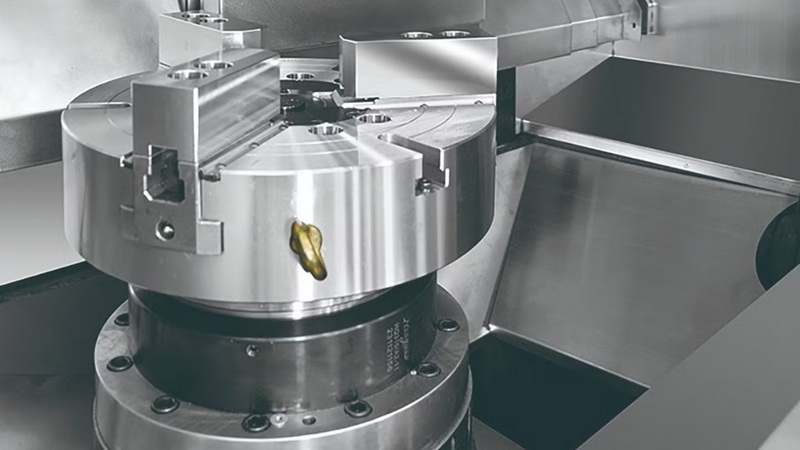
The control system defines how the lathe interprets operator commands. Enter key parameters through the control panel interface.
1. Axis Home Position Setup: Establish the zero reference for each axis (X, Z, and optional C axes).
2. Tool Data Input: Save tool length, radius, and offsets in the machine's tool memory.
3. Feed and Speed Limits: Set base feedrate and spindle speed based on machine capacity and tool specifications.
4. Program Verification: Load a sample G-code file and simulate motion to verify travel direction and coordinate accuracy.
For multi-axis VTLs, ensure synchronization between rotation (C-axis) and linear interpolation (X-Z motion) for milling operations.
Before cutting any metal, conduct a comprehensive functionality test. Run the following checks by step:
- Activate spindle rotation at low speed; observe for vibration or imbalance.
- Test automatic lubrication and coolant pump systems for consistent flow.
- Check hydraulic pressure that controls chuck clamping and turret indexing.
- Perform an axis movement test to ensure precise command response.
Calibration procedures:
Use precision instruments such as dial indicators, laser interferometers, and electronic levels to measure geometric accuracy. Parameters like spindle runout, perpendicularity between spindle and table, and cross-slide linearity must meet tolerance limits specified in ISO 230 or equivalent standards.
Trial operations ensure that the VTL performs correctly in real cutting scenarios. Begin with a test piece made of mild steel or aluminum.
Steps:
1. Secure the workpiece using proper clamping tools and check concentricity.
2. Conduct a facing cut at moderate speed to evaluate surface finish.
3. Measure diameter accuracy using micrometers or CMM (Coordinate Measuring Machine).
4. Examine tool wear and adjust feeds, speeds, or tool compensation as necessary.
5. Run turning, boring, and grooving operations sequentially to confirm stability.
If deviations occur, recalibrate axis positions or recheck tool offsets before production starts. Never begin full-scale production until all calibration results are verified.
Maintenance ensures long-term precision and reliability. Routine inspections detect abnormalities early, preventing unplanned downtime.
Recommended maintenance frequency:
- Daily: Clean chips from the table and slides, check coolant level, verify air pressure, and wipe tools.
- Weekly: Inspect the chuck jaws for wear, test lubrication system, and verify coolant concentration.
- Monthly: Examine spindle bearings for noise and confirm hydraulic lines are leak-free.
- Semi-Annually: Relevel the machine, inspect ball screws, and recalibrate all axes.
Always log maintenance activities for traceability. Following a structured maintenance plan enhances machine productivity.
Safety in CNC VTL operation is non-negotiable. The combination of high mass, fast spindle speeds, and sharp cutting tools demands constant attention.
- Always use protective eyewear and gloves during tool changing.
- Confirm that all guarding panels and interlocks work correctly.
- Never exceed the chuck's rated clamping capacity.
- Avoid manual measurement when the spindle is running.
- Use lifting devices for heavy components; avoid manual lifting above 25 kg.
Regularly train operators on emergency procedures and machine alarms. A safe setup guarantees not only operational excellence but also worker wellbeing.
For modern manufacturing, automation integration improves efficiency. VTLs can be connected with robotic loaders, pallet changers, or automated inspection devices.
Automation benefits:
- Increased production speed with minimal manual intervention.
- Improved consistency in repetitive tasks.
- Reduced risk of human error and labor fatigue.
- Real-time monitoring through CNC-connected sensors.
When integrating automation, ensure electrical communication between robot controllers and the CNC unit is properly configured to avoid command conflicts.
After setup and testing, optimization fine-tunes the machine for specific applications.
- Tool Path Optimization: Use CAM software to minimize tool travel distance and reduce cycle time.
- Cutting Parameter Adjustment: Experiment with feedrate and speed combinations to achieve ideal balance between efficiency and tool life.
- Coolant Strategy: Position coolant nozzles to target cutting zones precisely, improving chip removal and surface finish.
Use data from early batches to establish stable machining parameters for consistent quality.
Setting up a CNC Vertical Turning Lathe demands detail-oriented planning, accurate alignment, and continuous calibration. From preparing a stable foundation and installing precision components to programming control parameters and performing trial cuts, each phase contributes to reliable and efficient machining. A meticulously installed and well-maintained VTL not only achieves high dimensional accuracy but also enhances productivity, safety, and component finish quality across industries.
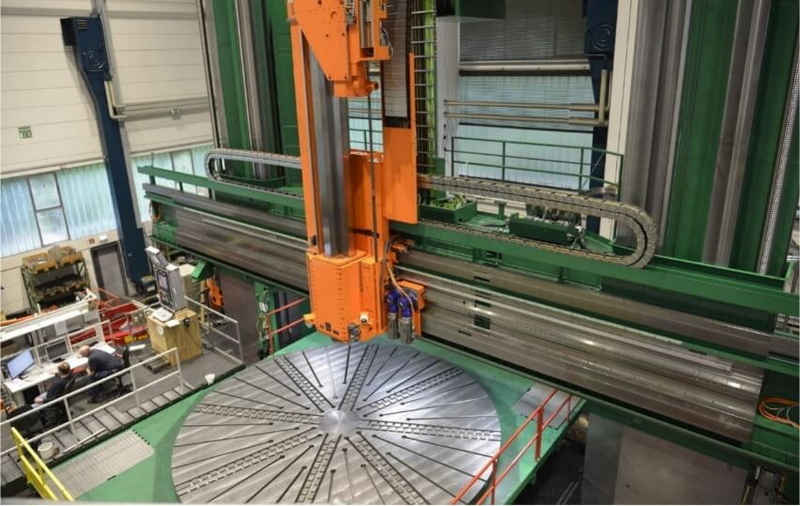
A CNC VTL provides exceptional stability for large and heavy components. Its vertical design utilizes gravity to secure the workpiece, ensuring uniform chip flow and reduced vibration during cutting.
Depending on the machine size, accessories, and calibration requirements, setup can take between 3 and 7 days. Complex VTLs with multi-axis systems may require an additional week for fine calibration and testing.
Not always. Vertical lathes often use specialized tool holders and geometries optimized for downward cutting forces. Always verify tool compatibility and manufacturer's recommendations.
VTLs handle a broad range of materials—from aluminum and cast iron to titanium and Inconel—all with adjustable speeds, feeds, and tooling solutions optimized for each.
Minor calibration should occur every three months, while a complete geometric inspection should be done at least once a year. Routine maintenance prolongs precision and reduces costly downtime.


