From idea to market-ready product, our NPI solutions make every stage easier, faster. Discover How We Help

Views: 222 Author: Tomorrow Publish Time: 2026-01-31 Origin: Site


Content Menu
● The Role of Cutting Fluid in CNC Milling
● Common Contaminants in CNC Milling Cutting Fluids
● Why Separating Cutting Fluid Is Essential
● Primary Methods to Separate Cutting Fluid From CNC Milling
>> 2. Coalescing Oil Separator
>> 4. Tramp Oil Skimmers and Vacuum Degreasers
>> 5. Filtration Systems: Paper Bed, Cartridge, and Magnetic
>> 6. Ultrafiltration and Membrane Systems
>> 7. Vacuum Evaporation Technology
● Selecting the Best Method for Your CNC Milling Workflow
● Preventive Maintenance Tips for CNC Milling Coolant Systems
● Environmental and Compliance Considerations
● Improving Efficiency With Smart Monitoring
● Economic Value of Cutting Fluid Recovery
● FAQ
>> 1. Why is cutting fluid separation essential in CNC milling?
>> 2. How often should coolant in CNC milling be cleaned or replaced?
>> 3. Can I reuse cutting fluid after separation?
>> 4. What happens if contaminated coolant is ignored?
>> 5. What is the most cost-effective method for small workshops?
Cutting fluid management is one of the most critical yet overlooked aspects of CNC milling operations. Clean and efficient cutting fluid contributes directly to high machining precision, extended tool life, and consistent product quality. However, as CNC milling processes continue over time, the cutting fluid inevitably becomes contaminated with chips, tramp oils, and micro debris. These impurities affect both the cooling performance and lubrication capacity of the fluid, leading to tool wear and lower milling efficiency.
That's why knowing how to separate cutting fluid from CNC milling is essential for every manufacturer, whether operating a small workshop or a large industrial plant. This article will explore the role of cutting fluid, the sources of contamination, and multiple effective separation methods, from simple gravity tanks to advanced membrane filtration systems.
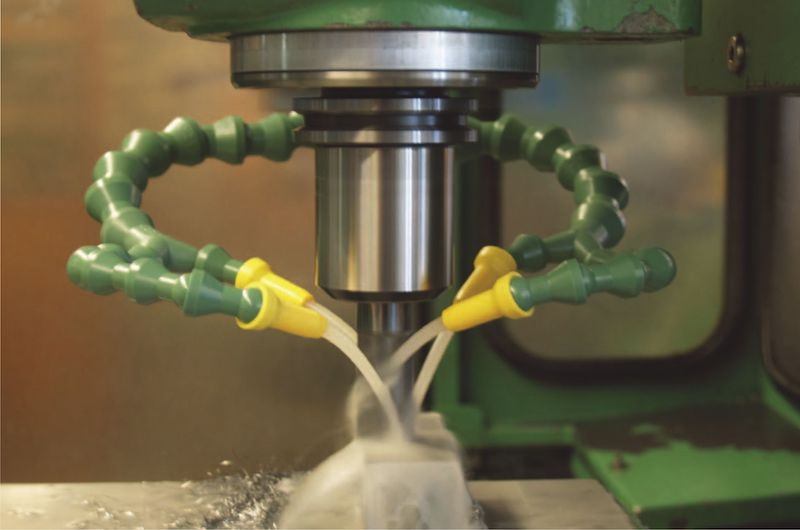
Cutting fluids—also known as coolants—perform several essential tasks inside CNC milling machines. They reduce friction, carry away heat, lubricate tool-work interfaces, and flush chips out of the cutting zone. During high-speed or heavy-load milling operations, the temperature in the cutting area can exceed hundreds of degrees Celsius. In such conditions, a properly balanced and clean cutting fluid ensures stability, precision, and tool longevity.
Key functions of cutting fluid in CNC milling include:
- Cooling tools and workpieces to prevent thermal deformation.
- Washing away chips and preventing chip recutting.
- Lubricating the contact zone to reduce friction.
- Providing rust and corrosion protection for machine components.
- Improving surface finish quality of the milled product.
When the fluid becomes loaded with impurities, these benefits are diminished. That is when separation and purification become necessary.
No matter the precision of your equipment, contaminants inevitably enter your coolant system. Common sources include worn tool particles, microscopic chips from the milling process, leaks from hydraulic and lubricating oils, and even bacterial contamination from ambient air.
The main contaminants that develop in CNC milling cutting fluids are:
- Metal chips and fines: Generated during continuous cutting and feed motion.
- Tramp oil: Originating from machine lubrication leaks or spindle bearings.
- Dust and sludge: Accumulated from the environment and work materials.
- Microbial growth: Bacteria, mold, and fungi that degrade fluid properties.
When these pollutants build up, they cause odor problems, corrosion, poor lubrication, and reduced cooling efficiency—negatively influencing both product quality and machine lifespan.
Ignoring contaminated cutting fluid can result in costly operational issues. Separation is more than routine maintenance—it is a strategic investment in process reliability.
Core benefits include:
- Longer coolant life – Separation prevents premature disposal and reduces the quantity of new coolant needed.
- Tool life extension – Clean coolant minimizes abrasive wear and thermal shock.
- Stable machining accuracy – Reduces deviations caused by fluctuating cutting temperatures.
- Health and environmental protection – Minimizes odor, bacterial exposure, and toxic waste levels.
- Cost optimization – Reduces total operating expenses from coolant replenishment, waste treatment, and downtime.
Thus, effective separation ensures a sustainable balance between cost efficiency, environmental responsibility, and machining accuracy.
CNC milling workshops employ various separation technologies based on scale, contamination type, and operational budget. Selecting the right method requires balancing performance, cost, and energy consumption.
Gravity separation relies on differences in density between contaminants, oil, and water-based coolant. In a settling tank, heavier metal particles naturally sink to the bottom while free oils float to the top.
This technique is often the first stage in fluid purification because it is simple, energy-free, and cost-efficient.
Advantages:
- Very low running cost and easy setup.
- Effective for large metal fines and surface oil removal.
Limitations:
- Ineffective for emulsified oil and micro-particles.
- Requires space for tanks and extended settling periods.
For workshops with limited chemical use, gravity separation remains a practical first-step filtering method.
A coalescing oil separator enhances oil removal efficiency by merging small oil droplets into larger globules that rise rapidly to the surface. The system uses special filter media, often polypropylene or stainless mesh, to create this coalescing effect.
Advantages:
- Compact footprint suitable for CNC machine integration.
- Removes most free and dispersed tramp oil efficiently.
Limitations:
- Requires periodic maintenance of filter media.
- Doesn't capture fine solids or sludge.
Integrating a coalescing separator with a filtration unit forms an efficient two-stage cleaning system for CNC milling coolants.
Centrifugal separators utilize high rotational speed to force heavier contaminants outward, separating solids, water, and oil. The principle of centrifugal force is highly effective for heavy-particle removal.
Advantages:
- Capable of rapid, continuous purification.
- Handles fine metal particles and oil contamination simultaneously.
Limitations:
- Higher upfront cost and power consumption.
- Balancing and routine maintenance are necessary.
Centrifugal cleaners are widely used in precision CNC milling centers, aerospace component plants, and other sectors demanding ultra-clean coolants for long machining cycles.
Tramp oil skimmers are simple mechanical devices designed to remove floating oil films from coolant surfaces. Common designs include belt skimmers, tube skimmers, and disk skimmers.
Vacuum degreasing systems combine suction with oil-water separation to achieve faster performance in large CNC milling tanks.
Advantages:
- Reliable for continuous oil removal.
- Minimal maintenance and low noise operation.
Limitations:
- Only removes surface oils—not emulsified or dissolved oil.
- Must be operated regularly to maintain best results.
For small- to medium-sized CNC milling shops, tramp oil skimmers offer the best ratio of simplicity to performance.
Mechanical filtration targets fine particulate contamination. Paper bed filters use disposable filter rolls; cartridge filters provide deeper filtration; magnetic separators are ideal for ferrous metals generated by milling stainless steels or iron alloys.
Advantages:
- Enhances clarity and particle-free coolant circulation.
- Improves cutting precision, particularly in finishing operations.
Limitations:
- Needs periodic filter replacement.
- Does not remove tramp oil without supplementary systems.
When used alongside coalescers or skimmers, filtration yields the highest fluid purification level.
Modern membrane separation technology offers one of the cleanest and most sustainable solutions. Ultrafiltration membranes allow only coolant concentrate and water to pass while blocking oils and fines.
Advantages:
- Produces near-original coolant quality suitable for reuse.
- Greatly reduces wastewater volume.
Limitations:
- Membranes are expensive and require automated cleaning.
- Performance varies with fluid formulation and temperature.
In advanced CNC milling facilities emphasizing “green manufacturing,” membrane filtration provides a closed-loop recycling solution aligned with environmental policies.
Vacuum evaporation evaporates the water portion of cutting fluid at low pressure and temperature, separating it from contaminants. The condensed vapor can be reused, while concentrated residue is collected for disposal.
Advantages:
- Dramatically reduces coolant waste volume.
- Suitable for large-scale coolant recycling systems.
Limitations:
- Requires skilled operation and high energy cost for heating.
Though less common in small shops, vacuum evaporation is a preferred eco-solution for large, automated milling plants processing thousands of liters weekly.
Every CNC milling environment has unique requirements depending on coolant type, operation time, and space availability. There is no one-size-fits-all method. The best approach is often a combination system that integrates several methods to handle different contamination stages.
For instance:
- Small job shops can use gravity separation plus tramp oil skimming.
- Medium manufacturers can adopt coalescing oil separators with periodic filtration.
- Large-scale operations benefit from automated centrifugal and membrane systems with continuous monitoring.
The correct choice maximizes return on investment, minimizes maintenance time, and extends coolant usability.
After separating and cleaning cutting fluid, ongoing preventive actions ensure consistent quality and longer coolant life.
1. Regular concentration checks – Measure coolant ratio with a refractometer to maintain proper chemical balance.
2. Monitor pH levels – Optimal levels (around 8.5–9.0) prevent corrosion and bacterial growth.
3. Keep tanks clean – Schedule tank cleaning every few months to remove sludge.
4. Skim oil daily – Prevent tramp oil from forming thick layers.
5. Use biocides carefully – Apply only approved additives to stop microbial activity.
6. Continuous circulation – Avoid stagnant conditions that accelerate decomposition.
Such preventive habits maintain cleaner systems and lead to long-term stability in CNC milling production.
Environmental protection regulations restrict the disposal of cutting fluid due to its oil and metal content. Many countries now require coolant waste to undergo pretreatment before discharge.
Recycling systems not only ensure regulatory compliance but also demonstrate corporate sustainability. Clean coolant also supports ISO 14001 and green manufacturing certifications, allowing companies to boost their industrial reputation.
By implementing coolant recycling and separation methods, CNC milling companies can reduce wastewater generation by up to 70%, conserve resources, and lower carbon emissions.
Advancements in Industry 4.0 technologies have introduced smart coolant management systems that use IoT sensors and data analytics to monitor coolant quality in real time. Sensors detect pH, temperature, particle density, and oil concentration, sending data directly to an operator's dashboard.
These intelligent systems allow automatic adjustment of fluid concentration, refill scheduling, and predictive maintenance alerts—greatly reducing human error and downtime in CNC milling operations.
Combining automation with advanced separation leads to high-efficiency, sustainable machining.
Recovering and reusing coolant after separation significantly reduces operating costs. Studies show that recycling cutting fluid in CNC milling can save 25–40% of the annual coolant expenditure. The investment in separation devices pays for itself within months through:
- Reduced coolant purchase frequency.
- Lower waste disposal costs.
- Minimized production interruption.
Furthermore, recycling programs enhance workplace safety by reducing chemical exposure and spillage risk.
Understanding how to separate cutting fluid from CNC milling is crucial for maintaining high machining standards and operational economy. Whether using gravity separation, coalescing oil units, centrifuges, or membrane systems, each method contributes to extending coolant life and improving cutting performance.
A well-managed coolant system not only lowers production costs but also supports sustainable, environmentally friendly manufacturing. As global industries move toward cleaner production and resource conservation, implementing robust coolant separation and recovery strategies is now a fundamental part of modern CNC milling operations.
Contact us to get more information!
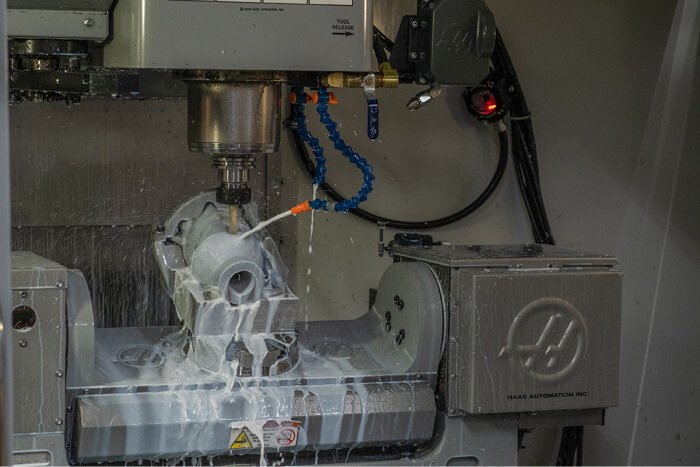
It prevents contamination, reduces tool wear, and maintains temperature stability. Without separation, coolant efficiency quickly declines, causing machining errors and shorter tool life.
For continuous milling operations, inspect weekly and separate contaminants daily. Full replacement every 3–6 months is typical, depending on fluid formulation and workload.
Yes. Once contaminants and tramp oils are removed, the fluid can be filtered and reused multiple times, significantly lowering operational costs and waste volumes.
Clogged nozzles, tool corrosion, poor surface finish, and bacterial odor issues can develop. In severe cases, machining accuracy and machine lifespan decrease drastically.
Tramp oil skimmers combined with cartridge filters are affordable, effective, and easy to maintain—perfect for small milling operations with limited budgets.
1. https://www.mmsonline.com/articles/coolant-filtration-options-for-cnc-machines
2. https://www.machinerylubrication.com/Read/30861/cutting-fluid-recycling
3. https://www.engineersedge.com/manufacturing/separation-of-cutting-fluids.htm
4. https://www.oilskimmers.com/resources/oil-skimmer-for-cnc-machining/
5. https://www.hse.gov.uk/metalworking/coolant-management.htm


