From idea to market-ready product, our NPI solutions make every stage easier, faster. Discover How We Help

Views: 222 Author: Tomorrow Publish Time: 2025-11-17 Origin: Site


Content Menu
● Understanding the Market and Defining Offerings
● Positioning and Value Proposition
● Establish a Compelling Offer
● Marketing and Lead Generation
● Sales Process and Lead Qualification
● Regulatory and Risk Management
● Sustainability and Waste Reduction
● Operational Considerations for Regulated Industries
● Pricing and Negotiation Tactics
● Marketing Analytics and Continuous Improvement
● FAQ
>> 1. What should be included in a 3D printing services proposal?
>> 2. How do I choose between printing technologies for a project?
>> 3. What materials are commonly offered in professional 3D printing services?
>> 4. How can pricing be made predictable for customers?
>> 5. What qualifications matter when selling to regulated industries?
In today's manufacturing and product development landscape, 3D printing has evolved from a prototyping tool to a core capability for rapid production, customization, and on-demand manufacturing. Selling 3D printing services requires a clear value proposition, disciplined workflow, and targeted outreach to potential customers across industries such as automotive, aerospace, healthcare, consumer electronics, jewelry, and education. This article lays out practical steps to position, market, and grow a 3D printing service business, from defining offerings to winning repeat clients.

Before reaching out to customers, it's essential to map the market and articulate what the service actually provides. A successful 3D printing service typically differentiates itself through one or more of the following dimensions:
- Material capability: offering a broad range of materials (PLA, ABS, nylon, PETG, high-temperature polymers, metal alloys, flexible rubbers, reinforced composites) and specialty materials (biocompatible, food-safe, conductive, or electrically heated polymers).
- Process versatility: supporting multiple technologies (FDM, SLA, SLS, DMLS/SLM, multi-jet fusion, binder jetting) to match part performance, surface finish, and production speed needs.
- End-to-end support: from design optimization and printable file preparation to post-processing (machining, smoothing, painting, polishing, plating) and assembly.
- Production scale: offering quick-turn prototypes, low-volume production runs, or on-demand warehousing and fulfillment.
- Quality and compliance: ISO/AS9100/ISO 9001 compliant processes, traceability, metrology, and documentation suitable for regulated industries.
A concise service menu should be published and promoted. Typical offerings include:
- Rapid prototyping and concept validation
- Functional testing parts and fixtures
- Lightweight end-use components
- Custom jigs, tools, and manufacturing aids
- Small-batch production and on-demand parts
- Design for 3D printing (DfAM) consulting and file preparation
- Post-processing, finishing, and coating services
- Assembly and integration services
To stand out, translate capabilities into tangible value for specific customer segments:
- Time-to-market acceleration: emphasize faster iteration cycles and reduced lead times.
- Cost optimization: highlight savings from reduced tooling, fewer design iterations, and lower waste.
- Customization at scale: showcase capabilities to produce personalized parts in small batches without expensive tooling.
- Performance and quality: demonstrate material properties, tolerances, repeatability, and post-processing quality.
- Supply chain resilience: offer on-demand production to mitigate stockouts and reduce inventory risk.
Develop buyer personas and tailor messages accordingly. For instance:
- Product designers and engineers seek design-for-3D-printing guidance and reliable prototyping timelines.
- Procurement managers value predictable pricing, quality, and on-time delivery.
- startups and small manufacturers need cost-effective pilots and scalable production options.
Create clear packaging and pricing that align with buyer needs. Options might include:
- Fixed-price rapid prototyping packages with defined deliverables (CAD file checks, print-ready files, multiple design iterations)
- Volume-based production pricing with volume discounts and setup fees
- Retainer-based design-for-3D printing consulting hours
- Free or low-cost initial feasibility studies for qualified leads
- Add-on services (design, finishing, coatings, inspection reports)
Pricing strategy should reflect machine utilization, material costs, post-processing labor, and effort for design optimization. Consider offering transparent quotes with assumed tolerances and finish levels to manage expectations.
A systematic, multi-channel approach helps reach potential customers efficiently:
- Website and SEO: build a clear, service-focused website with pages for each offering, case studies, material capabilities, and a simple quote form. Optimize for keywords like “3D printing services,” “industrial 3D printing,” and “rapid prototyping 3D printing” alongside industry-specific phrases.
- Content marketing: publish blog posts, white papers, and guides that address common pain points (DfAM tips, material selection, cost-per-part analysis, tolerance considerations). Use examples that demonstrate measurable outcomes (time saved, part weight reduction, cost savings).
- Case studies and testimonials: document successful projects with measurable results, materials used, lead times, and customer benefits.
- Partnerships and networks: collaborate with design consultancies, product development firms, universities, and local makerspaces to generate referrals.
- Trade shows and events: attend manufacturing, aerospace, medical, and education events to showcase capabilities and collect leads.
- Social proof and credibility: highlight certifications, quality processes, and notable clients to build trust.
An effective sales process moves leads from awareness to engagement and closure:
(1) Lead capture: capture inquiries with a short form requesting industry, part size, material, budget range, and timeline.
(2) Qualification: assess fit based on part complexity, required materials, production volume, and critical deadlines.
(3) Consultation: schedule a discovery call to understand design constraints, performance requirements, and post-processing needs.
(4) Proposal: deliver a clear quote with scope, materials, lead times, tolerances, QA steps, and post-processing details.
(5) Close and onboarding: align on contract terms, IP protections, delivery milestones, and a production ramp plan.
(6) Post-sale: provide ongoing support, track metrics, and pursue opportunities for repeat work or referrals.
Reliable execution is the backbone of a selling strategy. Focus on:
- Process discipline: standardized workflows for file preparation, build orientation, support structures, and post-processing.
- Quality control: implement inspection procedures, tolerances, and documentation ready for customers with regulatory requirements.
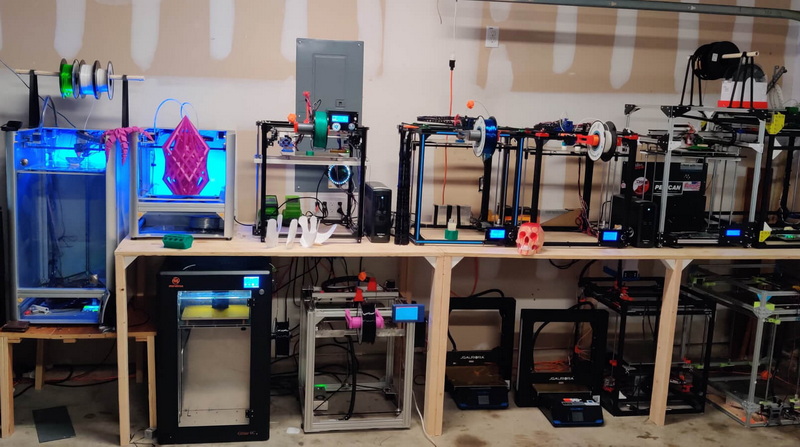
- Material and machine management: maintain material inventory, calibration schedules, and machine upkeep to minimize downtime.
- Data-driven improvements: collect metrics on lead times, part quality, and customer satisfaction to drive improvements.
As demand grows, consider:
- Expanding material options and technologies
- Increasing capacity through additional equipment or outsourcing partnerships
- Introducing automation in file processing, inspection, and data management
- Expanding service lines (product design, testing, certification services)
For industries with stringent requirements, implement robust programs:
- Documentation and traceability: retain complete records for each build, including material certificates and process validation data.
- IP protection: secure handling of all designs with NDAs, secure transfer methods, and clear ownership terms.
- Data security: implement access controls, encryption for data in transit and at rest, and regular security audits.
- Cyber-physical risks: protect connected equipment and data from cyber threats through segmentation and regular patching.
Quality signals trust. Pursue:
- ISO 9001 or sector-specific certifications, if feasible
- Process validation for critical parts, including build parameters, environmental controls, and post-processing methods
- Third-party material testing results and independent metrology reports
- Traceability from material lot to finished part
3D printing can reduce waste through additive manufacturing efficiency. Communicate environmental benefits where relevant, such as:
- Lower material waste compared to subtractive processes
- On-demand production reducing obsolete inventory
- Recyclable or recycled-content materials where available
- Case A: A consumer electronics startup needed 50 functional enclosures in two weeks. The team recommended using SLS for strong mechanical properties and a durable finish. The project delivered on time, with a cost-per-part savings compared to traditional tooling, and enabled a successful product launch.
- Case B: A medical device firm required biocompatible, sterilizable housings in small batches. SLA printing provided high surface finish, while post-processing achieved the required surface treatment. The supplier supplied validation data and traceability records to support regulatory submission.
- Case C: An automotive prototyping team sought lightweight brackets with complex geometries. Multi-material printing and targeted infill optimization reduced weight by 20% while preserving strength, enabling a competitive testing phase.
For customers in aerospace, medical, or automotive sectors, demonstrate compliance through:
- Documentation: material certificates, process validation data, print lot traceability, and post-processing records.
- Quality systems: adherence to recognized standards (ISO 9001, AS9100, or sector-specific requirements) and traceability.
- Data security and IP protection: non-disclosure agreements, secure file handling, and clear ownership of designs.
- Value-based pricing: tie pricing to outcomes like time-to-market reduction or weight savings rather than hours worked.
- Transparent quoting: list assumptions, tolerances, and potential risks to avoid scope creep.
- Flexible terms: offer milestones tied to deliverables, and contingencies for design changes.
- Pilot projects: propose small, paid pilots to win larger engagements after proven results.
- Track funnel metrics: lead source, conversion rates, average deal size, cycle time.
- Monitor customer satisfaction: post-project surveys and Net Promoter Score.
- A/B test messaging: test different value propositions and case study angles.
- Regular reviews: quarterly strategy reviews to prune underperforming channels and scale successful ones.
Delivering compelling 3D printing services requires clear positioning, credible proof of capability, and reliable execution. By defining a precise service menu, articulating a strong value proposition, building credibility through case studies and certifications, and maintaining rigorous operational standards, a 3D printing service business can attract steady leads, convert them into long-term clients, and scale sustainably. The emphasis should remain on solving real customer problems quickly and efficiently while upholding high quality and transparent communication.
- A clear scope of work, material and technology specified, part quantity, lead time, post-processing steps, QC plan, pricing, and terms. Include assumptions and potential risks to avoid scope creep.
- Consider part geometry, required tolerances, surface finish, material properties, and production volume. For quick-turn prototypes, FDM or SLA may suffice; for functional parts with complex geometries, SLS or DMLS might be better.
- Common plastics: PLA, ABS, PETG, nylon, polycarbonate; specialized: tough or heat-resistant variants; metals: aluminum, titanium, steel alloys; flexible materials, composites, and specialty polymers as needed.
- Use transparent pricing models with defined unit costs, setup fees, and volume discounts. Offer fixed-price packages for standard jobs and provide accurate quotes after completing a technical brief.
- Quality management systems (ISO 9001/AS9100), material certification, traceability records, validated processes, and documentation that supports regulatory submissions.


