From idea to market-ready product, our NPI solutions make every stage easier, faster. Discover How We Help

Views: 222 Author: Tomorrow Publish Time: 2026-01-06 Origin: Site


Content Menu
● 1: Reinforce the Frame Structure
● 2: Improve Linear Motion Components
● 3: Optimize the Gantry Assembly
● 4: Strengthen the Z-Axis and Spindle Mount
● 5: Improve the Table and Spoilboard System
● 6: Upgrade the Drive and Motion Transmission System
● 7: Reduce Vibrations and Resonance
● 8: Use Stiffer Cutting Tools and Toolholders
● 9: Apply Advanced Material-Specific Strategies
● 10: Maintenance and Calibration for Sustained Rigidity
● 11: Software Control and Cutting Parameter Optimization
● 12: Thermal and Environmental Stability
● FAQ
>> 1. How does rigidity impact machining performance?
>> 2. What's the simplest rigidity improvement for beginners?
>> 3. Is it possible to over-tighten CNC frame joints?
>> 4. Should I upgrade my spindle before other components?
>> 5. How often should a CNC machine be realigned?
Rigidity defines how well a CNC machine can hold tolerances, resist vibration, and deliver smooth, stable machining results. For an Avid CNC—widely favored among makers and small shops—enhancing rigidity can unlock greater accuracy, higher cutting speeds, and the ability to machine tougher materials like aluminum and even light steels. While Avid CNC machines are engineered for flexibility and cost-efficiency, they can benefit greatly from mechanical optimization and tuning. This comprehensive guide explores proven ways to make your Avid CNC more rigid and stable, covering frame reinforcement, linear motion upgrades, spindle improvements, and system-level vibration control.
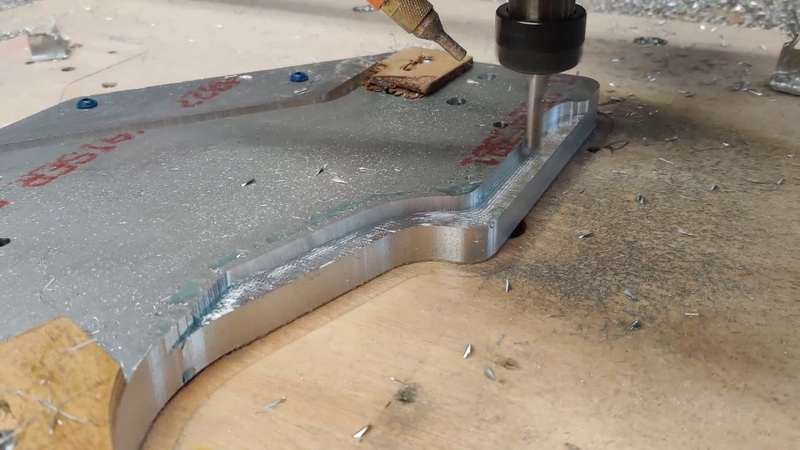
In machining, rigidity refers to the overall stiffness of the structure and its ability to resist deformation when subjected to cutting forces. When components flex under stress, cuts become inaccurate, resonance builds, and tool wear accelerates. On the Avid CNC, rigidity depends on the interaction of its mechanical subsystems:
- The frame and gantry, which provide structural support.
- The linear motion components, including bearings, rails, and screws.
- The Z-axis and spindle mount, where cutting forces concentrate.
- The table or bed surface, which maintains part stability.
Approaching rigidity improvement systematically—by reinforcing weak links and improving precision—can elevate the Avid CNC from a hobby-level tool to a near-industrial performer.
Your machine's frame acts as the backbone that transmits and distributes cutting loads. Any flex or vibration here propagates through the entire assembly.
- Cross-bracing for stiffness: Add steel or heavy-gauge aluminum braces across long, unsupported spans of the Y-axis. This converts rectangular structures into triangulated ones, eliminating side sway.
- Thicker corner plates: Replace factory plates with CNC machined steel corner brackets or gussets to prevent micro-movements at joints.
- Bolting to a foundation: Secure the entire frame to a rigid workbench or, ideally, anchor it to a concrete surface. Reducing contact vibrations enhances both rigidity and consistency.
- Monitor torque settings: Over time, fasteners may loosen due to machine vibrations. Retorque all bolts annually using consistent torque values for even stress distribution.
- Check for alignment: Ensure that each frame segment sits co-planar and square, as even a small twist amplifies deflection during high-load cuts.
The linear motion system determines how smoothly and precisely the tool moves in each direction. Play or flex in this system weakens overall rigidity.
- Convert to profile linear rails: Many Avid CNC models use V wheel gantries or unsupported round rails. Upgrading to fully supported or profile linear rails eliminates wheel compression and increases resistance to side loads.
- Optimize bearing preload: Correctly preloading bearings ensures zero backlash without restricting motion. A lightly preloaded bearing system feels firm yet smooth.
- Inspect and replace worn parts: Ballscrews or lead screws eventually develop play. Measurement with a dial indicator helps detect backlash early.
- Align rails precisely: Use a dial indicator or edge finder to verify parallelism and perpendicularity between axis rails. A misaligned system reduces stiffness and accelerates bearing wear.
- Install hardened shafts: Hardened precision-ground shafts resist wear and flex better than aluminum or mild steel alternatives.
The gantry forms the moving bridge that carries the spindle, so its rigidity is essential for consistent machining performance.
- Thicker or dual-walled plates: Upgrade to machined side plates or fabricate reinforced composite plates for reduced bending.
- Center reinforcing beam: Add an internal steel square tube across the gantry to counteract mid-span bending under heavy tool loading.
- Upgrade attachment bolts: Replace standard hardware with grade 8 bolts that maintain clamping force. Use thread lockers to avoid loosening from vibration.
- Align and square the gantry: Use precision measuring tools to ensure the gantry remains perpendicular to the table surface and parallel on both sides of the Y-axis.
- Distribute motor load: If your gantry uses dual Y-axis motors, synchronize them electronically and mechanically to prevent racking during acceleration.
A well-balanced, square gantry dramatically reduces deflection, maintaining consistent tool orientation across the work envelope.
The Z-axis directly bears the cutting tool's load. Because it has moving vertical components and often extends outward from the gantry plate, it is the most common source of flex and vibration.
- Rigid spindle clamps: Replace stock spindle brackets with heavy-duty dual-clamp aluminum or steel mounts. Ensure minimal radial play around the spindle body.
- Shorter spindle extension: Keep the spindle as close to the Z carriage as clearance allows—shorter tool projection increases leverage resistance.
- Dual-rail Z axis design: Reinforce the vertical assembly with two parallel guide rails on either side of the plate for balance and less deflection.
- Upgrade the spindle plate: A thicker, machined aluminum plate minimizes bending. If possible, mount it with recessed fasteners for maximum contact.
- Isolate motor vibration: Add rubber washers between the Z motor mount and bracket to reduce transmission of motor vibrations into the cutting area.
A rigid table ensures that your workpiece remains stable even when cutting large sheets or heavy materials.
- Replace MDF with aluminum: Aluminum tooling plates are far more dimensionally stable and resistant to moisture than MDF. They also allow threaded inserts for modular fixtures.
- Add subframe supports: For larger Avid CNC machines, install support ribs or tubing beneath the bed, spaced every 6–8 inches.
- Surface leveling: Rout or mill the table surface to ensure it is perfectly parallel to the gantry's travel plane, ensuring consistent Z-depth across the workspace.
- Secure spoilboards properly: Use T nuts or permanent inserts so boards can be replaced without introducing uneven height.
- Control humidity: Even small humidity changes can distort MDF or plywood surfaces used for spoilboards. Store materials in stable conditions and seal all exposed edges.
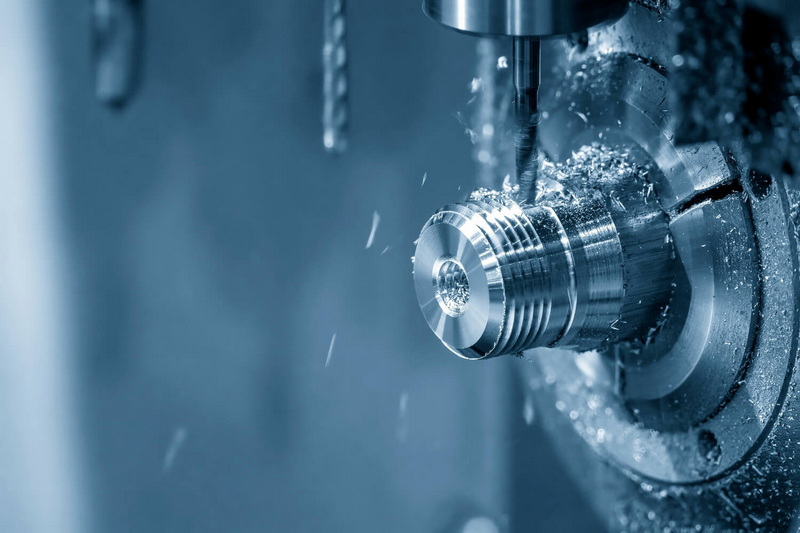
Power transmission from motors to the axes determines how consistently motion responds to cutting resistance.
- Zero-backlash couplers: Replace flexible couplers with precision zero backlash versions that maintain stiffness under torque changes.
- Consider belt upgrades: If using belt drives, switch to steel reinforced or wide GT3 belts for greater tension capacity.
- Preloaded ball screws: Upgrading to preloaded ball screws reduces both backlash and axial deflection.
- Support both ends of screws: Fixed–fixed mounting reduces bending modes and provides more uniform thrust under high load.
- Tune acceleration: Too aggressive acceleration or deceleration settings create mechanical shocks, which can cause vibration or lost steps. Controlled acceleration improves smoothness and rigidity in motion.
Even small vibrations can make a solid machine feel unstable. Reducing resonance amplifies the benefits of mechanical upgrades.
- Add damping fillers: Fill hollow aluminum extrusions with epoxy granite or dry sand to absorb vibrational energy. These materials turn lightweight members into dense, resonant free beams.
- Vibration-isolating mounts: Use rubber or polyurethane pads under the machine legs to decouple it from the floor.
- Spindle balancing: Even minor imbalance creates high-frequency vibration. Dynamic balancing tools or balancing rings can correct this.
- Avoid natural frequencies: Use a frequency analyzer app or accelerometer to identify vibration peaks. Adjust spindle speed (RPM) away from resonance points.
- Tune stepper drivers: Proper microstepping and current tuning can minimize the vibration introduced by stepper-driven motion systems.
While the machine structure influences rigidity, tooling choice is just as critical.
- Shorter tool projection: Minimize the length of exposed cutter beyond the collet. Longer tools act as levers and amplify deflection.
- High-quality collets: Invest in precision collets and holders that deliver better concentricity and grip.
- Balanced toolholders: Balanced tool assemblies reduce radial vibration during high-speed operations.
- Toolpath optimization: Adaptive clearing or trochoidal toolpaths maintain consistent tool engagement forces, reducing mechanical stress on the machine.
Rigidity requirements vary by material. Tailoring strategies to each type helps maximize spindle efficiency and surface finish.
- Machining aluminum: High spindle RPMs with light radial engagement and proper lubrication minimize chip welding and chatter.
- Cutting hardwood: Use moderate feed rates but ensure solid clamping to prevent workpiece shift.
- Working with plastics: Avoid excessive feed pressure that causes tool deflection or melting.
- Light steel operations: Keep chips small, use carbide tooling, and ensure machine stiffness through all previously mentioned upgrades. Reducing depth per pass protects against frame deflection.
- Composites: Reduce vibration by using compression bits or specialized cutting edges improved for layered materials.
Maintaining rigidity over time is as important as achieving it initially.
- Routine bolt checks: Tighten bolts systematically and record torque results.
- Clean and lubricate rails: Dust or chips reduce bearing contact and add play.
- Inspect lead screws and nuts for axial backlash every 3–6 months.
- Re square axes: After heavy use, verify perpendicularity between all axes using machinist-grade tools.
- Re tram the spindle: Adjust the spindle's perpendicularity to the table to maintain finish consistency.
- Motor tuning recalibration: Stepper or servo tuning may drift; re optimize periodically for smooth response.
The machine's motion controller also affects functional rigidity by how it commands movement.
- Acceleration ramping: Implement smooth acceleration curves within the control software to minimize jerks.
- Adaptive feed optimization: CAM programs like Fusion 360 or VCarve allow adaptive toolpaths that equalize load on the spindle.
- Backlash compensation: If small amounts of mechanical backlash remain, enable software correction to counteract it.
- Speed–feed balancing: Running the spindle too slowly or too fast for the feed rate creates uneven loads. Use manufacturer-recommended chip load formulas for balance.
- Firmware filtering: Some control systems allow vibration filtering to reduce oscillations from step transitions.
Temperature fluctuations can subtly affect alignment and cause material expansion or contraction, leading to loss of precision.
- Thermal stabilization: Allow the machine to reach ambient temperature before performing tight tolerance work.
- Even heat distribution: Avoid exposing one side of the machine to sunlight or heat sources.
- Controlled environment: If possible, maintain workshop temperature and humidity between 20–25°C to prevent expansion of aluminum extrusions or boards.
- Expansion relief joints: For very large frames, allow slight controlled movement near corners to reduce stress buildup.
Improving the rigidity of an Avid CNC is a step-by-step process involving mechanical reinforcement, vibration control, and precise maintenance. Each improvement—whether bracing the frame, upgrading bearings, balancing the spindle, or optimizing cutting parameters—adds incremental stiffness that collectively transforms overall machine performance. A properly stiffened and well-maintained Avid CNC can cut cleaner, faster, and more accurately, approaching the results of much more expensive industrial systems. Rigidity isn't just a structural goal; it's a philosophy of precision and care in every detail of CNC operation.
Machine rigidity directly influences dimensional accuracy and surface quality. A rigid machine maintains toolpath precision, reduces chatter, and prolongs tool life by maintaining consistent engagement with the workpiece.
Bolting the machine securely to a rigid, level surface often delivers the biggest initial improvement with minimal cost. It substantially reduces frame vibration and resonance.
Yes. Excessive torque can distort aluminum extrusions or introduce stress, leading to misalignment. Always follow recommended torque values and tighten gradually in a crisscross pattern.
Only after ensuring your frame and gantry can handle the additional weight. A heavy spindle improves stability but may create more flex if unsupported by a reinforced structure.
For general use, check alignment and tram every six months. If running continuous or heavy metal jobs, monthly inspection ensures accuracy and prevents early wear.


