From idea to market-ready product, our NPI solutions make every stage easier, faster. Discover How We Help

Views: 222 Author: Tomorrow Publish Time: 2025-11-28 Origin: Site


Content Menu
● Understanding CNC Milling Machines
>> Main Components of a CNC Milling Machine
● The Importance of Learning CNC Milling Operations
● Step-by-Step Guide: How To Learn CNC Milling Machine Operations
>> Step 1: Learn the Fundamentals of Machining
>> Step 2: Understand CNC Programming (G-Code & M-Code)
>> Step 3: Train on CNC Simulation Software
>> Step 4: Get Hands-On Training With CNC Milling Machines
>> Step 5: Learn CNC Machine Maintenance and Troubleshooting
>> Step 6: Master CAM (Computer-Aided Manufacturing) Software
>> Step 7: Practice Blueprint Reading & Measurement
>> Step 8: Focus on Safety and Best Practices
● Advanced CNC Milling Techniques
>> Trochoidal Milling and Vortex Machining
>> Multi-Tasking Machines (MTM)
● FAQs About Learning CNC Milling Machine Operations
>> 1. What is the best way to start learning CNC milling operations?
>> 2. How long does it take to learn CNC milling?
>> 3. Do I need prior experience to learn CNC machining?
>> 4. What software should beginners learn for CNC milling?
>> 5. Can CNC milling be self-taught?
Learning how to operate a CNC milling machine is an essential step for anyone entering the world of modern manufacturing. CNC (Computer Numerical Control) milling machines are at the core of precision engineering, producing accurate, consistent, and complex parts for industries like automotive, aerospace, electronics, and medical devices. Understanding CNC milling operations requires time, practice, and a structured approach. This article provides a detailed guide on how to learn CNC milling machine operations step by step.

Before learning the operations, it's important to understand what a CNC milling machine is and how it works. A CNC milling machine uses computer-controlled codes to cut, shape, and drill materials such as metal, plastic, or wood into specific dimensions and geometries. It interprets G-code and M-code commands to move the spindle, cutting tools, and worktable precisely.
- Spindle: Holds and rotates the cutting tool at variable speeds.
- Worktable: Secures the workpiece in place during machining.
- Control panel: Allows the operator to input programs and control machine functions.
- Tool changer: Automatically switches cutting tools based on programmed instructions.
- Coolant system: Maintains optimal temperature and tool performance.
Knowing these major components helps beginners identify the parts they will interact with most frequently during operations and maintenance.
CNC milling skills are valuable because they combine digital and manual technical knowledge. Skilled CNC milling operators can read blueprints, set up tools, run machining programs, and inspect finished parts. This versatility makes CNC professionals highly sought after in various industries.
Learning CNC milling offers several benefits:
- Career opportunities: CNC machinists and programmers are in high demand globally.
- Precision manufacturing skills: You gain mastery over tolerances, surface finishes, and dimensions.
- Automation know-how: Understanding CNC systems prepares you for working with modern smart factories and Industry 4.0 technologies.
- Entrepreneurial potential: Many skilled operators start their own CNC machining services or small workshops.
Learning CNC milling machine operations involves a structured process that develops your theory, programming, and practical hands-on skills.
Before operating CNC milling machines, start with the basic principles of machining. Study traditional manual milling, turning, drilling, and cutting. This foundation helps in understanding the movement, feed rates, and cutting speeds involved in CNC machining.
Topics to learn include:
- Milling and turning methods
- Types of cutting tools and materials
- Feeds and speeds calculation
- Tolerances, surface finishing, and cutting parameters
Practical exposure to manual milling helps you grasp the physical behavior of different materials, which is crucial for precise CNC work.
CNC milling machines operate using G-code (geometry code) and M-code (miscellaneous code). These machine language instructions guide the tool's path, spindle rotation, coolant control, and tool changes.
Some important G-codes include:
- G00 – Rapid positioning
- G01 – Linear interpolation
- G02/G03 – Circular interpolation (clockwise/counterclockwise)
- G17–G19 – Plane selection
- G54–G59 – Work coordinate systems
Common M-codes include:
- M03/M04 – Spindle on (clockwise/counterclockwise)
- M05 – Spindle stop
- M08/M09 – Coolant on/off
- M30 – Program end and reset
By learning these commands, you can manually program simple parts and understand how CAM software generates CNC codes automatically.
Before handling a machine, practice on CNC simulation software. It allows beginners to visualize machining operations, identify tool paths, and detect programming errors safely.
Popular software tools include:
- Autodesk Fusion 360
- Mastercam
- Siemens NX
- SolidCAM
- Haas CNC Simulator
Simulation helps you test G-code programs in a virtual environment, improving your programming confidence and minimizing the risk of damaging real machines.
Once you understand programming and simulation, hands-on experience is essential. Enroll in a technical training center or apprenticeship where you can operate real machines under supervision. Practical training helps you learn:
- Machine setup (tool change, work zero setting)
- Fixture and clamping setup
- Calibration and alignment
- Program execution and adjustment
- Tool wear detection and replacement
Hands-on practice teaches observation skills such as listening to machine sounds or recognizing vibration changes, which experienced operators use to monitor quality and safety.
CNC machines require regular maintenance to ensure accuracy and longevity. Operators must know how to inspect and care for components.
Key maintenance skills include:
- Lubricating machine bearings and guideways
- Checking coolant levels and replacing filters
- Cleaning chips and residues from work areas
- Inspecting tool wear and replacing dull tools
- Monitoring spindle temperature and vibration
Troubleshooting involves diagnosing alarms, correcting tool offsets, and recalibrating axes. These skills make you a more efficient and trustworthy CNC technician.
CAM software is used to generate G-codes automatically from 3D CAD models. Understanding CAM helps you create tool paths efficiently. Learn how to:
- Import and modify CAD files
- Choose machining strategies (contour, pocketing, drilling)
- Select cutting tools and define tool paths
- Simulate and post-process G-code
This step connects design and machining, enabling you to produce parts efficiently from concept to execution.
Accurate machining depends on reading technical drawings and verifying dimensions. Learn to interpret GD&T (Geometric Dimensioning and Tolerancing) symbols such as flatness, perpendicularity, and concentricity.
Familiarize yourself with measurement tools like micrometers, calipers, height gauges, and coordinate measuring machines (CMM). Precision measurement ensures the machined product meets design specifications.
Safety is a critical part of CNC operation. Always wear protective equipment like safety glasses, ear protection, and steel-toed shoes. Follow machine safety guidelines:
- Never reach into the cutting area while the spindle is running.
- Ensure all guards and shields are in place.
- Avoid loose clothing or jewelry.
- Double-check tool offsets and work zero before starting.
Following safety protocols protects both the operator and the machine from damage.
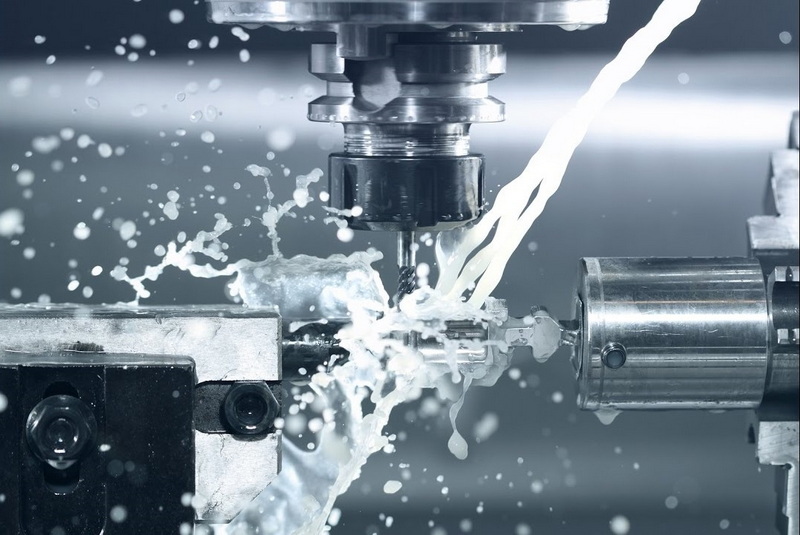
Once comfortable with basics, advancing your skills will set you apart. Advanced CNC milling techniques improve machining efficiency, precision, and capability.
5-axis machines operate along X, Y, Z axes plus two rotational axes (A and B), enabling complex parts to be machined without repositioning. This reduces setup time and improves accuracy by maintaining consistent tooling angles.
High-Speed Machining uses fast spindle speeds and higher feed rates with smaller depths of cut, enhancing material removal rates and surface finish. This method reduces cutting forces, extending tool life and minimizing heat damage.
Using different tools in a coordinated sequence within one setup maximizes productivity. Roughing tools remove bulk material quickly, followed by finishing tools for precise surface details.
Adaptive machining dynamically adjusts toolpaths based on real-time data, optimizing feed rates and cutting parameters to handle variable material conditions such as hard spots or casting irregularities.
These specialized techniques minimize tool engagement with the material by using circular or smooth continuous toolpaths, reducing tool wear and increasing feed rates for hard materials and deep slots.
MTM combines milling, turning, and drilling in one machine, streamlining production and reducing the need for multiple setups, especially useful in aerospace and medical manufacturing.
Learning how to operate a CNC milling machine requires a structured approach, starting from foundational machining principles through programming, simulation, and hands-on training. Advancing into sophisticated techniques such as 5-axis machining and adaptive toolpaths enhances precision and efficiency, critical for modern manufacturing. With continuous learning and practice, mastering CNC milling operations opens doors to a rewarding career in precision engineering.
Start with basic machining theory and manual milling before moving to CNC programming. Practice on simulation software, then gain hands-on experience with real machines under supervision.
The learning duration varies. A basic understanding may take a few months, but becoming fully proficient often requires 1–2 years of consistent practice and training.
No, many training programs welcome beginners. However, a background in mathematics, mechanics, or engineering can make the learning process smoother.
Begin with user-friendly programs like Fusion 360 or Mastercam. These platforms help you practice tool paths, simulate operations, and understand G-code behavior.
Yes, with online courses, tutorials, and simulation software, you can teach yourself the basics. However, practical experience on a machine is essential for professional proficiency.
[1](https://staubinc.com/news/advanced-precision-machining-techniques-for-high-volume-parts-part-1/)
[2](https://shamrockprecision.com/mastering-cnc-milling-basics-techniques-and-applications/)
[3](https://machiningconceptserie.com/cnc-toolpath-advanced-techniques/)
[4](https://www.bakerindustriesinc.com/blog/advanced-aerospace-cnc-machining-techniques/)
[5](https://jiga.io/articles/cnc-milling-cnc-turning/)
[6](https://xcmachining.com/advanced-milling-techniques/)
[7](https://www.lincolntech.edu/news/skilled-trades/cnc-machining-and-manufacturing/what-cnc-milling-machine-learn-fundamentals)
[8](https://gimbelautomation.com/blogs/news/mastering-automation-advanced-techniques-for-cnc-machining)
[9](https://geomiq.com/blog/cnc-milling-guide/)
[10](https://www.youtube.com/watch?v=el1hzYAs7-E)


