From idea to market-ready product, our NPI solutions make every stage easier, faster. Discover How We Help

Views: 222 Author: Tomorrow Publish Time: 2026-01-19 Origin: Site
Content Menu
● Understanding CNC Milling Machines
>> What Is a CNC Milling Machine?
>> Main Components of a CNC Milling Machine
● Types of CNC Milling Machines
>> Vertical, Horizontal, and 5-Axis Machines
>> Axis Configuration and Movement Range
● Key Technical Factors to Consider
>> Worktable Size and Load Capacity
>> Spindle Speed, Power, and Torque
>> Machine Rigidity and Structural Design
>> Accuracy, Repeatability, and Thermal Stability
>> Control System and Software Compatibility
>> Tool Capacity and Automatic Tool Changer
>> Cooling, Chip Management, and Lubrication
● Operational and Business Considerations
>> Footprint, Installation, and Workshop Environment
>> Automation, Probing, and Integration Options
>> Maintenance, Service, and Training
>> Budget and Total Cost of Ownership
● Practical Steps to Selecting the Ideal Machine
● FAQ About Choosing a CNC Milling Machine
>> 1. What is the difference between a vertical and horizontal CNC milling machine?
>> 2. How many axes do I need for my operations?
>> 3. How can I ensure long-term precision from my CNC milling machine?
>> 4. What software should I use for CNC programming?
>> 5. Is it worth buying a used CNC milling machine?
Choosing the right CNC milling machine is one of the most critical decisions for precision manufacturing, whether you are a small workshop or a large-scale industrial facility. A CNC milling machine directly affects your production speed, part quality, flexibility, and long-term profitability. With countless models and configurations on the market, it can be difficult to identify which machine really fits your products, processes, and budget. This comprehensive guide explains the key technical and business factors you must evaluate so you can invest in a machine that supports both current projects and future growth.
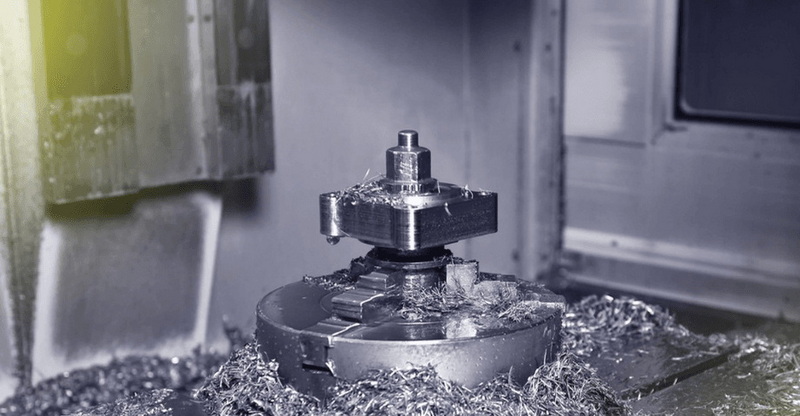
A CNC (Computer Numerical Control) milling machine is an automated cutting system that uses rotating tools to remove material from a stationary or moving workpiece according to programmed toolpaths. The controller reads a CNC program, usually written in G-code, and converts it into precise movements along the machine's axes. Because the process is automated and repeatable, CNC milling can achieve high accuracy, consistent quality, and complex geometries that are difficult or impossible with manual machining.
CNC milling machines are widely used in industries such as automotive, aerospace, medical, mold making, electronics, and general metalworking. They can machine metals, plastics, composites, and even wood, depending on spindle power, rigidity, and tooling. This broad versatility is one reason why choosing the right machine configuration is so important.
A typical CNC milling machine consists of several core assemblies that work together to cut the workpiece accurately and efficiently:
- Spindle: The rotating unit that holds the cutting tool and determines the speed and torque available for machining.
- Machine table: The surface that supports the workpiece and fixtures, moving in one or more linear axes.
- Axis drive system: Servo motors, ball screws, and linear guides that position the table and head with precision.
- Control system: The CNC controller, display, keyboard, and input/output hardware that execute programs and manage motion.
- Tool magazine and automatic tool changer (ATC): Storage and automatic exchange system for multiple cutting tools.
- Coolant and lubrication system: Pumps, nozzles, tanks, and lines that deliver coolant to the cutting zone and lubrication to mechanical components.
- Machine enclosure and guarding: Covers, doors, and safety interlocks that contain chips and coolant while protecting operators.
Understanding these components helps you compare machines beyond just price, and focus on the performance characteristics that matter for your application.
CNC milling machines are categorized mainly by spindle orientation and axis configuration:
- Vertical machining centers (VMC): The spindle is oriented vertically. These machines are versatile, relatively compact, and popular for general-purpose machining, die and mold work, and small to medium batch production.
- Horizontal machining centers (HMC): The spindle is horizontal, and workpieces are usually mounted on a rotating pallet or tombstone. HMCs provide excellent chip evacuation and are ideal for heavy cutting and multi-face machining.
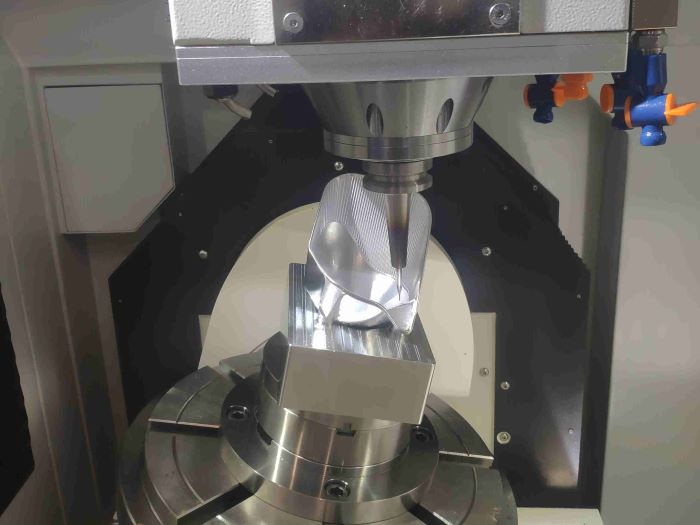
- 5-axis machining centers: The tool and/or table can tilt and rotate, allowing machining from multiple angles in a single setup. These machines are favored for complex components in aerospace, medical, and high-precision mold industries.
- Gantry or portal milling machines: A large bridge structure moves over a fixed table, suitable for large molds, dies, and structural components.
Choosing the right type depends on part geometry, production volume, and the materials you plan to machine. For example, if you mainly manufacture prismatic parts with multiple faces, an HMC or 5-axis machine can reduce setups and cycle time.
Axis configuration defines how the machine can move the tool relative to the workpiece:
- 3-axis: Movement along X, Y, and Z axes; sufficient for most simple and moderately complex parts.
- 4-axis: Adds a rotary axis (A or B), enabling profile machining of cylindrical or multi-sided parts without multiple setups.
- 5-axis: Adds two rotary axes, providing full access to complex geometries, undercuts, and freeform surfaces.
When selecting axis configuration, consider your current and future product range. If your business plans include complex impellers, turbine blades, or orthopedic implants, a 5-axis machine can offer significant competitive advantages. However, for simple plates and blocks, a high-quality 3-axis machine may be more cost-effective and easier to program.
The size of the machine table and its load capacity determine the maximum part size and fixture weight you can handle. Always consider:
- Maximum workpiece dimensions (length, width, height).
- Fixture space for vices, clamps, rotary tables, or modular fixturing systems.
- Table load capacity to safely support heavy steel or cast iron parts.
It is wise to choose a machine with some extra capacity beyond your current largest parts to allow for new projects without major upgrades.
The spindle is the heart of the CNC milling machine, and its characteristics strongly influence cutting performance:
- Spindle speed (RPM): Higher speeds are beneficial for machining aluminum, plastics, and small-diameter tools, while moderate speeds are appropriate for steels and harder materials.
- Power (kW or HP): Determines how aggressively you can cut, especially with larger tools or deeper cuts.
- Torque: Critical for low-speed, heavy-duty cutting in tough materials such as stainless steel, tool steel, and titanium.
Match spindle specifications to your most demanding materials and operations. If you produce mainly aluminum and light alloys, a high-speed spindle may be ideal. If you machine hard metals or perform deep roughing cuts, prioritize torque and rigidity over maximum RPM.
Rigidity affects accuracy, surface finish, and tool life. Key structural aspects include:
- Base and column material: Cast iron and polymer concrete structures provide good vibration damping and thermal stability.
- Guideways: Linear guideways offer high speed and smooth motion, while box ways provide extra rigidity for heavy cutting.
- Ball screws and support: High-quality, preloaded ball screws reduce backlash and improve repeatability.
A more rigid machine can handle higher cutting forces and maintain tolerances over long production runs. This is especially important for mold and die applications or when machining hard materials.
Accuracy describes how closely the machine can achieve the commanded position, while repeatability measures how consistently it can return to that same position over multiple cycles. Pay attention to:
- Positioning accuracy and repeatability values in the specifications.
- Use of linear scales or high-resolution encoders for feedback.
- Thermal compensation systems that correct for temperature-induced errors.
Good thermal management in the spindle, drive motors, and structure helps maintain accuracy during long shifts and high-duty cycles.
The CNC control system influences programming efficiency, operator learning curve, and integration with CAM software. When comparing controls:
- Check compatibility with your preferred CAM system and post-processors.
- Evaluate the user interface, conversational programming options, and simulation functions.
- Consider networking capabilities for DNC, program transfer, and integration into a digital factory or MES.
A user-friendly, well-supported controller shortens training time and reduces programming errors, especially when multiple operators share the machine.
The size and design of the tool magazine and automatic tool changer determine how many different operations you can perform without manual intervention. For flexible or high-mix production:
- Prefer a tool magazine with enough capacity to cover all tools required for your typical jobs, plus spare pockets.
- Consider tools for drilling, tapping, reaming, finishing, and special forms.
- Evaluate tool change speed and reliability, as frequent tool changes can impact cycle time.
If you run long unattended shifts or lights-out production, a large, reliable ATC is particularly valuable.
Effective coolant delivery and chip evacuation are essential for stable cutting conditions:
- Check whether the machine has flood coolant, mist coolant, or through-spindle coolant.
- Evaluate chip conveyors, augers, and filtration systems to keep the cutting area clear.
- Ensure automatic lubrication systems cover ways, ball screws, and other moving parts.
Poor chip control can lead to recutting chips, damaged surfaces, and even tool breakage. A good chip management system is especially important in high-volume production or when machining materials that produce long chips.
The physical size and installation requirements of the machine must match your workshop layout:
- Measure available floor space, door openings, and ceiling height.
- Consider space for operator access, tool storage, maintenance, and material handling.
- Check electrical requirements, air supply, and any foundation or anchoring needs.
Also assess environmental factors such as temperature control, cleanliness, and ventilation. A stable environment helps preserve machine accuracy and reliability.
Modern CNC milling machines can be enhanced with automation and smart features to increase productivity:
- Automatic pallet changers for quick setup changes and higher spindle utilization.
- On-machine probing for workpiece alignment, in-process inspection, and tool length or diameter measurement.
- Robot or gantry loading systems for unattended production.
Evaluate whether the machine supports these options either at purchase or as future upgrades. Even if you start with manual loading, having a platform that can be automated later adds long-term flexibility.
No matter how robust the machine is, it will eventually require maintenance and repair. When choosing a supplier, investigate:
- Availability of local service technicians and typical response time.
- Spare parts stock and delivery speed.
- Training programs for operators, programmers, and maintenance staff.
- Documentation quality, including manuals, maintenance schedules, and troubleshooting guides.
A machine from a reputable manufacturer with strong service infrastructure can reduce downtime and protect your investment.
While purchase price is important, long-term profitability depends on total cost of ownership:
- Initial machine cost, tooling, and fixtures.
- Software licenses, upgrades, and training.
- Maintenance, spare parts, and consumables such as coolant and filters.
- Energy consumption and operator labor costs.
Calculate cost per part and payback period based on realistic production volumes and cycle times. Sometimes a more expensive machine with higher productivity and lower downtime will prove cheaper over its lifetime.
To move from theory to a concrete purchasing decision, follow a structured approach:
1. Define your part portfolio
List the main parts you plan to produce, including material, size, tolerance, and surface finish requirements. Identify the most demanding part, as this will set the baseline for machine capability.
2. Specify performance requirements
Determine necessary spindle power, axis travels, accuracy, and tool capacity. Decide which axis configuration (3, 4, or 5) you truly need.
3. Shortlist machine models and suppliers
Compare several brands and models with similar specifications. Pay attention to structural design, control system, and available options.
4. Request sample machining or factory visits
Ask potential suppliers to machine one of your parts as a test. Evaluate cycle time, accuracy, and surface finish, and visit their showroom or existing user sites if possible.
5. Analyze support and service offerings
Confirm warranty terms, preventive maintenance plans, and training services. Discuss spare parts pricing and availability.
6. Review financial impact
Compare not only price quotes, but also productivity, expected lifetime, and running costs. Select the machine that delivers the best value and aligns with your business strategy.
When choosing a CNC milling machine, many buyers focus on impressive specifications or marketing terms and overlook critical practical aspects. Avoid these common mistakes:
- Buying more machine than you actually need, leading to higher costs without proportional benefits.
- Ignoring software and control compatibility, which can lead to programming difficulties and longer setup times.
- Underestimating the importance of rigidity and build quality, especially when machining hard materials or demanding tolerances.
- Neglecting operator training and maintenance planning, which can cause low productivity and unexpected downtime.
- Failing to plan for future expansion, such as additional axes, automation, or more advanced control features.
By taking a balanced view of performance, reliability, support, and cost, you can make a well-informed decision that supports long-term growth.
Choosing the right CNC milling machine is a strategic decision that influences product quality, delivery times, and profitability for years to come. The ideal machine is not simply the most powerful or the most expensive model, but the one that matches your parts, materials, tolerances, and production volumes while fitting your workshop and budget. By carefully evaluating machine type, axis configuration, spindle performance, rigidity, control system, automation options, and supplier support, you can identify equipment that delivers stable accuracy and high productivity. A methodical selection process ensures your investment pays off through reliable operation, flexible capabilities, and the capacity to adapt as your business and customer demands evolve.
Contact us to get more information!
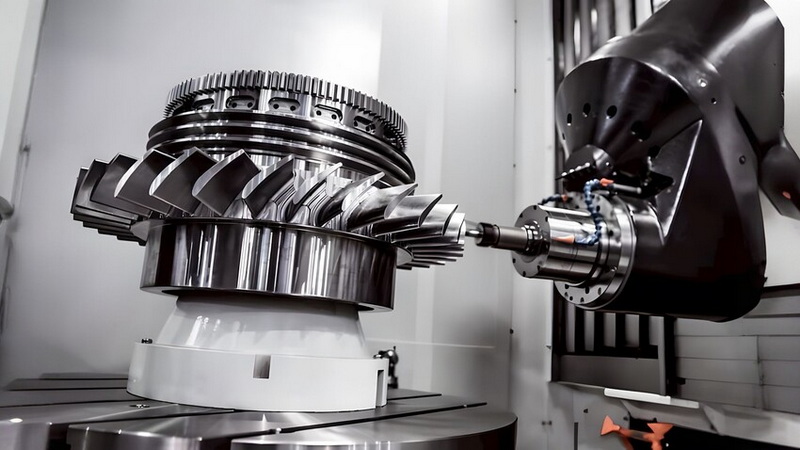
Vertical CNC milling machines have a vertically oriented spindle and are typically easier to program, set up, and maintain, making them popular in job shops and general machining environments. Horizontal CNC milling machines use a horizontal spindle with workpieces mounted on pallets or tombstones, offering better chip evacuation and the ability to machine multiple faces in fewer setups, which is especially beneficial for high-volume production and heavier cuts.
A 3-axis CNC milling machine is usually sufficient for simple prismatic parts, pocketing, drilling, and basic contouring. If your parts require machining on several sides or have cylindrical features, a 4-axis machine with a rotary table can greatly reduce setups, while a full 5-axis machine is best for complex freeform surfaces and tight-tolerance contours in industries like aerospace, medical, and high-end mold making.
To maintain long-term precision, follow a preventive maintenance schedule that includes regular lubrication, inspection of ball screws and guideways, and calibration of the machine's axes. Keeping the workshop environment stable in terms of temperature and cleanliness, combined with proper coolant management and prompt replacement of worn components, helps preserve accuracy and repeatability over the machine's service life.
Most shops use professional CAM software to generate toolpaths from 3D models and then post-process them for a specific CNC control. Choosing software that is compatible with your machine's controller, supports your typical machining strategies, and integrates well with your CAD tools will streamline programming, reduce errors, and shorten setup and cycle times.
Buying a used CNC milling machine can be a cost-effective option if the machine has been properly maintained and comes from a reliable source. Before purchasing, thoroughly inspect the spindle, ball screws, guideways, and electrical cabinet, check service records, and, if possible, run a test part to verify accuracy and overall condition.
1. https://taigtools.com/blog/choose-cnc-milling-machine-small-workshop/
2. https://hwacheonasia.com/7-steps-choosing-right-cnc-machine-tool/
3. https://www.cnccookbook.com/understand-cnc-machine-types-a-comprehensive-guide/
4. https://www.mekanika.io/en/blog/cnc-milling/how-to-choose-the-best-cnc-machine-for-beginner
5. https://www.onefinitycnc.com/post/cnc-machines-buyer-guide


