From idea to market-ready product, our NPI solutions make every stage easier, faster. Discover How We Help

Views: 222 Author: Tomorrow Publish Time: 2025-11-17 Origin: Site
Content Menu
● Understanding the cost structure
● Recommended pricing framework
>> (1) Calculate total direct costs per job
>> (2) Apply a target profit margin or markup
>> (3) Add value-based elements
>> - Step 1: Gather input data
>> - Step 2: Estimate material usage
>> - Step 3: Determine machine time
>> - Step 5: Add overhead and profit
>> - Step 6: Present a transparent quote
● Pricing strategies by service type
● Quality and reliability as price multipliers
● Communication and documentation
● Common pricing pitfalls to avoid
● Practical examples and scenarios
● Quality assurance and risk management
● Scaling and future-proofing pricing
● FAQ
>> (1) What is the most common pricing model for 3D printing services?
>> (2) How should I estimate post-processing time?
>> (3) Should I charge for setup time?
>> (4) How can I handle material price fluctuations?
>> (5) How do I present a quote to improve chances of winning the job?
3D printing has transformed many industries by enabling rapid prototyping, custom parts, and on-demand production. For service providers, setting a fair and profitable pricing model is essential to sustain operations, cover material costs, machine wear, labor, and overhead, while remaining competitive. This article outlines practical strategies for pricing 3D printing services, covering cost components, pricing models, practical calculations, and tips to improve profitability. It focuses on clarity, consistency, and transparency to help vendors communicate value to clients and win repeat business.
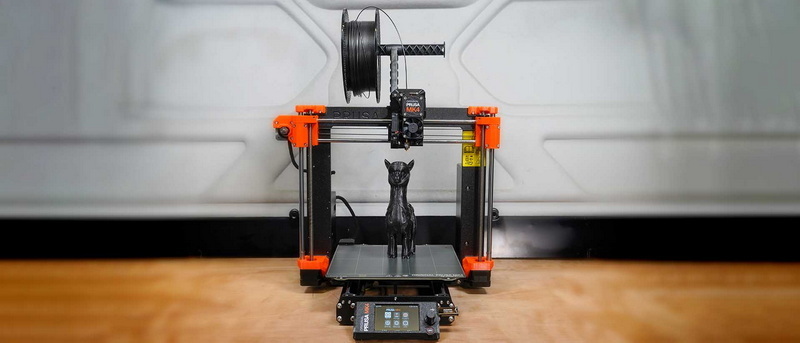
Pricing starts with a clear view of all costs involved in delivering a 3D printing job. Key cost components typically include:
- Material costs: The filament or resin used to print the part, including waste and support structures. Track cost per unit length or per volume and account for color or type variations.
- Machine depreciation and usage: The upfront cost of the 3D printer, its expected lifespan, maintenance, and calibration. Consider a per-hour or per-cubic-centimeter allocation to reflect wear and tear.
- Labor: Time spent on setup, slicing, model checks, parameter tuning, post-processing, cleaning, curing, and finishing. Labor costs should reflect both direct and indirect time.
- Post-processing: Finishing steps such as sanding, polishing, painting, chemical smoothing, annealing, or assembly, which add value and time.
- Power and consumables: Electricity usage, gloves, solvents, tools, and maintenance supplies required for each job.
- Overhead: Rent, software licenses, workspace utilities, tools, and administrative costs that support the service.
- Tooling and fixtures: Any custom jigs, supports, or fixtures created for a project to improve throughput or quality.
- Waste and rejection: Estimated waste during printing and post-processing rework, with a plan to minimize it over time.
Different pricing models suit different business goals and client expectations. The most common approaches include:
- Cost-plus pricing: Add a fixed markup to the total calculated cost. This straightforward method aligns price with expenses but requires careful tracking of all costs to avoid under- or over-charging.
- Time-based pricing: Charge by the hour for print time plus fixed fees for setup and post-processing. This model emphasizes labor and machine usage and is popular for custom or low-volume work.
- Material-based pricing: Charge for material used, plus a small machining or handling fee. This is transparent for clients emphasizing material consumption.
- Tiered pricing: Offer different service levels (e.g., quick-turn, standard, high-fidelity) with varying SLA, finishes, and speed. This can increase average order value by guiding customers to higher-margin options.
- Value-based pricing: Price according to the client's perceived value, part criticality, or time-to-market benefits. This requires a strong understanding of client needs and market positioning.
- Volume-based pricing: Reduce unit costs for larger orders or repeated orders to incentivize bulk work and retain clients.
A practical framework combines cost-plus with value insights and clear ROI for clients:
- Material cost: weigh or measure material used plus waste allowance.
- Print time: estimate machine hours based on job parameters.
- Labor: estimate setup, slicing, inspection, post-processing, and finishing time.
- Post-processing: quantify all finishing steps and materials.
- Overhead and utilities: allocate a fair share per job.
- Determine a baseline margin suitable for the market, then adjust for complexity, lead time, or customization level.
- Include design improvements, tolerances, surface finishes, or assembly services as value-added components that justify pricing.
- Build in a contingency for material fluctuations, machine downtime, or unexpected rework to maintain profitability.
- Part geometry, volume, layer height, infill pattern, supports, and material type.
- Desired finish level and post-processing requirements.
- Lead time and delivery expectations.
- Use slicer estimates or post-process weights to determine the exact material quantity.
- Include a small waste factor (e.g., 5–15%) based on printing challenges and supplier variability.
- Start/stop times, warm-up, and to-be-cleaned time should be included. Add buffers for potential retries.
- Record the time spent on each phase. Consider complexity multipliers for intricate geometries or calibration needs.
- Allocate overhead as a per-hour or per-part cost. Apply a target profit margin to the subtotal.
- Break down the quote into sections: materials, machine time, labor, post-processing, overhead, contingency, and total price.
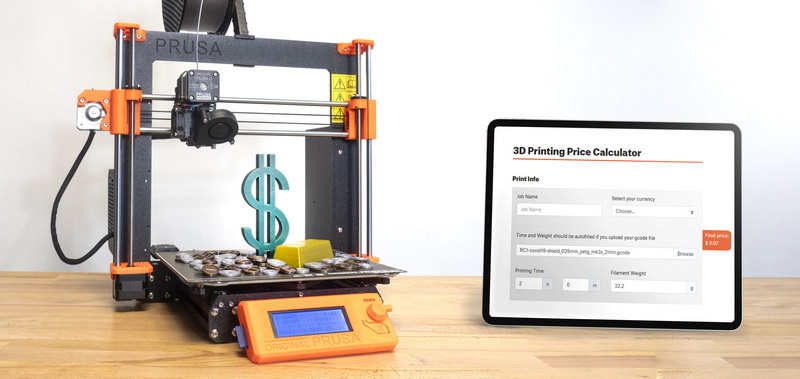
- Prototyping: Emphasize speed and iterative design. Charge for expedited service, often with higher hourly rates.
- Small-batch production: Use tiered pricing with volume discounts to make repeat orders attractive.
- Custom parts: Focus on value and fit-for-purpose; justify pricing with tolerances, surface finish, and material properties.
- Complex assemblies: Include post-processing, testing, and validation as separate line items to reflect added value.
- Tolerances and precision: Tighter tolerances justify higher pricing due to increased quality checks and potential bi-directional finishing.
- Material properties: Specialized materials (high-temperature, engineering-grade polymers, or composites) command premium pricing due to cost and processing difficulties.
- Finishes and post-process work: Sanding, painting, electroplating, or sealing add tangible value and cost.
- Retainability discounts: Offer lower unit prices for repeat customers or long-term contracts.
- Bundle discounts: Provide lower prices when printing multiple parts or entire assemblies together.
- Lead-time flexibility: Provide standard pricing for typical lead times and premium pricing for rush orders.
- Clear quotes: Provide itemized quotes with justifications for each line item. Avoid vague terms and confirm assumptions (material type, color, finish, tolerances).
- Change orders: Establish a process for changes that impact price; include a mechanism to re-quote quickly.
- Documentation: Keep a simple price book with current material costs, machine-hour rates, and typical processing times to ensure consistent quotes.
- Contracts: Use service-level agreements (SLAs) that cover delivery windows, quality standards, and dispute resolution.
- Underestimating post-processing time: Finishing often dominates total labor time and cost.
- Ignoring material waste: Failing to account for scrap or failed prints can erode margins quickly.
- Inconsistent quoting: Vague quotes lead to scope creep and margin erosion.
- Overreliance on low hourly rates: Competing on price alone can erode profitability; emphasize value and reliability instead.
- Neglecting maintenance costs: Printer downtime can dramatically impact capacity; factor maintenance into pricing.
- Track actual costs: Use a project management tool to record time, material usage, and waste for each job.
- Benchmark against competitors: Periodically survey local peers to ensure pricing is competitive yet sustainable.
- Use standard productization: Create a catalog of standard part sizes, finishes, and materials with fixed prices to expedite quotes and reduce errors.
- Offer value-added services: Provide design-for-print reviews, tolerancing guidance, or assemblies as paid services to boost profitability.
- Lead times: Communicate constraints and provide options (standard vs. expedited) with clear pricing implications.
- Material substitutes: Offer alternatives with transparent price comparisons and performance trade-offs.
- Perceived value: Emphasize durability, precision, and time-to-market benefits to justify pricing.
- Example A: Simple prototype part in PLA with standard finish
- Material cost: $2.50
- Print time: 2 hours at $15/hour
- Labor: 0.75 hours at $20/hour
- Post-processing: 0.5 hours at $18/hour
- Overhead allocation: $5
- Contingency: 5%
- Total: $2.50 + $30 + $15 + $9 + $5 = $61.50 plus contingency 5% of subtotal ($61.50 × 0.05 = $3.08) => $64.58
- Example B: Small-batch production of 50 units, with standard part
- Material: $1.20 per part × 50 = $60
- Machine time: 0.8 hours per part × 50 × $12/hour = $480
- Labor: 0.4 hours per part × 50 × $22/hour = $440
- Post-processing: 0.3 hours per part × 50 × $18/hour = $270
- Overhead allocation per part: $4 × 50 = $200
- Contingency: 5% of direct costs
- Total before contingency: $60 + $480 + $440 + $270 + $200 = $1,450
- Contingency: 5% of $1,450 = $72.50
- Total price: $1,522.50
- Example C: High-fidelity part with resin printing and post-curing
- Material: $6.50 per part
- Print time: 3 hours at $25/hour
- Labor: 1.0 hour at $28/hour
- Post-processing: 1.0 hour at $22/hour
- Finishing: painting and sealing add $5 per part
- Overhead: $6 per part
- Contingency: 10%
- Subtotal: 6.50 + 75 + 28 + 22 + 5 + 6 = $142.50
- Contingency: 10% of $142.50 = $14.25
- Total: $156.75
- Documentation of inspection criteria: Define dimensional tolerances, surface finish targets, and functional tests.
- Retry and defect handling: Establish a policy for failed prints, including reprint at no charge within a defined warranty window or discounted rework.
- Material traceability: Maintain batch records for materials used, enabling quick traceability in case of material-related issues.
- Software-based price libraries: Maintain live prices tied to material suppliers and machine-hours so quotes stay current.
- Automation: Use scripting in slicers or pricing software to generate quick quotes from standard templates.
- Strategic partnerships: Align with suppliers for favorable material pricing, allowing you to pass savings to clients while preserving margins.
Pricing for 3D printing services blends precise cost accounting, clarity of value, and thoughtful customer communication. By breaking costs into material, machine time, labor, post-processing, and overhead, and by applying appropriate pricing models—whether cost-plus, time-based, or tiered—service providers can maintain healthy margins while delivering reliable, high-quality parts. Transparent quotes, standardized pricing, and value-focused offerings help win repeat business and establish trust with clients, ensuring sustainable growth in a competitive market.
- The most common approach combines material costs, machine time, and labor with a markup or hourly rate, often using a tiered or value-based structure for different service levels.
- Break down each finishing step (sanding, smoothing, painting, sealing) and estimate the duration, then multiply by a productivity factor to account for fatigue and manual work variability.
- Yes. Include setup and calibration as a fixed or hourly fee because it adds value and ensures parts begin printing correctly.
- Build a contingency into quotes, regularly update your price book, and consider dynamic pricing for materials with high volatility.
- Provide a transparent, itemized quote with assumptions, lead times, and optional add-ons. Show ROI and value delivered to justify pricing.


