From idea to market-ready product, our NPI solutions make every stage easier, faster. Discover How We Help

Views: 222 Author: Tomorrow Publish Time: 2025-12-09 Origin: Site


Content Menu
● Understanding the Components of CNC Machining Cost
● Step 1: Calculating Material Cost
>> Steps to Estimate Material Cost
>> Formula:
● Step 2: Determining Machine Time and Cost per Hour
>> Formula:
● Step 3: Setup and Labor Cost
>> Formula:
>> Formula:
● Step 5: Tooling and Fixture Cost
>> Formula:
● Step 6: Overhead and Maintenance Costs
● Step 7: Adding Profit Margin
>> Given Data:
● Step 8: Quality Control and Inspection Costs
>> Common Quality Control Methods:
● Step 9: Post-Processing and Finishing
>> Common Finishes and Their Impact:
● Cost-Reduction Strategies in CNC Machining
● Software-Based Cost Estimation
● Summary of Key Cost Formulas
● FAQ
>> 1. What affects CNC machining cost the most?
>> 2. How do I estimate machining time accurately?
>> 3. What machine rates should I expect?
>> 4. How can I lower CNC machining cost without losing quality?
>> 5. Are online CNC quotes reliable?
CNC (Computer Numerical Control) machining has revolutionized modern manufacturing by enabling the production of complex, high-precision parts with consistent quality. From aerospace components to medical implants, CNC machining offers efficiency and excellent repeatability. However, one recurring challenge faced by engineers, buyers, and manufacturers is accurately calculating the machining cost. Understanding how these costs are calculated ensures fair pricing, increases profitability, and helps identify opportunities for cost reduction.
This comprehensive guide explores every factor influencing CNC machining cost and walks through a detailed calculation process using examples, cost formulas, and optimization strategies.
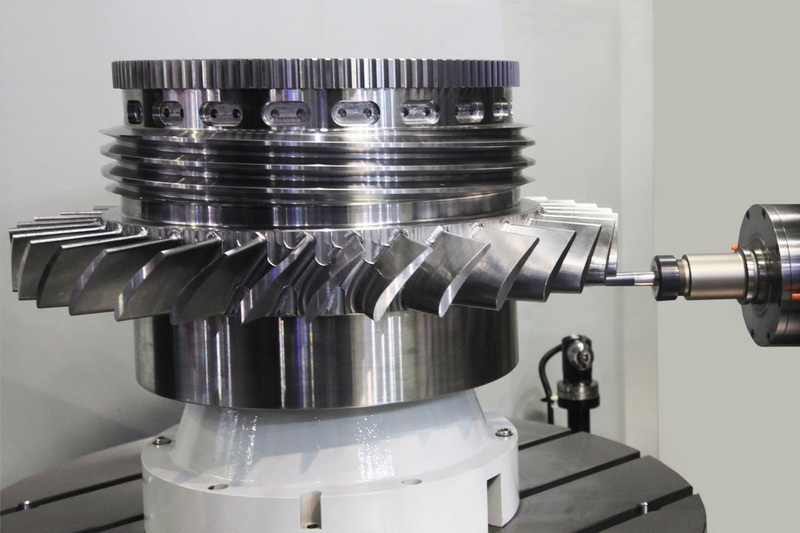
CNC machining cost is not based on a single element but rather the sum of multiple cost factors. Each component contributes differently depending on material, part complexity, tolerances, and production volume. A basic understanding of these components forms the foundation for accurate estimation.
Key contributors include:
- Material expenses: The raw stock's purchase cost and waste percentage.
- Machine operational time: The core factor that depends on machining cycles, speeds, and feeds.
- Setup and programming efforts: The time and cost for preparing machines or writing G-code.
- Labor costs: Operator or engineer involvement during production.
- Tooling and maintenance: Costs from tool wear, fixture use, and replacement.
- Overhead and profit margin: The portion that ensures sustainable operations.
Each of these factors can fluctuate depending on production scale, machining technology, and regional labor costs.
Material cost generally forms the foundation of your total machining estimate. The chosen material affects cutting parameters, tool wear, and part weight—all of which impact final cost.
1. Determine material type and grade. Aluminum alloys, stainless steels, titanium, and engineering plastics all have different price ranges and machinability ratings.
2. Calculate raw material volume. Multiply length, width, and thickness for rectangular stock or use volume formulas for cylindrical stock.
3. Determine raw stock price per unit weight. Check supplier quotes or current market prices for accurate estimation.
4. Add a scrap allowance. Machining removes material to achieve final geometry, leading to 10–30% scrap on average.
Material Cost = (Volume * Density * Unit Price) + Waste Allowance
For example, if a 6061 aluminum part uses a 0.002 m³ billet, aluminum's density is 2.7 g/cm³, and raw price $5/kg, the base cost before machining waste is about $27. Adding 15% waste brings the total to approximately $31.
Machine time—often called cycle time—is one of the most influential cost factors. It includes all time spent cutting, drilling, or finishing the part. A shorter cycle time directly reduces overall cost.
The best way to calculate cycle time is through CNC simulation software or CAM analysis, which uses actual toolpaths and feeds.
If unavailable, approximate the time using machining parameters:
Cycle Time = Cutting Length / Feed Rate + Setup and Loading Time
Each CNC type (milling, turning, EDM, or 5-axis) has different hourly rates, generally including energy consumption, depreciation, and maintenance.
Machine Cost = Machine Hourly Rate * Cycle Time
Typical machine hourly rates:
- 3-axis milling: $40–$80/h
- 5-axis milling: $80–$150/h
- Turning center: $50–$100/h
- EDM: $100–$200/h
Automation reduces supervision requirements but often comes with higher investment cost, affecting the rate.
Even though CNC machining is largely automated, setup and operator supervision remain crucial for precision. Setup involves tasks like tool calibration, material alignment, checking offsets, and setting fixtures or jigs.
- Machine preparation and calibration
- G-code verification and test runs
- Fixture and tool installation
- First-article inspection
Labor Cost = Setup Time (hours) * Hourly Wage
For batch production, setup cost is distributed across all parts:
Setup Cost per Part = (Total Setup Cost) / (Batch Quantity)
This explains why larger batch sizes significantly lower per-unit cost—the setup time remains constant, but cost distribution broadens.
Programming refers to creating the CNC toolpaths and inputs based on CAD models.
Programmers use CAM software to define cutting strategies, speeds, and tool sequences. This is a one-time cost per part design.
- Simple geometry: 1–2 hours of programming
- Complex multi-axis or contour machining: 4–10 hours or more
Programming Cost per Part = (Total Programming Hours * Hourly Rate) / (Batch Quantity)
CAM programming rates usually range from \$40–\$100/h depending on expertise and complexity. The more parts produced from one program, the cheaper the cost per piece.
Cutting tools wear down due to heat and friction. Material type and cutting parameters greatly influence their lifespan. Tooling costs also include fixtures and jigs required to hold parts during machining.
- Standard cutting tools: drills, end mills, inserts, face mills
- Custom fixtures or clamps: built for irregular shapes
- Tool maintenance: regrinding or replacement
- Coolant and lubrication: necessary for metal cutting longevity
Tooling Cost per Part = ( Total Tooling Expense ) / ( Number of Parts )
Hard materials like titanium and Inconel consume tools faster, raising cost, while softer metals like aluminum extend tool life.
Overhead represents indirect expenses required to run the workshop or production floor, including rent, energy, insurance, utilities, and management. Maintenance costs cover regular calibration and machine repairs.
A common method is to apply an overhead percentage to direct costs (material, labor, tooling). Maintenance should also include long-term expenditures like spindle replacement or software licensing.
Overhead = (Material + Labor + Machine + Tooling) * Overhead Rate
Typical overhead rates range between 15% and 30% depending on business structure.
Profit margin ensures sustainability after covering all production expenses. It compensates for unforeseen risks like tool breakage, design changes, or delivery delays.
Total Cost per Part = Direct Costs + Overhead + (Total Cost * Profit Margin)
Average machining profit margins lie between 10–25%. Precision machining shops or prototypes often demand higher margins because of complexity and uncertainty.
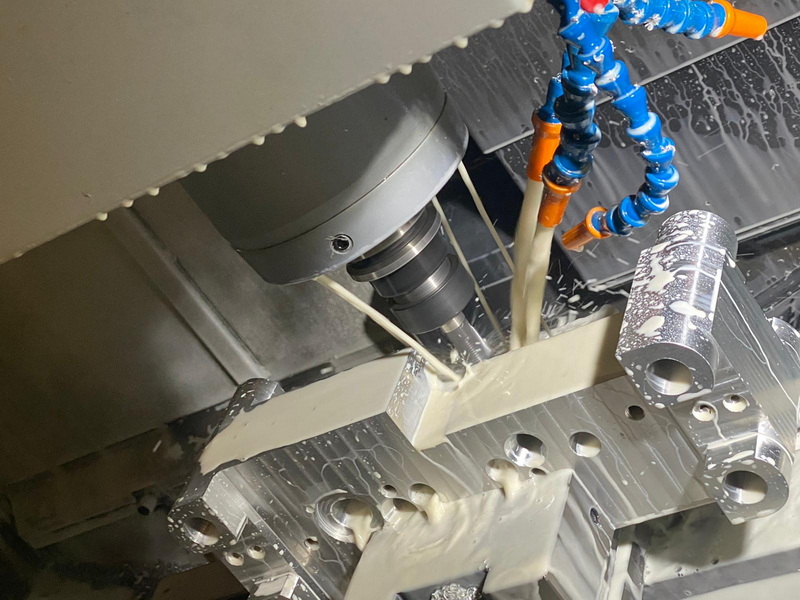
Consider manufacturing a precision aluminum bracket using a 3-axis milling machine.
- Material: Aluminum 6061, blank price = $10
- Machine rate: $60/hour
- Machining time: 45 minutes (0.75 hours)
- Setup: 60 minutes at $25/hour
- Batch size: 30 parts
- Tooling: total $150, shared across 30 parts
- Overhead rate: 20%
- Profit margin: 15%
1. Material cost per part = $10
2. Machine cost per part = $60 × 0.75 = $45
3. Setup cost per part = (1 × 25) / 30 ≈ $0.83
4. Tooling cost per part = 150 / 30 = $5
5. Direct total = 10 + 45 + 0.83 + 5 = $60.83
6. Overhead = 60.83 × 0.20 = $12.17
7. Profit = (60.83 + 12.17) × 0.15 = $10.95
Final total cost per part = $83.95
This practical example highlights how batch size, setup distribution, and overhead substantially affect pricing.
Quality inspection ensures that machined parts meet dimensional tolerances and surface finish requirements. Inspection time can vary depending on complexity.
- Manual measurement using calipers, micrometers, gauges
- Coordinate Measuring Machine (CMM) inspection for tight tolerances
- Surface roughness measurement and visual inspection
For precision industries (medical, aerospace), inspection may add 5–10% to total cost due to specialized equipment or certification documentation.
Machined parts often require secondary operations such as anodizing, polishing, painting, or heat treatment. These processes enhance durability and appearance but introduce extra costs.
- Anodizing: $5–$20 per part depending on size and color
- Powder coating: Adds around $10–$25 per piece
- Bead blasting: $2–$5 per piece depending on surface area
- Heat treatment: Increases hardness but adds time and machine hours
Including post-processing in your cost estimate ensures accurate pricing for customers expecting finished parts rather than raw machined components.
Reducing machining costs without compromising quality is a key manufacturing goal. Several strategies help achieve this goal efficiently:
- Design for Manufacturability (DFM): Simplify geometries and avoid deep cavities or unnecessary undercuts.
- Choose optimal materials: Lightweight and machinable materials reduce cycle time.
- Batch production: Spread setup and programming cost across many parts.
- Improve tool life: Use appropriate cutting speeds, feeds, and coolants.
- Use modular fixtures: Save setup time for recurring jobs.
- Leverage simulation software: Predict tool wear and optimize toolpaths.
A balanced combination of design and process optimizations leads to measurable cost savings and shorter production cycles.
Modern manufacturing benefits from digital cost estimation systems that link CAD/CAM data with real-time factory analytics. These tools use algorithms to simulate toolpath time and compute cost automatically.
Popular tools include:
- aPriori and DFMPro for design-stage estimation.
- MFGQuote for fast subcontractor quotes.
- MachiningCloud for toolpath optimization.
- Integrated CAM simulation (Mastercam, Fusion 360, SolidCAM).
Automating the estimation phase shortens quote turnaround time and minimizes human error in complex cost analyses.
1. Material Cost:
Cm = Volume * Density * Price per kg) +Waste
2. Machine Cost:
Cmach = Machine Hour Rate * Cycle Time
3. Labor Cost:
Cl = Hourly Rate * Setup Time
4. Tooling Cost:
Ct = (Total * Tooling * Cost)/(Batch * Quantity)
5. Total Cost per Part:
Accurately calculating CNC machining cost requires a systematic approach that considers all influencing factors — from raw material to final finishing. A well-defined costing model gives both manufacturers and clients transparent insights into production efficiency and profitability. By combining technical knowledge, data analysis, and modern estimation software, businesses can quickly generate accurate quotes while controlling manufacturing costs. Ultimately, understanding these parameters not only improves pricing accuracy but also encourages smarter design and sustainable production practices in the competitive machining industry.
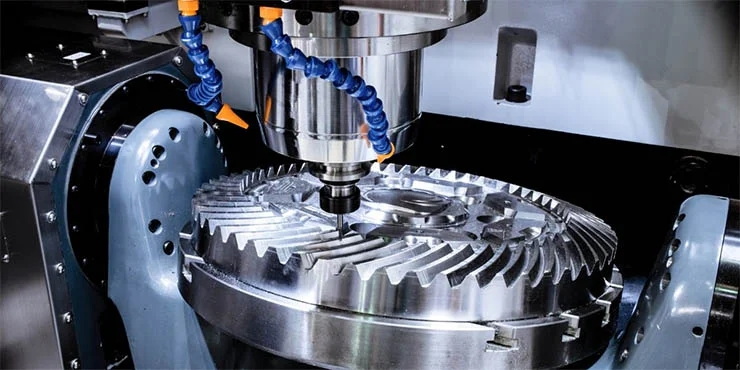
The biggest factors are material type, cycle time, and part complexity. Tight tolerances, small batches, and difficult-to-machine materials significantly raise costs.
For the best accuracy, use CAM software or digital simulations that calculate true cutting paths, speeds, and feeds instead of rough manual averages.
Typical hourly rates range from \$40/h for simple 3-axis mills up to over \$200/h for high-end 5-axis or EDM machines, depending on precision and location.
Reduce unnecessary tolerances, choose cost-effective materials, design for manufacturability, and order larger quantities to distribute setup costs.
Yes, modern online quoting systems use real machining data and validated cost models. While good for estimation, confirm complex jobs manually for precision and tolerance details.


