From idea to market-ready product, our NPI solutions make every stage easier, faster. Discover How We Help

Views: 222 Author: Tomorrow Publish Time: 2025-11-16 Origin: Site


Content Menu
● Choosing cutting speed and chip load
● Common guidelines (practical ranges)
● Step-by-step method to calculate feed rate
>> 1. Determine material and tool data
>> 3. Compute feed per tooth fz
>> 5. Adjust for engagement and cutting strategy
>> Example 1: Aluminum pocket milling with a 6 mm end mill
>> Example 2: Steel face milling with a 12 mm end mill
● Estimating feed rate without direct data
● In-process adjustments and optimization
● FAQ
>> 1. How do I determine the appropriate chip load fz for a new tool?
>> 2. Can I increase feed rate by increasing spindle speed instead of adjusting fz?
>> 3. What impact does engagement have on feed rate planning?
>> 4. How should I adjust feed rate for finishing passes?
>> 5. What practical steps can improve milling efficiency without sacrificing quality?
In CNC milling, feed rate represents how fast the cutter advances through material. It directly affects surface quality, tool wear, cycle time, and overall machining efficiency. Calculating the correct feed rate is essential to achieve precise dimensions, good finishes, and tool longevity. This article explains the fundamental concepts, steps, and practical approaches to determine feed rate for CNC milling across common scenarios.
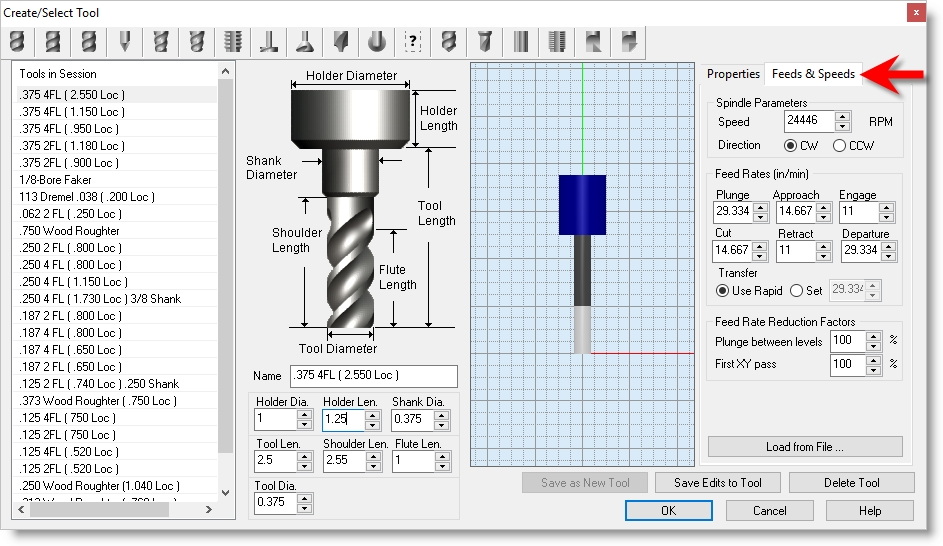
Feed rate is the distance the cutting tool travels per revolution of the spindle multiplied by the spindle speed, often expressed in units of inches per minute (IPM) or millimeters per minute (mm/min). In milling, several factors influence the effective feed rate, including tool diameter, engagement, cutter type, material properties, cutting speed, and machine dynamics.
- Cutting speed (V): The peripheral speed of the tool measured in surface meters per minute (m/min) or surface feet per minute (SFM). V depends on tool material, coating, and chip load requirements.
- Chip load (fz): The thickness of material removed by each flute per tooth per revolution, expressed in mm/tooth or inch/tooth. Proper chip load minimizes tool deflection and heat buildup while optimizing removal rate.
- Spindle speed (N): Revolutions per minute (RPM) of the CNC spindle.
- Number of teeth (z): The flute count of the cutting tool.
- Feed per tooth (fz): The chip load per tooth; for each revolution, the tool advances by fz × z.
- Cutting speed relation: V = π D N, where D is tool diameter in the same length units as V.
- Feed rate relation: F (mm/min) = fz × z × N
- Conversion between units: If V is in m/min and D in mm, ensure consistent units when calculating N: N = (1000 × V) / (π × D)
- Material family: Different workpiece materials require distinct cutting speeds. Aluminum tolerates higher speeds, while stainless steel or hardened alloys require lower speeds.
- Tool material and coating: Carbide with TiN/TiAlN coatings can handle higher speeds than high-speed steel (HSS).
- Tool diameter and flute count: Larger tools typically use lower speeds to prevent excessive vibration and heat buildup; more flutes allow higher feed per revolution for the same chip load.
- Aluminum: high-speed cutting, V ranges from 150 to 300 m/min depending on tool and rigidity; typical fz ranges from 0.02 to 0.08 mm/tooth.
- Steel (mild): V around 40 to 120 m/min; fz around 0.05 to 0.15 mm/tooth, depending on tool and rigidity.
- Stainless steel: V around 20 to 60 m/min; fz around 0.04 to 0.12 mm/tooth.
- Hard alloys: lower V and conservative fz to protect tool life.
- Material: identify workpiece material.
- Tool: note diameter D, number of flutes z, and recommended chip load fz based on tool manufacturer data.
- Use manufacturer curves or machining guidelines for the chosen material, tool, and operation. If not available, start with conservative N and adjust.
- From manufacturer guidance, select fz that suits the operation, tool, and material.
- Use F = fz × z × N.
- Convert units as needed to obtain mm/min or in/min.
- In roughing passes, deeper engagement reduces effective chip load and requires lower fz or modified F.
- For high radial engagement, reduce fz to prevent excessive heat and tool wear.
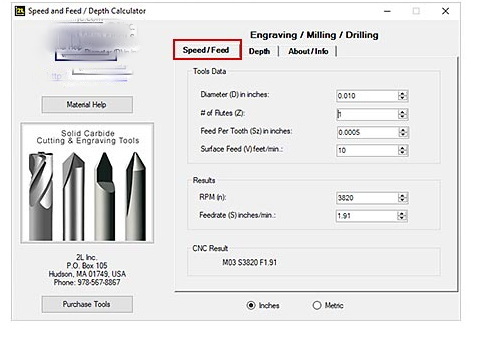
- Depth of cut (DOC) and width of cut (WOC): Higher DOC/WOC increases cutter load; reduce fz or N accordingly.
- Stepovers: Larger stepovers require lower fz or slower feed to avoid chatter.
- Tool deflection and rigidity: In long or cantilever setups, reduce feed to maintain accuracy.
- Coolant and lubrication: Proper cooling can allow higher speeds, but poor cooling increases thermal load and can shorten tool life.
- Machine limitations: Servo capacity, acceleration, and jerk limits affect achievable feed rates and should be considered in program planning.
- Tool: D = 6 mm, z = 4, fz = 0.04 mm/tooth
- Desired spindle speed: N = 12000 RPM (based on tool manufacturer)
- Feed rate: F = fz × z × N = 0.04 × 4 × 12000 = 1920 mm/min
- Interpret result: F = 1.92 m/min. If the machine and cut allow, consider increasing N or fz slightly, ensuring not to exceed tool and machine limits.
- Tool: D = 12 mm, z = 4, fz = 0.08 mm/tooth
- Spindle speed: N = 3000 RPM
- Feed rate: F = 0.08 × 4 × 3000 = 960 mm/min
- Considerations: Steels require lower cutting speeds; if chatter or excessive tool wear occurs, reduce fz or N.
- If fz is unknown, begin with a conservative estimate and iteratively refine:
- Start with fz ≈ 0.05 mm/tooth for rough aluminum operations with a 6–8 mm tool.
- For steels, start around fz ≈ 0.05–0.10 mm/tooth with moderate RPM.
- Monitor tool wear, surface finish, and vibration, and adjust accordingly.
- Surface finish constraints: To improve finish, reduce fz, decrease DOC, or increase cutting speed if the tool and machine permit.
- Roughing vs finishing: Roughing often uses higher material removal rates; finishing uses smaller fz and lighter passes for better accuracy and surface quality.
- Adaptive feed control: Many modern CNC controllers support adaptive feed or high-speed machining strategies that automatically adjust feed with real-time sensor feedback.
- Using too high a feed rate: This can trigger chatter, poor surface finish, and tool wear.
- Ignoring machine rigidity: A flexible setup causes deflection and dimensional inaccuracies.
- Overlooking coolant/ lubrication: Insufficient cooling raises temperatures, accelerating tool wear and workpiece distortion.
- Neglecting tool wear: Worn tools require lower cutting speeds and reduced feed rates to prevent poor performance and breakage.
- Use calibrated indicators to verify dimensions after milling.
- Track tool wear and replace or re-sharpen tools before significant quality degradation.
- Maintain consistent fixturing and clamping to reduce vibration and improve repeatability.
- Document recommended parameters for repeat operations to standardize processes and reduce setup time.
- Always follow machine safety protocols, secure workpieces properly, and wear appropriate protective equipment.
- Ensure guarding and automatic shutoffs are functional, especially during tool changes or maintenance.
Calculating feed rate for CNC milling hinges on understanding the relationship between cutting speed, chip load, tool geometry, and machine capabilities. By selecting appropriate cutting speed and chip load based on material and tool data, and then applying the fundamental formula F = fz × z × N, a precise and efficient feed rate emerges. Practical adjustments for engagement, rigidity, cooling, and strategy (roughing vs finishing) ensure balanced performance, good surface quality, and extended tool life. Regular monitoring, documentation of successful parameter sets, and thoughtful optimization are essential for consistent outcomes.
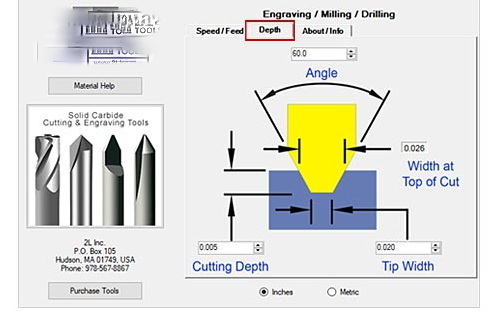
- Refer to the tool manufacturer's data for the material being machined, tool diameter, and flute count. Start with the recommended range and adjust based on observed results like surface finish and tool wear.
- Yes, within the tool's and machine's limits. However, higher speeds without adequate rigidity or cooling can lead to chatter or overheating. Always verify tool and machine capabilities and perform incremental testing.
- High engagement (large DOC/WOC) increases cutting forces. In such cases, reduce fz or N to maintain tool life and avoid deflection, then gradually increase as control allows.
- Finishing passes typically use smaller fz and sometimes slower N to achieve better surface quality and dimensional accuracy. Keep DOC shallow and focus on consistent cutting conditions.
- Use rigid tooling and fixturing, verify tool wear regularly, employ appropriate coolant, adopt adaptive parameters for varying engagement, and document successful parameter sets for repeat runs.


