From idea to market-ready product, our NPI solutions make every stage easier, faster. Discover How We Help

Views: 222 Author: Tomorrow Publish Time: 2026-01-12 Origin: Site


Content Menu
● What “CNC Milled Putter” Really Means
● Cost Benchmarks for a Single Milled Putter
● CNC Shop Hourly Rates in 2025–2026
● How Long Does It Take to Mill a Putter?
● Estimating CNC Milling Cost for 50 Putters
● Key Cost Components You Must Consider
● Material and Finishing Costs
● Economies of Scale from 1 to 50 Putters
● Practical Budget Ranges for 50 CNC Milled Putters
● How to Reduce CNC Milling Cost for 50 Putters
● FAQ About CNC Milling Costs for 50 Putters
>> 1. How much does one CNC milled putter head typically cost?
>> 2. What hourly CNC rate should I expect for putter milling?
>> 3. How many hours are needed to mill 50 putters?
>> 4. Why are milled putters so expensive compared with cast putters?
>> 5. How can I lower the cost of milling 50 CNC putters?
Golf brands, startups, and custom builders often ask how much it would cost to mill 50 putter heads on a CNC machine. The realistic answer depends on design complexity, shop rates, materials, and how efficiently the batch is programmed and fixtured.[1][2][3]
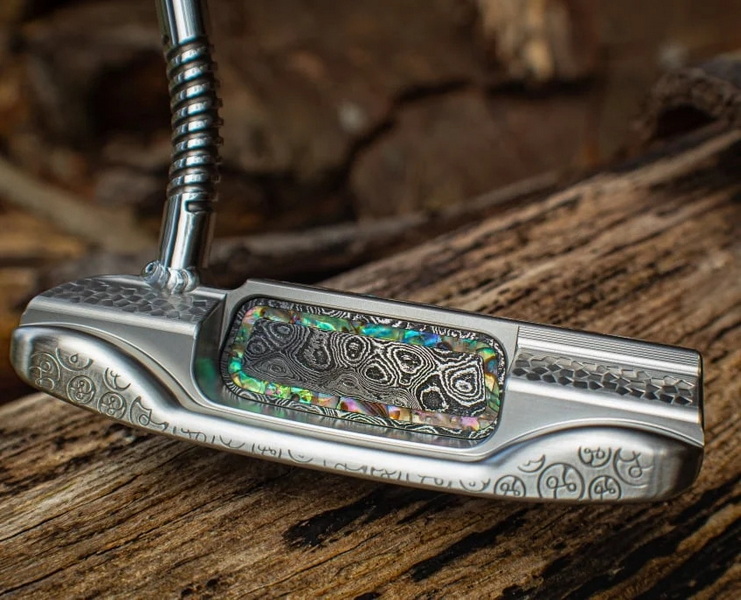
A CNC milled putter is typically produced from 303 stainless steel or similar alloys using a multi-axis machining center. The machine removes material from a billet or forging to achieve the final putter geometry.[4][1]
- A true one-piece milled head usually starts from a solid block or oversized forging, which is then fully machined on all critical surfaces.[1][4]
- Milling time increases sharply when the hosel is integral, deep cavities are required, or face grooves and logos demand multiple tool changes and passes.[5][4]
Before estimating 50 pieces, it helps to understand the typical cost of one high-quality milled putter head.
- Industry data shows that a one-piece milled Anser-style head from a first-tier operation often costs around 60–75 USD per unit for the raw machined head in reasonably large production runs.[1]
- When finishing processes such as polishing, blasting, plating, stamping, and paint-fill are added, total raw production cost for a premium milled putter can reach roughly 84–105.50 USD per unit.[1]
These figures assume an efficient shop, proven tooling, and repeatable programs, not a one-off prototype.[1]
Machine time is a major driver of CNC putter cost. Different sources outline typical hourly rates for modern mills.
- For general CNC machining in 2025, shops commonly charge in the range of about 35–150 USD per hour depending on capability and market segment.[2][6]
- More advanced 3-axis and 5-axis machining centers, especially those serving demanding industries, often fall in the 70–125 USD per hour range for milling, with some premium shops charging 150–250 USD per hour for 5-axis work and aerospace-level quality systems.[3][2]
For estimating a 50-piece putter batch, many brands will work with a mid- to high-end job shop rather than the cheapest garage operation, so a realistic blended machine rate is often around 70–125 USD per hour.[6][2][3]
Cycle time per part can vary widely based on design, tooling, and whether the head is from billet or near-net forging.
- For fully milled, multi-material, or highly detailed putters, milling time can reach several hours per head on sophisticated equipment.[7][8][4]
- In an optimized production environment, a more conventional Anser-style stainless head might have a cycle time nearer to 45–90 minutes of spindle time, especially when fixturing multiple heads per setup and using efficient toolpaths.[4][5]
This means that milling 50 putters is unlikely to be a quick job; total machine hours accumulate fast on high-value CNC mills.[4]
Bringing these elements together allows a practical cost range for CNC milling 50 putter heads.
- If each head requires roughly 1–1.5 hours of effective machine time and the shop rate is around 70–125 USD per hour, pure machine-time cost for 50 pieces can fall in the 3,500–9,375 USD range.[2][3][6]
- When adding programming, setups, tool wear, scrap allowance, and overhead, many operations effectively land in the previously cited raw cost band of roughly 84–105.50 USD per head for a quality one-piece milled design, which translates to about 4,200–5,275 USD for 50 heads before packaging and logistics.[1]
Designs with complex face inserts, tungsten weights, multiple components, or long engraving cycles can push the per-head cost much higher, sometimes approaching 120–130 USD in raw production cost.[1]
Several distinct line items combine to create the total cost of milling 50 putters.
- Machine time: Charged at the hourly rate of the CNC mill; includes actual cutting plus tool changes and probing cycles.[3][6][2]
- Programming and engineering: Initial CAM programming and design-for-manufacture work are often billed at 50–150 USD per hour and can add significant cost if the design is not finalized or needs rework.[9][2]
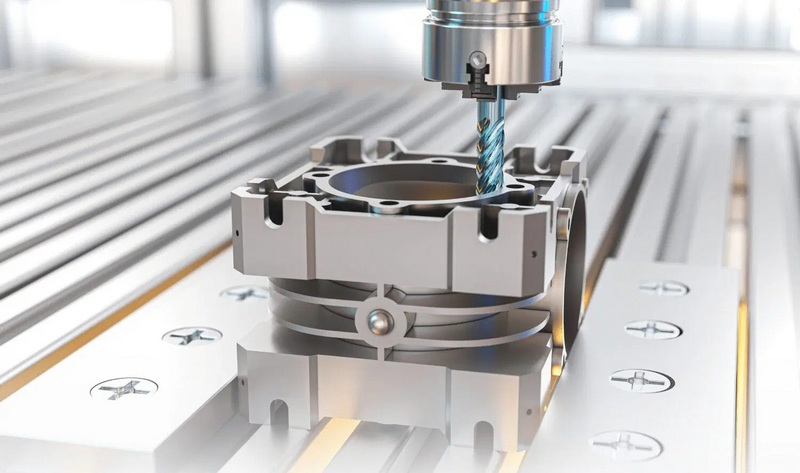
Material and finishing processes add to the machining cost and cannot be ignored when budgeting a batch of 50.
- A typical premium milled putter uses 303 stainless steel, chosen for machinability and corrosion resistance, but alternative alloys, carbon steel, or multi-material constructions change the cost and machining strategy.[10][1]
- Finishing operations such as polishing, bead blasting, plating, and paint-fill can add roughly 15–20 USD per head, with more elaborate finishes and hand-worked details increasing labor and unit cost.[1]
The cost per putter drops when you move from a single prototype to a 50-piece batch.
- Programming and fixture development are largely one-time costs, so spreading them across 50 heads lowers the design and setup cost per unit dramatically compared with one-off builds.[9][2]
- Larger production runs also improve material usage, enable better tool-life management, and let the shop refine feeds and speeds to reduce cycle time, all of which reduce per-head cost.[4][1]
However, 50 pieces are still a relatively small run, so the price per head will remain higher than true mass production volumes of hundreds or thousands of units.[1]
Considering all these factors, most brands and entrepreneurs can think in realistic bands when planning.
- For a relatively straightforward, one-piece stainless head with modest engraving and a standard finish, an indicative cost range for milling 50 putters might be roughly 4,000–6,500 USD in total, depending on the region, vendor tier, and tolerance/inspection requirements.[2][3][1]
- Highly customized designs with multiple materials, adjustable weights, deep face grooves, intricate logos, or tight tolerances can push 50-piece batches well above this range, potentially into the 7,500–10,000 USD zone or more in premium shops.[11][7][1]
These ranges exclude packaging, branding, marketing, and distribution, which must be considered when planning final retail pricing.[11][1]
Cost reduction is possible if the design and manufacturing approach are optimized for CNC machining.
- Simplifying geometry, limiting very deep pockets, reducing unnecessary engraving passes, and using standard hosel solutions all help to shorten cycle time and reduce tool wear, lowering machine-time cost.[5][4]
- Choosing a shop with strong experience in golf components or precision sports equipment, and agreeing on realistic tolerances and surface finish requirements, can avoid unnecessary high-end aerospace-grade processes and hourly rates.[3][2]
Milling 50 putters in a CNC is a serious manufacturing project, not a small side job. Depending on machine hourly rates, cycle time, design complexity, and finishing expectations, a realistic total machining and basic finishing budget often falls somewhere between roughly 4,000 and 10,000 USD for a 50-piece batch, with many standard one-piece stainless designs clustering in the 4,200–6,000 USD range. By understanding how machine time, programming, material, finishing, and economies of scale interact, brand owners and startups can model their putter business more accurately and negotiate more effectively with CNC suppliers.[6][2][3][4][1]
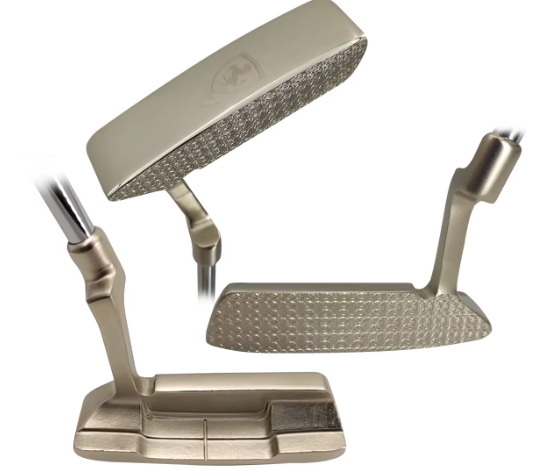
A premium one-piece milled stainless putter head often costs about 60–75 USD for machining alone in efficient production and roughly 84–105.50 USD including standard finishing steps like polishing and paint-fill. For very complex designs with additional parts, inserts, or extensive engraving, the raw production cost per head can climb toward 120–130 USD.[1]
Across the market, CNC machine time commonly ranges from about 35–150 USD per hour, but serious production shops with advanced 3-axis or 5-axis mills usually operate in the 70–125 USD per hour range. Top-tier facilities serving aerospace or high-spec customers may charge 150–250 USD per hour, especially for 5-axis machining and extensive quality documentation.[6][2][3]
For a reasonably optimized Anser-style design, a single head can take around 1–1.5 hours of net machine time, while highly detailed and multi-material designs may require significantly longer milling cycles. As a result, total machine time for 50 heads can easily accumulate to dozens of spindle hours, especially if fixturing and toolpaths are still being refined.[8][7][5][4]
Milled putters require expensive CNC mills, more raw material, longer cycle times, and higher tool wear than cast alternatives, all of which raise production cost. While a one-piece milled head might have a raw production cost above 80 USD, a comparable cast putter can often be produced for less than 25 USD, highlighting the impact of machining intensity.[11][4][1]
Cost can be reduced by simplifying the design, using near-net forgings instead of full billets, minimizing unnecessary deep pockets or fine engraving, and agreeing on realistic tolerances with the machining supplier. Grouping work into efficient setups, optimizing toolpaths, and planning for a slightly larger batch size can further reduce the per-head cost by spreading programming and fixture investment across more units.[5][2][4][1]
[1](https://mygolfspy.com/news-opinion/the-true-cost-of-making-a-putter/)
[2](https://hotean.com/blogs/hotean-blog/cnc-machining-shop-rates-in-2025)
[3](https://hkaa.cn/cnc-machining-cost-guide-2025-price-factors-and-cost-reduction-tips/)
[4](https://www.jeffsheetsgolf.com/cnc-machining)
[5](https://www.reddit.com/r/Machinists/comments/1b46l1m/advice_on_milling_putters_with_no_experience/)
[6](https://eastnashvillecnc.com/blog/how-much-does-a-cnc-cost-per-hour-2025-guide)
[7](https://www.facebook.com/story.php/?story_fbid=319473586807222&id=85008854180)
[8](https://www.facebook.com/PINGGolfFans/videos/pld-custom-you-design-we-build/319473586807222/?locale=ms_MY)
[9](https://www.reddit.com/r/CNC/comments/1iyu4xj/cost_best_method_of_cncing_a_golf_putter_head/)
[10](https://www.accio.com/plp/303-stainless-steel-putter)
[11](https://www.hagginoaks.com/blog/milled-vs-cast-putters-whats-the-difference-and-which-is-best-for-you/)
[12](https://www.facebook.com/groups/Golf.nothing.more/posts/23917529007862888/)
[13](https://golf.com/gear/putters/first-look-hone-golf-cnc-milled-precision-putters-lower-price/)
[14](https://www.alibaba.com/showroom/golf-cnc-putter.html)
[15](https://www.practicalmachinist.com/forum/threads/rfq-putter-heads-milled-from-steel.254512/)


