From idea to market-ready product, our NPI solutions make every stage easier, faster. Discover How We Help

Views: 222 Author: Tomorrow Publish Time: 2026-01-12 Origin: Site


Content Menu
● What Counts as a Small CNC Milling Machine?
● Typical Weight Ranges by Machine Type
>> Desktop and Micro CNC Mills
>> Compact “Mini” VMCs and Small Floor-Standing Mills
● Key Factors That Influence Machine Weight
>> Size and Travel of the Machine
>> Frame Construction and Materials
>> Spindle, Motors, and Components
>> Accessories, Stands, and Enclosures
● Why Machine Weight Matters for Buyers
>> Rigidity, Accuracy, and Surface Finish
>> Installation, Transport, and Floor Loading
>> Power, Environment, and Noise
● Practical Examples of Small CNC Mill Weights
>> Example Desktop and Education Machines
>> Example Benchtop and Small Gantry Systems
>> Example Compact Vertical Machining Centers
● How to Find and Compare Machine Weights
>> Checking Manufacturer Specifications
>> Interpreting Shipping Weight vs Machine Weight
● Matching Machine Weight to Your Application
>> Small Shops and Light Production
>> Industrial Users and High-Precision Work
● FAQs About Small CNC Milling Machine Weight
>> 1. How much does a typical small desktop CNC mill weigh?
>> 2. What is the usual weight of a benchtop CNC milling machine?
>> 3. Are heavier small CNC mills always better?
>> 4. How can I safely move a small CNC mill that weighs several hundred pounds?
>> 5. Where can I find the exact weight of a specific small CNC milling machine?
Small CNC milling machines can weigh anywhere from about 40–70 lbs for ultra-compact desktop units up to 500–700 lbs for heavier benchtop and small floor-standing mills, with some compact “mini” VMCs exceeding 2,000 lbs. Understanding this wide range is essential for planning installation, rigidity, and transport.[1][2][3][4][5][6]
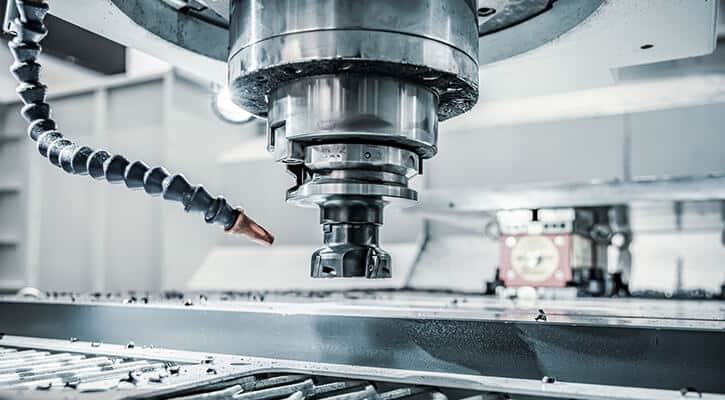
A small CNC mill usually refers to compact machines designed for benchtops, desktops, or tight shop spaces. These machines target prototype work, education, hobby machining, and light production instead of full-scale industrial output.[3][5][6]
Typical categories of small CNC milling machines include:[2][5][3]
- Desktop CNC mills and micro mills
- Tabletop/benchtop CNC mills
- Small-footprint “mini” VMCs and gantry mills
Each category has a different weight range, rigidity level, and installation requirement.[5][3]
Ultra-compact desktop mills are the lightest option and are often used in labs, classrooms, and hobby workshops. They prioritize portability and small work envelopes rather than heavy cutting performance.[7][2][3]
Common weight characteristics for desktop and micro mills include:[2][3][7]
- Very small CNC units can weigh around 40–70 lbs (about 18–32 kg), making them movable by one or two people.
- Some tabletop systems are shipped in configurations with shipping weights around 40 lbs for basic mini-mill packages.[7]
- Certain high-precision “world's smallest” CNC machines list approximate machine weights near 70 lbs while offering a compact 4–5 inch work envelope.[2]
Because of their low weight, these machines are easy to install on sturdy desks but have limited ability to handle aggressive cuts in hard metals.[7][2]
Benchtop CNC mills bridge the gap between hobby machines and light industrial equipment by combining compact footprints with higher rigidity and larger work envelopes. These machines typically sit on a heavy bench or dedicated stand instead of directly on a desk.[3][7]
Key weight data for benchtop CNC mills include:[4][1][3]
- A typical enclosed benchtop CNC mill with automatic tool changer and mid-size work area can weigh about 269 lbs (around 122 kg).[3]
- Some benchtop or small gantry mills ship in crates weighing roughly 500–700 lbs (about 225–320 kg), depending on options and accessories.[1]
- Other compact vertical mills and small machining centers can exceed 330 lbs for the base machine and reach over 2,000 lbs once fully configured.[8][4]
This weight range reflects stronger frames, more robust spindles, linear guides, and heavier tables designed for aluminum and light steel machining.[6][5]
At the upper end of “small” CNC milling machines are compact vertical machining centers and floor-standing mills with industrial features in reduced footprints. These machines are still considered small compared with full-size VMCs but are substantially heavier than typical benchtop units.[4][8]
Typical weight characteristics for these compact machines include:[8][4]
- Some compact vertical mills list system weights around 950–1,600 lbs (approx. 430–725 kg) for smaller models.[4]
- Heavier mini VMCs can reach 2,800 lbs (about 1,270 kg) even though they are marketed as compact for small shops or garages.[4]
- Specific “mini” mill models can have machine weights around 4,800 lbs (approx. 2,180 kg), showing how a small footprint can still mean significant mass.[8]
These higher weights support more demanding production uses and provide excellent vibration damping for harder materials.[5][6]
The physical dimensions and axis travel are primary drivers of CNC machine weight. Larger travels require longer castings, bigger tables, and heavier bases, which all add mass.[9][5]
Important size-related effects on weight include:[10][9][5]
- Longer X–Y–Z travel ranges demand larger frames and guides to maintain stiffness.
- Larger table and work envelope sizes increase both the moving mass and the supporting base.
- Machines designed for larger workpieces and fixtures tend to use thicker cast iron or steel components to preserve accuracy.
Even among small CNC mills, a jump from a few inches of travel to several hundred millimeters can significantly increase the overall weight.[9][5]
The material and construction of the frame also have a major impact on how much a small CNC milling machine weighs. Higher-end machines often rely on cast iron, steel weldments, or heavily ribbed structures.[6][5]
Common construction-related weight drivers include:[5][6]
- Cast iron bases and columns, which are heavier but provide superior damping and stability.
- Thick steel plates or weldments for gantry structures in small mills.
- Additional ribs, cross-bracing, and reinforced ways to minimize flex under cutting loads.
Lightweight desktop units may use aluminum frames or partial plastic enclosures, which keep weight low but limit rigidity.[2][7]
Spindle design, motor size, and additional hardware all contribute to the final weight of a small CNC mill. Machines targeted at metal cutting over long hours require stronger, heavier components.[6][5]
Typical component-related factors affecting weight include:[5][6]
- Larger, higher-torque spindle motors and gearboxes add both performance and mass.
- Bigger stepper or servo motors, ball screws, and linear guides increase weight but improve precision and load capacity.
- Tool changers, rotary axes, and enclosures add substantial extra weight compared with bare open-frame platforms.
Each additional axis or automation feature usually increases both capability and total machine weight.[6][5]
Accessories and add-ons can shift a small CNC mill from portable to semi-permanent. Even if the core machine is relatively light, a full setup with stands and guards can weigh much more than the base specification suggests.[1][3]
Typical add-ons that increase machine weight include:[1][3]
- Heavy-duty steel stands or cabinets for benchtop mills.
- Full enclosures, chip guards, and debris collection drawers.
- Additional axes such as rotary units, vises, fixtures, and tool magazines.
Manufacturers often list both machine weight and shipping weight, with the latter including crates, stands, and bundled accessories.[7][1]
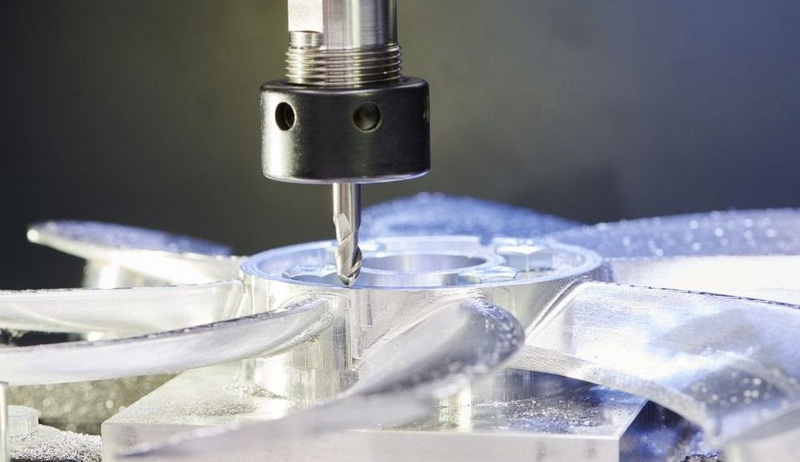
For CNC milling, machine mass directly relates to rigidity and vibration damping. Heavier machines generally deflect less under cutting loads and maintain more stable tool paths.[5][6]
Practical machining implications of higher machine weight include:[6][5]
- Better dimensional accuracy across multiple passes and long runtime jobs.
- Improved surface finish quality, especially in metals like aluminum and mild steel.
- Higher allowable depth of cut and feed rates without chatter.
Lighter machines can still deliver excellent results in plastics, wax, and softer metals but usually need conservative cutting parameters.[3][7]
Weight also determines how easily a small CNC milling machine can be moved and where it can be safely installed. Some small units can be manually carried; others demand pallet jacks, forklifts, or special freight.[1][5]
Typical installation considerations include:[3][1][5]
- Desktop and micro mills around 40–70 lbs can be placed on sturdy desks without special floor checks.
- Benchtop machines in the 250–700 lb range generally require strong benches, reinforced tables, or factory stands.
- Compact VMCs above 1,000 lbs may need concrete floors, anchoring, and rigging for delivery and placement.
Knowing the exact weight helps plan handling equipment, doorway clearances, and building structural capacity.[1][5]
Although machine weight does not directly control power usage, the heavier small machines often integrate more powerful spindles and higher-capacity electronics. They tend to be installed in workshop or industrial environments rather than offices.[3][6]
Relevant environment-related points include:[6][3]
- Lighter desktop mills often plug into standard outlets and run quietly enough for studio or classroom settings.[3]
- Heavier small VMCs may need dedicated circuits, higher voltage, and better ventilation or coolant management.[6]
- Enclosed benchtop mills balance machine weight with noise reduction and chip containment for shared spaces.[3]
These factors should be reviewed alongside weight when selecting a machine for a specific workspace.[6][3]
Several well-known desktop and educational CNC mills provide concrete weight references for buyers evaluating small machines.[2][7][3]
Typical patterns across these machines include:[7][2][3]
- Compact tabletop mills with modest travel and light-duty spindles that keep total weight under 100 lbs for easy relocation.
- Education-focused benchtop mills with enclosures and safety features that bring the weight into the 150–300 lb range.[3]
- Micro-machining platforms designed for jewelry, dental work, or small prototypes that stay in the 40–70 lb bracket.[2][7]
These examples illustrate how even within desktop-class machines, design priorities such as safety, travel, and rigidity can change the overall weight noticeably.[7][3]
Benchtop and small gantry CNC systems show an even wider spread of weights because of differences in frame design and application.[1][3]
Common trends in this category include:[1][3]
- Entry-level benchtop mills with cast-iron frames and modest travels commonly weighing around 250–300 lbs.
- Larger benchtop gantry mills with extended work areas shipped in crates whose total shipping weight can exceed 500–700 lbs.[1]
- Configurations that add stands, coolant systems, and enclosure panels, which can boost total system weight by 30–50 percent over the bare machine.[1][3]
These systems are still small compared with full industrial VMCs but require much more planning for delivery and placement than desktop units.[5][1]
Compact vertical machining centers (VMCs) stand at the heavy end of the “small CNC” spectrum and provide industrial-level performance in condensed footprints.[8][4]
Typical weight-related characteristics for compact VMCs include:[4][8]
- Machine weights in the 900–1,600 lb range for small models with limited travel.
- Larger “mini” mills that can approach or exceed 2,800–4,800 lbs once fully equipped with tool changers and enclosures.[8][4]
- Strong cast-iron bases and columns that significantly increase mass but deliver excellent machining stability.[5][6]
Because of these weights, such machines are best suited to workshops with suitable floors and lifting equipment.[5][1]
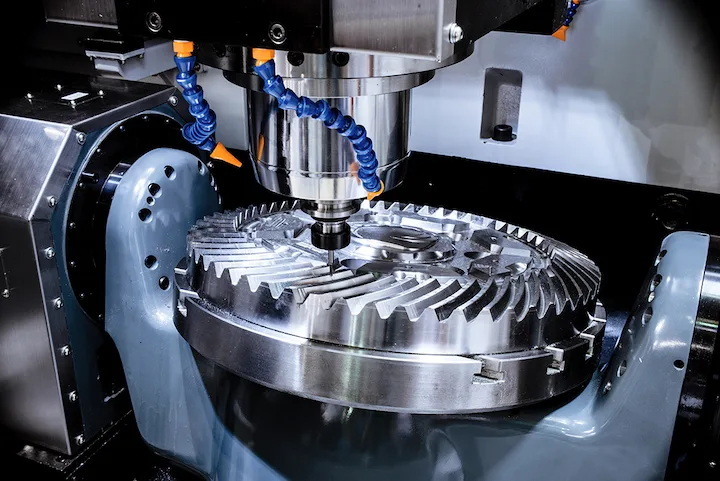
The most reliable way to know how much a small CNC milling machine weighs is to consult the official specification sheets or product pages. Reputable manufacturers list detailed technical data for each model.[5][3]
Commonly published information that helps evaluate weight includes:[4][2][3]
- Machine weight, usually in pounds and/or kilograms.
- Shipping weight, including crate and accessory packaging.
- External dimensions, work envelope, and table size for context.
Comparing these values across models helps buyers choose the right balance between compact size and mechanical stability.[4][3]
Buyers should distinguish between machine weight and shipping weight when planning logistics for a small CNC mill.[5][1]
Key differences to keep in mind include:[1][5]
- Machine weight reflects the actual mass of the CNC mill installed and ready for use.
- Shipping weight includes pallets, crates, protective packaging, and sometimes bundled accessories such as stands or coolant systems.
- Handling and freight calculations should use shipping weight, while floor loading and bench design calculations should use machine weight.[5][1]
Understanding both figures helps avoid surprises during delivery and installation.[1][5]
Reviewing real-world product examples provides a practical sense of weight variation among small CNC mills.[4][3][1]
Typical examples include:[8][2][3][1]
- A very small precision CNC machine weighing around 70 lbs with a limited work envelope of a few inches.
- A benchtop mill with automatic tool changer and mid-size table weighing around 269 lbs.
- A small gantry mill shipping in crates weighing 500–700 lbs depending on configuration.
- A compact vertical mill whose complete system can reach several thousand pounds, despite being marketed as a mini mill.
These examples show how even within the “small CNC” category, machine weight can vary by an order of magnitude.[4][1]
For hobby users and small prototype labs, weight often needs to balance portability with adequate rigidity.[7][3]
Suitable weight characteristics for this group usually include:[7][3]
- Machines under about 100 lbs that can be lifted by two people and placed on a sturdy desk or bench.
- Frames stiff enough to machine plastics, wood, and softer metals at conservative feeds and speeds.
- Compact enclosures to control chips and noise in shared or home environments.[3]
In many cases, a desktop or light benchtop CNC mill offers the best compromise between weight and capability.[7][3]
Small fabrication shops, job shops, and startup manufacturers often prefer heavier small CNC mills that support light production runs.[6][4]
For these users, weight-related priorities include:[4][6]
- Machines in the 250–700 lb range that deliver higher rigidity and better metal-cutting performance.
- Ability to mount on strong benches, stands, or low-profile foundations without full industrial infrastructure.
- Reasonable portability using pallet jacks or small lifts if the workshop layout changes.[5][1]
Such machines allow small businesses to grow into CNC machining without committing to full-size VMCs.[6][4]
Industrial users or shops focused on demanding high-precision work often choose the heaviest machines that still fit their available space.[6][5]
Relevant weight considerations for this group include:[6][5]
- Compact machining centers in the 1,000–4,800 lb range that provide robust stability and accuracy.
- Compatibility with existing lifting equipment, loading docks, and reinforced floors.
- Integration with automation, tool changers, and coolant systems that further increase total system weight.[8][4]
In these environments, higher weight is usually seen as a positive indicator of performance potential rather than a drawback.[5][6]
Small CNC milling machines span a broad weight range from roughly 40–70 lbs for ultra-compact desktop systems, through 250–700 lbs for typical benchtop mills, up to over 1,000 lbs for compact vertical machining centers. The main drivers of weight are machine size, frame construction, spindle and motor configuration, and added accessories or enclosures. Heavier machines generally offer better rigidity, accuracy, and cutting performance but require more planning for transport, installation, and floor loading. For any buyer, checking manufacturer specifications on machine and shipping weight is essential to ensure the chosen small CNC mill matches both performance needs and site constraints.[2][7][3][4][1][6][5]

Most small desktop CNC mills weigh between about 40 and 70 lbs, depending on frame materials and work envelope size. This weight makes them portable enough for one or two people to move and suitable for sturdy desks or lab benches.[2][7]
A typical benchtop CNC milling machine often weighs in the range of 250–300 lbs for an enclosed unit with moderate travel. When stands, enclosures, and accessories are included, shipping weights can reach 500–700 lbs for some benchtop and small gantry mills.[3][1]
Heavier small CNC mills generally provide higher rigidity, better vibration damping, and improved surface finishes in metals. However, they are harder to move, require stronger floors or stands, and may demand more robust power and workshop infrastructure.[1][6][5]
For machines weighing several hundred pounds, it is important to use appropriate handling equipment such as pallet jacks or dollies rated for the load. Following manufacturer recommendations for lifting points, securing the machine, and using freight services for delivery greatly reduces the risk of damage or injury.[1][5]
The exact weight of a particular small CNC milling machine is listed in the manufacturer's specification sheet or product page. These documents typically provide machine and shipping weight, along with dimensions and work envelope, allowing direct comparison between different models.[4][3][5]
[1](https://www.langmuirsystems.com/mr1)
[2](https://cncmachines.com/worlds-smallest-cnc-machine)
[3](https://www.rolanddga.com/products/3d/mdx-50-benchtop-cnc-mill)
[4](https://tormach.com/machines/mills.html)
[5](https://www.sigmatechnik.com/cnc-factory/how-much-does-a-cnc-machine-weigh)
[6](https://www.campro-usa.com/post/top-features-to-look-for-in-a-modern-cnc-milling-machine)
[7](https://www.sherline.com/product/8540/)
[8](https://titansofcnc.com/products/syil-x5-cnc-mini-mill)
[9](https://www.3erp.com/blog/cnc-machining-part-size/)
[10](https://xometry.pro/en/articles/cnc-machining-size-limitations/)


