From idea to market-ready product, our NPI solutions make every stage easier, faster. Discover How We Help

Views: 222 Author: Tomorrow Publish Time: 2026-01-07 Origin: Site
Content Menu
● Understanding CNC Milling Machines
● The Structure of the Global CNC Milling Machine Market
● Leading CNC Milling Machine Brands
>> 1. Haas Automation (United States)
>> 2. DMG Mori (Germany & Japan)
>> 9. Doosan Machine Tools (South Korea)
>> 11. Brother Industries (Japan)
>> 12. Kitamura Machinery (Japan)
● Emerging Chinese, Taiwanese, and Indian Brands
● CNC Milling Machine Technology and Software Integration
● Application Industries of CNC Milling Machines
● Choosing the Right CNC Milling Machine Brand
● Future Trends in CNC Milling Machines
● FAQ
>> 1. What is the most popular CNC milling machine brand?
>> 2. Which countries are known for the best CNC milling machines?
>> 3. Are Chinese CNC milling machines reliable for industrial use?
>> 4. How long can a CNC milling machine last?
>> 5. What are the primary factors to consider before buying a CNC milling machine?
The world of modern manufacturing revolves around precision, automation, and efficiency — and CNC milling machines lie at the heart of that evolution. These machines have transformed how we create parts, shapes, and prototypes across industries. From intricate aerospace components to everyday mechanical parts, CNC milling has become an essential production method.
But in such a vast global market, it raises a natural question: How many brands of CNC milling machines are there? The answer is not simple. Hundreds of manufacturers exist worldwide, from leading corporations in Japan and Germany to emerging innovators in China, India, and the United States. This article explores the breadth of the CNC milling industry, identifies major brands, explains technology types, and provides insights into choosing the right machine for your needs.
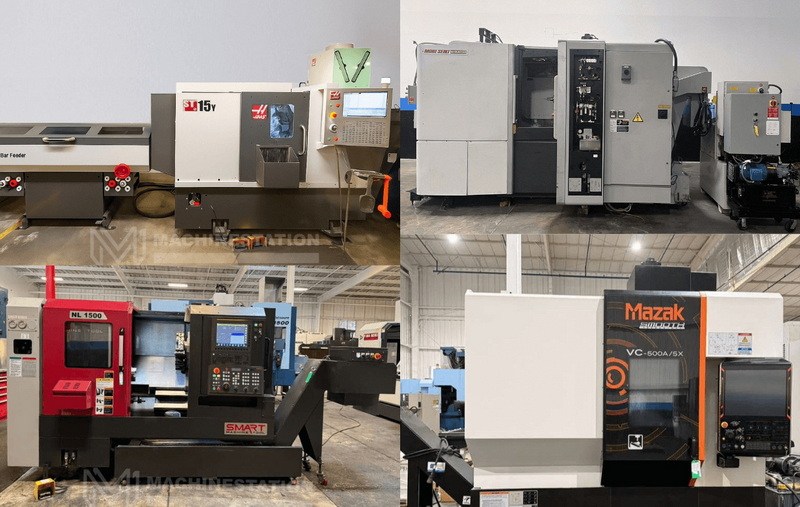
A CNC milling machine is a computer-operated tool designed to remove material from a workpiece using rotary cutters. The key innovation lies in the use of computer numerical control (CNC), which translates digital design programs into precise mechanical motions. Operators set up the machine, load the cutting program, and the equipment executes highly accurate cuts repeatedly — often within microns of tolerance.
Compared with manual milling, CNC milling delivers consistency, speed, and advanced 3D capabilities. Operators can create complex curves and shapes without constant supervision, significantly reducing human error.
There are several common types of CNC milling machines, each designed for specific functions:
- Vertical Milling Machines (VMCs): Feature a vertically aligned spindle. They are the most common and adaptable, suited for general production, prototyping, and light to medium workloads.
- Horizontal Milling Machines (HMCs): Contain a horizontally oriented spindle and allow simultaneous multi-face machining, ideal for heavy cutting and mass production.
- 5-Axis Milling Machines: Provide movement along five different axes at once, enabling the machining of complex geometries, molds, and turbine parts.
- Gantry and Bridge Mills: Extremely large machines designed to handle heavy components such as molds, aerospace frames, or large-scale dies.
- Mini or Desktop CNC Mills: Compact systems built for small parts, research, education, and home-based manufacturing businesses.
CNC milling machines are integral to industries including aerospace, automotive, medical, electronics, defense, energy, and general manufacturing. The global market exceeds tens of billions of dollars annually, with continuous growth projected due to the rising need for automation and precision production.
Regions dominating the market include:
- Asia-Pacific: China, Japan, South Korea, and Taiwan lead production and consumption. China, in particular, has grown as a manufacturing powerhouse, producing everything from low-cost mills to high-end industrial equipment.
- Europe: Germany, Switzerland, and Italy are home to highly precise engineering firms and luxury machine tool manufacturers.
- North America: The U.S. market emphasizes innovation, software integration, and interoperability with digital factory systems.
- Other Regions: India, Turkey, and Brazil have developing industries supported by government-backed manufacturing initiatives.
In total, over 200 identifiable brands operate globally — a number that fluctuates as new startups appear and mergers reshape the competitive landscape.
Haas is among the most recognized American brands, famous for its cost-effective, durable, and user-friendly machines. Its VMC and HMC series dominate workshops and educational spaces worldwide. Haas also provides software upgrades and a strong global network for service, making it a go-to for small and mid-sized businesses.
A collaboration between Gildemeister (Germany) and Mori Seiki (Japan), DMG Mori embodies engineering excellence and innovation. Their high-speed machining centers and 5-axis mills set benchmarks in automotive and aerospace sectors. With sustainability and digital automation at its core, DMG Mori continues to expand its global leadership.
Yamazaki Mazak offers some of the most advanced machine tools in the world. Its VARIAXIS and INTEGREX series feature hybrid multi-tasking capabilities that combine milling and turning, improving accuracy and reducing setup time.
Okuma machines are revered for their precision and long-term stability. The company's proprietary control system, OSP-P300A, integrates machine, motor, and encoder technology in a seamless operation, enabling reliable autonomous production.
Makino machines cater to manufacturers demanding ultra-fine tolerances. Their engineering expertise supports high-precision industries — particularly aviation, medical, and mold-making. Makino's commitment to micron-level performance makes it one of the most respected CNC brands globally.
Although best known for robotics and control systems, FANUC manufactures CNC machines that combine automation with exceptional reliability. Many other brands use FANUC controllers, making the company a cornerstone of global CNC integration.
For small shops, makerspaces, and educational labs, Tormach offers affordable CNC mills that balance quality with flexibility. Their PathPilot software allows easy G-code programming, and machines are accessible even to beginners.
Hurco bridges the gap between manual programming and automated control. Its WinMax software simplifies part setup and simulation, making it a favorite among toolmakers and prototyping specialists.
Now rebranded as DN Solutions, Doosan is a key manufacturer offering both vertical and horizontal machining centers known for power, speed, and precision. Its machines serve heavy industries such as shipbuilding, energy, and automotive manufacturing.
Hermle AG produces world-class precision 5-axis machines. Its engineering excellence caters to aerospace, healthcare, and die/mold makers. Hermle emphasizes energy-efficient designs and intelligent software integration, making its machines among the most advanced globally.
With decades of electronic engineering experience, Brother turned its focus toward compact machining centers optimized for speed and reduced cycle times. Its “SPEEDIO” series is especially popular in electronics and small parts production.
Kitamura distinguishes itself with ultra-high precision and long-life reliability. Its machines, built in Japan, maintain tolerances under one micron and are prized by semiconductor and micro-precision industries.
A historically significant American manufacturer, Fadal has rebuilt its position with affordable, reliable CNC machines targeting mid-level workshops and mold-making sectors.
TOYODA, under the JTEKT Group, provides heavy-duty milling and turning machines used in automotive production lines. The company's systems are known for advanced automation and integration with smart factories.
Although Siemens doesn't produce full milling machines, its Sinumerik CNC controllers power many of the best machines worldwide, influencing precision, automation, and digital twin development.
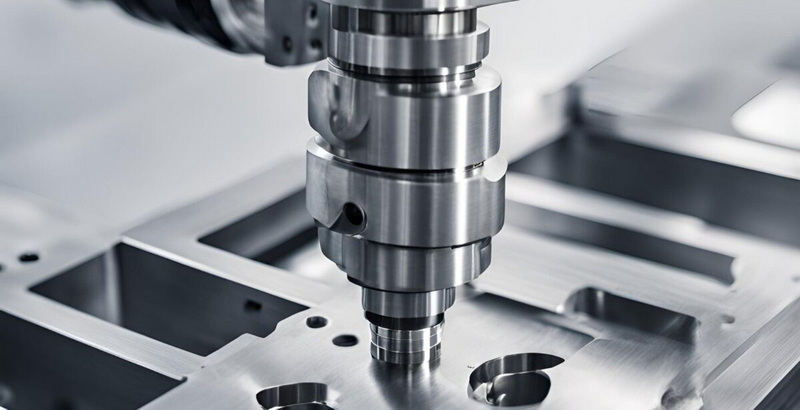
The rise of Asian manufacturing has expanded the number of CNC milling machine brands dramatically:
- China boasts brands like Shenyang Machine Tool Co. (SMTCL), Dalian Machine Tool Group (DMTG), Han's Laser Smart Equipment, and Jinan Blue Elephant CNC Machinery. Their machines target entry-level and mid-range markets but are increasingly improving in accuracy and control integration.
- Taiwan produces high-quality brands such as Victor Taichung, Hartford, FEELER, and Milltronics Taiwan, which combine innovation and affordability.
- India continues its industrial expansion through companies like ACE Micromatic, BFW (Bharat Fritz Werner), and Jyoti CNC Automation, supporting both domestic and global shops.
These emerging manufacturers add to the diversity of the CNC ecosystem, pushing the total number of brands well over 200 worldwide. Their growth increases competition and drives rapid technological advancement, offering buyers more choices than ever before.
Beyond mechanical design, CNC milling depends heavily on controller systems and software integration. The most common control brands include FANUC, Siemens, Heidenhain, Mitsubishi, and OSP (Okuma's proprietary platform).
These controllers govern toolpath precision, motion dynamics, and even cutting optimization. Increasingly, manufacturers integrate:
- Automatic Tool Changers (ATC) for seamless high-speed switching between milling tools.
- Tool Monitoring Systems that detect wear or breakage.
- Adaptive Cutting Technologies utilizing AI algorithms to optimize spindle speed and feed rate in real-time.
- CNC simulation and digital twins that allow offline programming and process visualization before cutting begins.
Such innovations blend mechanical performance with digital intelligence, bringing manufacturing closer to fully autonomous systems.
CNC milling technology is indispensable across numerous domains:
- Aerospace: Producing precision turbine blades, engine parts, and airframe structures from titanium or composite materials.
- Automotive: CNC machines create molds, engine components, brake systems, and custom prototypes.
- Medical: Used in making implants, surgical instruments, and prosthetics requiring sub-micron tolerances.
- Electronics: Miniature milling for printed circuit boards, semiconductors, connectors, and housings.
- Energy: Machining turbine housings, pump casings, and valve bodies used in energy generation equipment.
- Tool and Die Making: The backbone of precision tooling, essential for injection molds, stamping dies, and press components.
Every industry's demand for accuracy and productivity drives ongoing innovation, stimulating competition among brands worldwide.
Selecting the correct CNC milling machine brand depends on evaluating:
1. Precision Requirements – High-end machines like Makino or Hermle are unmatched for micro-tolerance applications.
2. Budget – Entry-level machines from Tormach or Chinese suppliers are cost-effective for startups or educational uses.
3. Machine Size & Power – Heavy-duty manufacturers like Doosan or Toyoda provide powerful, stable platforms for large components.
4. Software Compatibility – Ensure the machine supports widely used CAD/CAM software like Mastercam, Fusion 360, or SolidWorks CAM.
5. After-sales Service – The ability to obtain spare parts and local support determines long-term reliability.
6. Control System Familiarity – Operators comfortable with a specific CNC controller (e.g., FANUC or Siemens) can reduce setup time and training needs.
The next decade will reshape how CNC milling functions within smart manufacturing ecosystems. Key developments include:
- Artificial Intelligence: Adaptive learning systems that automatically fine-tune cutting parameters based on feedback.
- Integrated Additive Manufacturing: Combining CNC milling and 3D printing in hybrid machines for complex part fabrication.
- Internet of Things (IoT): Smart machines transmitting performance data for remote monitoring and predictive maintenance.
- Green Manufacturing: Eco-friendly coolant systems and energy-efficient servo motors.
- Automation Expansion: CNC machines paired with robotic arms, automated pallet changers, and AI scheduling systems.
As technology evolves, brand differentiation will depend increasingly on how well machines integrate digitally rather than just physical precision.
In answering the question — “How many brands of CNC milling machines exist?” — the reality is dynamic. There are hundreds of brands operating worldwide, from legacy engineering giants like DMG Mori and Mazak to nimble newcomers in developing economies. This diversity reflects an industry driven by innovation, competition, and global collaboration.
The right machine depends not merely on brand recognition but on how effectively it aligns with the user's production goals, software ecosystem, and service expectations. Whether you are a small business owner or an industrial manufacturer, the modern CNC market offers an unprecedented range of solutions — proving that precision engineering has never been more accessible.
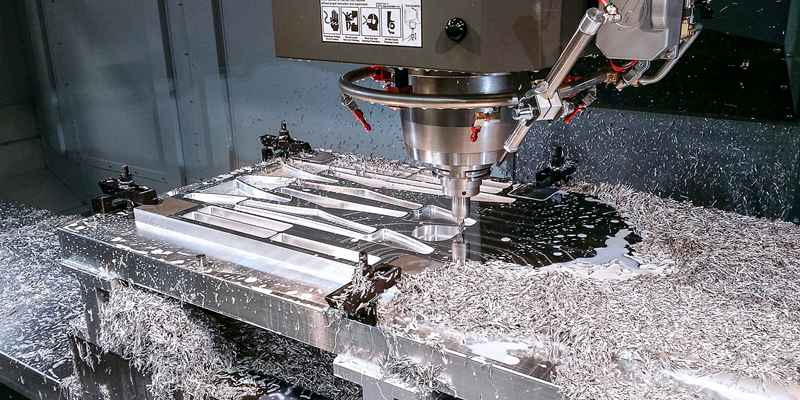
Answer: Haas Automation is widely regarded as the most popular for its balance of affordability, simplicity, and reliability. It dominates machine shops across North America and Europe.
Answer: Japan and Germany produce many of the top brands — including Mazak, DMG Mori, Makino, Hermle, and Okuma — known for exceptional accuracy and build quality.
Answer: Chinese brands have significantly improved in quality and technology. While they may not always match German or Japanese precision, many now offer excellent value for light to medium-duty production.
Answer: A well-maintained CNC mill can last 10 to 25 years or longer, depending on the brand, usage level, and maintenance standards.
Answer: Key factors include precision tolerance, machine capacity, software compatibility, control system type, warranty coverage, after-sales service, and cost efficiency.


