From idea to market-ready product, our NPI solutions make every stage easier, faster. Discover How We Help

Views: 222 Author: Tomorrow Publish Time: 2026-01-07 Origin: Site
Content Menu
>> Advantages
>> Limitations
>> Typical Uses
>> Applications
>> Example
● 6-Axis and Multi-Axis CNC Milling Machines
>> Limitations
● Impact of Axis Count on Performance
● How Axis Count Improves Workflow Efficiency
● Advanced Control Technology in Multi-Axis Systems
● Choosing the Right CNC Milling Machine
● Trends in CNC Axis Development
● FAQ
>> 1. What is the difference between 3-axis and 5-axis CNC machines?
>> 2. Why are 5-axis machines more expensive?
>> 3. Can 5-axis machines handle all materials?
>> 4. Do more axes always guarantee better results?
>> 5. How should I maintain a multi-axis CNC milling machine?
CNC milling machines represent one of the most transformative technologies in modern precision manufacturing. They have replaced manual machining processes by introducing automation, consistent accuracy, and faster production times. The concept of “axes” in CNC machining defines the machine's flexibility and capability to shape materials into desired forms. Every added axis enables more movement freedom, higher precision, and the ability to create complex geometries that were once impossible using conventional tools.
When asking “How many axes does a CNC milling machine have?”, it's important to understand that the answer depends on machine design and intended use. A basic milling machine may operate on just three axes, while high-end models in aerospace or medical manufacturing might use up to six or even nine axes. Each configuration provides a different balance of cost, control, and complexity.
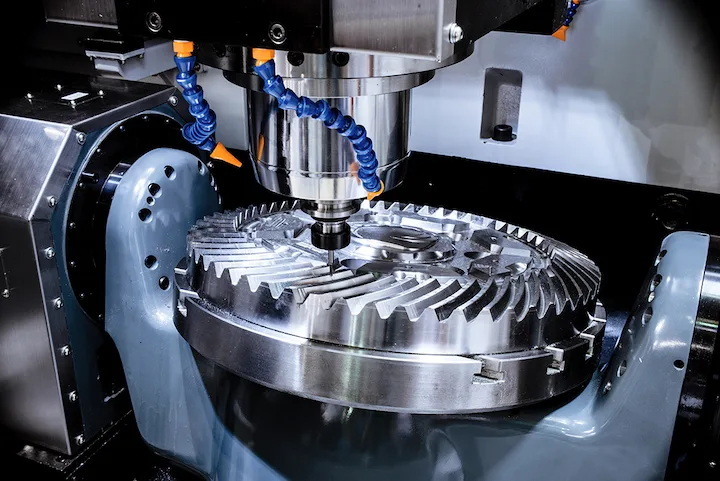
In CNC machining, an axis refers to a direction of movement that the machine's cutting tool or workpiece can take. The more axes a machine possesses, the greater its ability to perform diverse operations from multiple angles.
CNC milling systems are built on the Cartesian coordinate system consisting of three principal directions:
- X-Axis: Controls horizontal movement from left to right.
- Y-Axis: Dictates front-to-back movement.
- Z-Axis: Directs vertical movement—up and down.
Many advanced machines add rotational axes—typically known as A, B, and C axes—allowing rotation around these linear movements. These additional rotations make the cutting process more versatile by reducing the need for manual repositioning and ensuring simultaneous multi-angle machining.
A 3-axis CNC milling machine is the simplest and most common type found in workshops and learning labs. It moves the cutting spindle along the three Cartesian directions (X, Y, and Z) and is used to machine flat surfaces, drill holes, and cut shapes with relatively simple geometries.
- Cost-effective for basic operations and prototypes.
- Simple setup, programming, and maintenance.
- Produces accurate parts quickly with minimal training.
- Limited reach on undercuts or deep cavities.
- Needs manual repositioning for complex structures.
- Restricted to operations on one face at a time.
3-axis milling excels in 2D and 2.5D operations. It is widely used in automotive part manufacturing, fixture design, and machined housings for electronics, where high accuracy and simplicity are adequate.
The 4-axis CNC milling machine introduces an extra degree of rotation—usually the A-axis, which rotates the workpiece around the X-axis. This added capability allows the tool or table to reach different sides of the part automatically, saving both time and setup effort.
- Enables machining around cylindrical parts or on multiple sides of a component.
- Reduces repositioning errors and increases accuracy for complex shapes.
- Ideal for creating spiral cuts, slots in tubes, and engraved shafts.
4-axis machines are often used in mold manufacturing, pipe fittings, and engravings on curved surfaces. They bridge the gap between standard milling and advanced multi-axis operations, offering an optimized cost-to-performance ratio for medium-complexity projects.
The 5-axis CNC machine represents a significant leap in flexibility and efficiency. In addition to the three primary linear movements, it introduces two rotational axes—often labeled A and B (or A and C depending on design). This configuration allows the cutting tool to approach the workpiece from virtually any direction.
- Complex Geometry: Perfect for producing parts with intricate surfaces, angles, and cavities.
- High Precision: Eliminates multiple setups, maintaining tight tolerances.
- Superior Finish: Continuous tool contact reduces visible tool marks and improves surface quality.
- Faster Production: Single-setup machining saves production time significantly.
5-axis technology is standard in aerospace, medical, energy, and automotive industries. It is used to produce turbine blades, orthopedic implants, injection molds, and high-performance engine parts.
Imagine manufacturing a turbine blade with twisted surfaces. A 3-axis or 4-axis machine would require multiple setups, making alignment and surface consistency challenging. A 5-axis machine, however, can rotate and tilt the blade dynamically, completing the entire piece in one operation with exceptional accuracy.
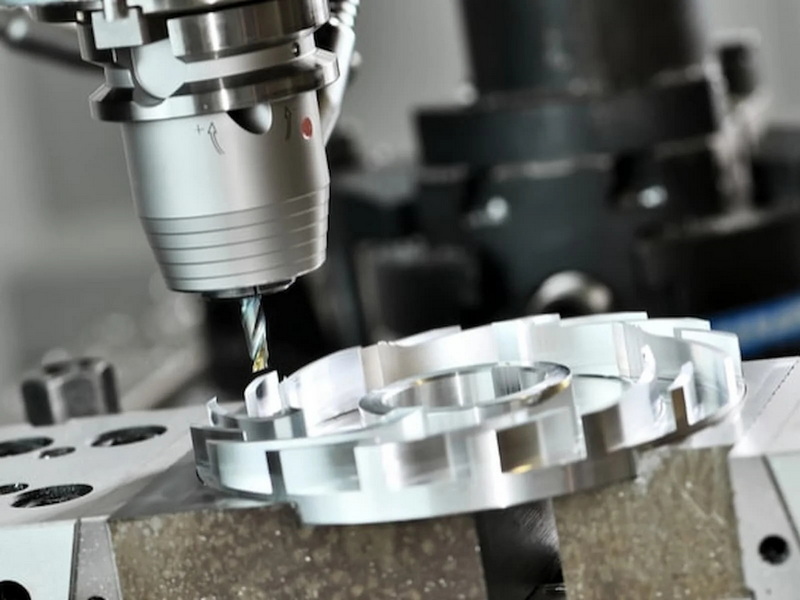
For exceptionally demanding tasks, manufacturers rely on 6-axis CNC milling machines. These systems add an additional rotational axis (usually the C-axis) that provides continuous motion and full freedom of movement. Some variations incorporate robotic arms capable of synchronized movement, expanding control to 7, 8, or even 9 axes.
- Unmatched Flexibility: The tool or workpiece can move freely in virtually any direction.
- High Speed and Accuracy: Reduces setup time while maintaining ultra-fine tolerances.
- Real-Time Adjustments: Compensates dynamically for tool deflection and vibration.
Multi-axis CNC technology is dominant in aerospace engine housing, robotic assembly, and energy sector fabrication. Components like impellers, rotors, and precision mechanical assemblies benefit greatly from this capability.
While performance is remarkable, the cost and maintenance demands are substantial. Such systems require expert operators and advanced programming tools, making them suitable only for large-scale specialized environments.
More axes equal more complexity and greater function—but that relationship doesn't always mean “better” for every application. Choosing the correct configuration depends on project goals.
- 3-axis systems excel at simplicity, affordability, and reliability.
- 4-axis systems offer balance for moderately complex operations.
- 5-axis systems deliver exceptional flexibility and finish quality.
- 6-axis or higher configurations grant total freedom and efficiency but come with high cost and maintenance levels.
- Surface Quality: Extra axes allow continuous tool contact for smoother curves.
- Production Speed: Multi-axis machining reduces setup changes.
- Repeatability: Advanced feedback systems ensure every part remains identical.
- Tool Life: Better positioning reduces abrupt directional changes that wear tools faster.
Multi-axis CNC machines streamline production significantly. In traditional setups, workers had to reposition a workpiece multiple times between operations—a process prone to errors. With 4 or 5 axes, parts can be machined from multiple sides within a single clamping, reducing handling time.
Additionally, multi-axis programming allows for simultaneous motion, cutting down on idle movement. Combined with automatic tool changers (ATC) and probe sensors, the overall productivity and accuracy skyrocket.
For high-mix, low-volume industries—like custom aerospace parts or prosthetic implants—this efficiency directly translates into faster delivery, lower cost per unit, and superior product quality.
Modern CNC axis control relies on a combination of powerful processors, intelligent feedback systems, and sophisticated software.
- Servo Motors: Drive precise, controlled motion for each axis.
- Encoders: Measure position and speed for real-time corrections.
- CNC Controllers: Execute programmed instructions accurately.
- Software Integration: CAD/CAM systems create optimized toolpaths for multi-axis cutting.
Many advanced machines now use artificial intelligence and sensor feedback loops to adapt cutting parameters in real time. If tool wear, temperature fluctuation, or unexpected resistance occurs, the system adjusts feed rates and spindle speeds automatically, maintaining consistency and preventing defects.
Selecting the right machine involves balancing capability, cost, and intended use. Below are general considerations:
- Budget and ROI: Multi-axis machines are expensive but reduce production time.
- Part Geometry: The more complex the part, the more axes you'll benefit from.
- Skill Level: Advanced setups require experienced programmers and operators.
- Batch Volume: Higher axes provide efficiency for low-volume, high-complexity projects.
An engineering team should carefully analyze project demands before upgrading to a higher-axis system. Investing in extra axes only makes sense if your designs consistently require multi-directional access or complex contouring.
As manufacturing continues to evolve, CNC technology is advancing beyond static axis configurations. Innovations such as hybrid machining, additive-subtractive systems, and AI-driven toolpath optimization are shaping the next generation of CNC milling.
- Hybrid Machining: Combines material removal and additive processes in one machine.
- Robotic Automation: Integrates multi-axis robotic arms with milling heads.
- Smart Monitoring: Predicts maintenance needs based on performance data.
- Ultra-Compact 5-Axis Machines: Deliver precision machining in smaller workshops.
These developments aim to enhance production flexibility while reducing costs and environmental impact.
Understanding how many axes a CNC milling machine has is essential for grasping its capabilities and applications. From 3-axis workhorses used for basic shaping to sophisticated 6-axis robotic systems capable of crafting ultra-complex parts, each level adds precision, efficiency, and innovation to the world of manufacturing.
The number of axes not only dictates how the machine moves but also determines how industries evolve—bridging the gap between imagination and what is mechanically possible. As technology advances, future CNC systems will continue to push the limits of accuracy, automation, and creativity, shaping the next era of intelligent manufacturing.
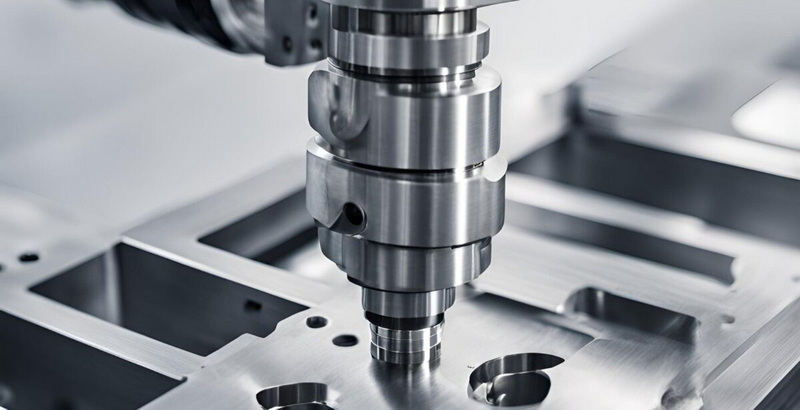
A 3-axis machine moves along X, Y, and Z directions, ideal for flat designs and simple parts. A 5-axis machine adds two rotations, allowing the tool to access multiple surfaces in one go, making it better suited for complex and curved geometries.
They require additional hardware, precision rotary tables, and enhanced control systems. Moreover, the software and training for 5-axis programming add to the total investment, though they often reduce production time and increase accuracy.
Yes. They can machine metals, plastics, and composites. However, adjustments in spindle speed, feed rate, and coolant flow must be made depending on the material's hardness and flexibility to ensure optimal tool performance.
Not necessarily. More axes increase capability and speed, but for simple parts, basic machines are more economical. The right number of axes should match the project's complexity, precision requirements, and operational budget.
Perform routine cleaning to remove chips, check lubrication regularly, and inspect calibration. Also, keep software updated, ensure tool alignment, and schedule professional maintenance to maintain long-term precision.


