From idea to market-ready product, our NPI solutions make every stage easier, faster. Discover How We Help

Views: 222 Author: Tomorrow Publish Time: 2026-01-03 Origin: Site


Content Menu
● Key Factors That Determine CNC Milling Time
>> 1. Part Geometry and Complexity
>> 2. Material Type and Machinability
>> 3. Dimensional Tolerances and Surface Finish
>> 4. Cutting Tools and Tool Path Strategy
>> 5. Machine Type and Technology
>> 6. Setup and Fixturing Time
● Techniques to Reduce CNC Milling Time
>> 1. Optimize Tool Paths and Cutting Parameters
>> 3. Enhance Fixturing and Automation
>> 4. Use Multi-Axis Machining
>> 5. Plan Effective Roughing and Finishing Passes
>> 6. Continuous Process Improvement
● Balancing Quality, Speed, and Cost
● Common Myths About CNC Machining Time
>> Myth 1: Faster spindle speeds always mean faster production.
>> Myth 2: CNC machines can run unattended indefinitely.
>> Myth 3: All materials take similar time to cut.
>> Myth 4: One machine setup suits all parts.
● Future Trends in CNC Milling Efficiency
● FAQs
>> 1. How long does it take to set up a CNC milling machine?
>> 2. Which materials are fastest to machine?
>> 3. Does using a 5-axis CNC always save time?
>> 4. How can I estimate machining time accurately?
>> 5. What is the average CNC milling time for a prototype?
CNC milling is a cornerstone of modern manufacturing, combining advanced technology with precision engineering. The process is used across industries such as aerospace, automotive, electronics, and medical device production. While it produces consistent and accurate results, one of the most common inquiries engineers and customers make is: How long does CNC milling take?
The duration of CNC milling depends on multiple factors, from the design and material involved to the complexity of the machining process itself. There is no universal answer, but understanding what drives machining time enables better project planning, cost estimation, and scheduling.
This article explores every major factor that influences CNC milling time, practical methods to estimate duration, tips for reducing machining time, common misconceptions, and expert insights that improve efficiency.
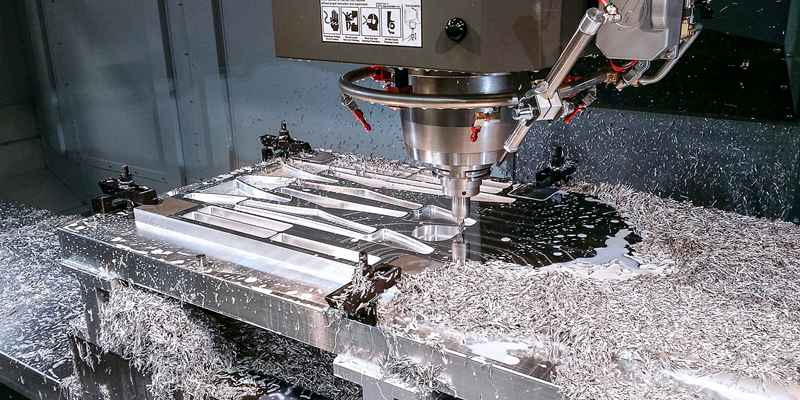
CNC (Computer Numerical Control) milling is a subtractive manufacturing process where a rotating cutting tool removes material from a stationary workpiece to create custom components with high precision. It relies on G-code programming and digital control systems that guide the machine's movement, enabling exact repetition across multiple runs.
A typical milling job follows five key phases:
1. Design and programming: Engineers create a 3D CAD model and convert it into a CAM (Computer-Aided Manufacturing) program that defines the tool paths.
2. Machine setup: Operators secure the workpiece using fixtures, load tools into the spindle, and configure machining parameters.
3. Roughing: Large portions of material are removed quickly to approximate the final shape.
4. Finishing: Small passes refine the shape and achieve tight tolerances and smooth surfaces.
5. Inspection: Quality checks verify that dimensions and surface finishes match specifications.
Each stage contributes to the overall time taken to complete the part. A well-organized process can dramatically reduce waste and idle machine time.
Accurately estimating CNC machining time requires examining the interplay between several variables. These include material type, part design, tolerances, tooling strategy, and operator expertise.
Complex parts with deep pockets, fine details, or undercuts take longer to machine than simple shapes. Surfaces requiring multi-axis movements or contouring increase tool path length and cutting time.
- Simple geometry (e.g., plates, brackets): 30 minutes to 2 hours.
- Moderate complexity (e.g., enclosures, fittings): 3–5 hours.
- High complexity (e.g., molds, turbine blades): 10+ hours.
In advanced industries such as aerospace, one intricate titanium component may require 20 to 40 hours of machining time, including tool changes and inspection cycles.
Different materials respond differently to cutting forces. The harder or tougher a material is, the slower the cutting speed must be to maintain tool integrity.
| Material | Machinability | Cutting Speed | Typical Time Impact |
|---|---|---|---|
| Aluminum | Excellent | Very high | Fastest machining |
| Copper/Brass | Good | High | Moderate |
| Steel | Fair | Medium | Slower |
| Stainless Steel | Poor | Low | Longer time |
| Titanium | Difficult | Very low | Longest time |
In short, aluminum or plastic parts can be milled quickly, while titanium or hardened steel parts might more than double the required time.
Tighter tolerances require smaller stepovers, slower feed rates, and more finishing passes. Similarly, a mirror-like surface finish adds extra machining and polishing steps.
For instance, achieving ±0.05 mm tolerance is faster than achieving ±0.01 mm — and the difference could easily double machining time. The same applies to aesthetic finishes for consumer or luxury products.
Tool type, size, and coating influence both cutting efficiency and time. Using improper tool paths often increases air-cutting time, tool chatter, or heat buildup.
Modern CAM software can design optimized tool paths to maintain consistent tool load, shorten machining distance, and maximize material removal rates. Techniques such as adaptive clearing and high-speed machining enable faster and smoother cuts.
Machine capability is another major factor. High-end CNC centers with multiple axes can complete advanced operations in one setup, whereas basic 3-axis machines may require repositioning the part.
- 3-axis CNC: Ideal for flat surfaces and simple contours.
- 4-axis CNC: Supports rotation, reducing setups for cylindrical features.
- 5-axis CNC: Enables simultaneous movement across axes for complex shapes, greatly reducing overall production time.
Automation features such as pallet changers and robotic loading also reduce idle machine time between runs.
Machine preparation often takes longer than actual cutting for small runs or prototype projects. Setup time includes installing fixtures, calibrating tools, aligning coordinates, and running test paths.
Using quick-change fixtures, zero-point clamping systems, and automatic tool changers can shorten setup durations by up to 50%.
A skilled machinist's knowledge can make or break efficiency. Experienced operators tune parameters, anticipate tool wear patterns, and prevent programming errors that waste valuable hours. Proper training and experience ultimately minimize troubleshooting downtime.
Batch production typically requires one extended setup but enables faster cycles for each subsequent part. A single prototype might take six hours, while the same part in a batch of 100 might take only 90 minutes per unit.
There are several methods for estimating milling time depending on available data and software tools.
A simple estimation formula often used in workshops is:
Machining Time = Cutting Length / (Feed Rate)
For more complex operations involving multiple passes, tool changes, and setups, additive calculations can estimate total duration:
T = Tsetup + Tcutting + Ttool change + Tinspection
Here, each stage is measured or simulated within the CAM software environment.
Modern CAM software like Fusion 360, Mastercam, or SolidCAM provides accurate predictions by simulating tool movements. The software accounts for spindle speeds, feed rates, rapid traverse, and chip load to predict machining time within 5–10% accuracy.
This approach helps engineers compare alternative strategies before physically running the job — saving both time and tools.
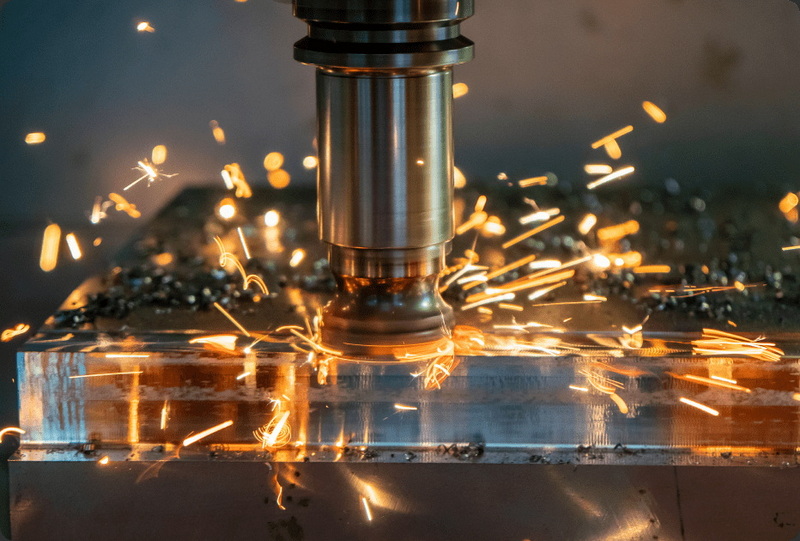
Manufacturers continuously seek ways to boost efficiency without compromising quality. Below are proven strategies to decrease machining duration.
Use advanced CAM algorithms that ensure consistent tool engagement and minimal air cutting. Adaptive toolpaths allow deeper cuts and higher feed rates safely.
Use coated carbide or diamond-coated cutters for long life and high-speed machining. Small changes in tool geometry can lead to significant cycle time gains.
Implementing CNC pallet systems, modular vises, or vacuum fixtures makes changeovers faster and repeatable. Robotic arms for part loading can save hours per batch.
5-axis capabilities reduce the need for multiple setups and manual repositioning. The tool reaches more surfaces in one cycle, improving not only speed but also accuracy.
Separate programming for roughing and finishing can optimize machining. Roughing removes bulk material quickly; finishing focuses on surface precision.
Track cycle times over repeated productions and gather machine data (via IoT or sensors). Analyzing this data helps identify inefficiencies and refine operations.
| Application | Material | Machine Type | Cycle Time | Key Factors |
|---|---|---|---|---|
| Aluminum drone frame | Aluminum 6061 | 5-axis | 1.5 hours | Lightweight design, adaptive clearing |
| Injection mold cavity | Tool steel | 3-axis | 12 hours | Deep pockets, tight tolerance |
| Medical implant | Titanium | 5-axis | 22 hours | Complex geometry, biocompatibility prep |
| Automotive fixture | Cast iron | 3-axis | 4 hours | High rigidity requirement |
| Polycarbonate housing | Plastic | 3-axis | 40 minutes | Soft material, fast feed |
These examples reveal that both design and material selection directly influence how long each job takes, even when using advanced equipment.
In CNC milling, shorter machining time means lower cost, but excessive speed can compromise quality or lead to tool failure. Finding balance requires understanding the ideal material removal rate (MRR) while maintaining precision and surface integrity.
Manufacturers often experiment with feed rates, spindle speeds, and stepovers to determine the maximum performance point — where productivity peaks without quality loss. Regular equipment maintenance ensures machines operate near their theoretical best.
Without the correct feed rate and cooling, high speeds can overheat tools and parts, increasing rework time.
Even automated systems need supervision for tool wear, coolant level, and quality checks to avoid costly errors.
Material properties vary widely; machining hardened steel is far slower than cutting plastic, even with the same geometry.
Unique designs often require specialized fixtures and orientations. Reusing setups rarely works without modifications.
Automation and digital manufacturing technologies are reshaping time management in CNC workshops. Some major innovations include:
- AI-driven optimization: Algorithms adjust cutting parameters in real-time for maximum precision and minimum waste.
- Digital twins: Virtual replicas simulate the entire process, highlighting bottlenecks before production starts.
- Hybrid manufacturing: Combining additive (3D printing) and subtractive (CNC) methods reduces total lead time.
- Lights-out machining: Fully automated systems can run overnight with minimal human intervention.
These advances are expected to lower machining times by up to 40% in the coming decade.
The time required for CNC milling depends on a blend of factors — material type, geometry complexity, machine capability, and desired surface finish. A simple aluminum bracket might take an hour, while a complex titanium aerospace component may require several days of continuous machining.
Manufacturers can shorten production times through smarter design, optimized programming, effective tooling strategies, and advanced automation. By balancing speed and precision, CNC operations achieve both cost efficiency and unmatched quality, reinforcing why CNC milling remains a pillar of modern precision engineering.
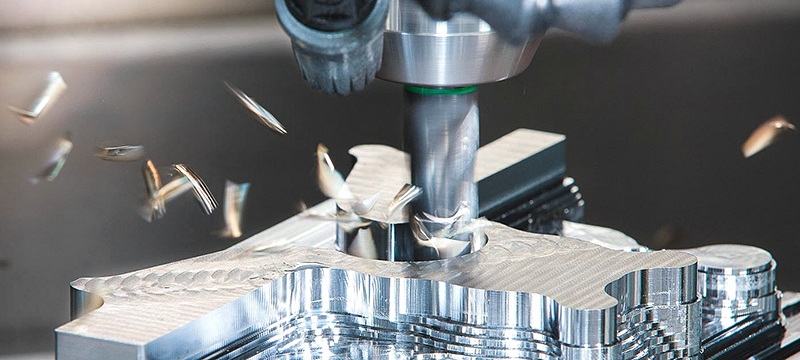
Setup times vary from 30 minutes for basic parts to several hours for complex geometries requiring multiple tools and fixtures. Streamlined fixturing and tool presetting reduce this time considerably.
Aluminum, brass, and most plastics are quickest to mill due to their softness and high machinability ratio. Tool life is also extended with these materials.
Usually yes, since 5-axis machines reduce manual repositioning and allow machining of multiple surfaces in one setup. However, programming and setup may require extra time for accurate calibration.
Use CAM simulation tools to calculate real-time cutting paths and cycle durations. These tools provide the most reliable estimates by considering machine behavior and feed parameters.
Prototypes typically take two to six hours, depending on design complexity and finish requirements. Larger or more intricate parts may take significantly longer.


