From idea to market-ready product, our NPI solutions make every stage easier, faster. Discover How We Help

Views: 222 Author: Tomorrow Publish Time: 2025-12-03 Origin: Site


Content Menu
● Learning Curve for Beginners
● Common Challenges in CNC Machining
● Advances Easing CNC Difficulty
● Operational and Maintenance Considerations
● Cost Factors and Industry Impact
● FAQ
>> 1. Is CNC machining hard for beginners?
>> 2. What are the biggest challenges in CNC machining?
>> 3. How long does it take to master CNC programming?
>> 4. Which materials are hardest to machine with CNC?
>> 5. Can anyone learn CNC machining?
CNC machining, or Computer Numerical Control machining, is a manufacturing process where computer-controlled machines precisely remove material from a solid workpiece to produce custom parts. It combines mechanical operations with digital programming to achieve high accuracy and complex shapes that manual methods cannot replicate. Industries such as aerospace, automotive, and medical depend heavily on CNC machining for parts with tight tolerances and repeatability. Operators use CAD/CAM software to design parts, which are then converted into machine instructions known as G-code guiding mills, lathes, or routers through intricate cuts and contours.
This process starts by selecting the appropriate material like aluminum, steel, or plastics and securing it on the machine bed. The cutting tools spin at high speeds, and feed rates and depth of cuts control the removal efficiency. Modern CNC machines often employ multiple axes of movement to craft complex three-dimensional shapes in fewer setups, improving workflow efficiency and reducing errors.

CNC machining has a noteworthy learning curve because it merges mechanical skills, computer programming, and hands-on machine operation. Beginners frequently start as machine operators responsible for loading tools, setting up parts, and monitoring machine runs. Reaching proficiency in running standard jobs independently usually takes 6 to 12 months, while mastering more advanced programming and multi-axis operations can take years.
Important foundational skills include interpreting engineering blueprints with tight tolerances often within ±0.001 inches, understanding G-code commands, and practicing on simulation software to avoid costly machine crashes. Physical stamina is essential as machinists often stand for long periods, move heavy stock, and adjust fixtures. Mental focus is critical because machines operate at spindle speeds reaching 20,000 RPM, where a single mistake can cause damage. Apprenticeships and structured training programs are vital in easing this learning process.
Key technical competencies for CNC machining include familiarity with CAD for design creation and CAM software for toolpath generation. Knowledge of machine operation panels and programming languages, chiefly G-code, is essential to control movement and processes. Understanding machining parameters like feed rates, spindle speeds, and chip load helps prevent premature tool wear and ensures optimal cut quality.
Machining difficulty escalates with the number of controlled axes: 3-axis machines are suited for flat parts, while 5- or 6-axis machines handle intricate contours and undercuts but demand higher programming expertise. Materials vary in machinability; aluminum machines easily, but titanium or hardened steel requires slower feeds and rigid setups. Tool selection—such as carbide or diamond coatings—and coolant use are tailored to material properties to prolong tool life and maintain surface finish.
The most frequent challenges include:
- Tool wear and breakage, which increase operating costs and downtime; tools may wear out after producing 10–50 parts.
- Vibration and chatter from incorrect feeds or speeds degrade surface finishes.
- Complex part geometries that demand custom tooling or sophisticated multi-axis programming.
- Programming errors such as over-travel or incorrect tool paths cause scrapped parts.
- Handling of large or heavy materials requires specialized equipment and introduces issues like thermal distortion.
- Material inconsistencies such as porosity can cause dimensional deviations and quality defects.
Addressing these challenges requires rigorous maintenance, precise programming, and strategic workflow planning.
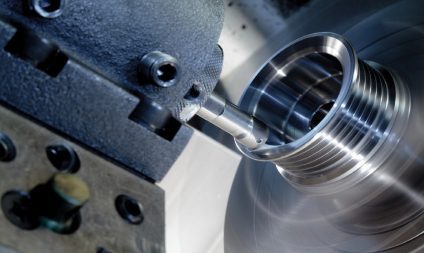
Technological progress has significantly reduced CNC machining difficulty. Multi-axis machines allow production of highly complex parts in a single setup, enhancing accuracy and throughput. High-speed machining techniques reduce cycle times and lower tool wear by increasing spindle speed and feed rates judiciously.
Integration of AI and IoT enables machines to self-optimize tool paths, predict wear, and adjust parameters automatically, minimizing human error. Digital twins create virtual models for simulation and troubleshooting pre-production, saving time and reducing waste.
CAD/CAM software enhancements incorporating AI, automation, and real-time monitoring have democratized CNC machining by simplifying programming and improving machine utilization. Hybrid manufacturing combines additive and subtractive methods, expanding design freedom and material efficiency.
Machine setup accounts for a significant portion of machining time. Precise fixturing and work offsets must be established to attain dimensional accuracy. Routine maintenance such as lubrication, calibration, and chip removal prevents unplanned downtime, preserving machine longevity.
Scalability introduces challenges like rapid fixture changes and stock variability management. Lean manufacturing methods, including Single-Minute Exchange of Dies (SMED), reduce setup times. Consistent operator training ensures adherence to best practices and safety protocols.
Initial CNC machine investments can exceed $100,000, plus tooling and software expenses. Labor costs vary with skill level but generally range from $25 to $60 per hour. Prototype parts cost significantly more per unit than mass-produced components due to setup and programming overhead.
Outsourcing to regions with economies of scale, such as China, can reduce costs by 40–60%. However, quality control and communication challenges accompany this approach.
Continuous technological innovation and workforce development are critical to sustaining competitive advantages in precision machining.
CNC machining combines advanced technology, precise programming, and skilled manual operation, resulting in a complex but rewarding manufacturing process. While difficulties arise from the nuanced technical demands, material behaviors, and evolving software, progressive tools and techniques are making CNC increasingly accessible. Success depends on rigorous training, adherence to process discipline, and embracing technological advancements that streamline workflow and enhance product quality.
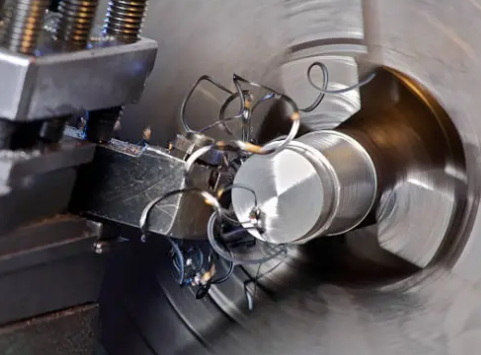
Yes, beginners face a steep learning curve in understanding programming, setup, and machine operation. Typically, 6 to 12 months of training with simulator practice and apprenticeships are required to gain competence.
The top challenges include tool wear, managing complex geometries, handling material variability, and preventing programming errors. Solutions involve maintenance, advanced CAM software, and rigorous quality control.
Basic conversational programming can be learned within 200 to 500 hours, but full mastery—especially of multi-axis and advanced machining—takes years of experience.
Titanium, superalloys such as Inconel, and hardened steels are among the most difficult due to their hardness and thermal properties, requiring specialized tooling and slow machining speeds.
Individuals with mechanical aptitude and focus can learn CNC machining through structured training and apprenticeships. Physical stamina and attention to detail improve success.
[1](https://pathmachining.com/resources/guides-and-trend-reports/cnc-machining-innovations-future/)
[2](https://bgmfg.com/advancements-and-trends-in-multi-axis-cnc-machining/)
[3](https://www.bakerindustriesinc.com/blog/advanced-aerospace-cnc-machining-techniques/)
[4](https://blogs.sw.siemens.com/solidedge/advanced-manufacturing-techniques-to-accelerate-cnc-machining/)
[5](https://www.norck.com/blogs/news/how-advanced-cnc-technology-is-revolutionizing-custom-machined-parts)
[6](https://www.americanmicroinc.com/resources/advanced-surface-treatment-techniques-cnc-machining/)
[7](https://www.goodwin.edu/enews/cnc-machining-techniques/)
[8](https://west.mtseries.com/news/precision-machining-technology-cnc-machining-advancements/)
[9](https://www.atlasfibre.com/cnc-composite-machining/)
[10](https://gimbelautomation.com/blogs/news/mastering-automation-advanced-techniques-for-cnc-machining)


