From idea to market-ready product, our NPI solutions make every stage easier, faster. Discover How We Help

Views: 222 Author: Tomorrow Publish Time: 2025-11-22 Origin: Site


Content Menu
>> Designing the Part with CAD
>> Generating the CNC Program (CAM)
>> Setting Up the CNC Milling Machine
>> Executing the Milling Operation
● Key Components of CNC Milling Machines
● Types of CNC Milling Operations
● FAQ
>> 1. What materials can CNC milling machines work with?
>> 2. How precise is CNC milling?
>> 3. What is the difference between CNC milling and CNC turning?
>> 4. What types of cutting tools are commonly used in CNC milling?
>> 5. How long does it take to program a CNC milling machine?
CNC milling is a precise subtractive manufacturing process where material is removed from a workpiece using computer-controlled rotating cutting tools. It is widely used across industries to create complex parts with high accuracy and repeatability. This article explains how CNC milling works, its process steps, machine components, types of operations, advantages, limitations, and answers common questions.

Computer Numerical Control (CNC) milling uses automated machines guided by digital instructions to accurately shape materials such as metal, plastic, or wood. The process involves a motor-powered spindle driving a rotating cutting tool that removes material from a stationary or moving workpiece, achieving the desired shape. The motions of the tool and workpiece are precisely controlled along multiple axes by the CNC machine's computer based on instructions called G-code.
The CNC milling process generally follows five main steps:
Manufacturing begins with creating a detailed 3D digital model of the part using Computer-Aided Design (CAD) software. This model defines the exact specifications and geometry to be produced.
The CAD model is imported into Computer-Aided Manufacturing (CAM) software. CAM converts the design into machine-readable G-code, which directs the CNC machine's tool paths, speeds, feed rates, cutting depth, and other parameters.
The raw workpiece material is securely clamped onto the machine's worktable. The appropriate cutting tool(s) for the job are installed in the spindle. Machine setup includes aligning the workpiece and calibrating the tool position and offsets to ensure precision.
Once set up, the CNC machine reads the G-code and executes the milling process automatically. The cutting tool spins at high speeds (often thousands of revolutions per minute) and moves relative to the workpiece along programmed axes (commonly X, Y, and Z). Material is removed layer by layer until the final shape is formed.
Cooling fluids may be applied during cutting to reduce heat and improve tool life. Human intervention is minimal and mainly involves monitoring or handling exceptions.
After milling, parts often require finishing actions like deburring sharp edges, polishing surfaces, cleaning, or additional machining to meet final tolerances and appearance specifications.
- Spindle: Rotates the cutting tool at variable speeds as programmed.
- Cutting Tools: Various types such as end mills, face mills, ball nose cutters used depending on material and part geometry.
- Axes: Standard machines operate on three linear axes (X, Y, Z). Advanced CNC mills support 4 or 5 axes for more complex parts.
- Control Unit: The computer that interprets the G-code and controls tool and workpiece movement.
- Worktable: Where the workpiece is fixed for machining; may move in some machines.
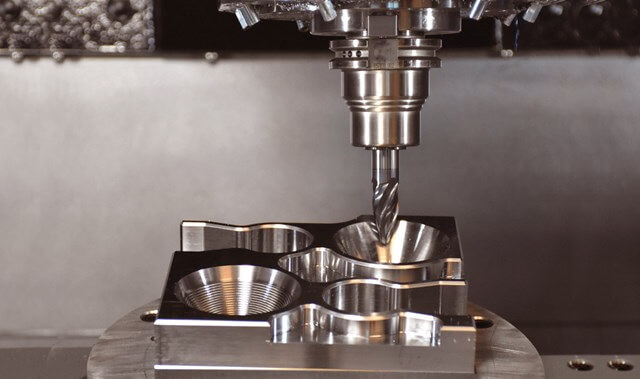
- Face Milling: The cutter's axis is perpendicular to the workpiece surface, removing material to produce flat surfaces and shallow contours.
- Peripheral (Plain) Milling: The cutter's axis is parallel to the workpiece surface, cutting deeper slots, grooves, or contours along the edges.
- Angular Milling: The cutting tool rotates at an angle to the workpiece surface to create features like chamfers, dovetails, and angled grooves.
- Slot Milling: Creates slots or pockets by cutting straight into the workpiece.
- Contour Milling: Produces curved or 3D complex shapes using multi-axis movement.
- Conventional Milling: The cutter rotates against the direction of feed. Traditionally more common but produces more tool wear.
- Climb Milling: The cutter rotates with the feed direction, reducing tool wear and often producing better surface finishes.
- Extremely precise and repeatable machining.
- Ability to create intricate and complex part geometries difficult for manual methods.
- Automation reduces human error and increases production speed.
- Flexible machining of various materials—metals, plastics, composites.
- Scalable for prototypes to mass production.
- Higher initial investment in CNC machines and programming.
- Requires skilled programming and setup time before production.
- Cutting very hard materials may require special tooling and slower speeds.
- Material wastage inherent to subtractive process.
CNC milling is a highly sophisticated subtractive manufacturing process that combines computer programming with mechanical precision to produce complex and accurate parts across industries. From CAD design through CAM programming and machine execution, CNC milling enables the efficient production of high-quality components with minimal human intervention. Its versatility, precision, and automation make it fundamental in modern manufacturing.
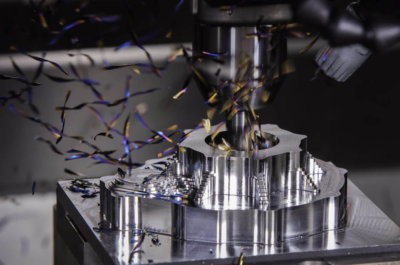
CNC milling is capable of machining a wide range of materials including metals such as aluminum, steel, titanium, plastics, wood, and composite materials, depending on the tooling and machine capabilities.
Typical CNC milling machines can achieve tolerances within a few thousandths of an inch (typically ±0.001 inch or better), making it suitable for demanding engineering parts.
Milling uses a rotating cutting tool to progressively remove material from a workpiece, often creating complex shapes. Turning rotates the workpiece against a stationary cutting tool and is typically used to produce cylindrical parts.
Common tools include end mills for general cutting, face mills for flattening surfaces, ball nose cutters for 3D shaping, drill bits for holes, and specialized cutters for slots and chamfering.
Programming time varies based on part complexity but generally ranges from a few hours to several days, including CAD modeling and CAM tool path generation.
[1](https://geomiq.com/blog/cnc-milling-guide/)
[2](https://fractory.com/cnc-milling/)
[3](https://www.xometry.com/resources/machining/what-is-cnc-milling/)
[4](https://get-it-made.co.uk/resources/what-is-cnc-milling)
[5](https://www.ardelengineering.com/cnc-milling-process)
[6](https://www.youtube.com/watch?v=flTPiOddlP4)
[7](https://www.speedtigertools.com/solution/ins.php?index_id=107)
[8](https://www.fictiv.com/articles/cnc-milling-explained)
[9](https://www.uti.edu/blog/cnc/milling)
[10](https://www.rapiddirect.com/blog/what-is-cnc-milling/)


