From idea to market-ready product, our NPI solutions make every stage easier, faster. Discover How We Help

Views: 222 Author: Tomorrow Publish Time: 2025-11-21 Origin: Site


Content Menu
● The History of CNC Machining
● Key Components of a CNC Machine
● How CNC Machining Works Step by Step
>> 5. Finishing and Inspection
● Types of CNC Machining Processes
>> CNC Milling
>> CNC Turning
>> CNC Drilling
>> CNC Grinding
>> CNC EDM (Electrical Discharge Machining)
● Common Materials Used in CNC Machining
● Applications of CNC Machining Across Industries
● FAQ
>> 1. What does CNC stand for?
>> 2. How accurate is CNC machining?
>> 3. What is the difference between CNC milling and turning?
>> 4. Can CNC machines process plastic materials?
>> 5. What software is used in CNC machining?
CNC machining stands for Computer Numerical Control machining, a highly precise and automated method of manufacturing that uses computer programs to control tools and machinery. This technology plays a crucial role in modern manufacturing, enabling the production of complex components with exceptional accuracy and consistency. From aerospace and automotive to electronics and medical devices, CNC machining ensures reliable results across multiple industries.

CNC machining is a subtractive manufacturing process that removes material from a solid block—known as a workpiece—to form the desired shape. The process uses computer-aided design (CAD) and computer-aided manufacturing (CAM) software to translate digital 3D designs into commands for machining equipment. These commands control the movement and operation of tools such as mills, lathes, routers, or grinders.
Unlike manual machining, CNC machining eliminates human error by relying on precise, programmable instructions. The machine interprets G-code or M-code commands that specify cutting speed, spindle rotation, toolpath, and other parameters. As a result, CNC machining offers high repeatability and efficiency for both prototyping and mass production.
The origin of CNC machining dates back to the 1940s and 1950s when engineers first used punched tape technology to automate machine tools. Early numerical control (NC) systems relied on punched cards to store instructions. By the 1970s, advances in computing led to the development of CNC machines with integrated microprocessors, revolutionizing the manufacturing industry.
Today's CNC machines are far more advanced. They feature multi-axis control, live tool capabilities, and smart sensors that allow real-time monitoring and optimization. The continued integration of artificial intelligence (AI), Internet of Things (IoT), and advanced materials pushes CNC machining into a new era of smart manufacturing.
Each CNC machine consists of several core components that work together to deliver precise, automated operation:
- Controller – The “brain” of the CNC system that interprets the code and sends instructions to the motors and drives.
- Machine tool – The physical equipment performing the cutting or shaping, such as a mill, lathe, or router.
- Spindle – The rotating shaft that holds and drives the cutting tool.
- Worktable – The surface on which the material or workpiece is fixed during machining.
- Drive system – A set of motors and actuators that move the tool or workpiece along specific axes.
- Coolant and lubrication system – Keeps the temperature stable and reduces wear on the cutting tools.
Together, these parts create a synchronized system capable of maintaining tight tolerances and flawless surface finishes.
The process begins with a CAD model, where engineers design the part digitally. This step defines every dimension, hole, and curve. The 3D model serves as the blueprint for the machining program.
Next, the CAD design is imported into CAM software, which generates the toolpath—the path the cutting tool follows to shape the part. The CAM software converts the design into G-code or M-code, defining tool moves, feed rates, and sequencing.
The operator sets up the CNC machine by installing the correct tools, securing the workpiece on the worktable, and calibrating the equipment. Proper setup ensures that the machining process runs smoothly and safely.
Once prepared, the CNC machine executes the programmed instructions. The controller reads the G-code and moves the tool along multiple axes, precisely cutting material from the workpiece. Some advanced machines support up to five or more axes for complex geometries.
After machining, the part often undergoes finishing operations such as sanding, polishing, or deburring. Quality control follows using measuring tools like coordinate measuring machines (CMMs) to ensure that the output meets design specifications.
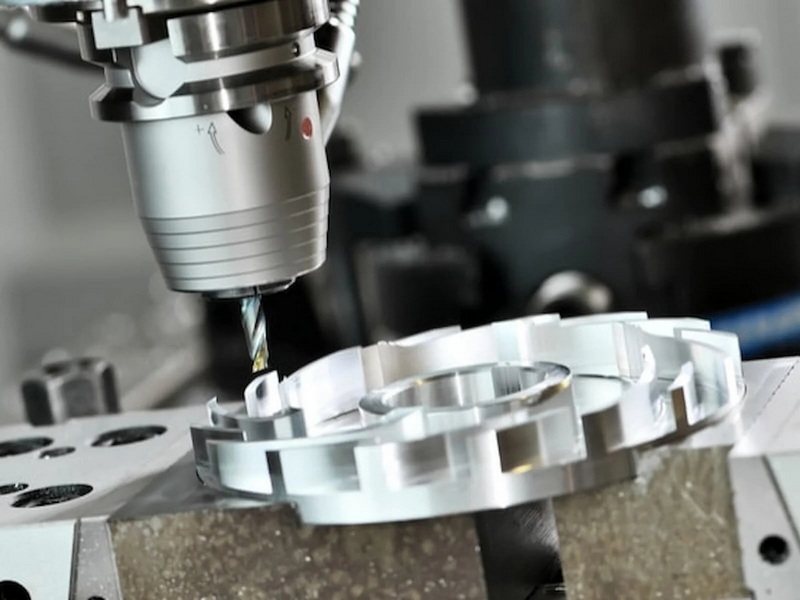
Different CNC processes are used depending on part design, materials, and application.
CNC milling involves rotating a cutting tool against a stationary workpiece. The tool moves in multiple axes (commonly 3, sometimes up to 5) to remove material and form precise features like slots, holes, and contours.
In turning, the workpiece rotates while the cutting tool remains stationary. This process creates cylindrical shapes and is ideal for producing components such as shafts, bushings, and bolts.
Drilling employs a rotating drill bit to create round holes in a stationary workpiece. Advanced machines can perform tapping and threading operations automatically.
Grinding uses an abrasive wheel to achieve fine finishes and maintain extremely tight dimensional tolerances. It is common in the finishing stages of precision parts.
EDM shapes hard metals by using electrical discharges or sparks. It is excellent for intricate features that are difficult to machine through conventional methods.
CNC machines can process a wide variety of materials, including:
- Aluminum – Lightweight, corrosion-resistant, and easy to machine.
- Stainless steel – Durable and wear-resistant, ideal for structural or medical applications.
- Brass – Excellent for parts requiring high precision and conductivity.
- Titanium – Strong, lightweight, and biocompatible, often used in aerospace and medical industries.
- Plastics – Materials like ABS, POM, or nylon are used for prototypes or lightweight parts.
Material selection impacts machining speed, tool choice, and surface quality. Each material requires specific cutting parameters to achieve optimal results.
CNC machining offers numerous benefits compared to manual processing:
- Superior accuracy and repeatability – Automated control ensures every part matches the original design.
- Efficiency – Once programmed, machines can operate continuously with little supervision.
- Flexibility – Easily programmable for different designs and materials.
- Reduced human error – Automation minimizes operator mistakes.
- High-quality surface finish – Consistent results suitable for both prototypes and end-use parts.
These advantages make CNC machining the foundation of modern high-precision production systems.
CNC machining is highly versatile and widely applied across various industries, fueling innovation and efficiency.
- Aerospace – Precisely machined components like turbine blades, engine parts, structural assemblies, and interior furnishings requiring strict tolerance and reliability.
- Automotive – Production of customized engine components, transmission parts, electric vehicle innovations, and precision prototyping.
- Medical – Manufacturing of surgical instruments, implants (like titanium hip replacements), prosthetics, MRI housings, and electronic medical device enclosures.
- Electronics – Creation of printed circuit boards (PCBs), heat sinks, connectors, and housings demanding microscopic precision.
- Renewable Energy – Components for wind turbines including blades and bearings, solar panel frames, and precision gears for energy efficiency.
- Agriculture – Tractor parts, irrigation components, harvesting machinery, and tools that require durable and reliable machining.
- Food and Beverage – Production of molds, die casting, food processing tools, bakeware, and packing equipment.
- Industrial Equipment – Heavy construction components like engine housings, hydraulic parts, conveyors, and safety equipment.
The precision and automation of CNC machining systems have revolutionized these industries by combining speed with unparalleled accuracy.[1][2][3][4][5]
Digital transformation advances the future of CNC machining by integrating artificial intelligence, machine learning, and IoT technologies. This enables real-time monitoring, predictive maintenance, and adaptive machining that optimize efficiency and reduce downtime.
Hybrid manufacturing systems combining additive techniques (3D printing) with subtractive CNC machining enhance production flexibility. Furthermore, sustainability efforts drive the adaptation of energy-efficient machines and eco-friendly cooling processes.
With continuous innovation, CNC machining is expected to remain a cornerstone of precision manufacturing while meeting the evolving demands of global industries.
CNC machining combines the power of computer precision with mechanical ingenuity to manufacture components crucial to modern technology. Its ability to produce complex designs with high accuracy and consistency supports industries ranging from aerospace to healthcare. Ongoing advancements ensure that CNC machining will continue driving innovation, efficiency, and quality in manufacturing for years to come.
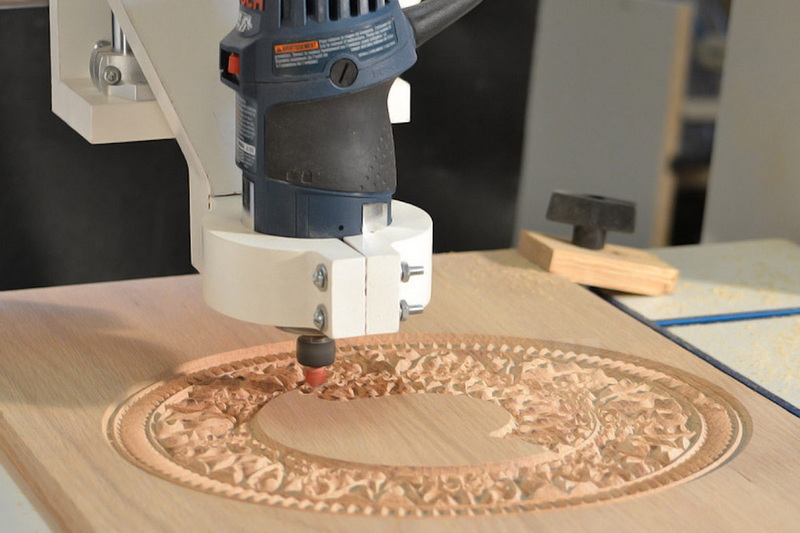
CNC stands for Computer Numerical Control, referring to machines that use computerized systems to automate and control cutting tools.
CNC machines can achieve tolerances as tight as ±0.001 inches or even finer, making them ideal for precision engineering applications.
Milling removes material from a stationary workpiece with a rotating tool, while turning rotates the workpiece against a stationary cutting tool.
Yes, CNC machines can handle plastics such as ABS, acrylic, nylon, and PEEK, offering high precision for prototypes and lightweight components.
Commonly used software includes CAD programs like SolidWorks or AutoCAD for design, and CAM software like Fusion 360 or Mastercam to generate G-code for machining.
[1](https://www.3erp.com/blog/cnc-machining-applications-and-uses/)
[2](https://venttup.com/cnc-machining-industries-applications/)
[3](https://qviro.com/blog/what-industries-use-cnc-machines/)
[4](https://www.americanmicroinc.com/resources/industries-use-cnc-machinery/)
[5](https://durexinc.com/top-industries-using-cnc-machining/)
[6](https://astromachineworks.com/cnc-machine-industries/)
[7](https://www.ametals.com/post/7-uses-of-cnc-machining)
[8](https://www.reddit.com/r/MechanicalEngineering/comments/1953x9j/which_industrys_uses_cnc_milling_the_most_for/)
[9](https://millenniumprecision.com/7-key-industries-benefit-cnc-machining/)
[10](https://www.rcoeng.com/blog/cnc-applications)


