From idea to market-ready product, our NPI solutions make every stage easier, faster. Discover How We Help

Views: 222 Author: Tomorrow Publish Time: 2026-01-21 Origin: Site


Content Menu
● The Role of Automation in CNC Machining
● Reduced Setup and Changeover Time
● Integration with Industry 4.0 Technologies
● Material Efficiency and Waste Reduction
● Lower Labor Costs and Skill Utilization
● Scalability and Flexibility in Production
● Improved Quality Control and Standardization
● Cost Efficiency and Return on Investment
● Tool Life and Maintenance Advancements
● Training, Workforce Development, and Innovation
● Environmental and Sustainability Benefits
● Future Outlook: Intelligent CNC Manufacturing
● FAQs
>> 1. What industries benefit most from CNC machining?
>> 2. How does CNC machining reduce production time?
>> 3. Is CNC machining cost-effective for small runs?
>> 4. What materials can CNC machines handle?
>> 5. How does CNC machining support sustainability?
In the rapidly evolving manufacturing world, CNC machining has become a cornerstone of industrial efficiency and innovation. As global competition grows and consumer demand for precision parts increases, manufacturers are relying more heavily on Computer Numerical Control (CNC) systems to enhance capabilities, reduce production time, and achieve higher output with consistent quality.
This technology integrates automation, digitalization, and precision engineering to create a production system that not only delivers superior results but also dramatically improves productivity across every stage of the manufacturing process.
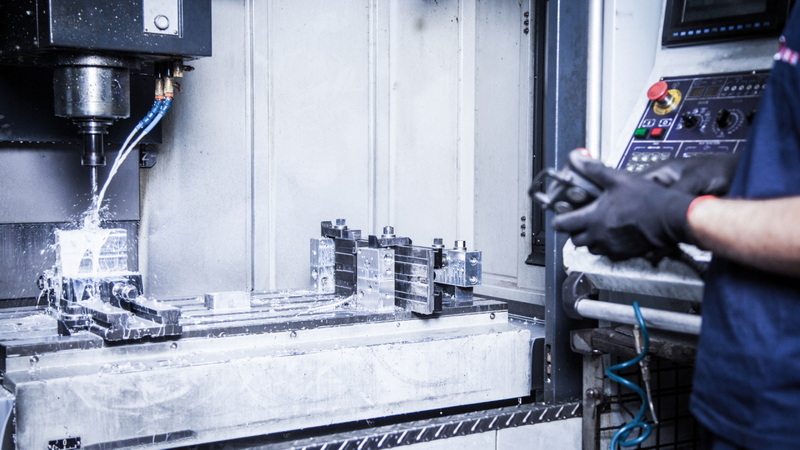
CNC machining is a subtractive manufacturing process in which pre-programmed computer software dictates how factory tools and machinery move. From milling and turning to drilling and grinding, CNC systems control everything with a high degree of accuracy.
The process begins with a digital 3D model created in Computer-Aided Design (CAD) software. The CAD file is converted into a Computer-Aided Manufacturing (CAM) program that generates G-code — the series of precise commands that direct the machining operations.
This automation eliminates the limitations of manual machining, allowing operators to produce parts repeatedly with identical dimensions. Whether the work involves aluminum engine components, aerospace fittings, or plastic prototype housings, CNC machining ensures uniformity and precision throughout large-scale manufacturing.
Automation is the key driver behind the productivity benefits of CNC machining. Machines operate automatically under the control of digital instructions, performing multiple operations simultaneously without human interference.
Advanced systems are capable of “lights-out” manufacturing, which means machines continue production 24/7 without needing constant monitoring. This round-the-clock functioning maximizes output and eliminates idle machine time.
With automation, manufacturers no longer rely solely on the skill or endurance of the operator. Instead, the machine performs tasks with flawless consistency. Operators focus on system optimization, programming, and maintenance — roles that add strategic value rather than repetitive labor.
One of the hallmarks of CNC machining is its unmatched precision and consistency. The system ensures every cut, hole, and surface finish is executed within microns of accuracy.
High precision directly impacts productivity by:
- Reducing the need for rework or repair.
- Minimizing material waste.
- Ensuring components fit perfectly during assembly.
Because CNC machines reproduce parts according to the same digital file, they remove variance caused by human error. This level of repeatability is especially critical in industries such as aerospace or medical technology, where even a minor deviation could compromise performance or safety.
Traditional machining requires lengthy setup and manual calibration every time a new product is introduced. In contrast, CNC machining allows quick and seamless changeovers.
Once a program is written and stored, it can be instantly recalled for future production runs. Operators can tweak tool parameters or adjust cutting speeds without completely resetting the machine. As a result, downtime is minimized and production cycles become significantly faster.
This streamlined approach allows manufacturers to run multiple product types on the same machine, supporting flexibility and custom orders — all while maintaining high productivity.
Speed is a defining benefit of CNC machining. With optimized feed rates, advanced multi-axis systems, and continuous operation capability, CNC machines complete complex tasks far more quickly than manual methods.
Multitasking machines combine turning, milling, drilling, and threading functions in one setup, saving handling time. High-speed machining centers with efficient tool paths allow faster removal of material without sacrificing surface quality.
Moreover, the integration of automatic tool changers keeps the workflow uninterrupted, reducing setup delays. These factors combine to shorten lead times and boost output capacity.
As part of the smart manufacturing revolution, CNC machining has evolved through integration with Industry 4.0 digital technologies. Connectivity allows machines to communicate with central software systems, collecting real-time data on performance, tool condition, and production metrics.
This data drives predictive maintenance, meaning manufacturers can address potential mechanical issues before they lead to downtime. IoT sensors and AI analytics further enhance equipment lifespan and operational efficiency.
When connected within a larger digital ecosystem, CNC machines contribute to a fully automated and optimized production line — improving both speed and reliability throughout the supply chain.
Another significant advantage of CNC machining is improved material efficiency. The process enables careful planning of tool paths and machining strategies, which minimizes scrap and optimizes each raw material blank.
CAD/CAM simulation tools allow engineers to visualize cutting sequences, detect potential collisions, and refine parameters before any physical production begins. This not only reduces wasted material but also prevents costly trial-and-error setups.
Many CNC systems also track real-time cutting conditions, adapting feed rates automatically to optimize energy usage and tool performance.
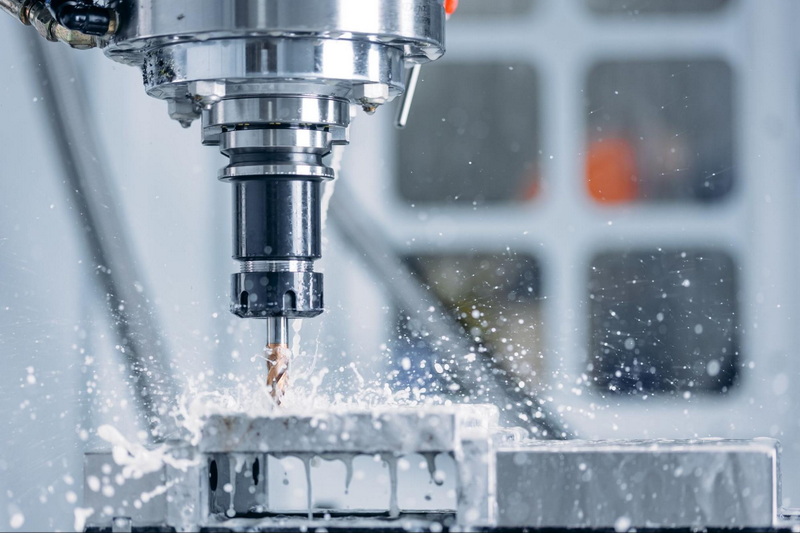
While highly sophisticated, CNC machining actually lowers total labor costs by allowing fewer operators to oversee more machines. Instead of performing manual machining tasks, operators become programmers, technicians, and process managers — roles that supervise automation and ensure quality.
One skilled operator can easily manage several machines running simultaneously. The reduction in manual hours not only lowers wage costs but also eliminates human fatigue-related errors. Companies benefit from improved labor productivity and a more efficient, technology-driven workforce.
In modern manufacturing, flexibility means the ability to scale production quickly without compromising quality — and CNC machining excels at this. By storing digital design files and tool paths, manufacturers can produce large quantities or one-off prototypes with minimal adjustments.
This flexibility supports customized production and on-demand manufacturing, ideal for industries like automotive and consumer electronics where designs frequently change. The ability to pivot swiftly to new products directly enhances overall productivity and competitiveness.
Because every CNC machining operation is digitally controlled, quality control becomes more reliable and measurable. Machine sensors monitor vibration, temperature, and tool wear in real-time. Data analysis tools can automatically verify dimensions and tolerances through integrated probing systems.
The outcome is a consistent stream of parts that meet strict quality requirements — eliminating costly rework and ensuring higher customer satisfaction. Automated inspection capabilities increase throughput while enhancing transparency in the production process.
Human error remains one of the leading causes of production inefficiencies in traditional machining. CNC machining eliminates the variability introduced by manual input, ensuring every motion and tool operation is executed exactly as programmed.
This minimizes defective parts and rejections, allowing consistent productivity levels even during extended operation periods. With fewer interruptions caused by quality issues, manufacturers can deliver larger quantities in shorter time frames.
While CNC machining involves higher initial investment costs for machines, software, and training, the long-term savings are considerable. Reduced scrap, minimized rework, faster production cycles, and lower labor costs quickly offset the upfront expenses.
By combining these operational efficiencies, companies enjoy improved profitability and a faster return on investment. Over the equipment's lifespan, the consistent performance and reliability further reinforce cost efficiency.
Modern CNC machining systems come equipped with advanced diagnostics and adaptive control features that extend tool life. Automated coolant delivery, adaptive feed rate control, and real-time vibration monitoring protect both the cutting tools and the workpiece.
Machines automatically adjust based on load conditions, avoiding tool breakage and ensuring smoother operation. As a result, maintenance intervals are predictable, and downtime is dramatically reduced — another clear pathway to better productivity.
To fully harness the power of CNC machining, workforce training is crucial. Skilled programmers and operators are needed to design tool paths, optimize cutting parameters, and manage integrated systems.
Investment in technical education helps ensure the workforce remains capable of adapting to new software updates, machine types, and digital manufacturing environments. This fusion of human intellect with automation speeds up process innovation and unlocks higher productivity potential.
Sustainability is now a core focus in manufacturing, and CNC machining contributes significantly to greener operations. By precisely controlling tool movement and minimizing waste, energy consumption per part is reduced. Advanced cooling systems use recyclable fluids, and tool path optimization cuts machining time.
Furthermore, many CNC setups now integrate renewable energy sources and energy-efficient drives, reducing the overall carbon footprint of production. These improvements not only support sustainability goals but also reduce long-term operational costs.
The future of CNC machining lies in deeper integration with artificial intelligence, robotics, and cloud computing. Adaptive learning systems can analyze past machining data to automatically improve throughput and precision in future cycles.
Collaborative robots (cobots) will load and unload CNC machines autonomously, while centralized software platforms manage scheduling and resource allocation. These advancements reinforce CNC technology's role as the foundation of smart, connected, and highly productive manufacturing ecosystems.
CNC machining has revolutionized modern manufacturing by merging automation, precision, and digital intelligence into one powerful system. Its ability to continuously deliver high-quality output with minimal waste and reduced labor makes it a vital tool for boosting productivity.
From concept design to final assembly, CNC technology enhances efficiency, scalability, and profitability across industries. As it continues to evolve through smart integration, predictive maintenance, and AI-driven control, CNC machining will remain the driving force behind industrial productivity and global competitiveness.
Contact us to get more information!
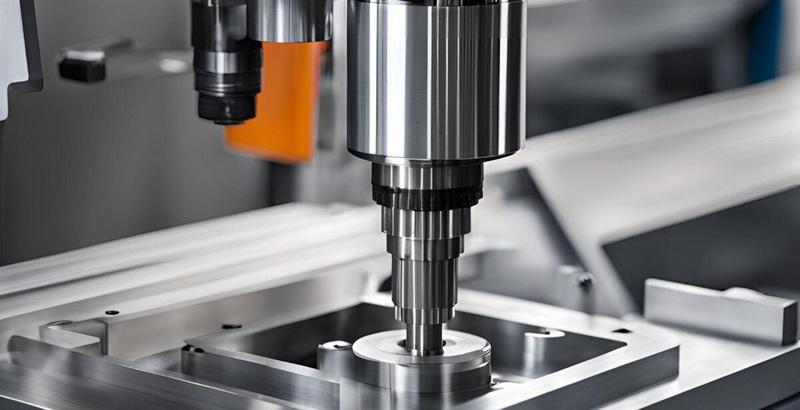
CNC machining is widely used in industries like aerospace, automotive, defense, electronics, and medical devices — any sector demanding precision, reliability, and efficiency.
By automating multiple operations in one setup and allowing machines to work continuously, CNC machining shortens cycle times and increases output.
Yes. Its precision and repeatability make CNC machining ideal for prototypes and small-scale runs without high tooling costs.
CNC machining works with metals such as aluminum, titanium, and steel, as well as plastics, composites, and even ceramics — offering broad material versatility.
The process minimizes material and energy waste while enabling eco-friendly production through optimized tool paths, recyclable coolants, and reduced emissions.
1. https://www.engineersedge.com/manufacturing/cnc-machining-overview.htm
2. https://www.autodesk.com/solutions/cnc-machining/overview
3. https://www.machinemfg.com/what-is-cnc-machining/
4. https://www.sandvik.coromant.com/en/knowledge/machining/what-is-cnc-machining
5. https://www.mscdirect.com/betterMRO/metalworking/understanding-cnc-machining
6. https://www.hubs.com/knowledge-base/what-is-cnc-machining/
7. https://www.makeitfrommetal.com/how-cnc-machining-improves-manufacturing/


