From idea to market-ready product, our NPI solutions make every stage easier, faster. Discover How We Help

Views: 222 Author: Tomorrow Publish Time: 2026-01-21 Origin: Site
Content Menu
● How CNC Machining Supports On-demand Manufacturing
● Main Advantages of CNC Machining in On-demand Manufacturing
>> 1. Exceptional Precision and Repeatability
>> 2. Flexibility Across Materials and Applications
>> 3. Rapid Prototyping and Continuous Design Improvement
>> 4. Cost Efficiency for Lower-volume Runs
>> 5. Reliable Quality Control and Reduced Human Error
● Integrating CNC Machining With Digital Manufacturing Platforms
● CNC Machining and Industry 4.0: A Smart Manufacturing Ecosystem
● Sustainability Through Efficiency and Waste Reduction
● Common Applications of CNC Machining in On-demand Manufacturing
● Challenges and Future Developments
● Benefits for Global Supply Chain Flexibility
● The Future of CNC Machining in On-demand Manufacturing
● FAQs About CNC Machining and On-demand Manufacturing
>> 1. What makes CNC Machining ideal for on-demand manufacturing?
>> 2. How does CNC Machining compare to 3D printing in flexibility?
>> 3. Can CNC Machining produce complex geometries?
>> 4. How does CNC Machining help reduce costs in low-volume production?
>> 5. What industries benefit most from CNC Machining in on-demand models?
CNC Machining has become an indispensable foundation in the era of on-demand manufacturing. As the manufacturing world shifts toward greater flexibility, customization, and speed, CNC Machining continues to evolve as one of the most reliable, precise, and scalable methods of production. By merging digital design, computer control, and precision engineering, CNC Machining bridges the gap between concept and reality, enabling manufacturers to meet ever-changing customer demands without sacrificing quality or efficiency.
This article explores the vital role of CNC Machining in on-demand manufacturing, discussing its benefits, technological advancements, production efficiency, and future potential within global manufacturing ecosystems.
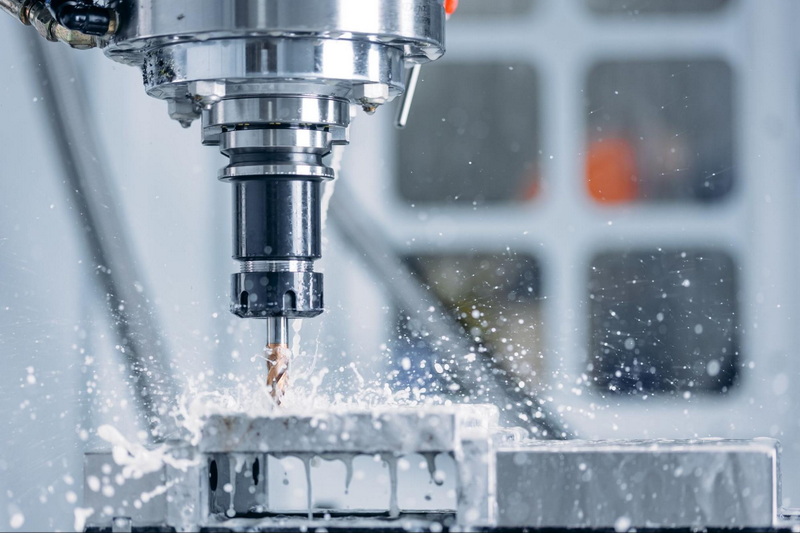
CNC Machining, short for Computer Numerical Control Machining, is a subtractive manufacturing process where computer-controlled cutting tools remove material from a solid block—known as a workpiece—to achieve the final design. It's one of the most widely used methods for producing high-precision parts in industries like aerospace, automotive, medical devices, and consumer electronics.
Unlike manual machining, CNC Machining operates through programmable commands translated from CAD (Computer-Aided Design) models into CAM (Computer-Aided Manufacturing) instructions. The machine executes these instructions automatically, resulting in minimal human error and exceptionally consistent quality. From milling and turning to drilling and grinding, CNC Machining offers unmatched control and accuracy over every dimension of a part.
In today's competitive market, where customers expect faster turnaround and higher customization, CNC Machining allows manufacturers to produce complex geometries, maintain consistent tolerances, and quickly respond to changes in demand—all crucial aspects of on-demand manufacturing.
On-demand manufacturing emphasizes agility, efficiency, and responsiveness. Instead of overproducing or maintaining costly inventory, companies only manufacture parts when orders come in. CNC Machining fits seamlessly into this system due to its flexibility, precision, and minimal setup times.
When a digital model is ready, engineers feed the design files directly into the CNC system. The machine interprets the geometry instantly and begins cutting within hours. This streamlined workflow allows businesses to move from design concept to finished product without lengthy tooling or manual adjustments. With such efficiency, CNC Machining reduces waste, lowers costs, and speeds up product delivery times — essential drivers for the success of on-demand production models.
CNC Machining delivers micro-level precision, often achieving tolerances as tight as ±0.001 inches. Every produced part matches the digital design exactly, no matter the batch size. For sectors like aerospace or healthcare, where performance and safety depend on consistency, CNC systems ensure no deviation between components. This level of reliability is key in on-demand manufacturing, where defective or inconsistent production runs can cause serious supply chain disruptions.
CNC Machining's ability to work with multiple materials—metals like aluminum, titanium, brass, stainless steel, and non-metals like ABS, nylon, or polycarbonate—makes it an incredibly versatile production tool. Manufacturers can easily switch materials depending on product specifications without reconfiguring the entire setup. This adaptability helps companies produce varied parts in small batches efficiently, a hallmark feature of on-demand manufacturing.
When developing new products or components, engineers need to iterate quickly. CNC Machining allows nearly instant prototype production using the same materials and tolerances as the final part. This accelerates design validation, enabling rapid testing and modification. Each prototype can be machined, evaluated, and reprogrammed based on results—all within days. For industries that depend on speed and innovation, like consumer electronics or robotics, CNC Machining is the ideal prototyping partner.
Unlike traditional manufacturing methods such as injection molding or die casting, CNC Machining doesn't require molds, dies, or special tooling setups. The digital workflow and fast configuration make it economically viable for low and medium production volumes. This affordability allows small startups, research facilities, and niche manufacturers to produce customized parts without investing in large, upfront tooling expenses.
Automation ensures every machining process follows the same programmed paths and parameters, which drastically reduces variation. Many advanced CNC machines come equipped with automatic measurement and inspection systems that check dimensions during production, ensuring each component meets precise specifications. As a result, scrap rates drop, and production efficiency increases—aligning perfectly with on-demand manufacturing's need for low-cost, consistent performance.
On-demand manufacturing isn't limited to traditional factories; it's increasingly powered by digital platforms that connect designers, engineers, and production facilities. CNC Machining services are now integrated into cloud-based manufacturing networks that use algorithms to analyze designs, suggest pricing, and automatically allocate production to the nearest available machine.
This digital workflow enables true on-demand production at scale. A customer can upload a design, receive instant pricing and feedback, approve production, and have CNC-machined parts delivered within days. The convergence of CNC Machining and digital manufacturing platforms reduces supply chain bottlenecks and increases transparency across global networks.
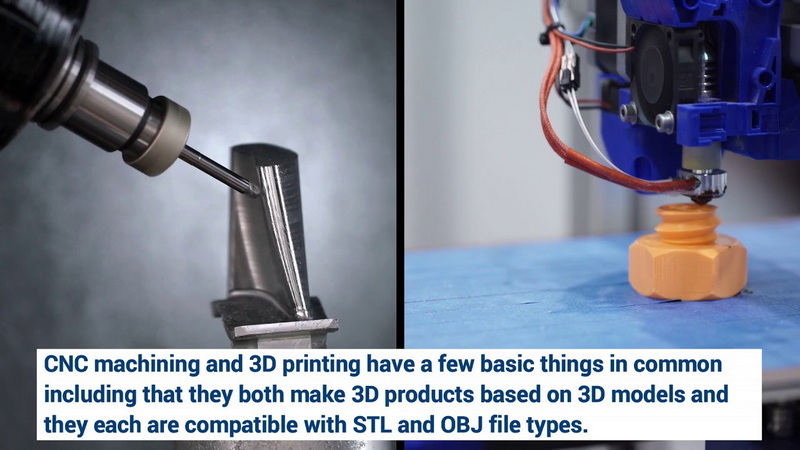
As Industry 4.0 technologies transform global production systems, CNC Machining continues to evolve through smart connectivity. Sensors embedded in CNC equipment track performance data in real-time, detecting tool wear, temperature fluctuations, and spindle loads. By feeding this data into AI-driven analytics, manufacturers can predict maintenance needs, optimize cutting parameters, and prevent downtime.
Machine learning further enhances optimization by automatically adjusting speeds, feeds, and tool paths for maximum efficiency. Such capabilities integrate CNC Machining into a broader smart manufacturing ecosystem—where processes are data-driven, responsive, and self-improving. The result is faster production, reduced waste, and unparalleled operational precision in on-demand manufacturing facilities.
Sustainability has become a central theme in modern manufacturing, and CNC Machining supports this by minimizing waste and optimizing material use. Unlike additive manufacturing, which builds layer by layer, CNC Machining strategically removes material from solid stock. Advanced toolpath optimization software maximizes yield and minimizes scrap rates by calculating the most efficient cutting sequences.
Additionally, CNC Machining promotes local production models. Instead of outsourcing parts from overseas suppliers, custom components can be locally machined on-demand, reducing transportation emissions and logistics costs. Many manufacturers also recycle metal chips and reuse coolants, ensuring a cleaner and more resource-efficient production cycle.
CNC Machining's versatility across materials and high accuracy make it valuable in numerous industries that operate under on-demand production models:
- Aerospace: CNC Machining produces turbine blades, engine housings, and landing gear components that must meet strict safety and performance standards.
- Automotive: Used for rapid prototyping, performance part development, and custom dies or tooling. On-demand CNC parts keep the automotive aftermarket agile and innovative.
- Medical Devices: From orthopedic implants to surgical tools, CNC Machining delivers biocompatible precision for patient-specific devices.
- Consumer Electronics: CNC Machining allows manufacturers to produce precision aluminum enclosures, frames, and prototypes for new product launches.
- Industrial Equipment: Replacement and upgrade parts can be machined quickly when required, minimizing equipment downtime.
Each industry benefits from CNC Machining's ability to handle low-volume production, tight tolerances, and complex geometries while maintaining repeatable performance.
Despite its numerous advantages, CNC Machining faces challenges in adapting to increasingly complex design requirements and tighter sustainability standards. However, new innovations are addressing these issues.
Hybrid manufacturing, which combines CNC Machining with additive manufacturing, is one key development. This combination allows manufacturers to build parts using 3D printing and then finish them with precision CNC Machining to achieve exact tolerances. Such hybrid processes minimize waste while extending design capabilities beyond what either technology can achieve alone.
Automation will also continue to advance CNC Machining systems. AI-driven machining centers, robotic loading arms, and unmanned production cells are already being implemented in smart factories. In the near future, fully autonomous CNC shops could handle on-demand manufacturing requests automatically—responding to new orders, adjusting schedules, and communicating with digital supply chain systems in real time.
Global supply chains are under growing pressure from unpredictable demand, logistical constraints, and economic shifts. CNC Machining's digital adaptability allows producers to operate in decentralized networks, manufacturing closer to their target markets. This distributed production model reduces dependence on centralized factories and long shipping routes.
For example, a company based in the United States could upload a CAD file, which is then sent to certified CNC Machining facilities in Europe or Asia for production and local delivery. The resulting flexibility not only accelerates lead times but also improves sustainability by reducing cross-border transportation needs. These benefits align perfectly with the goals of on-demand and lean manufacturing systems.
Looking ahead, CNC Machining will remain central to modern manufacturing due to its compatibility with customization, sustainability, and digital transformation. As artificial intelligence, 5-axis machining, and real-time simulation advance, CNC systems will become even more precise and autonomous.
Emerging technologies such as cloud-based monitoring, digital twins, and remote programming will expand CNC Machining capabilities even further. Manufacturers will be able to simulate entire production runs virtually, optimize machine paths in real-time, and execute operations remotely—all of which will drive faster, cleaner, and more reliable on-demand production across industries.
CNC Machining lies at the heart of on-demand manufacturing, bridging the gap between digital design and physical production. Its precision, flexibility, and automation allow manufacturers to shift seamlessly from prototype to production without delays or excess inventory. As industries continue to move toward agile, data-driven systems, CNC Machining will remain a core enabler of efficient, sustainable, and highly customizable manufacturing worldwide. Whether for rapid prototyping, small-batch production, or precision engineering, CNC Machining continues to redefine how industries respond to customer needs in real time.
Contact us to get more information!
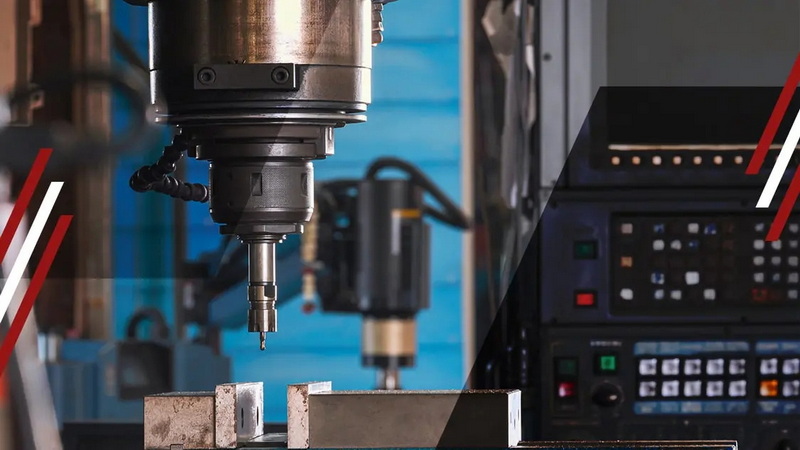
CNC Machining's computer-controlled process allows fast, precise production directly from digital files. Its minimal setup time, repeatability, and wide material compatibility make it perfect for agile, on-demand manufacturing systems.
CNC Machining provides higher strength and surface finish by removing material from a solid block, while 3D printing builds parts layer by layer. CNC Machining is more suitable for functional, structural components requiring tighter tolerances.
Yes. With advanced 5-axis CNC machines, manufacturers can produce intricate components with undercuts, curved surfaces, and tight angles that would be difficult or impossible to achieve using manual methods.
CNC Machining eliminates expensive mold tooling, offers rapid setup, and requires fewer manual adjustments. This makes it highly cost-effective for low- and medium-volume production runs typical in on-demand manufacturing.
Industries such as aerospace, medical devices, automotive, and electronics benefit the most, as they require high precision, quick turnaround, and the ability to produce customized or small-batch parts efficiently.
1. https://www.autodesk.com/solutions/cnc-machining/overview
2. https://www.makepartsfast.com/what-is-on-demand-manufacturing/
3. https://www.hubs.com/knowledge-base/cnc-machining/
4. https://www.engineering.com/story/how-cnc-machining-supports-industry-4-0
5. https://www.protolabs.com/resources/blog/how-cnc-machining-fits-into-on-demand-production/
6. https://www.machinedesign.com/machining/article/21835808/cnc-machining-key-role-in-modern-manufacturing


